
Table of Contents
- EPA Certification Requirements We Maintain for Safe Refrigerant Handling
- NADCA Standards We Follow for Professional Air Duct Cleaning
- NATE Certification Our Technicians Earn to Ensure Quality Work
- HVAC Licensing Standards in Texas That Protect Your Investment
- ASHRAE Guidelines We Use to Optimize Your Indoor Air Quality
- Mold Remediation Standards We Follow for Safe Home Treatment
- Energy Efficiency Certifications We Provide for Insulation Upgrades
- Frequently Asked Questions (FAQ)
EPA Certification Requirements We Maintain for Safe Refrigerant Handling
When you call us for HVAC maintenance or air duct cleaning, you’re not just hiring a service company, you’re trusting us with your family’s health and your home’s largest mechanical system. That trust isn’t something we take lightly, which is why we’ve built our entire operation around certifications and industry standards that actually matter.
We’ve learned through years of working in Austin, San Antonio, Dallas, and Houston that homeowners deserve to know exactly what qualifications the technician walking through their door actually possesses. It’s the difference between someone who passed a licensing exam and someone who truly understands how to diagnose and fix your HVAC problems safely. Let’s walk through the certifications and standards we maintain, and why each one protects both your investment and your home.
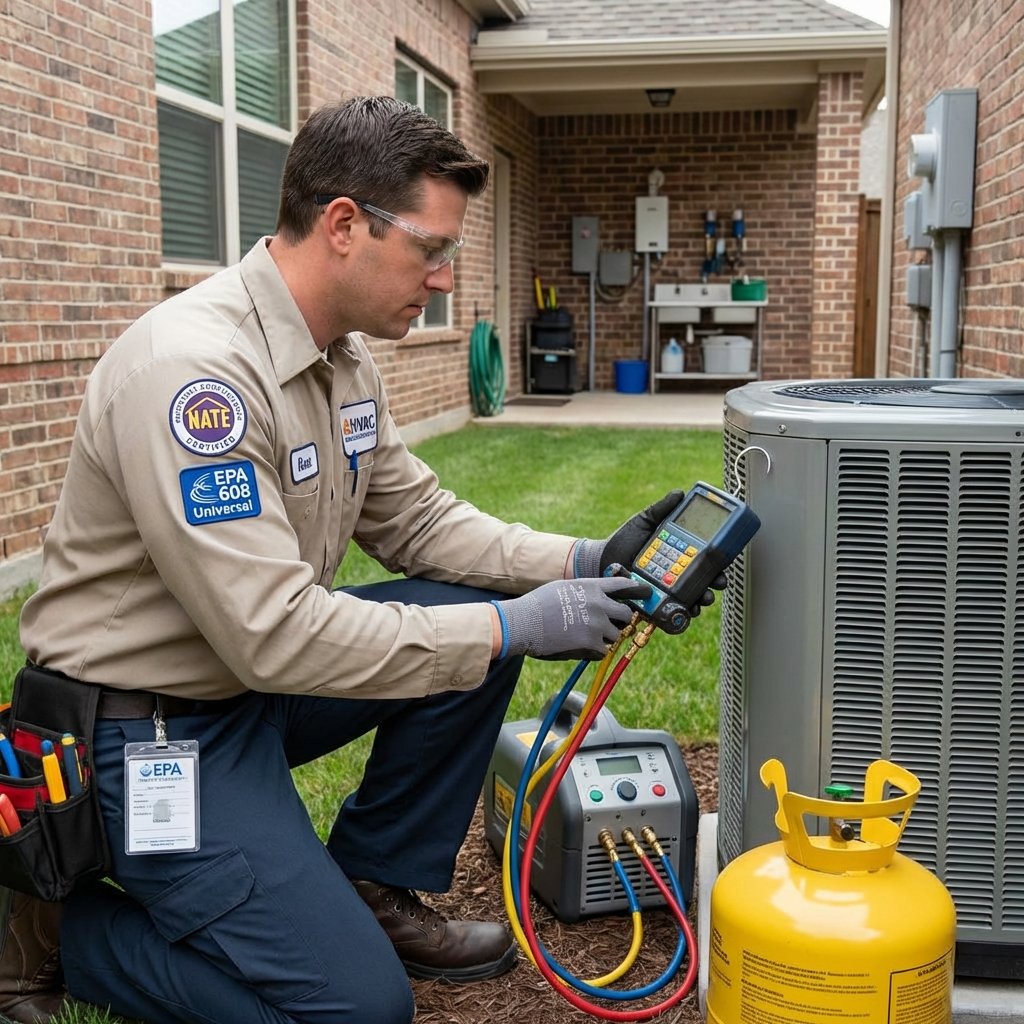
Federal law requires anyone handling refrigerants to hold EPA Section 608 certification, and we maintain this credential across our entire technician team. This isn’t a box-checking exercise, it’s a legal mandate that protects the environment and ensures proper handling of materials that could otherwise damage the ozone layer.
Our technicians understand the nuances of different refrigerant types, recovery procedures, and leak detection methods. When we service your air conditioning system, we’re not just topping off refrigerant levels, we’re diagnosing why leaks occur in the first place and addressing root causes. We’ve found that many homeowners assume their AC just needs a “recharge,” when really they have a developing copper line leak or a faulty compressor valve that will cost far more to ignore.
The EPA certification process requires passing a rigorous exam covering environmental regulations, safety protocols, and equipment-specific knowledge. Our team stays current on updates to refrigerant standards, including the phaseout of older R-22 units and the transition to newer, more environmentally friendly options like R-410A.
What to do next: When you schedule service with us, ask to see our EPA credentials. If your AC system is over 10 years old and uses R-22 refrigerant, we can explain your upgrade options and help you plan ahead before a major failure occurs.
NADCA Standards We Follow for Professional Air Duct Cleaning
The National Air Duct Cleaners Association (NADCA) sets the gold standard for how air duct systems should be cleaned, inspected, and maintained. We follow NADCA’s ACR (Assessment, Cleaning, and Restoration) Standard, which means we don’t just blow air through your ducts and call it done.
Our process starts with a video inspection using specialized camera equipment to see exactly what’s inside your ductwork before we touch anything. We’re often surprised at what we find, and so are our customers. Dust buildup, mold growth, pest droppings, and construction debris are common discoveries in ducts that haven’t been professionally cleaned in years. Once we identify what needs cleaning, we use equipment rated for your specific duct material and design, whether that’s flex duct, sheet metal, or fiberglass board.
The NADCA standard also requires us to use source removal methods, meaning we extract contaminants at the point where we’re working, rather than pushing them deeper into your system. This prevents the dust clouds and air quality problems that happen when someone uses cheaper, less effective equipment.
We’re NADCA-certified, and that certification matters to homeowners who want to protect their indoor air quality. The difference between NADCA-compliant cleaning and bargain basement duct cleaning is the difference between actually removing contaminants and just stirring them around.

What to do next: Schedule a free video inspection of your ducts. If you suffer from seasonal allergies or your home has visible dust buildup, professional cleaning often provides relief within days.
NATE Certification Our Technicians Earn to Ensure Quality Work
The North American Technician Excellence (NATE) certification is the credential that separates experienced HVAC professionals from someone who watched a YouTube video. Our technicians earn and maintain NATE certification in their specific specialty areas, whether that’s heating and cooling equipment, sheet metal fabrication, or refrigeration.
NATE certification requires documented work experience, passing a comprehensive exam, and continuing education to maintain credential status. The exam covers real-world troubleshooting, equipment operation, safety procedures, and relevant building codes. A NATE-certified technician can diagnose why your furnace won’t ignite, explain why your air conditioning efficiency has dropped, and recommend cost-effective repairs rather than unnecessary replacements.
We require NATE certification for our core technical staff because we’ve found it correlates directly with customer satisfaction and fewer callbacks. When a technician truly understands how your HVAC system works instead of just following a service manual, they catch problems early and explain them in language you actually understand.
What to do next: Ask whether your HVAC contractor’s technicians hold NATE certification before you book service. It’s a simple question that tells you everything about the company’s commitment to quality.
HVAC Licensing Standards in Texas That Protect Your Investment
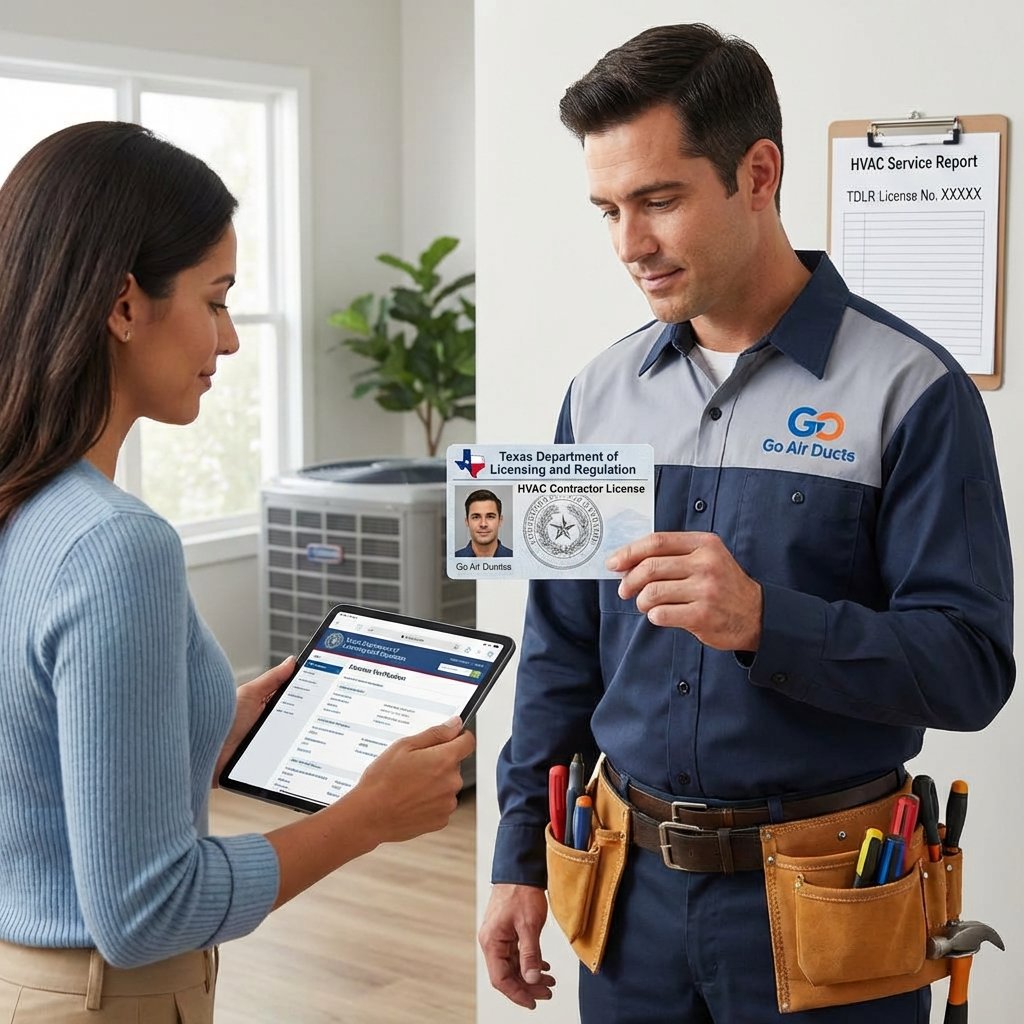
Texas requires HVAC contractors to hold a license issued by the Texas Department of Licensing and Regulation (TDLR). Our company maintains active licensing for all service areas we operate in, and every technician who installs or services systems carries the qualifications required by state law.
The Texas licensing system includes different credential levels. A Class A contractor can handle any HVAC work. A Class B contractor can work on systems under certain conditions. These distinctions matter because they determine who’s legally allowed to do the work at your home. If someone shows up to install a furnace or replace your air handler and they’re not properly licensed, you have no legal recourse if something goes wrong.
Beyond licensing, Texas law requires documentation of work performed, warranties on parts and labor, and proper handling of refrigerants. We maintain detailed records of every service call, every repair, and every system upgrade we complete. This protects both you and us, because there’s a clear paper trail if questions ever arise about what was done and when.
Homeowners in Austin and San Antonio have learned the hard way that hiring an unlicensed contractor to save a few hundred dollars often costs thousands in the long run. We’ve seen systems installed incorrectly, warranties voided, and insurance claims denied because work wasn’t done by a licensed professional.
What to do next: Before you hire any HVAC contractor, verify their Texas license number on the TDLR website. Our license and credentials are available on request, and we’re happy to discuss our qualifications over the phone.
ASHRAE Guidelines We Use to Optimize Your Indoor Air Quality
The American Society of Heating, Refrigerating and Air-Conditioning Engineers (ASHRAE) publishes technical standards that guide how HVAC systems should be designed, installed, and maintained to achieve specific indoor air quality goals. We use ASHRAE guidelines to ensure your system isn’t just cooling or heating your home, it’s managing humidity, filtration, and air circulation for optimal comfort and health.
ASHRAE Standard 62.1 covers ventilation for acceptable indoor air quality. This standard tells us how many air changes per hour your home needs, what outdoor air intake rates are required, and how to balance fresh air with efficient operation. Your HVAC system needs to work with your home’s design, not against it. A poorly ventilated home with sealed windows and a mediocre air filter might actually have worse indoor air quality than an older home with natural ventilation.
We assess your current system against ASHRAE guidelines and recommend upgrades when necessary. Sometimes that means installing a higher MERV-rated filter. Sometimes it means adding ventilation or upgrading your system’s humidification control. We’ve noticed that homes in Austin and San Antonio benefit from dehumidification during humid months, and ASHRAE guidelines help us specify the right equipment for your climate.
What to do next: If you or your family members experience respiratory issues, allergies, or moisture problems, we can perform an ASHRAE-based indoor air quality assessment and recommend specific upgrades.
Mold Remediation Standards We Follow for Safe Home Treatment
Mold inside air ducts or HVAC systems isn’t just unsightly, it can trigger serious health issues for your family. We follow remediation standards published by the EPA and the Institute of Inspection, Cleaning and Restoration Certification (IICRC) when addressing mold in HVAC systems.
The IICRC Standard for Professional Mold Remediation requires us to identify the moisture source causing mold growth, address that root cause, properly contain and remove contaminated materials, and verify that conditions won’t allow mold to return. If we simply kill visible mold and leave the underlying humidity problem unsolved, mold will return within weeks.
Our mold remediation process includes video inspection to document the extent of growth, moisture mapping to identify problem areas, proper containment to prevent spore spread, and HEPA filtration during removal. We don’t use bleach or harsh chemicals that can damage duct material. Instead, we remove contaminated insulation, clean metal surfaces, and allow your system to dry completely.
We’ve found that mold in ducts often indicates a larger problem: condensation on cold ductwork during cooling season, inadequate attic ventilation, or a malfunctioning condensate drain. Our remediation addresses these root causes, not just the visible symptoms.
What to do next: If you notice a musty smell when your AC runs, visible mold on duct registers, or black spots on your insulation, contact us for an inspection. Mold remediation costs far less than treating health issues mold exposure causes.
Energy Efficiency Certifications We Provide for Insulation Upgrades
When we install insulation upgrades in your attic or seal air leaks in your HVAC system, we follow energy code standards and use materials rated by recognized certification bodies. The DOE (Department of Energy) and EnergyStar program provide guidelines we use to ensure your upgrades deliver the efficiency improvements we promise.
Insulation R-value ratings tell you the material’s resistance to heat flow. We specify insulation rated for your specific climate zone. In Texas, your attic needs different insulation performance than an attic in Minnesota. We also ensure proper installation, because improperly installed insulation performs far below its rated value.
When we seal ductwork and air leaks, we use materials rated for HVAC systems specifically. Not all sealants are appropriate for duct applications, and using the wrong product can degrade over time or create airflow restrictions. Our process includes blower door testing and thermal imaging to measure actual air leakage before and after our work.
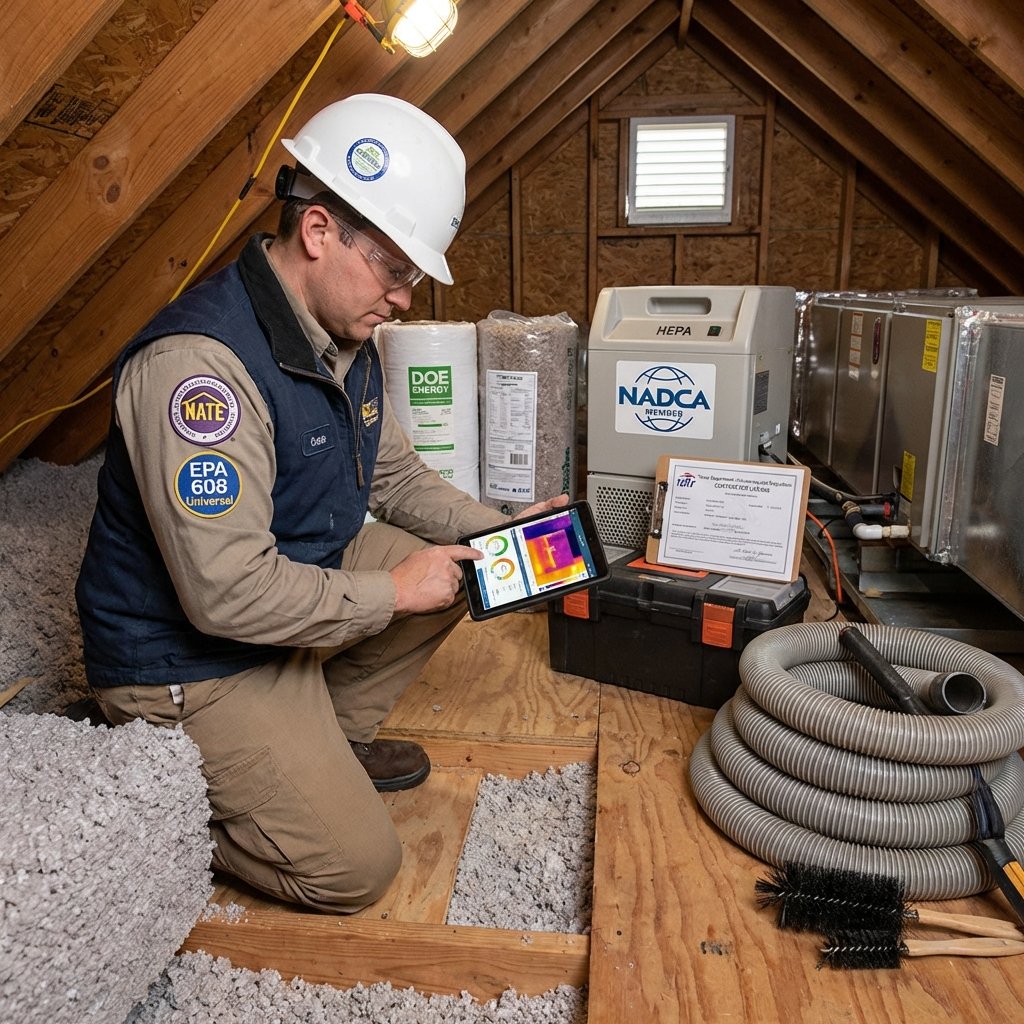
Homeowners in Austin and San Antonio often see energy bill reductions of 15 to 25 percent after we complete insulation upgrades and duct sealing. These improvements also improve comfort by eliminating hot spots and cold spots throughout your home.
What to do next: Request an energy audit from us. We’ll perform a thermal scan of your home, identify where you’re losing energy, and show you exactly what upgrades will pay for themselves through utility bill savings.
—
We’ve built Go Air Ducts on the foundation of these certifications and standards because we believe your home deserves better than the cheapest option available. Every credential we maintain, every standard we follow, and every training hour our technicians complete directly protects your investment and your family’s health.
When you work with us, you’re hiring a team that’s held to strict professional standards, regularly audited on compliance, and genuinely invested in delivering results that last. Contact us today for a free estimate on air duct cleaning, insulation upgrades, or any other HVAC service your home needs.
For further reading: Certified duct technicians.

If you’re dealing with dust, poor airflow, mold in your ducts, or a clogged dryer vent — don’t wait. These issues can affect your health and safety. Go Air Ducts Group are the local experts in air duct cleaning, mold removal, dryer vent cleaning, and attic insulation. Call now for a free inspection and same-day service in Austin and San Antonio.
Frequently Asked Questions (FAQ)
Why do your HVAC technicians need NATE and EPA certifications?
We require our technicians to hold NATE and EPA certifications because these credentials verify they have the knowledge to handle your HVAC system safely and effectively. NATE certification ensures our team understands proper installation and maintenance procedures, while EPA certification specifically qualifies them to handle refrigerants without damaging the environment or your home. These aren’t optional credentials in our company—we believe your home deserves technicians who have proven their expertise through rigorous testing.
What NADCA standards do we follow for air duct cleaning?
We adhere to NADCA standards because they establish the best practices for removing contaminants from your ductwork without causing damage to your system. Our cleaning process follows their protocols for assessment, containment, and verification to ensure we’re actually improving your indoor air quality rather than just moving dust around. When we complete an air duct cleaning at your home, you’re getting the benefit of industry-recognized procedures that protect both your HVAC investment and your family’s health.
How do your insulation services meet energy efficiency standards?
We install insulation using ASHRAE guidelines to guarantee proper R-values and installation techniques that actually reduce your energy bills and maintain consistent indoor temperatures. Our team doesn’t just meet minimum standards—we help you understand what efficiency level makes sense for your Austin or San Antonio home based on local climate conditions. This approach ensures your insulation upgrade delivers real savings, not just a checkbox on a contractor’s list.