
🕑 5 min read
What dryer vent routing mistakes increase fire risk?
Long runs, too many bends, crushed flexible hose, and improper materials trap lint and restrict airflow, raising fire risk and drying times. Go Air Ducts corrects dryer vent routing in Texas homes, straightening and upgrading vents so lint clears properly, reducing fire hazards and helping clothes dry faster.
For most homeowners, the clothes dryer is an indispensable appliance that runs several times a week without a second thought. However, the efficiency and safety of this machine depend entirely on a system that is often hidden behind walls or tucked into crawlspaces: the dryer vent routing. When a dryer vent is poorly designed or incorrectly installed, it does more than just leave your towels damp; it creates a significant fire hazard.
At Go Air Ducts, we frequently encounter ventilation systems that violate basic safety principles. Understanding common routing mistakes is the first step toward protecting your home from the hidden dangers of lint accumulation and mechanical overheating.
The High Stakes of Improper Dryer Ventilation
According to the National Fire Protection Association (NFPA), nearly 16,000 home fires are caused by clothes dryers every year, with the leading cause being a failure to clean out lint. However, what many people don’t realize is that improper routing is often the root cause of that lint buildup.
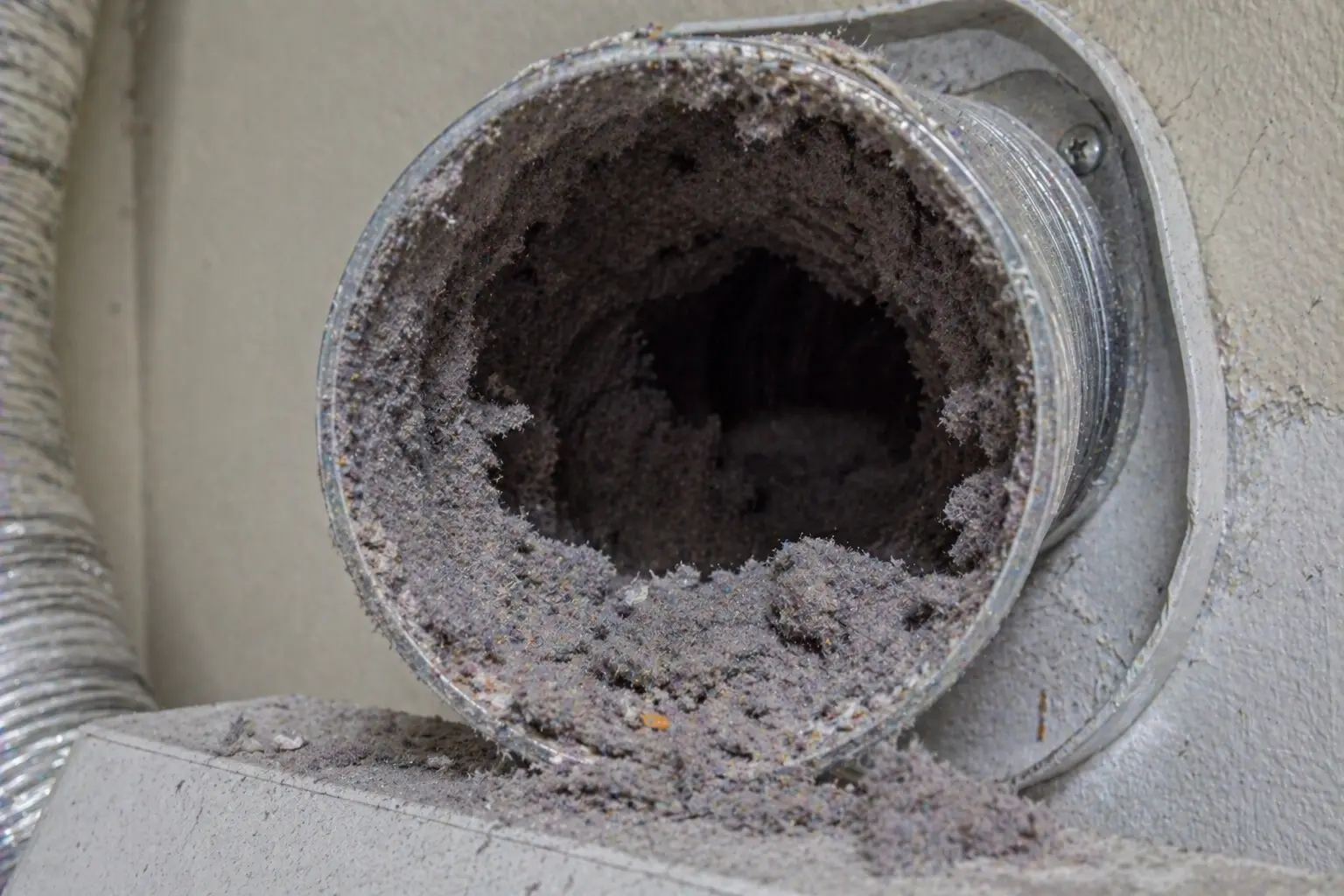
A well-routed vent allows moist air and lint to exit the home as quickly as possible. When the path is obstructed by poor design, the air slows down, moisture condenses, and lint begins to stick to the walls of the duct. Over time, this creates a “plug” that traps heat inside the dryer, eventually leading to a fire.
Using Flexible Foil or Plastic Ducting
One of the most common mistakes found in residential homes is the use of flexible plastic or thin foil ducting for the entire length of the vent run. These materials are highly problematic for two reasons. First, the corrugated interior creates significant air turbulence, which catches lint like a spiderweb. Second, plastic and foil are not fire-rated. If a small fire starts within the dryer, these materials will melt and actually fuel the flames rather than containing them.
The International Residential Code (IRC) specifies that dryer exhaust ducts should be constructed of smooth-walled, rigid metal with a minimum thickness of 0.0157 inches. Rigid metal ducts minimize friction and provide a smooth surface that allows lint to pass through to the exterior vent hood effectively.
Excessive Duct Length and Too Many Bends
Every inch of ductwork and every turn in the vent path adds “equivalent feet” of resistance to the airflow. The longer the vent and the more 90-degree elbows it contains, the harder the dryer’s blower motor has to work. Most building codes limit a dryer vent to a maximum of 35 feet, and that length must be reduced by 2.5 to 5 feet for every 90-degree turn.
When a vent is too long, the moist air cools down before it reaches the exit. This causes “wet lint” to settle in the duct, which eventually hardens into a thick, papier-mâché-like substance. If your dryer takes more than one cycle to dry a standard load, an over-extended vent line is likely the culprit.
Routing Vents into Attics or Crawlspaces
A dryer vent should always terminate directly to the outdoors. A common but dangerous shortcut is venting the dryer into an attic, a crawlspace, or even a wall cavity. This mistake introduces gallons of moisture into the structural areas of your home.
Venting into an attic leads to wood rot, saturated insulation, and rapid mold growth. Furthermore, discharging hot, lint-filled air into a confined space creates a “tinderbox” effect. Lint is highly combustible; one spark from a faulty wire or a mechanical failure in the dryer can ignite the accumulated lint in the attic, leading to a fire that can spread through the roof before a smoke detector even sounds.
Using Screws to Connect Duct Segments
It seems logical to use sheet metal screws to secure joints in a dryer vent, but this is a major safety violation. The tips of the screws protrude into the interior of the duct, acting as lint traps. As air passes by, lint snags on the screws and builds up until the duct is nearly closed.
Professional installers use high-quality UL-listed foil tape to seal the joints. This ensures the duct remains airtight and the interior remains perfectly smooth, allowing lint to flow freely to the outside world without obstruction.
Neglecting the Exterior Vent Hood
The termination point, the vent hood on the outside of your house, is just as important as the pipe itself. A common mistake is using a hood with a fine mesh screen. While intended to keep pests out, these screens clog with lint in a matter of weeks, completely choking the system.
Additionally, if the vent hood is located too close to the ground or obscured by landscaping, it cannot “exhale” properly. A proper exterior vent should have a backdraft damper (flaps) that opens when the dryer is on and closes when it is off to prevent birds or rodents from entering the system.
The Mechanical Cost of Poor Ventilation
Beyond the fire risk, improper routing ruins your appliance. When airflow is restricted, the thermal fuse or heating element in the dryer is forced to operate at maximum capacity for extended periods. This leads to frequent repairs and significantly shortens the lifespan of the machine. By investing in a professional routing correction, you aren’t just buying safety; you are protecting your investment in your household appliances and reducing your monthly energy consumption.
Ensure Your Home’s Safety with Professional Vent Services
Is your dryer running hot, taking too long, or emitting a musty smell? These are the warning signs of a ventilation system in distress. At Go Air Ducts, we specialize in identifying and correcting dangerous dryer vent routing mistakes to ensure your home remains safe and efficient. Our expert technicians can reroute your system using code-compliant rigid metal ducting, reducing fire risks and cutting your drying time in half. Don’t let a hidden ventilation error threaten your family’s safety, Contact us today for a comprehensive dryer vent inspection and professional correction.