
Table of Contents
- Why Historic Home Chimney Inspections Differ From Modern Properties
- San Antonio Historic District Chimney Inspection Requirements
- Austin Historic Home Chimney Standards and Regulations
- Common Problems We Find in Aging Chimney Systems
- How We Conduct Professional Historic Chimney Inspections
- Inspection Frequency and Timeline for San Antonio Homeowners
- Inspection Frequency and Timeline for Austin Homeowners
- What Happens After Your Inspection: Our Next Steps
- Why Certified Inspectors Matter for Historic Properties
- Protecting Your Home's Integrity and Air Quality
- Schedule Your Comprehensive Chimney Inspection Today
- Frequently Asked Questions (FAQ)
Why Historic Home Chimney Inspections Differ From Modern Properties
If you own a historic home in San Antonio or Austin, your chimney isn’t just a decorative feature—it’s a critical safety system that requires specialized knowledge to maintain properly. We’ve inspected hundreds of aging chimneys across Texas, and we can tell you that historic properties come with unique inspection demands that modern homes simply don’t face.
The difference matters because older masonry chimneys, original flue systems, and period-appropriate materials respond differently to time, weather, and wear. Getting the right inspection from someone who understands historic construction isn’t just about passing a checklist. It’s about protecting your home’s structural integrity, preventing dangerous draft issues, and ensuring your family stays safe.
Historic chimneys weren’t built with today’s heating systems in mind. When we inspect a chimney from the 1800s or early 1900s, we’re dealing with materials and construction methods that behave very differently than a chimney installed in 2010.
The main differences come down to three factors: materials, design philosophy, and code evolution. Older chimneys often use lime mortar instead of Portland cement, which is softer and more porous. This actually has advantages for masonry longevity, but it requires a different maintenance approach. The flue sizes were also calculated for wood-burning fireplaces, not modern gas inserts or heating appliances. And here’s the key: historic chimneys were built before modern safety codes existed, so they may pass inspection but still need reinforcement or modification for today’s heating equipment.
When we inspect a 120-year-old chimney, we’re looking not just for cracks or deterioration, but for how well the chimney will function with your current heating system and how to preserve its historic character while making it safe. This requires experience and specialized knowledge that general HVAC contractors often don’t possess.
San Antonio Historic District Chimney Inspection Requirements
San Antonio’s Historic District and surrounding heritage neighborhoods have specific guidelines we always follow. The city takes preservation seriously, and for good reason—many of these homes represent irreplaceable architectural heritage.
If your property falls within a local historic district, you’ll need clearance from the Historic Preservation Office before making certain chimney repairs. We handle these requirements as part of our inspection process. We document the chimney’s condition thoroughly, note what’s original to the period, and identify what work can be done without triggering review requirements.
For San Antonio homeowners, the inspection must verify several key points:
- Structural integrity of the masonry and mortar joints
- Proper chimney height relative to roof peak and nearby structures
- Absence of dangerous voids, cracks wider than 1/4 inch, or spalling
- Flue blockages or creosote buildup if used for wood burning
- Proper cap installation that allows draft while blocking water and debris
- Clearance from combustibles (typically 2 inches minimum for wood framing)
We also check whether the flue liner is intact. Many historic chimneys never had a liner, and that’s fine if the chimney is used only for a decorative fireplace. But if you’re running heating equipment through it, a liner becomes necessary for safety and efficiency. San Antonio’s guidelines typically allow liner installation if done carefully to preserve the exterior chimney appearance.
Our experience shows that San Antonio chimneys tend to suffer more from water intrusion damage than structural failure, especially on the north and west sides of homes. The city’s clay soil and periodic heavy rains create moisture problems that deteriorate mortar quickly. We always recommend having your chimney inspected annually during our fall service window.
Austin Historic Home Chimney Standards and Regulations
Austin’s approach to historic preservation is similar but with some distinct differences. The city’s Historic Landmark Commission requires notification before significant chimney work, and certain types of repairs require explicit approval.
Austin’s guidelines emphasize maintaining the original appearance of historic structures. This means if your chimney is visible from the street or public right-of-way, any visible repairs should match original materials and methods as closely as possible. We work with this requirement regularly and know how to source period-appropriate mortar, brick, and caps that satisfy the commission while doing the job right.
The inspection standards are stringent. Beyond the basic safety checks, Austin’s requirements include:
- Documentation of original materials and construction methods
- Assessment of whether the chimney supports any original fireplaces or has been modified
- Evaluation of how any modern heating system integration affects the chimney’s performance
- Detailed photos and measurements for the historic record
Austin chimneys face unique challenges because of the city’s limestone and granite soils, plus the intense summer heat and occasional freeze-thaw cycles. We’ve found that Austin chimneys often develop what we call “spalling”—where the outer brick or stone layer separates from the inner masonry. This isn’t always a safety issue, but it does need monitoring and sometimes gentle repair to prevent water infiltration.
We also see more gas insert retrofits in Austin historic homes, and that requires careful attention. A modern gas insert changes how your chimney draws air and handles moisture. We inspect to ensure the chimney can handle this change and that we’re not creating draft problems or allowing backdrafting into your home.
Common Problems We Find in Aging Chimney Systems
In our years of inspecting historic chimneys, certain issues appear again and again. Knowing what to watch for helps you understand what’s normal aging versus what needs immediate attention.
Mortar joint deterioration is probably the single most common problem. The mortar between bricks weakens over 80 to 100 years, and in Texas’s varied climate, it fails faster. We’ll find mortar that crumbles when we probe it gently. This allows water to penetrate, which leads to bigger problems downstream.
Chimney leaning catches a lot of homeowners off guard. Historic chimneys can shift several inches over their lifetime, especially if the foundation has settled. This isn’t always dangerous, but it needs monitoring and may require internal bracing or external support.
Flue blockages are extremely common in chimneys that have had fireplaces sealed or abandoned. Debris accumulates, birds nest, and sometimes structural bits fall from deteriorating flue liners. We use video inspection to see exactly what’s inside.
Missing or damaged flue liners are a safety issue we take very seriously. If a chimney is actively used for wood burning or any combustion appliance, a damaged liner can allow heat to reach nearby combustibles or allow carbon monoxide to seep into your living space.
Chimney crown deterioration happens because most historic chimneys never had a proper crown cap. Water sits on top of the chimney and works its way down through the structure. Installing a proper crown is one of the most effective long-term preservation moves you can make.
These problems aren’t deal-breakers, but they do require proper diagnosis and timely repair. That’s why we recommend annual inspections for historic homes.
How We Conduct Professional Historic Chimney Inspections
Our inspection process is thorough and uses modern diagnostic tools while respecting the historic nature of your property.
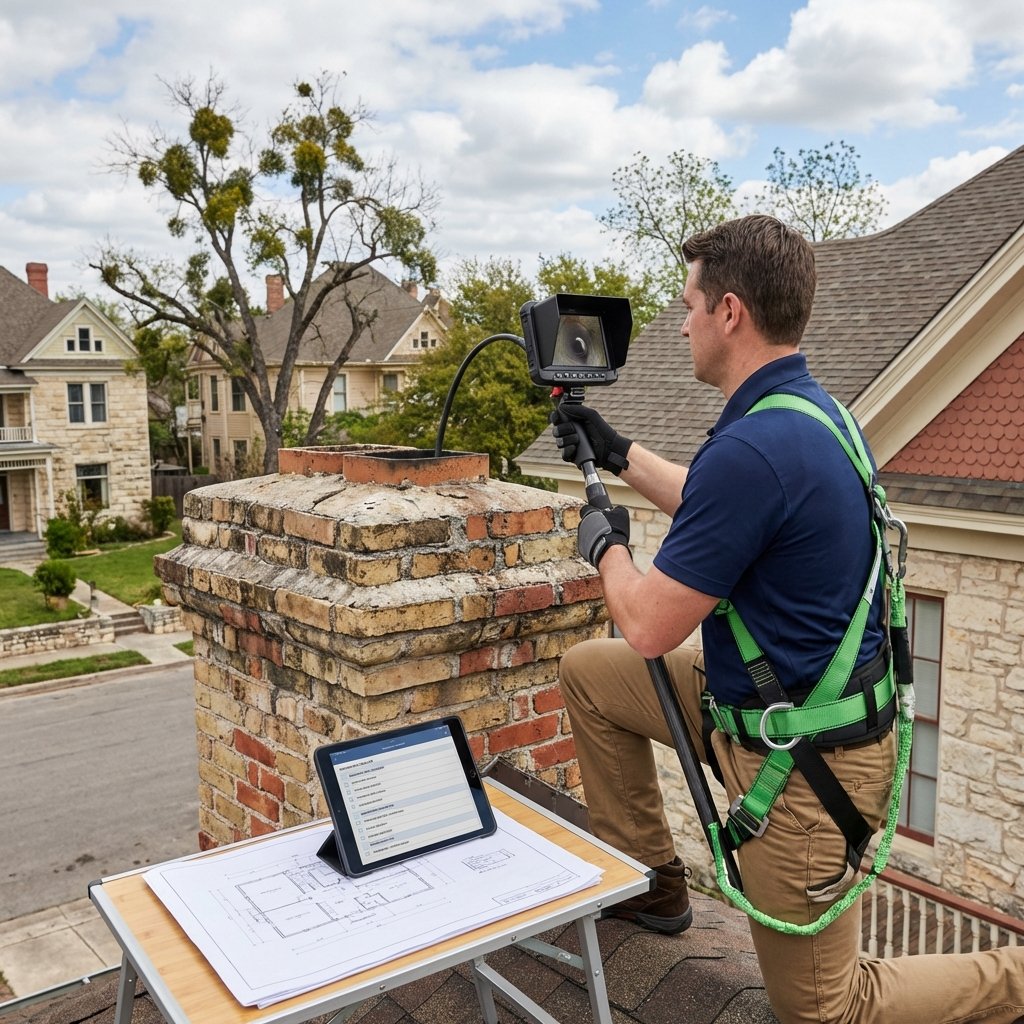
We start with an exterior visual assessment. We climb the roof (safely, with proper equipment) and examine the chimney crown, cap, flashing, and mortar joints. We photograph everything and take careful notes about original materials versus previous repairs. We look for signs of water damage, leaning, or loose bricks.
Next comes the interior inspection using our video scope camera. This lets us see the full length of the flue without destructive investigation. We can spot cracks in the liner, creosote buildup, blockages, or structural defects that would be invisible from outside.
We then run a draft test if the chimney is actively used. This tells us whether it’s drawing properly and safely. Poor draft can indicate blockages, improper sizing, or design issues that need addressing.
Finally, we provide you with detailed documentation: photographs, video clips, measurements, and a written report explaining what we found, what’s safe, and what needs attention. We prioritize findings by urgency and provide cost estimates for any recommended work.
This whole process takes 1.5 to 2 hours for most historic chimneys. You get a clear picture of your chimney’s condition and a realistic roadmap for keeping it safe and functional.
Inspection Frequency and Timeline for San Antonio Homeowners
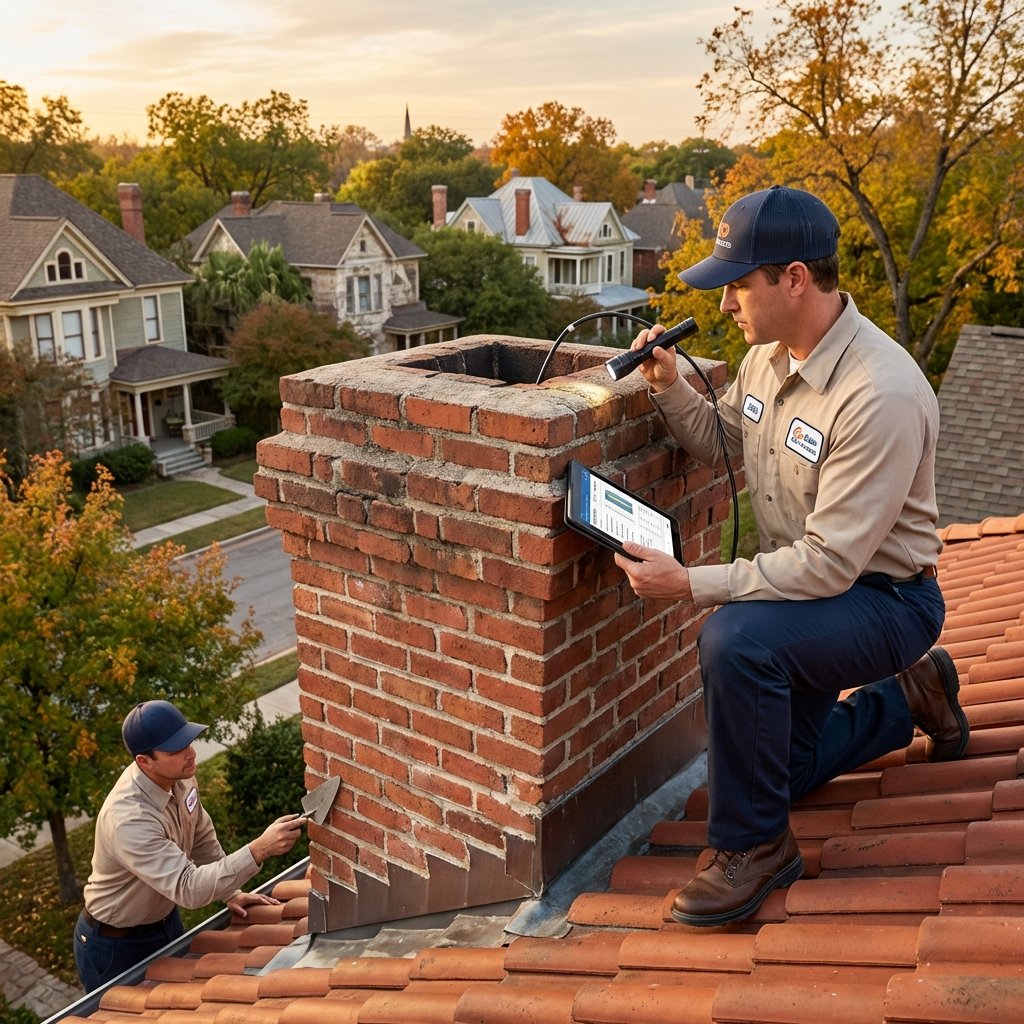
San Antonio’s climate creates specific maintenance demands for historic chimneys. We recommend an annual inspection for San Antonio properties, scheduled in early fall before heating season.
The reasoning is simple: San Antonio’s humidity and occasional heavy rains keep your chimney under constant moisture stress. An annual check catches deterioration early, before small problems become expensive repairs. If your chimney is actively used for wood burning, we recommend inspection twice yearly—once before heating season and once after to assess creosote buildup.
For properties with modern gas inserts or inactive chimneys, annual inspection is still wise, but you can extend to every 18 months if the previous year’s inspection showed no concerning findings.
We keep maintenance records for our repeat customers, so we can track trends over time. If we notice your mortar is weakening faster than typical, we’ll alert you so you can plan repointing before it becomes urgent.
Inspection Frequency and Timeline for Austin Homeowners
Austin’s climate is drier than San Antonio’s, but the intensity of summer heat and occasional cold snaps create their own stress patterns. We typically recommend annual inspection for Austin historic chimneys as well, but the scheduling can be more flexible.
Many of our Austin clients prefer spring inspection, right after the winter heating season ends. This timing lets us see how the chimney weathered active use and catch any issues before the long summer heat arrives. If needed, you have several months to plan repairs before next winter.
For Austin chimneys used only for decoration (no active fireplace or heating), inspection every 18 to 24 months is often sufficient, provided the previous inspection showed no warning signs.
Austin’s Historic Landmark Commission also prefers that major work be done outside the active season, so fall and spring are ideal times to schedule repairs after inspection.
What Happens After Your Inspection: Our Next Steps
Once we complete your inspection, we provide a comprehensive written report within 24 hours. The report prioritizes findings into three categories: immediate safety concerns, recommended repairs within 12 months, and long-term maintenance items.
For any immediate safety issues, we’ll discuss options right away. Examples include a severely damaged liner that’s creating a carbon monoxide risk, or a large gap in the crown cap that’s allowing water to flood the chimney interior. We can often schedule repair work within 5 to 7 business days for urgent concerns.
Recommended repairs—like mortar repointing or crown installation—we discuss timing and options with you. Some homeowners prefer to complete everything at once. Others schedule work seasonally or budget it over a year or two. We’re flexible and can work with your timeline and budget.
For long-term items, we’ll explain what to monitor and suggest a follow-up inspection date. We’ll also remind you at that time so you don’t miss the maintenance window.
We stand behind our work with warranties on all repairs, and we’re happy to coordinate with other contractors if you’re doing broader home restoration work.
Why Certified Inspectors Matter for Historic Properties
Not all chimney inspectors are created equal, especially when it comes to historic properties. A general home inspector might miss crucial details about historic materials or preservation requirements that an experienced historic restoration specialist would catch immediately.
We’ve invested in certifications and ongoing training specific to historic masonry and chimney systems. Our team understands the interaction between historic mortar chemistry, original flue designs, and modern heating equipment. We know how to work within San Antonio’s and Austin’s preservation guidelines, and we understand which repairs require approval from historic commissions.
This expertise matters in practical ways. A less experienced inspector might recommend repointing with modern Portland cement mortar, which would actually damage your historic chimney over time because it’s too hard and doesn’t allow moisture to move through the masonry the way lime mortar does. We specify the correct mortar for your specific chimney’s age and materials.
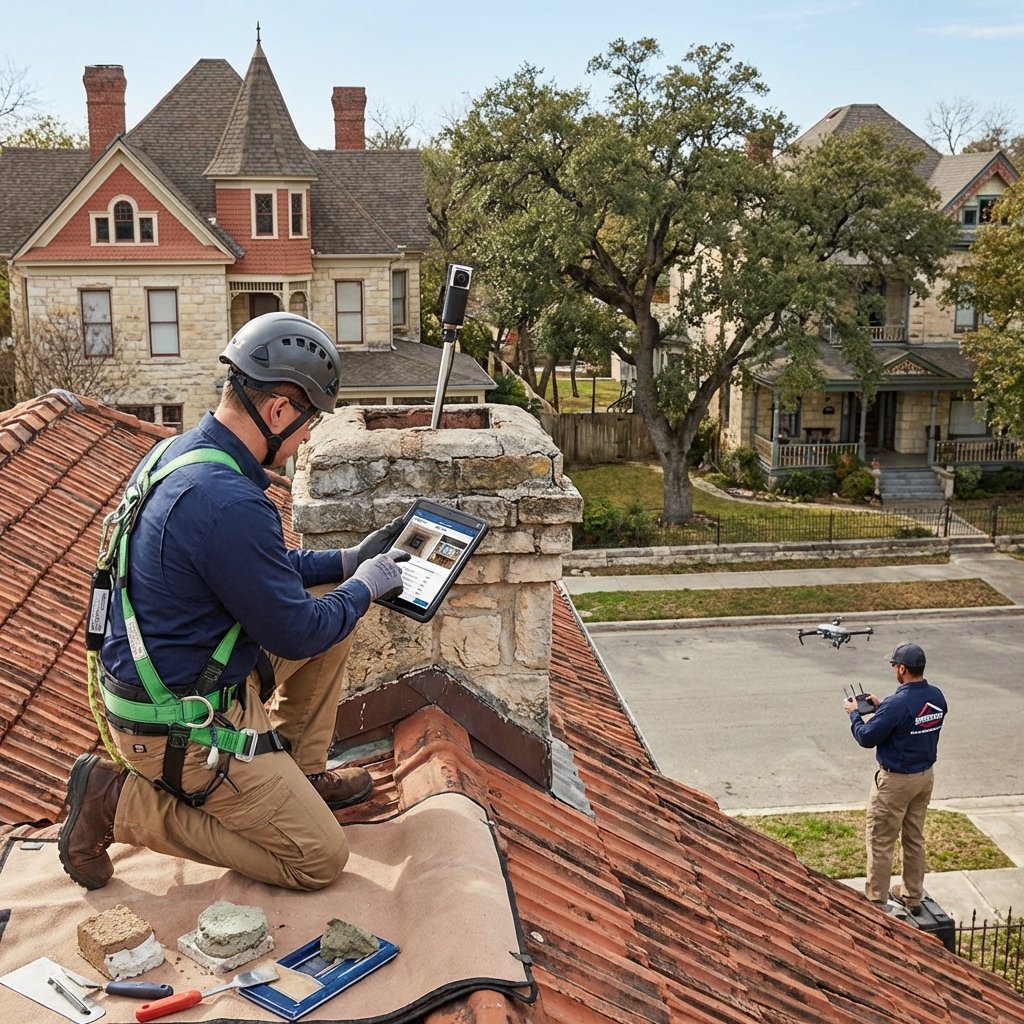
Similarly, we know how to evaluate whether a modern gas insert can safely use your historic chimney, or whether modifications are needed. We can advise on flue liners that preserve appearance while providing required safety, rather than suggesting solutions that would compromise your home’s character.
Choosing a certified, experienced inspector isn’t an added luxury—it’s the best way to ensure your inspection gives you accurate, actionable information that protects both your home and your investment.
Protecting Your Home’s Integrity and Air Quality
Your chimney is connected to your home’s overall air quality and comfort. A chimney that’s not drafting properly can allow backdrafting, pulling bad air into your living spaces. A deteriorating chimney can allow moisture into walls and attics, creating conditions for mold growth. A missing or damaged cap lets pests, debris, and rainwater inside.
That’s why chimney inspection is really about protecting your whole home’s health. When we inspect your chimney, we’re checking that your home can safely exchange air, manage moisture, and operate efficiently. This connects to the broader importance of air quality in historic homes, many of which were built with materials and construction methods that respond differently to modern insulation and heating changes than newer homes do.
If you’re also concerned about hidden dust problems or considering why air duct cleaning matters for your heating system, a proper chimney inspection is part of that same picture. A well-maintained chimney that drafts properly is safer and more efficient, which reduces strain on your HVAC system overall.
Our approach is holistic: we look at your chimney as part of your home’s overall air quality and safety picture, not just as an isolated structure.
Schedule Your Comprehensive Chimney Inspection Today
If you own a historic home in San Antonio or Austin, don’t guess about your chimney’s condition. A professional inspection gives you the clear, detailed information you need to make smart maintenance decisions.
We offer free service estimates and can typically schedule inspections within 5 to 7 business days. Our detailed reports and expert guidance will help you understand your chimney’s real condition and what’s needed to keep it safe, functional, and preserving your home’s character for years to come.
Contact us today to schedule your comprehensive chimney inspection. Our certified technicians are standing by to help you protect your historic home.
For further reading: Chimney services.
If you’re dealing with dust, poor airflow, mold in your ducts, or a clogged dryer vent — don’t wait. These issues can affect your health and safety. Go Air Ducts Group are the local experts in air duct cleaning, mold removal, dryer vent cleaning, and attic insulation. Call now for a free inspection and same-day service in Austin and San Antonio.
Frequently Asked Questions (FAQ)
How often should we have our historic San Antonio or Austin home’s chimney inspected?
We recommend annual inspections for most historic properties, especially if your chimney hasn’t been used recently or shows signs of deterioration. If you use your fireplace regularly, we suggest inspections before and after the heating season to catch any issues early. San Antonio’s humidity and Austin’s temperature fluctuations can accelerate wear on older masonry, so staying on schedule helps prevent costly repairs down the road.
What makes historic chimney inspections different from inspecting newer homes?
We focus on the unique challenges that aging chimneys present, including deteriorated mortar joints, clay tile liner deterioration, and structural settling that’s common in properties built before modern building codes. Historic properties often have multiple flue systems, unconventional construction methods, or modifications that require specialized knowledge to evaluate properly. Our certified inspectors understand these distinctions and know what warning signs matter most for preserving your home’s integrity.
What happens if we find problems during our chimney inspection?
We provide you with a detailed report explaining each finding, its severity, and our recommended solutions so you can make informed decisions about repairs. We’ll discuss whether issues are immediate safety concerns or maintenance items you can address over time, and we’re always available to answer questions about next steps. Our goal is giving you clarity on your chimney’s condition so you can protect both your family and your home’s historic value.