
Table of Contents
- Why Historic Chimney Work Requires Special Permits in Texas
- The Real Cost of Skipping Proper Approval Process
- San Antonio Historic District Chimney Regulations Explained
- Austin Landmark District and Contributing Property Requirements
- Step-by-Step Permit Application Process We Guide You Through
- Documentation and Inspection Standards for Older Homes
- How Our Certified Team Handles Historic Preservation Compliance
- Common Permit Delays and How We Help Prevent Them
- Timeline Expectations for Historic Chimney Projects
- Your Next Step: Free Compliance Assessment from Go Air Ducts
- Frequently Asked Questions (FAQ)
Why Historic Chimney Work Requires Special Permits in Texas
If you own a historic home in San Antonio or Austin, you already know that older properties come with character, charm, and complexity. When it comes to chimney work, that complexity extends to the permitting process. We’ve guided hundreds of homeowners through historic chimney permits, and we’ve seen firsthand how the right approach saves time, money, and headaches down the road.
Historic homes aren’t just houses; they’re recognized as community assets. That’s why Texas requires special oversight for any work on chimneys in designated historic districts or on contributing properties. Whether your 1920s Spanish colonial home sits in San Antonio’s historic district or your Victorian-era property is a contributing structure in Austin’s landmark zones, understanding the permit requirements isn’t optional. It’s essential.
We’re here to walk you through every step of the process, from initial assessment to final inspection approval.
Historic preservation regulations exist to protect the architectural integrity and cultural heritage of older neighborhoods. Texas takes this seriously, and both San Antonio and Austin enforce strict guidelines for any modifications to historic properties.
A chimney isn’t just a functional element; it’s part of your home’s character and structural identity. Even seemingly minor repairs or cleaning services can trigger permitting requirements if they alter the exterior appearance, materials, or structure. We’ve encountered situations where a homeowner assumed a simple chimney cleaning wouldn’t require approval, only to discover later that an inspection revealed unpermitted work.
State and local agencies oversee these rules because they want to ensure:
- The chimney’s exterior appearance remains consistent with the home’s original design
- Repairs use historically appropriate materials and methods
- Any modifications don’t compromise the property’s historic listing status
- Work meets modern safety codes without destroying original features
Here’s what matters most: if your property is in a recognized historic district or is designated as a contributing structure, you’ll need a permit before the work begins. Not after. This is where many homeowners stumble.
What to do next: Check your property’s status. Search your county assessor’s website or contact your local historic preservation office to confirm whether your home falls under these regulations.
The Real Cost of Skipping Proper Approval Process
We understand the temptation. Permits take time, cost money upfront, and feel bureaucratic. But cutting corners on historic chimney permits creates real financial and legal consequences that far outweigh the cost of doing it right from the start.
Unpermitted chimney work can result in fines ranging from $500 to several thousand dollars, depending on the severity of the violation and your local jurisdiction. More significantly, unpermitted work can complicate future home sales. Buyers and their inspectors will eventually discover the violation, and you’ll either need to obtain retroactive permits or negotiate a price reduction to cover the cost of bringing the work into compliance.
We’ve seen cases where homeowners faced $3,000 to $5,000 in additional expenses trying to fix unpermitted chimney repairs after the fact. Banks and title companies may also flag unpermitted work during refinancing, potentially delaying or blocking the transaction.
Beyond the financial risk, there’s the safety issue. Permitted work means professional inspection and verification that the chimney meets current building codes. Unpermitted work skips that critical safety step. A poorly repaired or inadequately sealed chimney can lead to carbon monoxide leaks, water infiltration, and structural deterioration that becomes exponentially more expensive to repair later.
Insurance complications are another real concern. Some policies won’t cover damage or injuries related to unpermitted home modifications. If a fire starts in an unpermitted chimney, your claim could be denied.
What to do next: If you’ve already had chimney work done without a permit, contact us for a confidential assessment. We can help you understand your options and guide you through the compliance process.
San Antonio Historic District Chimney Regulations Explained
San Antonio’s historic district covers multiple neighborhoods, including the downtown area, Southtown, and several residential zones. The San Antonio Historic Preservation Office enforces strict guidelines on any visible work to historic properties.
For chimney work in San Antonio, here’s what typically requires a Certificate of Appropriateness (COA):
- Repointing or tuckpointing mortar joints
- Chimney cap replacement or repair
- Flue lining installation or replacement
- Exterior cleaning if it alters the surface
- Brick or stone restoration
- Color changes to the chimney exterior
San Antonio focuses heavily on maintaining the visual character of its historic neighborhoods. If your chimney is visible from the street, the city wants to ensure any work respects the property’s original architectural style. We’ve completed projects where the specific mortar color and joint profile had to match the original construction, and the inspector checked that match carefully.
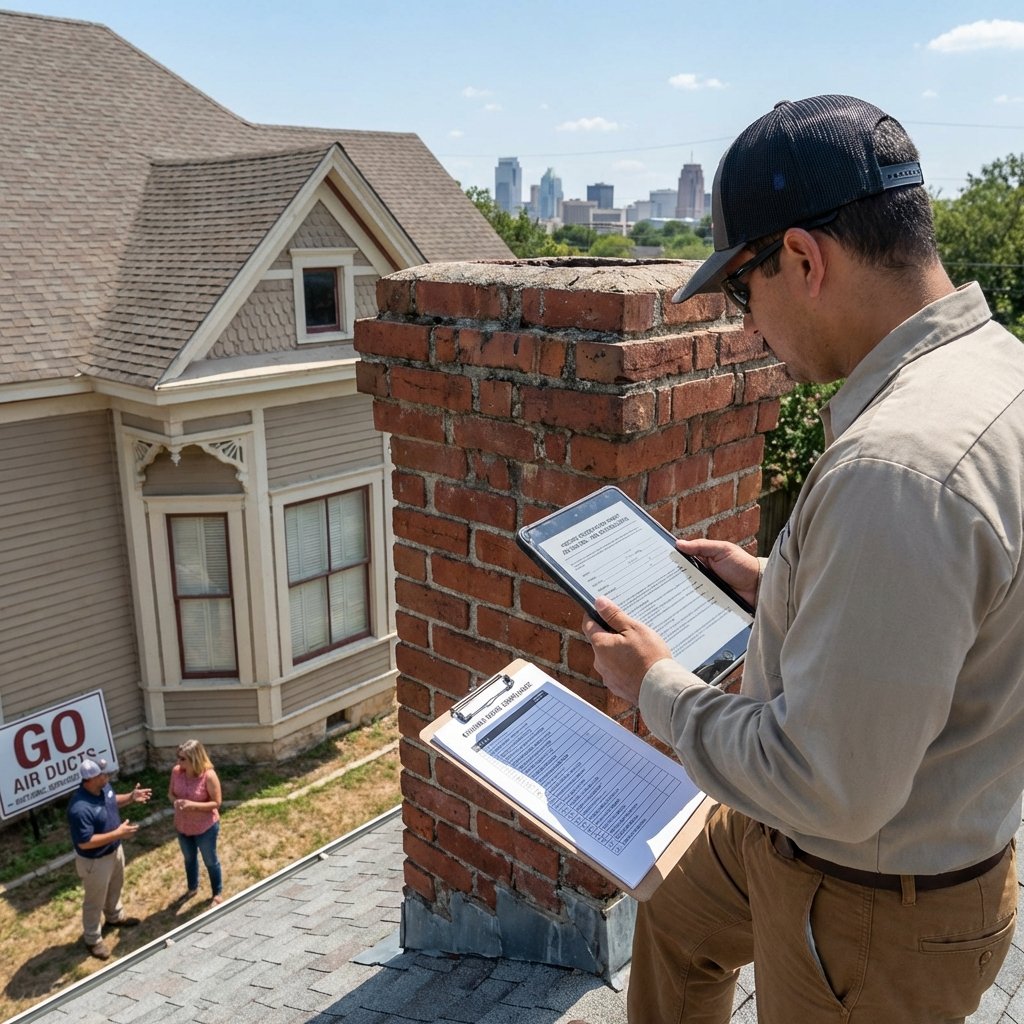
The review process in San Antonio typically takes 2 to 4 weeks for straightforward projects. However, if the Historic Preservation Office determines that your proposed work doesn’t align with district standards, you’ll need to revise your application or find an alternative approach.
What to do next: Submit your project description and photos to the San Antonio Historic Preservation Office early. We can help you prepare these materials in the format they expect, which speeds up the review.
Austin Landmark District and Contributing Property Requirements
Austin’s approach differs slightly from San Antonio’s. The city has both designated local landmarks and contributing properties within historic districts. Contributing properties are recognized as part of the historic character even if they’re not individually landmarked.
Austin’s Design Guidelines require permits for any external chimney work on landmark buildings or contributing properties. The city’s Historic Landmark Commission reviews applications and looks at:
- Whether the work is reversible
- Whether it preserves or restores historic features
- Whether it uses compatible materials and methods
- The visual impact on the streetscape
Austin is particularly focused on preventing irreversible changes. If you propose replacing an original clay flue tile with modern materials, the commission wants documentation that the original approach no longer functions safely. We often need to justify why modern solutions are necessary while minimizing visual impact.
Contributing property designations in Austin’s historic districts carry the same permit requirements as individually designated landmarks. We’ve guided homeowners in neighborhoods like Mueller, Zilker, and the Mueller residential zone through these approvals.
What to do next: Request the Austin Historic Landmark Commission’s design guidelines for your specific district. These guidelines are available online and provide clear direction on what’s approvable.
Step-by-Step Permit Application Process We Guide You Through
We break the permit process into manageable stages, and we handle the heavy lifting so you don’t have to navigate bureaucracy alone.
Stage 1: Property Assessment
We inspect your chimney and verify whether your property requires a permit. This includes documenting its current condition and identifying what work is needed. We provide you with a report that clearly states whether your property is in a historic district or is a contributing property.
Stage 2: Design Documentation
We photograph the existing chimney from multiple angles and prepare a work proposal that describes the scope in detail. For San Antonio, we include materials specifications and finish details. For Austin, we document why the work is necessary and how it meets the Design Guidelines.
Stage 3: Application Preparation
We compile the application materials, including our professional assessment, photos, material samples if relevant, and a detailed explanation of the work. We’ve done hundreds of these; we know what each office expects to see.
Stage 4: Submission
We submit the application to your local historic preservation office and provide you with confirmation of the filing date. This is important for your records.
Stage 5: Review and Approval
The city reviews the application (typically 2 to 4 weeks). If they have questions or require modifications, we work with them to clarify or revise the proposal.
Stage 6: Building Permit
Once you receive approval from the historic preservation office, you’ll obtain a standard building permit through your city’s permitting system. We guide you through this step as well.
Action item: Schedule a free compliance assessment with us. We’ll determine whether your chimney project requires a permit and outline the exact steps ahead.
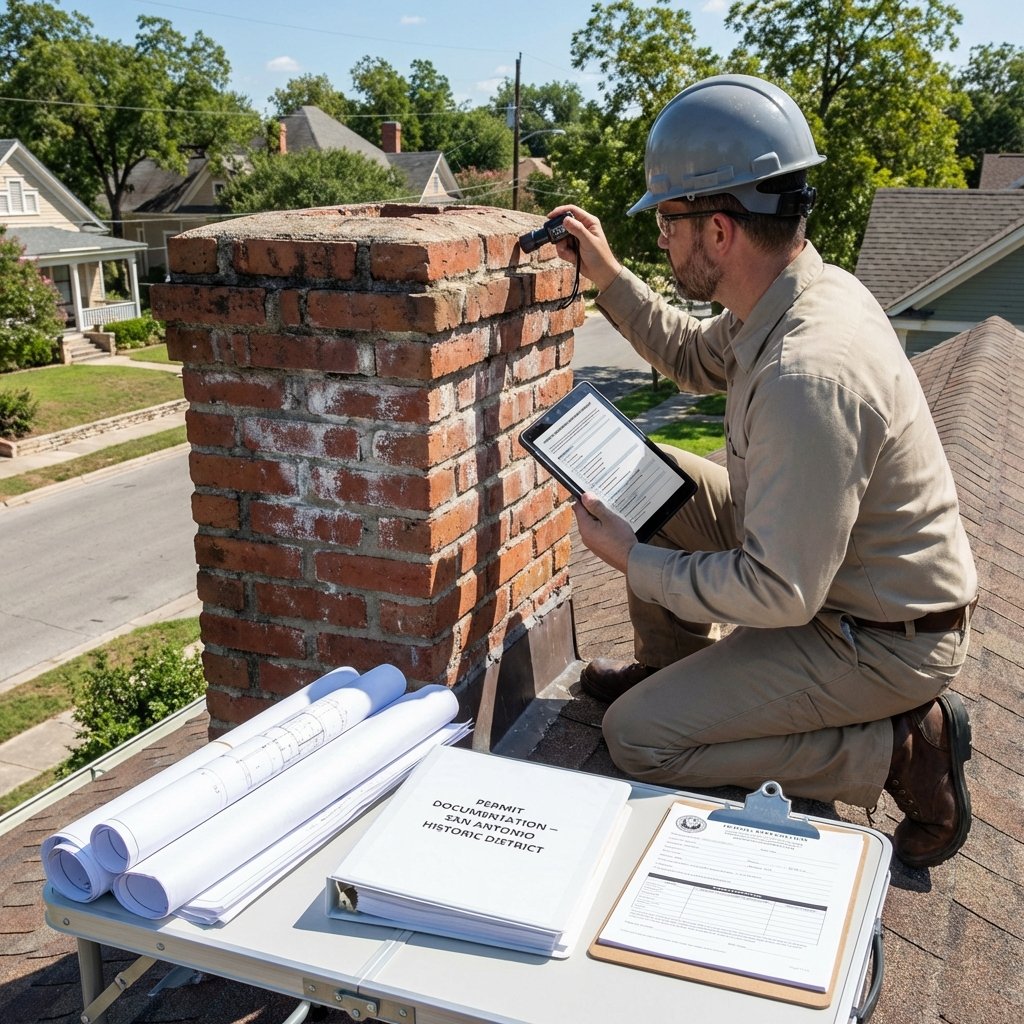
Documentation and Inspection Standards for Older Homes
Older homes have unique characteristics that modern inspection standards don’t always account for. We approach historic chimney inspection with both current safety codes and preservation sensitivity in mind.
Our inspection process documents:
- Original construction materials: clay tile flues, mortar composition, brick or stone type
- Current damage: spalling brick, mortar loss, water infiltration, deterioration patterns
- Safety hazards: obstructions, missing caps, structural cracks
- Functional deficiencies: drafting issues, settling damage, deteriorated liners
Historic homes often have clay tile flues without modern liners. The question becomes: do you need to add a liner (which is safer but alters the interior), or can you restore the original flue? Documentation helps the historic preservation office understand that you’re not making unnecessary changes; you’re addressing genuine safety or functional concerns.
We photograph everything in high resolution, creating a visual record that supports the permit application and provides protection for you if questions arise later.
What to do next: If you haven’t had your historic chimney professionally inspected recently, prioritize this. A detailed inspection report becomes your foundation for any permit application.
How Our Certified Team Handles Historic Preservation Compliance
We’re certified HVAC and chimney specialists with specific experience in historic home work. That experience matters because historic properties require different techniques and materials than modern homes.
When we scope a historic chimney project, we think in two languages: safety code compliance and preservation appropriateness. We know which repairs can be done using traditional methods and which require modern solutions. We understand which material changes are approvable and which violate preservation guidelines.
For example, if your chimney needs a new cap, we know that a historically accurate cap (often copper or cast iron that matches the original style) may be required instead of a standard modern cap. If repointing is needed, we use mortar analysis to match the original composition, because using modern high-strength mortar on old brick can actually cause damage.
Our team stays current on both Texas building codes and preservation standards. We’ve completed chimney projects in designated historic districts across Austin and San Antonio, and we’ve built relationships with the historic preservation offices in both cities. That means faster communication, clearer expectations, and fewer surprises during the permitting process.
Actionable step: When you contact us for a quote, tell us your property is historic. We’ll ensure that whoever inspects your chimney has the right expertise for your specific situation.
Common Permit Delays and How We Help Prevent Them
We’ve seen delays happen repeatedly, and most are preventable. The most common mistakes include:
Incomplete applications: Missing photos, vague scope descriptions, or insufficient detail about materials. We’ve learned the exact information each office wants to see, and we provide it upfront.
Inappropriate material choices: Proposing modern materials that don’t match the historic character. We vet material selections before submission so there’s no back-and-forth.
Scope creep: Submitting an application for one repair, then changing your mind once work starts. Stick to the approved scope. If you want additional work, submit an amendment.
Poor communication with the contractor: Historic preservation offices need to talk to the actual contractor who will do the work. If you hire someone unfamiliar with historic guidelines, delays multiply. We’ve learned to address every technical question in advance.
Timing issues: Submitting applications when the review board isn’t meeting. We know the meeting schedules and deadlines for both Austin and San Antonio, and we time submissions accordingly.
What to do next: Be transparent about your project scope from the start. Don’t add work later without another permit approval.
Timeline Expectations for Historic Chimney Projects
A standard chimney repair on a non-historic home typically takes 2 to 3 weeks from inspection to completion. Historic chimney projects take longer, and it’s important to expect that upfront.
Here’s a realistic timeline:
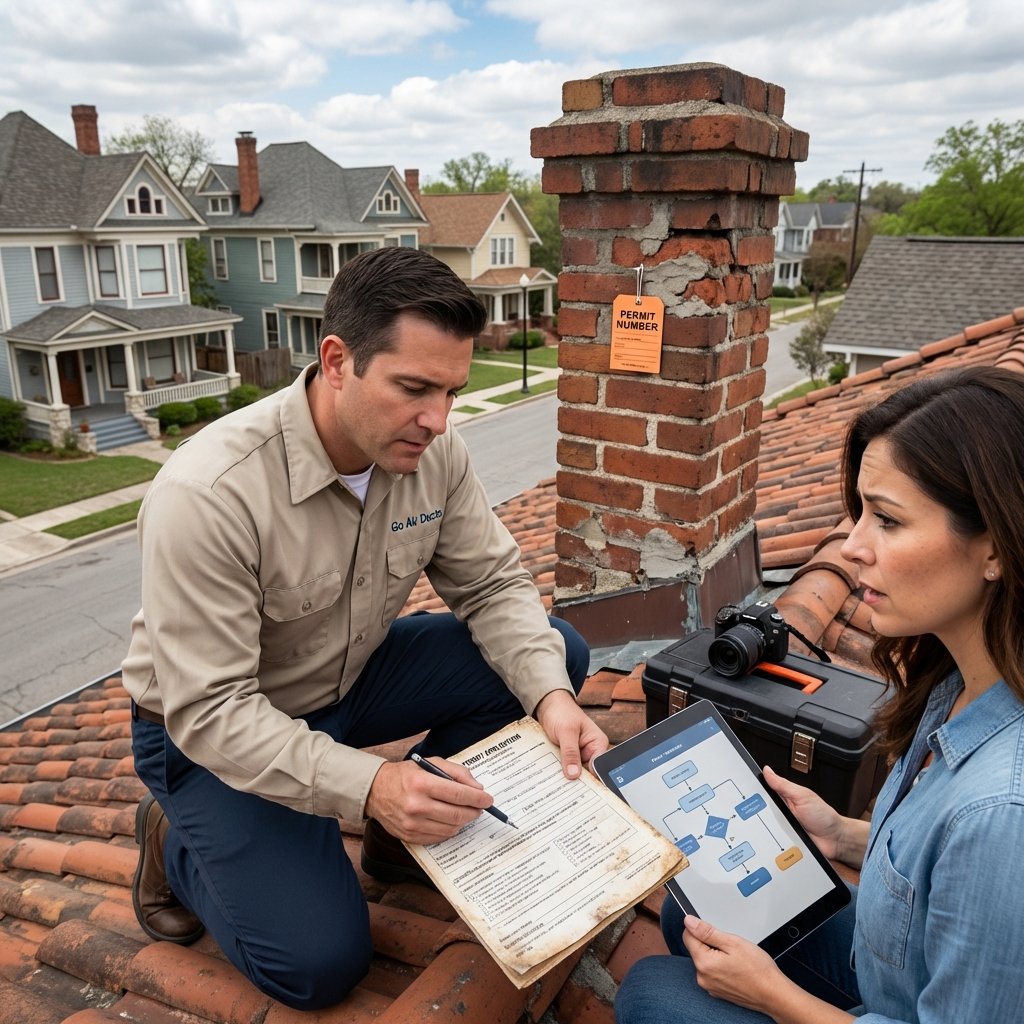
Week 1-2: Initial inspection and assessment. We document the chimney’s condition and determine permit requirements.
Week 2-3: Permit application preparation and submission to your local historic preservation office.
Week 3-6: Historic preservation review (typically 2 to 4 weeks, sometimes longer if revisions are needed).
Week 6-7: Building permit application and approval (usually 1 week if the preservation approval is complete).
Week 7-9: Scheduling and completion of the actual chimney work (1 to 2 weeks depending on scope).
Week 9-10: Final inspection and approval by the city.
Total elapsed time: roughly 8 to 10 weeks from start to finish. If revisions are needed during the historic preservation review, add 2 to 4 additional weeks.
We can often compress timelines by submitting applications as soon as our initial inspection is complete, rather than waiting until you’ve decided to move forward. This parallel processing saves weeks.
Planning ahead: If you need chimney work done by a specific date, let us know now. We’ll work backward from that deadline and help you stay on schedule.
Your Next Step: Free Compliance Assessment from Go Air Ducts
Navigating historic chimney permits doesn’t have to be stressful. We’ve built our chimney services around helping homeowners like you understand the requirements and move through the process confidently.
Here’s what we offer:
- Free assessment of your property’s historic status
- Clear determination of whether a permit is required
- Honest explanation of the timeline and cost
- Professional documentation and application support
- Communication with your local historic preservation office
- Guidance through building permit and final inspection
You don’t pay anything until we’ve inspected your chimney, explained what needs to be done, and you’ve decided to move forward. No obligation, no pressure, no surprises later.
We serve homeowners throughout Austin, San Antonio, Dallas, and Houston. If you’re in one of these areas and you own a historic home, we have the expertise to guide you through this process correctly the first time.
Call us today or visit our website to schedule your free compliance assessment. We’ll answer your questions, assess your chimney, and provide a clear path forward.
Your historic home deserves respectful, professional care. Let us help you protect it while keeping it safe and functional.
If you’re dealing with dust, poor airflow, mold in your ducts, or a clogged dryer vent — don’t wait. These issues can affect your health and safety. Go Air Ducts Group are the local experts in air duct cleaning, mold removal, dryer vent cleaning, and attic insulation. Call now for a free inspection and same-day service in Austin and San Antonio.
Frequently Asked Questions (FAQ)
Do we handle the permit application process for historic chimney work in San Antonio and Austin?
Yes, we guide our clients through the entire permit application process from start to finish. Our team manages the documentation, communicates with local historic preservation offices, and ensures your project meets San Antonio Historic District or Austin Landmark District requirements. We’ve worked with these regulatory bodies extensively, so we understand exactly what inspectors need to see and how to avoid common delays.
What happens if we skip the permit process for chimney repairs on our historic home?
Skipping permits can create serious problems down the road, including fines from your city, mandatory removal of unpermitted work, and complications when selling your property. Insurance may also deny claims related to unpermitted chimney work. We’ve seen homeowners face costly remediation after the fact, which is why we strongly recommend proper approval before any work begins.
How long does a historic chimney permit typically take in our area?
Our experience shows that San Antonio permits usually take 4-6 weeks, while Austin permits range from 3-8 weeks depending on whether your property is a designated landmark or contributing structure. We manage the timeline for you and can often expedite the process by submitting complete documentation upfront. We’re happy to discuss specific timeframes during your free compliance assessment.