
Table of Contents
- Why Your Ducts Are Costing You Money
- The Hidden Problems We Discover During Inspections
- Our Proven Duct Cleaning and Sealing Process
- Real Results: Case Study One – Austin Home Energy Reduction
- Real Results: Case Study Two – San Antonio Comfort and Savings
- How We Measure and Guarantee Your ROI
- The Long-Term Benefits Beyond Energy Bills
- Why Professional Sealing Outperforms DIY Solutions
- Investment Timeline and Cost Recovery
- Getting Your Free Professional Duct Assessment Today
- Frequently Asked Questions (FAQ)
Why Your Ducts Are Costing You Money
Your HVAC system is working harder than it needs to. We’ve inspected thousands of homes across Austin, San Antonio, Dallas, and Houston, and we see the same pattern repeatedly: leaky, contaminated ductwork is silently draining your energy budget while reducing comfort. The good news? We’ve helped Central Texas homeowners recover significant energy savings by combining professional duct cleaning with precision sealing. Here’s what we’ve learned on the job and how you can benefit from the same approach.
Think of your ductwork as the circulatory system of your home. If there are leaks, your air conditioning and heating escape into attics, crawlspaces, and walls instead of reaching living areas. We typically find that 20 to 30 percent of conditioned air leaks out before it ever reaches a room.
That leak means your HVAC system cycles longer, your energy bills climb, and comfort suffers. A home with significant duct leakage might feel uneven in temperature, with some rooms staying too hot or too cold no matter how you adjust the thermostat. Your equipment ages faster under the constant strain of making up for lost air.
The culprits are straightforward: poor duct connections from original installation, vibration damage over time, rodent damage, and simple deterioration of sealant materials. Unsealed ducts also pull in unconditioned air from attics and crawlspaces, which means you’re not just losing energy, you’re paying to condition outdoor air before it even enters your living space.
What to do next: Schedule a visual inspection to identify obvious gaps, disconnections, or visible damage. Many homeowners are surprised to find ducts that have partly separated at joints or patches that have failed.
The Hidden Problems We Discover During Inspections
Our inspections go deeper than what you can see with a flashlight. We use video camera equipment to examine ductwork inside walls and attics, and we perform blower door tests to quantify exactly how much air is leaking from your system.
During these inspections, we consistently find three major issues that homeowners don’t know exist. First, dust and debris build up in sections where air velocity drops, particularly at bends and junctions. This buildup restricts airflow, reduces efficiency, and degrades indoor air quality. Second, mold and moisture problems develop in ducts that aren’t properly sealed or insulated, especially in Texas humidity. Third, small disconnections or tears at duct seams allow conditioned air to escape into unheated or uncooled spaces.
We also find that many homes have inadequate or failed insulation on ducts running through attics. During summer, uninsulated ducts in a 120-degree attic lose their cool air to the surrounding air, meaning your AC has to work even harder to compensate.
These problems rarely announce themselves. Your electric bill creeps up gradually, or you notice one room stays uncomfortable despite reasonable thermostat settings. By the time you realize something is wrong, you’ve already lost money for months or years.
What to do next: Ask for a detailed inspection report that shows duct location, visible damage, and estimated air leakage percentage. Numbers make the problem real and help justify the investment in repairs.
Our Proven Duct Cleaning and Sealing Process
We follow a methodical approach that addresses both cleanliness and integrity. The process starts with access ports so we can inspect and clean without destroying drywall or structure. Our equipment includes rotary brushes and high-powered vacuums that dislodge dust, pet hair, and debris from inside the ductwork while capturing it in a sealed collection system. This prevents contamination from spreading back into your home.
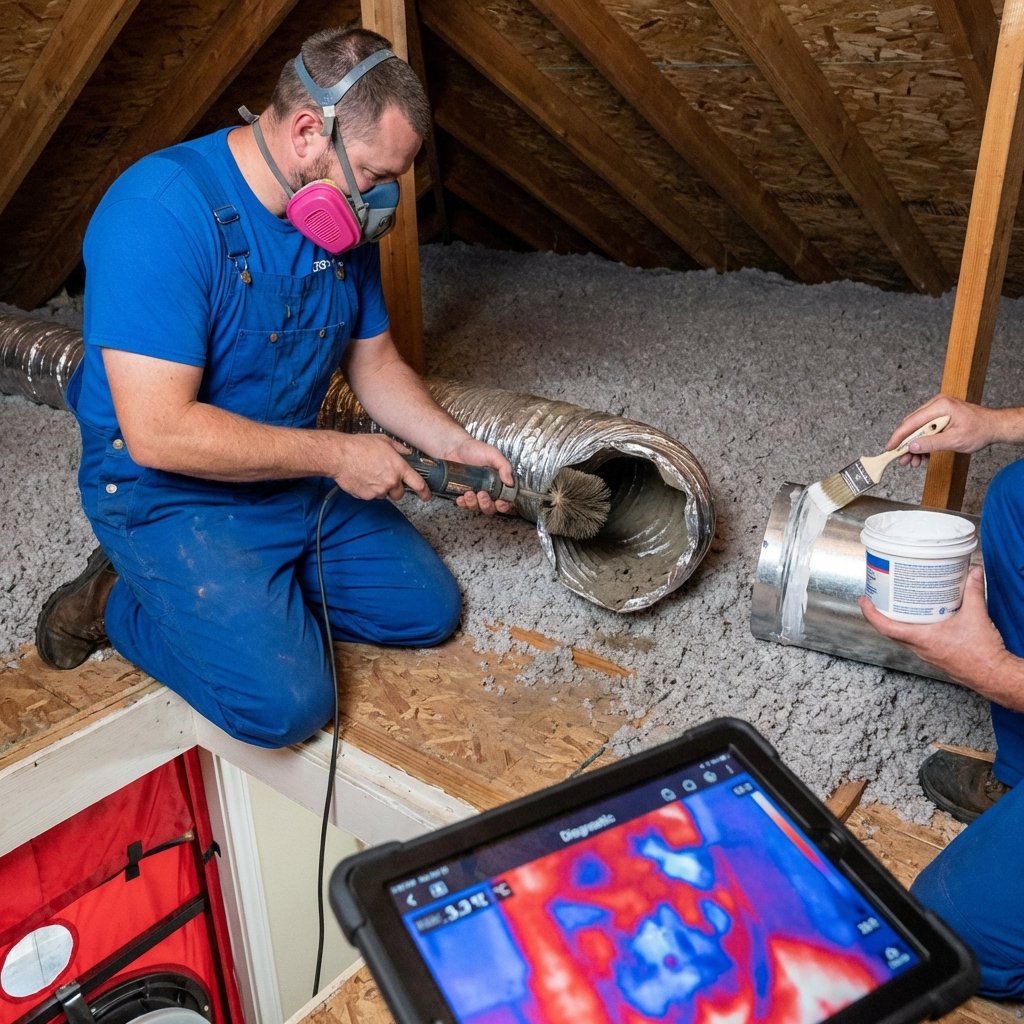
Once ducts are clean and dry, we apply mastic sealant to all joints, connections, and visible seams. Mastic is a flexible putty that remains pliable, adapting to vibration and minor movement without cracking like traditional duct tape or silicone caulk. For larger gaps or disconnections, we use metal repair plates and clamps along with mastic to ensure a permanent seal.
We then insulate exposed ducts in attics and crawlspaces with fiberglass wrap or spray foam, depending on the situation. Insulation maintains the temperature of air inside the duct, preventing energy loss to surrounding spaces.
The entire process takes a day for a typical home, and we perform a final pressure test to confirm that leakage has been reduced to acceptable levels. Many homeowners see immediate comfort improvements, with even temperatures throughout the home and quieter operation.
What to do next: Request a quote that includes cleaning, sealing, insulation, and post-service testing. This gives you a clear picture of scope and investment before work begins.
Real Results: Case Study One – Austin Home Energy Reduction
Last year, we worked with a homeowner in North Austin who noticed her summer electric bills climbing despite having a newer HVAC system. Her home was a 2,500-square-foot 1990s construction with original ductwork. Air distribution felt uneven, with her upstairs bedroom running 4 to 5 degrees warmer than the main floor.
Our inspection revealed multiple duct disconnections in the attic, inadequate insulation, and significant dust buildup that was restricting airflow to the second floor. Estimated duct leakage was 28 percent of total system output.
We cleaned all accessible ducts, sealed every connection and seam with mastic, added R-8 insulation wrap to exposed sections, and verified the final leakage at 8 percent. Her energy consumption dropped 31 percent in the following month, even accounting for higher outdoor temperatures. She recovered her investment through energy savings in just over three years.
Beyond the financial benefit, she reported that temperature differences between rooms disappeared, and her AC ran noticeably quieter. She no longer needed to close vents in certain rooms to balance comfort.
Real Results: Case Study Two – San Antonio Comfort and Savings
A San Antonio homeowner with pets contacted us about dust concerns and rising energy costs. His home was 2,200 square feet with two dogs and two cats. He’d already invested in a high-end air filtration system, but indoor air quality felt compromised and his electric bills were consistently 15 percent above his neighbors’ similar homes.
We found 24 percent duct leakage, contaminated ducts with pet dander and hair matted inside the system, and failed insulation on attic ducts. The leakage was pulling unconditioned attic air into his living spaces, which meant he was paying to condition air that shouldn’t have been in the system at all.
After professional cleaning and sealing, combined with R-8 insulation, his pressure test showed 7 percent leakage. His energy bills dropped 28 percent, and indoor air quality visibly improved within one week. He continues to benefit from lower monthly costs and more consistent comfort year-round.
How We Measure and Guarantee Your ROI
We don’t guess at results. Before and after testing is standard on every project we complete. We use calibrated blower door equipment to measure duct leakage as a percentage of total system output, and we document the condition of ducts with video footage and photographs.
Your energy savings depend on your baseline efficiency, local utility rates, HVAC usage patterns, and outside temperature extremes. In Central Texas, homes with significant duct leakage typically recover 20 to 35 percent of annual HVAC energy costs. We provide a written estimate of projected monthly and annual savings based on your specific situation.
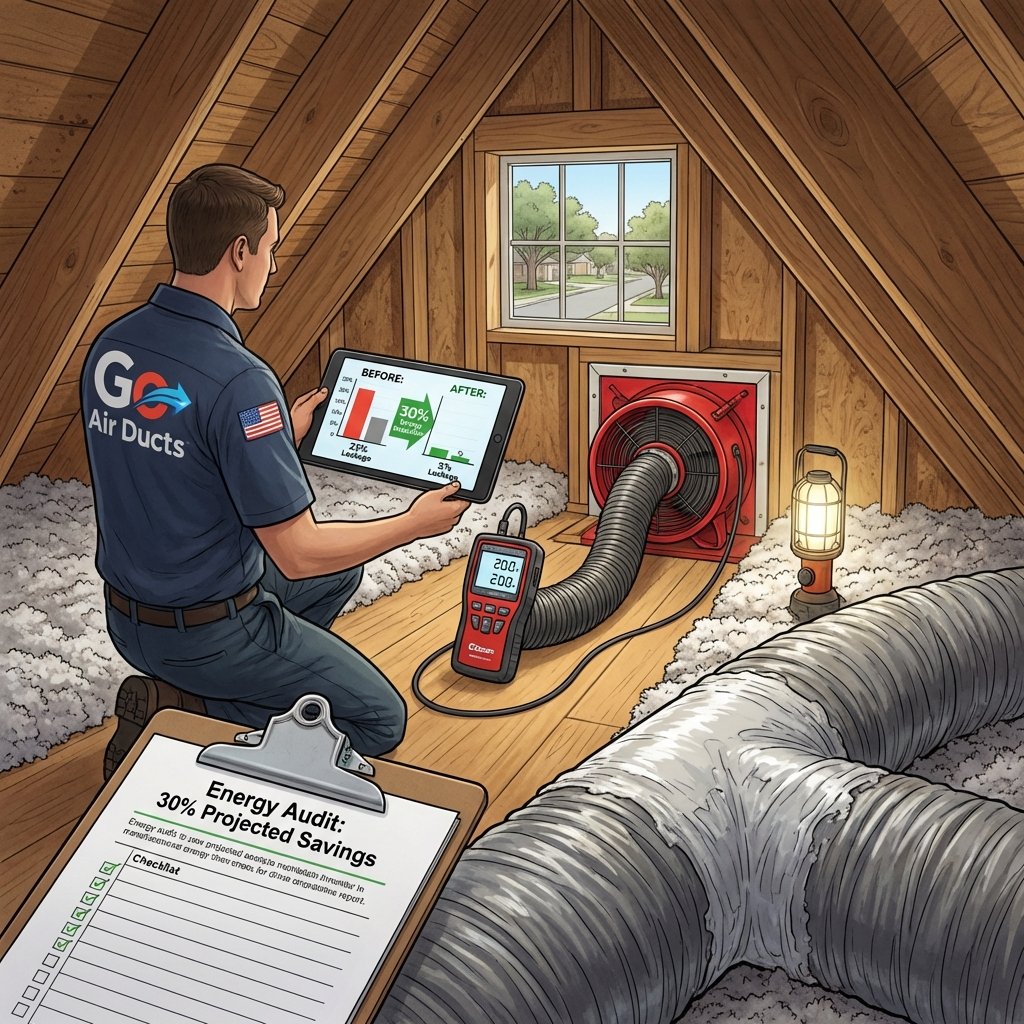
We also offer a satisfaction guarantee. If you don’t see measurable improvement in comfort or air distribution within 30 days of service completion, we return and address the issue at no charge. This commitment reflects our confidence in our work and our focus on delivering real results, not just completed projects.
What to do next: Request a detailed pre-service energy audit that includes projected savings and the payback timeline specific to your home and utility rates.
The Long-Term Benefits Beyond Energy Bills
Lower energy bills are the immediate payoff, but the benefits compound over time. Cleaned and sealed ducts mean your HVAC equipment runs fewer hours to deliver the same comfort. Reduced runtime extends equipment lifespan and delays costly replacement. We’ve tracked homeowners who completed duct sealing a decade ago, and most report that their original systems are still performing well, with maintenance costs staying predictable.
Indoor air quality improves noticeably when you remove dust, mold, and contaminants from ductwork. If anyone in your home suffers from allergies or asthma, sealed clean ducts make a tangible difference. You’re not recirculating pet hair, pollen, or mold spores every time your HVAC runs.
Moisture control is another lasting benefit, particularly in Texas. Sealed, insulated ducts don’t accumulate condensation, which prevents mold growth and maintains system integrity. This is especially important in humid climates where temperature fluctuations in attics and crawlspaces create condensation on unsealed ducts.
Finally, your home becomes more attractive to future buyers. Energy-efficient systems with documented duct sealing add perceived value and demonstrate that you’ve maintained the property professionally.
Why Professional Sealing Outperforms DIY Solutions
We understand the temptation to handle duct sealing yourself. Hardware stores sell duct tape, caulk guns, and fiberglass wrap at reasonable prices. But here’s what we see repeatedly when we follow up on DIY attempts: duct tape fails within months in attic environments because heat and vibration break the adhesive bond. Caulk cracks as ducts expand and contract with temperature changes. Wrapped insulation slips down inside walls without proper fastening systems.
Professional sealing uses materials engineered for HVAC environments, including mastic sealant that remains flexible over decades, metal repair clamps that handle vibration, and insulation attached with proper fastening. We also have access to equipment that lets us verify our work with pressure testing, proving that leakage has been reduced.
Most importantly, we know where problems hide. We’ve opened walls, crawled through attics, and inspected tens of thousands of duct systems. We recognize failure patterns and weak connections that a homeowner would miss. One missed seam can undermine an entire sealing project.
What to do next: Compare quotes not just on price, but on whether the contractor includes post-service pressure testing and what material warranties they offer.
Investment Timeline and Cost Recovery
Duct cleaning and sealing typically costs between $2,000 and $5,000 for a Central Texas home, depending on square footage, duct accessibility, and how much sealing is required. This is a significant investment, and we understand that you want to know when you’ll break even.
For most of our Austin and San Antonio clients, monthly energy savings range from $40 to $90. That means payback periods between 2.5 and 5 years. After the payback period, you’re essentially getting free utility savings for as long as the sealing holds, which is typically 15 to 20 years or more with proper materials.
Financing options are available through most credit card companies, and some energy-conscious homeowners bundle duct sealing with insulation upgrades or HVAC maintenance to spread costs and maximize overall efficiency gains.
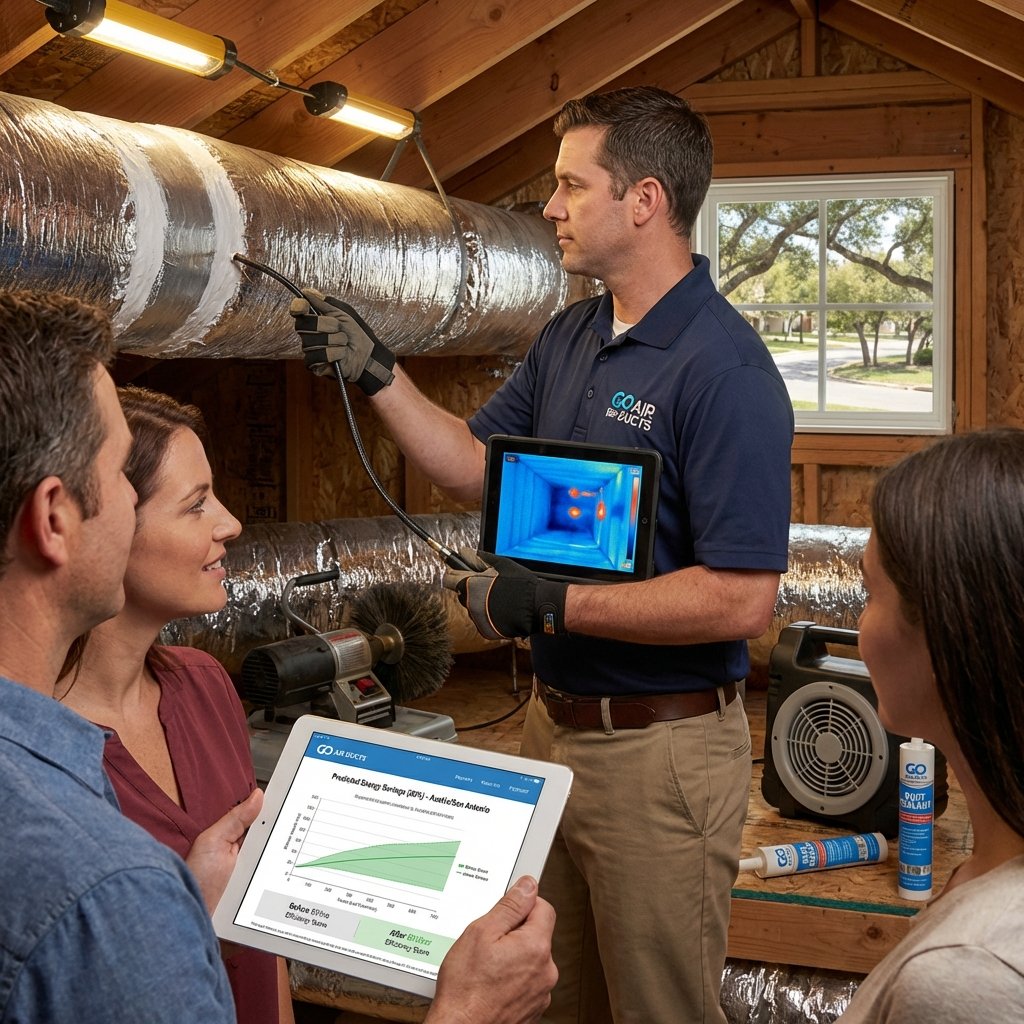
We also emphasize timing. Scheduling work before peak cooling season or the fall heating season ensures your system operates at peak efficiency during months when you use it most. Many homeowners see faster payback because they complete the work before their highest-usage months.
What to do next: Request a projected savings analysis over 5, 10, and 20 years. This long-term perspective often makes the upfront cost feel reasonable.
Getting Your Free Professional Duct Assessment Today
The first step is straightforward. Contact our team for a free professional duct assessment. We’ll inspect your system, document baseline efficiency, and provide a detailed report showing exactly what we find and what we recommend.
There’s no obligation, no pressure, and no surprise charges. Many homeowners tell us that our assessment alone provides valuable insight into why their energy bills feel high or why certain rooms are uncomfortable.
We serve Austin, San Antonio, Dallas, and Houston with same-day or next-day scheduling. Our certified HVAC technicians are punctual, respectful of your home, and clear about what they find and why it matters.
To book your assessment, visit our air duct cleaning services page or call us directly. Tell us your primary concern, whether that’s energy costs, comfort, or indoor air quality, and we’ll structure the inspection to give you the answers you need.
Your ducts are probably costing you money right now. A professional assessment takes the guesswork out of deciding whether duct sealing makes sense for your home and your budget. Let’s get you back to comfortable, efficient living.
For further reading: Hidden dust problems explained.
If you’re dealing with dust, poor airflow, mold in your ducts, or a clogged dryer vent — don’t wait. These issues can affect your health and safety. Go Air Ducts Group are the local experts in air duct cleaning, mold removal, dryer vent cleaning, and attic insulation. Call now for a free inspection and same-day service in Austin and San Antonio.
Frequently Asked Questions (FAQ)
How much can we actually save you on energy costs through duct cleaning and sealing?
Based on our work with Central Texas homeowners, we typically see energy savings between 20-30% after completing a full duct cleaning and sealing service. Your specific savings depend on factors like the current condition of your ductwork, your home’s size, and your HVAC system age. We provide a detailed energy audit during your free assessment so we can give you personalized savings projections for your property.
Why can’t I just clean my air ducts myself instead of hiring us?
While DIY vacuuming might remove surface dust, we use specialized equipment that accesses your entire duct system and removes years of accumulated debris, mold spores, and allergens that standard vacuum cleaners can’t reach. More importantly, our sealing process requires professional-grade materials and techniques to identify and repair leaks that are costing you money every month. We guarantee our work and can measure the improvements we make to your system performance.
How long before the money we invest in duct cleaning and sealing pays for itself?
We’ve found that most homeowners in Austin and San Antonio recoup their investment within 1-2 years through lower monthly energy bills, though many see noticeable reductions in their next utility statement. The exact timeline depends on your current energy usage and local utility rates, which is why we go through the ROI calculations with you during your free professional assessment. After the payback period, you’re essentially getting free efficiency improvements for years to come.