
Table of Contents
- Why Your HVAC System Isn't Performing Like It Should
- Common Signs Your Air Filter Needs More Than Replacement
- How We Diagnose Dirty Ducts Before You Notice Problems
- The Filter Change vs Duct Cleaning Decision Process
- When Our Insulation Upgrades Solve Your Temperature Control Issues
- Signs You Need Professional Dryer Vent Cleaning Now
- Why DIY HVAC Solutions Fall Short of Professional Results
- Our Diagnostic Process Saves You Time and Money
- How Our Certified Technicians Determine the Right Service for Your Home
- Energy Efficiency Gains From Our Recommended HVAC Services
- Why Texas Homeowners Trust Our Expert Assessments
- Schedule Your Free Professional HVAC Diagnostic Estimate Today
- Frequently Asked Questions (FAQ)
Why Your HVAC System Isn’t Performing Like It Should
Your HVAC system runs quietly in the background until something goes wrong. By then, you’re often stuck with either a spike in energy bills, poor airflow in certain rooms, or worse—indoor air quality problems that affect your family’s health. We’ve spent years diagnosing exactly why Texas homes struggle with these issues, and we’ve learned that most problems stem from three overlooked areas: dirty ducts, undersized filters, and poor insulation. This guide walks you through what we actually find during diagnostics and how we determine the right fix for your specific situation.
Your air conditioning system works harder than you probably realize. In Texas, we run our AC systems nearly year-round, which means dust, pet dander, pollen, and moisture accumulate inside your ductwork faster than in other regions. When we inspect a home’s HVAC setup, we often discover that the culprit isn’t a broken component—it’s buildup that restricts airflow and forces your system to work overtime.
Think of your ducts like arteries. A clogged artery forces your heart to pump harder. Similarly, buildup inside your ducts makes your system run constantly, increasing wear and shortening its lifespan. The Texas heat also means your system cycles more frequently, and each cycle draws in more dust from your attic, crawl space, or walls. We’ve seen homes where homeowners keep adjusting the thermostat because they assume the system is broken, when the real issue is that dirty ducts are strangling airflow.
Several factors contribute to poor HVAC performance in our region:
- High outdoor temperatures forcing longer system runtimes
- Extended cooling seasons increasing dust accumulation
- Inadequate or missing duct insulation causing temperature loss
- Undersized air filters that clog quickly and restrict flow
- Leaky ductwork allowing conditioned air to escape into unconditioned spaces
The good news: most of these issues are preventable with proper diagnostics and maintenance.
Common Signs Your Air Filter Needs More Than Replacement
Many homeowners think that swapping out their air filter every month or two solves their air quality problem. A standard replacement helps, but it’s only one piece of the puzzle. We often find that homeowners are actually dealing with a much larger issue hiding behind the filter.
A clogged filter is your first warning sign. If you’re replacing your filter monthly and it’s visibly gray or brown within weeks, that’s not normal. Standard 1-inch filters are designed to trap surface dust, but they can’t handle the volume of contaminants in homes with poor duct maintenance. When we pull a heavily soiled filter during a diagnostic visit, we know there’s significant buildup elsewhere in the system.
Here’s what we typically find in these situations:
- Filter showing heavy dirt accumulation within 2-4 weeks of replacement
- Visible dust or debris around return air vents
- Musty or stale odors coming from air vents
- Reduced airflow despite a “fresh” filter installed
- Allergy or respiratory symptoms worsening indoors
If you’re experiencing any of these symptoms, your filter isn’t the solution—it’s a symptom. We recommend scheduling a duct inspection to see what’s actually happening inside your system. Our hidden dust problems guide explains exactly what we’re looking for during these inspections.
How We Diagnose Dirty Ducts Before You Notice Problems
We use a combination of visual inspection, airflow testing, and camera technology to see inside your ducts without guessing. Many homeowners have never had their ducts inspected, so they don’t realize how much buildup has accumulated over years of operation. Our diagnostic process is non-invasive and gives you a clear picture of what’s actually happening.
During a typical inspection, we start by measuring airflow at each supply vent using a digital anemometer. If certain rooms feel cooler or warmer than others, uneven airflow is usually the culprit. Next, we visually inspect the return air filter and the furnace compartment for signs of dust escape. Finally, we use a camera scope to peer inside your ducts and see what’s on the walls. If we find significant buildup—which we do in roughly 60-70% of homes we inspect—we can show you exactly where the problem is.
The camera inspection is crucial because dust doesn’t distribute evenly. We often find heavy accumulation near the furnace, around elbows and transitions, and near registers where air velocity slows down. Texas humidity can also cause some of that dust to clump together, which makes it harder for your filter to catch.
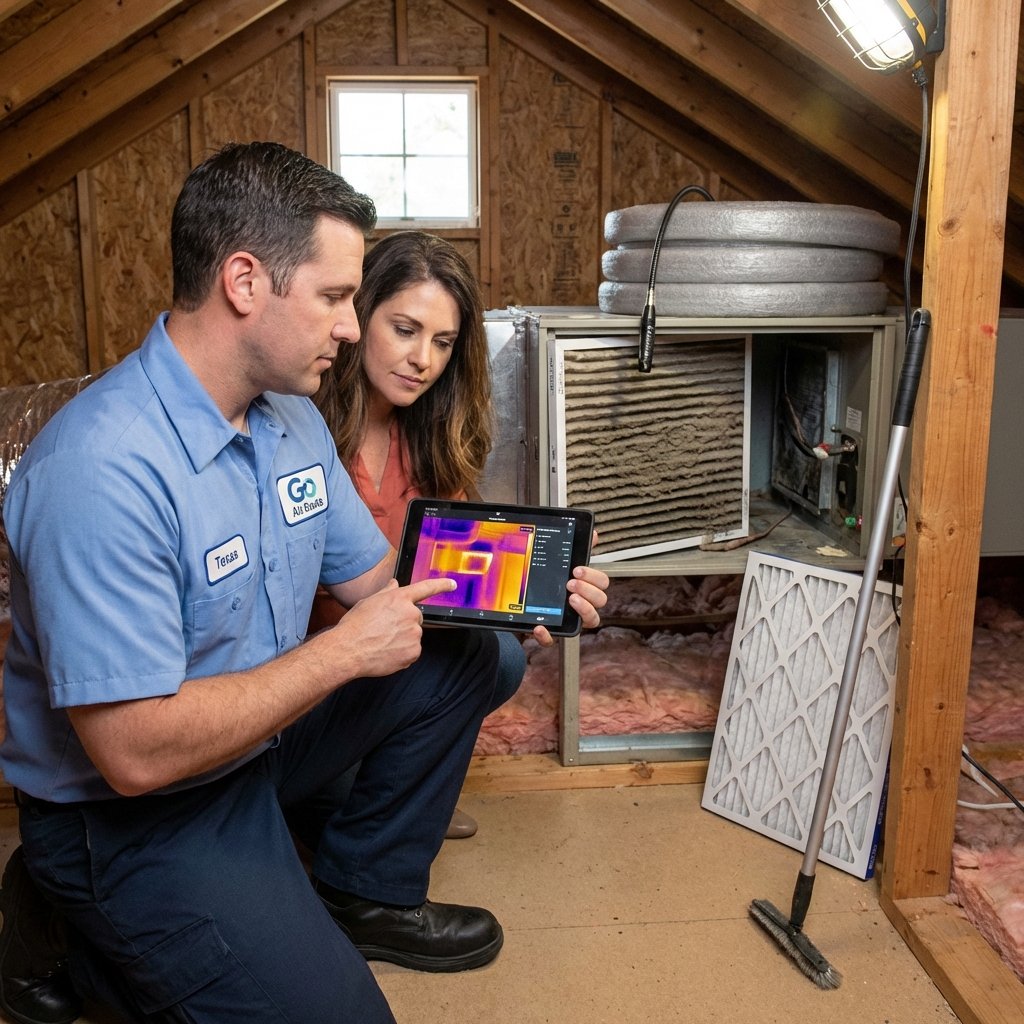
Our technicians look for specific indicators:
- Visible dust coating on duct interior surfaces
- Moisture staining or signs of mold (especially problematic in humid climates)
- Debris near ductwork seams or joints
- Damage or separated duct sections
- Missing or deteriorated duct insulation
Once we identify the problem, we can calculate whether duct cleaning alone will solve your issue or whether you need additional work like HVAC insulation upgrades.
The Filter Change vs Duct Cleaning Decision Process
This is where many homeowners get confused. Some people think they can just buy a better filter and skip professional cleaning. Others assume they need a full duct cleaning when a filter upgrade might actually solve their problem. We help you make this decision based on your specific situation.
If you’re replacing a standard 1-inch filter every 3-4 weeks and your ducts haven’t been cleaned in over three years, duct cleaning is almost certainly needed. The buildup inside your ducts is perpetually feeding dust back into your system, so no filter can keep up. However, if your ducts were cleaned recently and your filter is clogging in 2-3 weeks, upgrading to a thicker HEPA filter or a higher MERV rating (while ensuring your system can handle it) might be the answer.
Here’s how we help you decide:
- Review your filter change frequency and what we find during duct inspection
- Test your system’s airflow capacity to ensure it can handle upgraded filters
- Assess when your ducts were last cleaned (if ever)
- Evaluate whether you have pets, allergies, or dust-prone locations (like new construction homes)
- Consider your overall energy bills and comfort complaints
The right approach depends on your home’s specific conditions. In many cases, homeowners benefit from a combination: professional duct cleaning to remove existing buildup, plus a higher-efficiency filter to prevent rapid reaccumulation.
When Our Insulation Upgrades Solve Your Temperature Control Issues
Poor temperature control—hot spots in summer or cold rooms in winter—often gets blamed on the HVAC system itself. The real problem is frequently inadequate or missing insulation around your ductwork. When ducts run through unconditioned spaces like attics, crawlspaces, or walls, they lose or gain temperature as air travels. In Texas summers, this can waste 15-20% of your conditioned air before it ever reaches the room.
We measure duct insulation during every diagnostic. If we find R-value ratings below R-8 (our Texas standard is typically R-13 minimum for attic ducts), upgrading makes financial sense. Homes with poor duct insulation often show 8-12 degree temperature differences between rooms, and their energy bills reflect the wasted cooling capacity.
Signs that insulation upgrade will help:
- One or more rooms consistently warmer or cooler than others
- Energy bills staying high despite AC running constantly
- Ducts visibly wrapped with thin or deteriorated insulation
- New construction homes with minimal duct covering
- Second-floor rooms difficult to cool in summer
We’ve installed thousands of square feet of rigid foam and fiberglass insulation on duct systems throughout Austin and San Antonio. Homeowners typically see payback within 2-3 years through lower energy costs.
Signs You Need Professional Dryer Vent Cleaning Now
Dryer vent cleaning is one of the easiest services to ignore—until your dryer stops working or your clothes take two cycles to dry. But the real danger is fire risk. Lint buildup inside dryer vents is a leading cause of house fires, and most homeowners don’t realize their vent is clogged until it’s too late.
During our diagnostics, we always ask about dryer performance. If you answer “yes” to any of these, your vent needs immediate cleaning:
- Clothes take significantly longer to dry than they used to
- Dryer runs hot to the touch or shuts off mid-cycle
- Lint or debris visible around the outdoor vent opening
- Burning smell coming from the dryer
- Lint accumulating inside the dryer drum or lint trap
We use a specialized camera and brush system to clear lint from ducts that standard brush kits can’t reach. Many vents have crushed sections, bends, or transitions that require professional equipment to navigate safely. We also inspect the vent hood to ensure it opens freely and isn’t blocked by bird nests or debris.
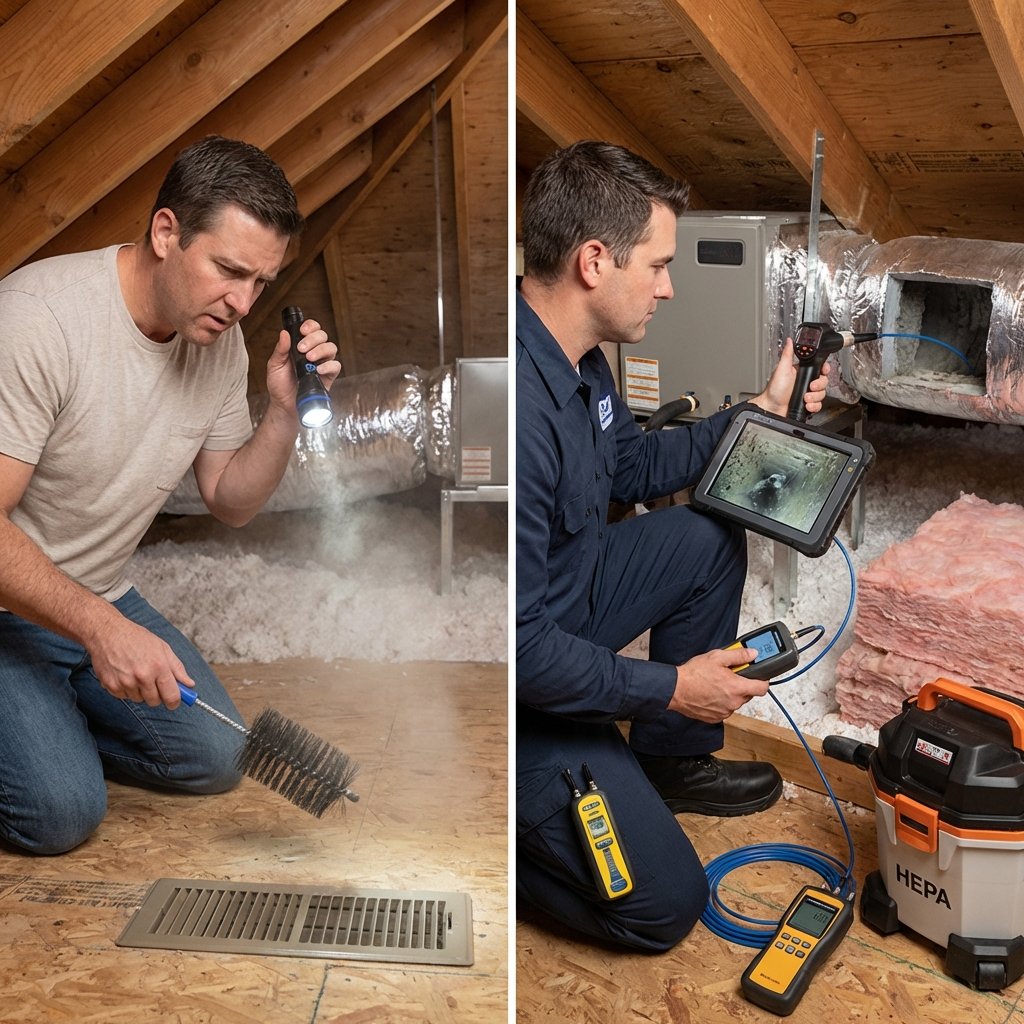
Professional dryer vent cleaning takes 30-45 minutes and typically costs less than repairing a damaged dryer. Our pet hair guide covers how pet owners face accelerated lint buildup—something we see constantly in Austin and San Antonio homes.
Why DIY HVAC Solutions Fall Short of Professional Results
We respect DIY efforts, but HVAC diagnostics and cleaning require specialized tools and training that homeowners typically don’t have. A standard brush kit from the hardware store won’t effectively clean ductwork because it can’t reach around bends, it can’t generate the suction needed to extract debris, and it can’t inspect hidden sections.
When homeowners attempt their own air duct cleaning, we often find that they’ve:
- Loosened dust from duct walls but left it to resettle elsewhere
- Created small leaks or damaged ductwork liners
- Broken apart debris into smaller particles that bypass filters
- Missed entire sections of the duct system
- Failed to properly seal access points, reducing system efficiency
Our equipment includes industrial-grade vacuums with 16,000+ CFM capacity, camera systems that work in confined spaces, and specialized brushes designed for different duct shapes and materials. We also understand the physics of airflow and know how to prevent dust disturbance and settling. More importantly, we can identify problems like mold, moisture, or duct separation that require professional remediation.
The investment in professional service isn’t just about cleanliness—it’s about doing the job right the first time and avoiding damage to your system.
Our Diagnostic Process Saves You Time and Money
When you call us for a diagnostic, we’re not trying to sell you every service we offer. We’re trying to understand your specific situation and recommend only what your home actually needs. This approach builds trust and usually saves homeowners money because we focus on the biggest problems first.
Here’s how our process works:
- Initial consultation: We discuss your comfort complaints, energy bills, and history of HVAC maintenance.
- Visual inspection: We examine filters, furnace compartment, attic/crawlspace ducts, and outdoor components.
- Airflow testing: We measure velocity at supply vents and return air to identify restrictions.
- Camera inspection: We scope accessible ducts to document buildup or damage.
- Detailed report: We show you photos and explain our findings in plain language.
- Prioritized recommendations: We list services in order of impact on comfort and efficiency.
This diagnostic approach means you never pay for unnecessary work. If your ducts are clean but your filter is undersized, we’ll tell you that. If your insulation is adequate but your ductwork is leaking, we’ll address the leak. We price each service separately so you can prioritize based on your budget.
Our diagnostics typically take 45-60 minutes and are completely free. You’re investing time to get answers, and we’re confident those answers will lead to better decisions about your home.
How Our Certified Technicians Determine the Right Service for Your Home
Every home is different. A five-year-old home in North Austin with a builder-grade system needs different solutions than a 20-year-old home in San Antonio with neglected maintenance. Our certified technicians use their experience to understand these differences.
Our team looks beyond just what needs cleaning. We consider:
- How long you plan to stay in your home (impacts ROI on upgrades)
- Whether you have allergies or respiratory sensitivity
- Your budget for both immediate and future improvements
- The age and original quality of your HVAC system
- Your home’s insulation envelope and ductwork layout
A newer home with pets and allergy-prone inhabitants might benefit most from professional duct cleaning plus a HEPA-rated filter system. An older home with high energy bills might need insulation upgrades and duct sealing before anything else. We don’t push one-size-fits-all solutions.
Our technicians are trained in multiple disciplines: HVAC maintenance, air quality assessment, insulation installation, and chimney inspection. This means we see how all these systems interact. We often catch issues that would be missed by a technician trained only in one area.
Energy Efficiency Gains From Our Recommended HVAC Services
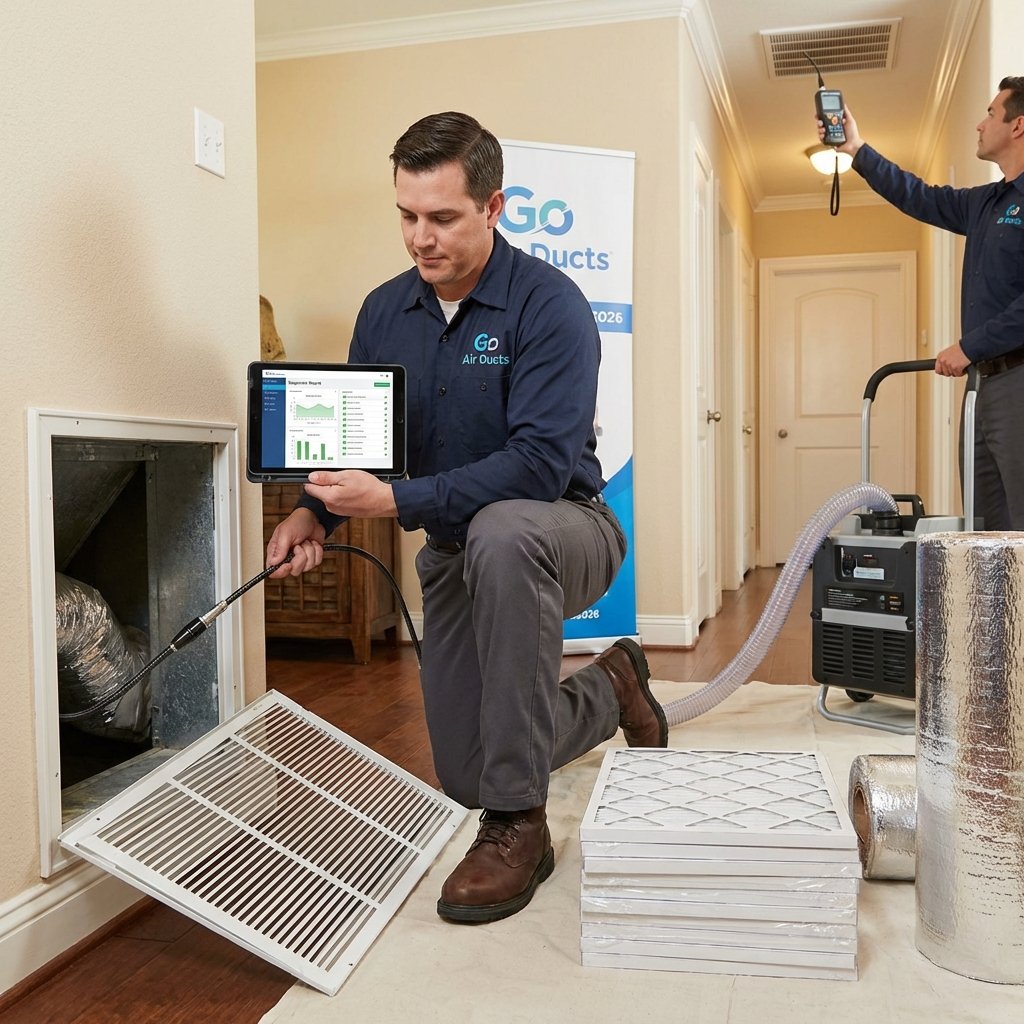
You want to know the payoff in dollars and cents. When we recommend services, we can usually quantify the savings. Duct cleaning improves airflow, which reduces how long your system runs. Proper duct insulation prevents temperature loss, so your system doesn’t have to work as hard. Filter efficiency and duct sealing both contribute to lower energy consumption.
Our typical customers see 8-15% reduction in HVAC-related energy costs after our recommended services. That might be 10-20 dollars per month on an average home, or significantly more if your system was severely neglected. In homes where we also install insulation upgrades, savings can reach 20-25%.
These aren’t theoretical numbers. We base them on:
- Baseline energy consumption before service
- System runtime reduction after cleaning and sealing
- Thermal efficiency improvements from insulation
- Standard Texas utility rates and seasonal cooling demand
We can provide a rough estimate during your diagnostic appointment, and we encourage you to compare your electric bills before and after service. Most homeowners notice the difference within the first month of warmer weather.
Why Texas Homeowners Trust Our Expert Assessments
We’ve been diagnosing and servicing HVAC systems in Austin, San Antonio, Dallas, and Houston for years. We understand Texas-specific challenges: high humidity, intense heat, dust-prone construction sites, and the particular way our climate affects indoor air quality. We’re not a national chain relying on generic protocols. We’re a local team with deep knowledge of regional conditions.
Homeowners trust us because we’re transparent. We show you what we find with photos and video. We explain problems in language that makes sense, not industry jargon. We never pressure you into services you don’t need, and we’re happy to answer questions about our recommendations.
Our reputation is built on follow-through. When we say your ductwork will be cleaner, your airflow will improve, and your energy bills will drop, we mean it. We stand behind our work with a service guarantee.
Schedule Your Free Professional HVAC Diagnostic Estimate Today
If you’re tired of guessing about your air quality, comfort issues, or energy bills, it’s time to get real answers. Our free diagnostic appointment gives you a clear picture of what’s actually happening in your home. We’ll show you the problems, explain the solutions, and let you decide what makes sense for your situation and budget.
Contact us today to schedule your appointment. We offer flexible scheduling, and we serve Austin, San Antonio, Dallas, and Houston with rapid response times. Your home deserves expert attention, and we’re ready to help you breathe easier and save money.
If you’re dealing with dust, poor airflow, mold in your ducts, or a clogged dryer vent — don’t wait. These issues can affect your health and safety. Go Air Ducts Group are the local experts in air duct cleaning, mold removal, dryer vent cleaning, and attic insulation. Call now for a free inspection and same-day service in Austin and San Antonio.
Frequently Asked Questions (FAQ)
What’s the difference between replacing our air filter and getting a professional duct cleaning?
We recommend filter replacement as routine maintenance you can do between our professional visits, but it only catches particles at one point in your system. Our duct cleaning addresses the accumulated dust, mold, and debris that builds up throughout your entire ductwork over time. If you’re experiencing persistent allergies or noticing dust on your furniture shortly after changing filters, we’ve likely found the real culprit hiding in your ducts.
How do we know if your home needs insulation upgrades versus just better HVAC maintenance?
During our diagnostic process, we assess your temperature consistency across rooms, check for drafts, and evaluate your current insulation’s R-value against Texas climate standards. We’ll tell you honestly if your HVAC system can perform better once we clean your ducts and optimize airflow, or if adding insulation will actually solve your heating and cooling struggles. Many of our Austin and San Antonio customers discover that their temperature control issues stem from a combination of both factors, so we create a plan that addresses each.
What are the warning signs that we should inspect your dryer vent before it becomes a safety issue?
We recommend professional dryer vent cleaning when you notice clothes taking longer to dry, lint buildup around the vent opening, or a burning smell during cycles. Clogged dryer vents reduce efficiency and create serious fire hazards, so we make this inspection part of our comprehensive home assessment to keep your family safe.