
🕑 15 min read
Why combine duct cleaning with insulation and sealing?
Combining them tackles air quality, airflow, and heat transfer together, delivering cleaner air and bigger energy savings than any single service. Go Air Ducts bundles duct cleaning with insulation and sealing for Texas homes, creating a complete indoor-air-quality and efficiency strategy that saves money and improves comfort.
Table of Contents
- Why Austin and San Antonio Homeowners Face Indoor Air Quality Challenges
- The Hidden Connection Between Dirty Ducts and Energy Loss
- How We Diagnose Your Home's Complete Air Quality Problem
- Air Duct Cleaning as the Foundation of Your IAQ Strategy
- Sealing and Insulation Work Together to Lock in Clean Air
- Filtration Upgrades That Complement Professional Duct Cleaning
- The Integrated Approach We Recommend for Your Home
- Why Standalone Services Fall Short of Real Results
- Our Process from Assessment to Installation
- Allergy and Mold Prevention Through Comprehensive IAQ Solutions
- What You Can Expect After Our Complete Service
- Frequently Asked Questions (FAQ)
Why Austin and San Antonio Homeowners Face Indoor Air Quality Challenges
When we walk into a home in Austin or San Antonio, we often hear the same complaint: “We’re spending a fortune on cooling, but the air still feels stale.” That disconnect between energy bills and comfort tells us something important is broken in the home’s air quality system. It’s rarely just one problem. The real solution requires a coordinated strategy that tackles dirty ducts, air leaks, poor insulation, and filtration all at once.
We’ve spent years building a methodology around this exact challenge. We’ve learned that rushing to clean ducts without sealing ductwork or upgrading insulation leaves money on the table and leaves homeowners frustrated. This article walks you through our integrated approach to indoor air quality and explains why combining services delivers results that single treatments cannot.
Texas heat creates pressure that most homeowners don’t fully appreciate. Our intense summer temperatures force cooling systems to run longer and harder, pulling more air through ducts that collect dust, pollen, pet dander, and debris year-round. When doors and windows stay shut against the heat, air recirculates through the same contaminated pathways repeatedly.
Austin’s humidity and San Antonio’s seasonal dust patterns both accelerate buildup. We’ve pulled out shocking amounts of lint, dead insects, and mold spores from homes that look clean on the surface. Pets compound the problem significantly. If you have dogs or cats indoors during the heat, shedding accelerates and fur accumulates in vents far faster than homeowners realize.
Beyond contamination, most homes in our service areas suffer from unsealed ductwork and insufficient attic insulation. Homes built before 2010 especially tend to have ductwork that has settled, cracked, or separated at joints over time. Air leaks into unconditioned attic spaces, forcing your HVAC system to work 20-40% harder than necessary. This drives up energy costs and degrades indoor air quality simultaneously.
Allergies and respiratory sensitivity spike in spring and late summer in Central Texas. We work with families dealing with mold concerns, asthma, and dust sensitivities who feel trapped between high energy bills and poor breathing conditions. The solution isn’t choosing one focus over the other. It’s addressing the whole system.
The Hidden Connection Between Dirty Ducts and Energy Loss
Most homeowners assume duct cleaning is purely about air quality. We understand it differently. Dirty ducts actually reduce airflow efficiency significantly. Dust and debris coat the inner walls of metal or flex ducts, creating friction that forces your blower to work harder to push conditioned air through the system. That’s wasted energy going straight to your utility bill.
Here’s what happens in real homes we service: A ductwork system clogged with lint and dust can lose 15-25% of its cooling efficiency. Your thermostat reads “cooling” but rooms stay warm because air velocity drops. You respond by lowering the temperature setting, running the system longer, and paying more. Meanwhile, the real culprit stays hidden inside the ducts.
When we clean ducts thoroughly and then seal leaks we uncover during cleaning, homeowners often see energy bill reductions of 10-20%. That’s not magic. It’s physics. Clean ductwork flows freely, and sealed ducts keep conditioned air inside the system instead of leaking into your attic or crawl space. The combined effect is substantial.
We’ve documented homes where dirty, leaky ducts were costing homeowners $50-100 extra per month during summer. Cleaning and sealing paid for itself in a single season. Beyond the financial benefit, sealed ductwork also prevents unconditioned air from being drawn in, which means fewer dust particles and allergens entering your living spaces.
How We Diagnose Your Home’s Complete Air Quality Problem
We start every project with a comprehensive assessment that goes far beyond a quick duct inspection. Our certified technicians perform a visual survey of all accessible ductwork, check your current filter condition, and evaluate your system’s age and capacity. We also inspect attic insulation depth, look for visible mold or moisture issues, and check for air leaks around seals and joints.
For homes with suspected mold or allergy concerns, we perform ATP testing inside ducts to measure microbial activity levels. This gives us objective data about contamination severity. We ask specific questions: Do you notice dust on surfaces within a day of cleaning? Are certain rooms harder to cool? Have you noticed musty or stale odors? These details guide our recommendations.
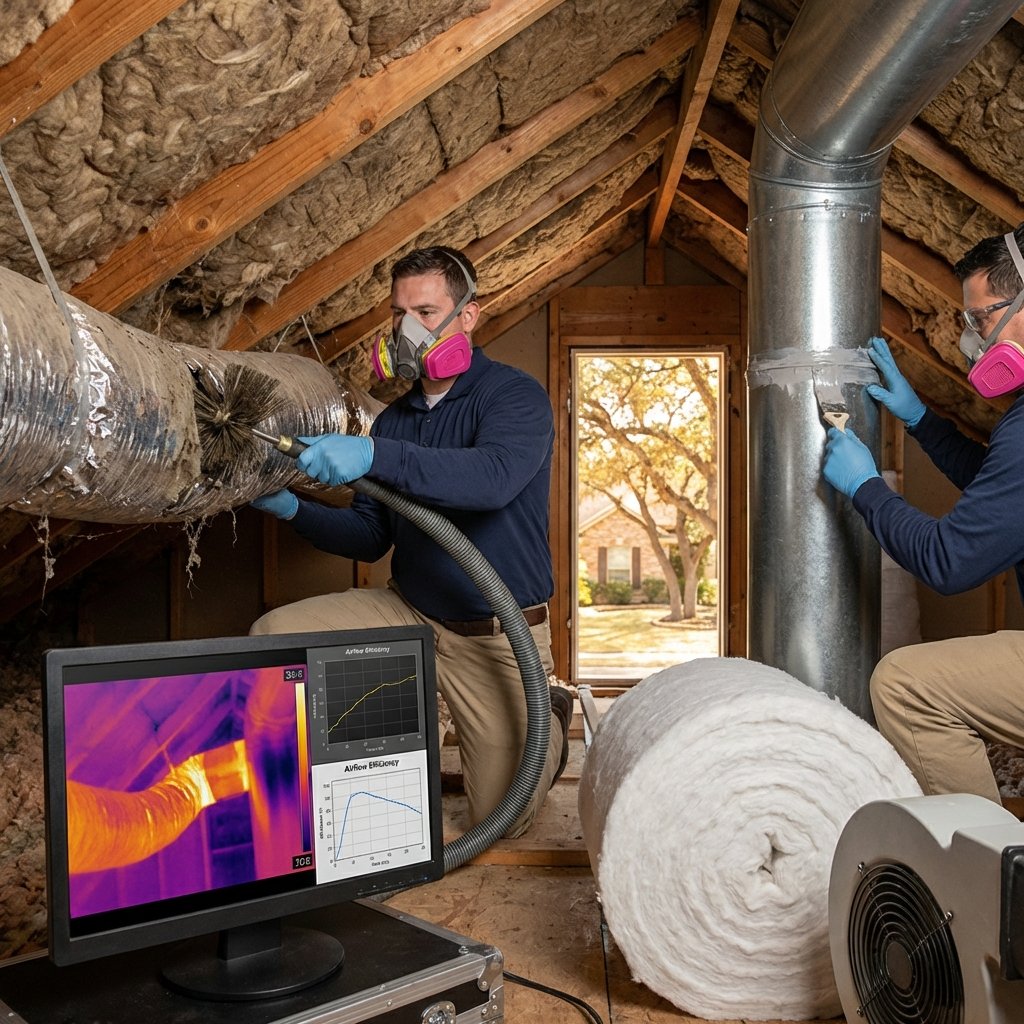
We also assess your filtration system. Many homes still run basic fiberglass filters that catch only 20-30% of airborne particles. Upgrading to MERV-13 or high-efficiency media filters can improve indoor air quality dramatically, but only if your ductwork is clean and properly sealed first. A clogged filter in a dirty system is like putting a bandage on a deeper wound.
The diagnostic process includes a clear walkthrough where we show you actual conditions. Photographs of duct interiors, insulation depth measurements, and visible leaks help you understand what needs attention and why. We provide a detailed estimate that prioritizes work logically: cleaning first, then sealing, then insulation upgrades, then filtration. This sequence matters.
Air Duct Cleaning as the Foundation of Your IAQ Strategy
Professional duct cleaning removes accumulated debris that no filter alone can prevent. Our equipment includes truck-mounted vacuums with thousands of CFM of suction power and rotary brushes that dislodge buildup from duct walls. We clean supply lines, return air ducts, and the plenum chamber where air is conditioned before entering the ductwork.
The process takes 4-6 hours for a typical residential system. We create negative pressure inside the ductwork using our equipment, which safely contains dust and prevents it from entering living spaces. We seal off registers with protective coverings and monitor air quality throughout the job using proper containment methods.
After cleaning, homeowners notice immediate improvements. Air flows more freely, system noise often decreases, and many people report fresher-smelling air within days. For homes with allergy sufferers or mold sensitivity, the relief is often noticeable. Dust accumulation on furniture and surfaces typically drops significantly within weeks.
Duct cleaning alone, however, provides temporary benefits. Without sealing and insulation work, new dust begins accumulating within months. The ductwork continues drawing in unconditioned, dirty air from your attic. That’s why we never position cleaning as a standalone solution. It’s the essential first step in a complete strategy, not the entire strategy itself.
Sealing and Insulation Work Together to Lock in Clean Air
Sealing ductwork is where most homeowners see the biggest surprise. When we use thermal imaging cameras, many homes reveal significant air leaks around duct seams, boot connections at registers, and where ducts meet the HVAC unit. Some homes lose enough air through duct leaks to cool an entire additional room unnecessarily.
We use mastic sealant and reinforced mesh tape to seal joints and cracks. This stops conditioned air from escaping into your attic before it reaches your rooms. Sealed ducts also prevent hot, dusty attic air from being drawn back into the system during the cooling cycle. This double benefit cuts both energy waste and indoor air contamination.
Attic insulation works in tandem with sealing. If your attic lacks proper insulation depth (R-38 to R-49 is our standard recommendation for Texas), sealed ducts lose effectiveness quickly. Heat radiates through thin insulation and warms the ductwork, forcing your cooling system to recondition already-cooled air. Upgrading insulation simultaneously holds the benefits of sealing in place longer and prevents seasonal temperature swings that stress the system.
We typically blow cellulose or fiberglass insulation to recommended depths during an insulation upgrade. This work also improves summer and winter comfort throughout your home. Rooms stay cooler in summer without overworking the HVAC system, and winter heating works more efficiently. Homeowners often report fewer temperature swings between rooms as well.
Filtration Upgrades That Complement Professional Duct Cleaning
After clean ducts and sealed ductwork, upgrading your air filter is the logical next step. Standard fiberglass filters remove only large particles and do little to improve indoor air quality for allergy sufferers. We recommend MERV-13 pleated filters or media filters as a minimum upgrade.
MERV-13 filters trap fine particles like dust mites, pet dander, pollen, and mold spores that cause respiratory sensitivity. They do require slightly more airflow resistance, but sealed ductwork ensures your system handles this without strain. We help homeowners understand the proper filter size and replacement schedule. Most pleated filters last 90 days; media filters can last 6-12 months depending on household dust load.
For homes with severe allergy concerns or immunocompromised residents, we discuss whole-home media filter cabinets or UV germicidal lights that work alongside standard filters. These add layers of protection without the ongoing replacement frequency of premium disposable filters. The choice depends on your specific situation and budget priorities.
The critical detail many homeowners miss: A better filter only works if your ducts are clean and your system can pull air through efficiently. Putting a high-MERV filter in a system with dirty ducts and air leaks creates excessive resistance that strains your equipment. That’s why filtration comes last in our sequence, not first.
The Integrated Approach We Recommend for Your Home
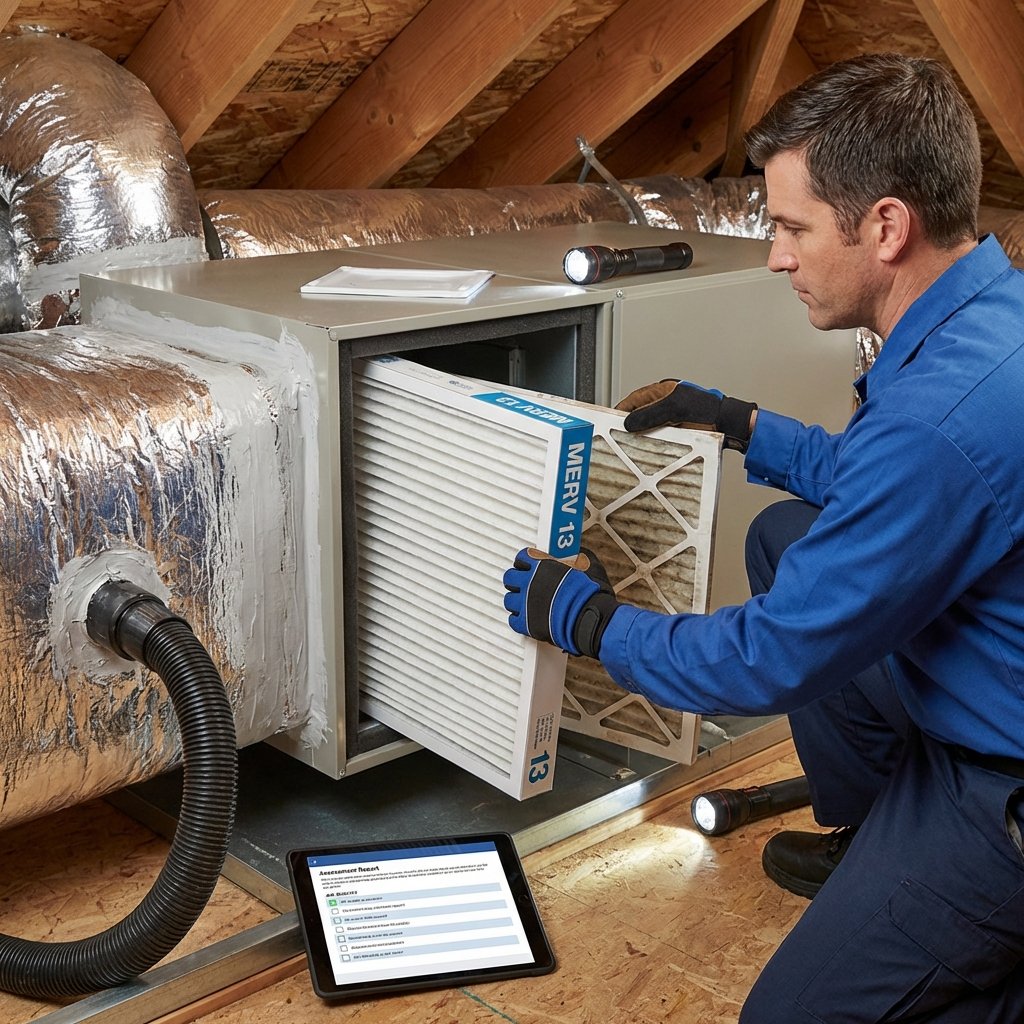
Our strategy always follows this sequence: assessment, cleaning, sealing, insulation, then filtration upgrades. This order maximizes both air quality improvements and energy efficiency gains. Starting with cleaning removes the contamination source. Sealing prevents new contamination from entering and stops energy waste. Insulation upgrades amplify those benefits year-round. Filtration maintains the improvements long-term.
A homeowner attempting only duct cleaning will see temporary improvement but frustration returns within months. Someone who seals ducts without cleaning first is trapping dirty air inside the system. Upgrading insulation without sealing ducts wastes that insulation’s effectiveness. Each component depends on the others.
We tailor the specific scope to each home’s needs and budget. Some homeowners prioritize energy savings and tackle sealing and insulation first. Others with allergy concerns want aggressive cleaning and filtration right away. We work within your timeline and budget while always recommending the logical sequence that delivers lasting results.
Our free service estimates include a detailed breakdown showing which services address which problems and in what order. This transparency helps you understand the “why” behind our recommendations, not just the “what.”
Why Standalone Services Fall Short of Real Results
We’ve seen homeowners frustrated because they invested in duct cleaning years ago but still battle dust and high bills. The likely reason: Their ducts were cleaned but never sealed, and their attic insulation remains thin. New dust accumulates quickly in leaky ducts, and energy efficiency never improves because the sealed ductwork leaks performance away.
Similarly, homes with recent insulation upgrades but no duct sealing show minimal energy savings. The new insulation prevents heat transfer through the ceiling, but ductwork leaks offset those gains. The math doesn’t work with partial solutions.
We’ve also observed that homeowners who upgrade only filtration without cleaning ducts face filter clogs and system strain. A premium filter traps dust so effectively that a dirty ductwork system behind it creates dangerous airflow resistance. Equipment runs longer and costs more while filtration performance paradoxically decreases due to rapid clogging.
The Texas heat magnifies these problems. When you run your cooling system hard during summer, any inefficiency multiplies. A partially sealed system bleeds conditioned air continuously. Dirty ducts create mounting resistance all day long. Thin insulation lets heat radiate into ductwork relentlessly. These problems compound rather than cancel each other out.
Our Process from Assessment to Installation
We schedule your free assessment at a time that works for your schedule, typically same-day or next-day availability in Austin and San Antonio. Our technician arrives with inspection tools and thermal imaging equipment. We spend 45-60 minutes examining your system thoroughly, then walk you through findings in your home with photos and clear explanations.
The estimate we provide breaks costs into separate line items so you see the investment for each service. We explain which items address air quality specifically and which improve efficiency. This clarity helps you prioritize if budget is a concern.
Once you approve an estimate, we schedule the work. Duct cleaning typically happens first and takes one full day. We call before arrival, protect your floors and furniture, and contain dust throughout the process. Our crew cleans the system completely, then provides before-and-after photos of ductwork conditions.
Sealing and insulation work follows within days or weeks, depending on your schedule. We coordinate with you on access to your attic, schedule work during cooler morning hours when possible, and keep disruption minimal. Filtration upgrades are quick and happen during the final walkthrough.
Throughout the entire process, we maintain direct communication. You have contact information for your project lead. If questions arise or unexpected conditions appear during work, we discuss them with you before proceeding. Transparency and clear communication define our approach.
Allergy and Mold Prevention Through Comprehensive IAQ Solutions
Mold grows in dust and moisture. When we clean ductwork thoroughly, we remove the organic material that mold feeds on. When we seal ducts, we prevent humid attic air from entering your system. These two steps together dramatically reduce mold risk inside ductwork.
Insulation upgrades also protect against mold by reducing condensation risk. Thin or missing insulation allows temperature differentials that promote moisture buildup on duct surfaces. Proper insulation keeps ductwork warmer, preventing condensation and the mold growth that follows.
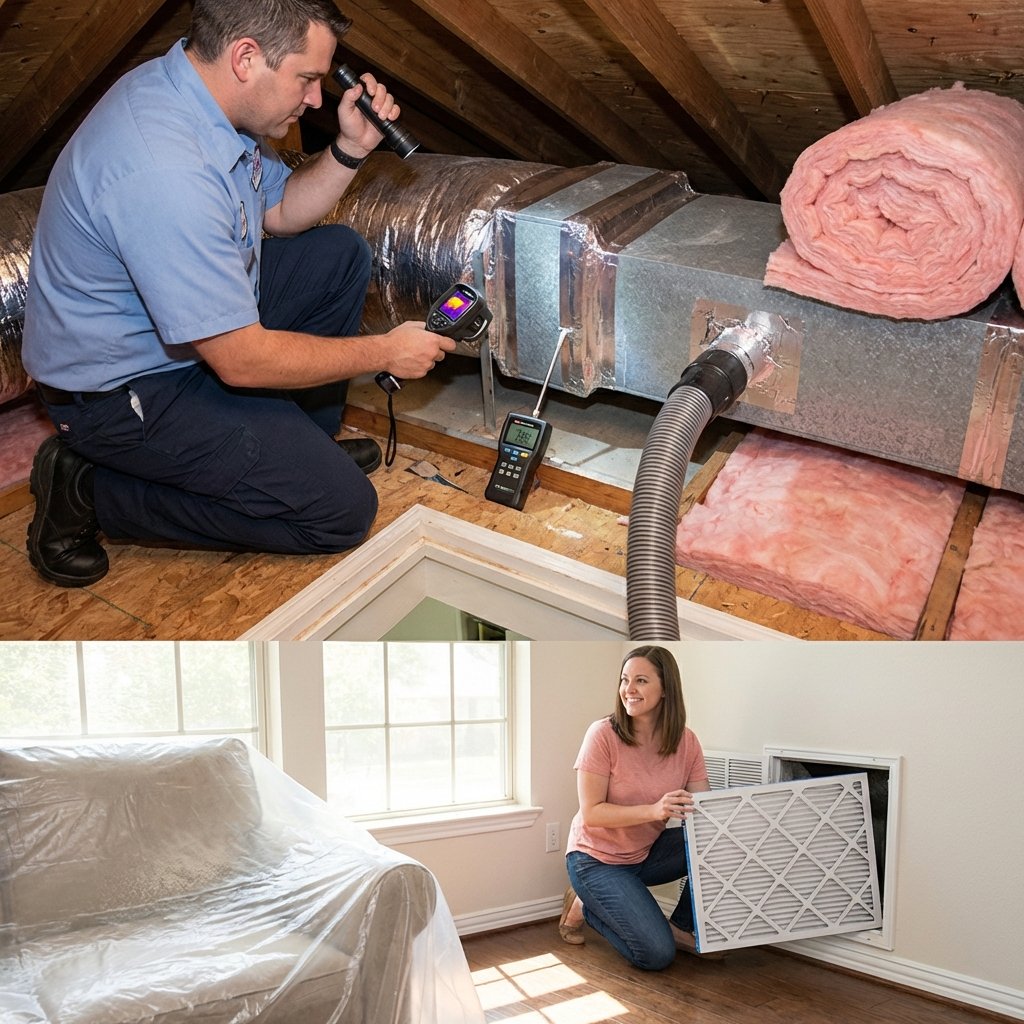
For homes with existing mold concerns, we recommend addressing them before cleaning ducts. If mold is actively growing inside your system, cleaning moves contaminated material through your home unless we address the moisture source first. Sealing and insulation work often eliminate the moisture conditions that allowed mold to start growing, preventing recurrence.
We also discuss humidity control with homeowners struggling with indoor air quality. If your relative humidity consistently exceeds 60%, mold risk increases regardless of ductwork condition. Ventilation improvements or dehumidification sometimes complement our duct and insulation services for homes in high-humidity areas.
Our approach to allergy prevention is equally comprehensive. Dust mites thrive in humid environments and accumulate in contaminated ductwork. Cleaning removes existing populations. Sealing prevents new dust entry. Improved filtration traps new particles. Insulation stabilizes humidity. Each piece supports the others. Families with dust mite allergies typically report significant improvement within weeks of our complete service package.
What You Can Expect After Our Complete Service
Immediate improvements include noticeably fresher air and improved airflow to all rooms. Dust accumulation on furniture slows dramatically. Rooms reach set temperatures more quickly and consistently. Energy bills drop measurably, often within the first full billing cycle post-installation.
Longer-term benefits unfold over the following months and seasons. Allergy symptoms often improve significantly as dust and allergen levels continue declining. System noise decreases as airflow becomes more efficient. Equipment runs longer but less frequently because it meets temperature targets faster. Winter heating becomes more comfortable and efficient.
We recommend filter replacement schedules and basic maintenance to lock in these improvements. Replacing filters on schedule, having the system inspected annually, and keeping registers clean all extend the benefits of our comprehensive work. We provide written maintenance recommendations specific to your system and filters.
Many homeowners also appreciate the peace of mind that comes with knowing their ductwork is clean and sealed, their insulation meets current standards, and their system is running at peak efficiency. The initial investment pays dividends through lower bills, better comfort, and improved indoor air quality for years to come.
If you’re concerned about indoor air quality, noticing higher-than-expected energy bills, or dealing with dust and allergy challenges, we’d like to help you understand your home’s specific situation. We serve Austin, San Antonio, Dallas, and Houston with certified technicians and a proven approach to comprehensive air quality solutions. Contact us for your free assessment. We’ll walk you through exactly what your home needs and why, with no pressure and complete transparency about the investment involved.
For further reading: Air duct cleaning services, Hidden dust problems in Texas, Texas pets and duct cleaning.
If you’re dealing with dust, poor airflow, mold in your ducts, or a clogged dryer vent — don’t wait. These issues can affect your health and safety. Go Air Ducts Group are the local experts in air duct cleaning, mold removal, dryer vent cleaning, and attic insulation. Call now for a free inspection and same-day service in Austin and San Antonio.
Frequently Asked Questions (FAQ)
Why do we recommend combining air duct cleaning with insulation and sealing instead of doing just one service?
We’ve found that standalone services rarely deliver lasting results because your home’s air quality and energy efficiency depend on multiple interconnected systems working together. When we clean your ducts but leave them unsealed, new dust and contaminants enter through gaps and leaks. Similarly, insulation without clean ducts means you’re trapping dirty air and circulating allergens throughout your home. Our integrated approach addresses the root causes, so you actually feel the difference in air quality and see it reflected in your energy bills.
How long does it take to see improvements in our home’s indoor air quality after your service?
Most of our customers notice cleaner air within the first week, especially those with allergies or respiratory concerns. However, the full benefits develop over several weeks as your HVAC system runs through multiple cycles with sealed ducts and upgraded filtration. We provide specific recommendations during your assessment so you know what timeline to expect based on your home’s particular conditions.
What’s included in your free service estimate?
We visit your home to inspect your air ducts, insulation, and HVAC system, then explain exactly what we find and why we recommend specific services. There’s no obligation, and we give you a detailed written estimate before we do any work. Our goal is to help you understand your home’s air quality challenges so you can make an informed decision about which services make sense for your situation.