
Table of Contents
- Why Homeowners Mistake DIY Mold Cleanup for Professional Remediation
- Health Risks of Incomplete Mold Treatment in Texas Homes
- Our Professional Assessment Process for Mold and Contamination
- DIY Methods Fail to Address Root Causes We Identify
- Specialized Equipment and Certification Standards We Meet
- Fire and Smoke Damage: Why Professional Duct Cleaning Matters
- Pest Contamination in HVAC Systems Requires Certified Treatment
- Our Comprehensive Remediation vs Surface-Level Solutions
- How Our Technicians Prevent Contamination Spread During Cleanup
- Timeline and Cost Comparison: Professional vs Repeated DIY Attempts
- Why Austin and San Antonio Homeowners Choose Our Proven Approach
- Frequently Asked Questions (FAQ)
Why Homeowners Mistake DIY Mold Cleanup for Professional Remediation
Mold in your home isn’t always visible, but when it appears in your HVAC system, attic, or walls, the stakes become serious fast. We’ve seen countless Austin and San Antonio homeowners attempt DIY cleanup only to face recurring mold problems months later. The difference between a surface wipe-down and true remediation often determines whether mold returns or stays gone for good.
Understanding when professional intervention is necessary can save you thousands in repair costs and protect your family’s health. We’ve built our reputation on identifying contamination that homeowners miss and treating it at the source.
Most homeowners equate mold removal with a spray bottle and some elbow grease. You spot a dark patch on a duct surface or in a basement corner, clean it off, and assume the problem is solved. This is where the critical misunderstanding happens.
What you’re actually seeing is likely the tip of a much larger issue. Mold colonies extend behind surfaces, into insulation, throughout ductwork, and into structural cavities. When you wipe down visible mold, you’re addressing maybe 5-10% of the contamination. The remaining 90% continues to grow, spread spores, and multiply invisibly.
We approach mold differently. Our assessment includes moisture mapping, ductwork scoping, humidity analysis, and contamination extent documentation. A proper remediation plan addresses why the mold appeared in the first place, not just what you can see.
What to do next: If you’ve cleaned mold yourself in the past six months and it’s returned, schedule a free professional assessment before spending more time on surface treatments.
Health Risks of Incomplete Mold Treatment in Texas Homes
Texas heat and humidity create ideal mold conditions. Our climate means your HVAC system cycles constantly, condensation builds in ducts, and moisture accumulates in attics and crawlspaces. Incomplete mold treatment in this environment isn’t a minor inconvenience; it’s a growing health hazard.
Mold spores circulate through your home every time you run your air conditioning. Incomplete treatment means you’re continuously inhaling partially treated contamination. People with mold sensitivities, asthma, or compromised immune systems develop respiratory issues, persistent allergies, and sinus problems that seem to defy treatment.
We’ve documented cases where homeowners suffered chronic health problems for months, spent hundreds on doctor visits and medications, only to discover that incomplete mold remediation in their ductwork was the root cause. Once we performed comprehensive treatment, their symptoms resolved within weeks.
The risk escalates with young children and elderly family members. Their immune systems are less equipped to handle prolonged mold exposure. What starts as a “minor mold spot” can contribute to bronchitis, asthma attacks, and infections that wouldn’t have developed otherwise.
Actionable step: If family members have worsening allergies, respiratory issues, or persistent sinus problems despite medication, request an indoor air quality assessment that includes ductwork inspection before attributing symptoms to seasonal allergies.
Our Professional Assessment Process for Mold and Contamination
Our assessment process differs fundamentally from what you’ll find in a typical DIY approach. We begin with a moisture assessment using calibrated humidity meters and thermal imaging to identify where moisture concentrates in your home. Mold doesn’t appear randomly; it follows moisture.
Next, we scope your entire HVAC system. We insert cameras into your ducts to visualize contamination you can never see from a vent. We photograph problem areas, document the extent, and identify the moisture source feeding the mold growth. This is where we often discover that the visible mold is secondary to a larger duct contamination issue.
We test air samples from affected areas to determine mold species and spore levels. Some molds are more aggressive and allergenic than others. The species present informs our treatment protocol and helps us communicate the actual risk to you.
We evaluate your home’s ventilation, insulation condition, and HVAC efficiency. Poor ventilation traps moisture. Inadequate insulation allows condensation on cool surfaces. We identify these system-level issues because treating mold without addressing them means the problem returns within months.
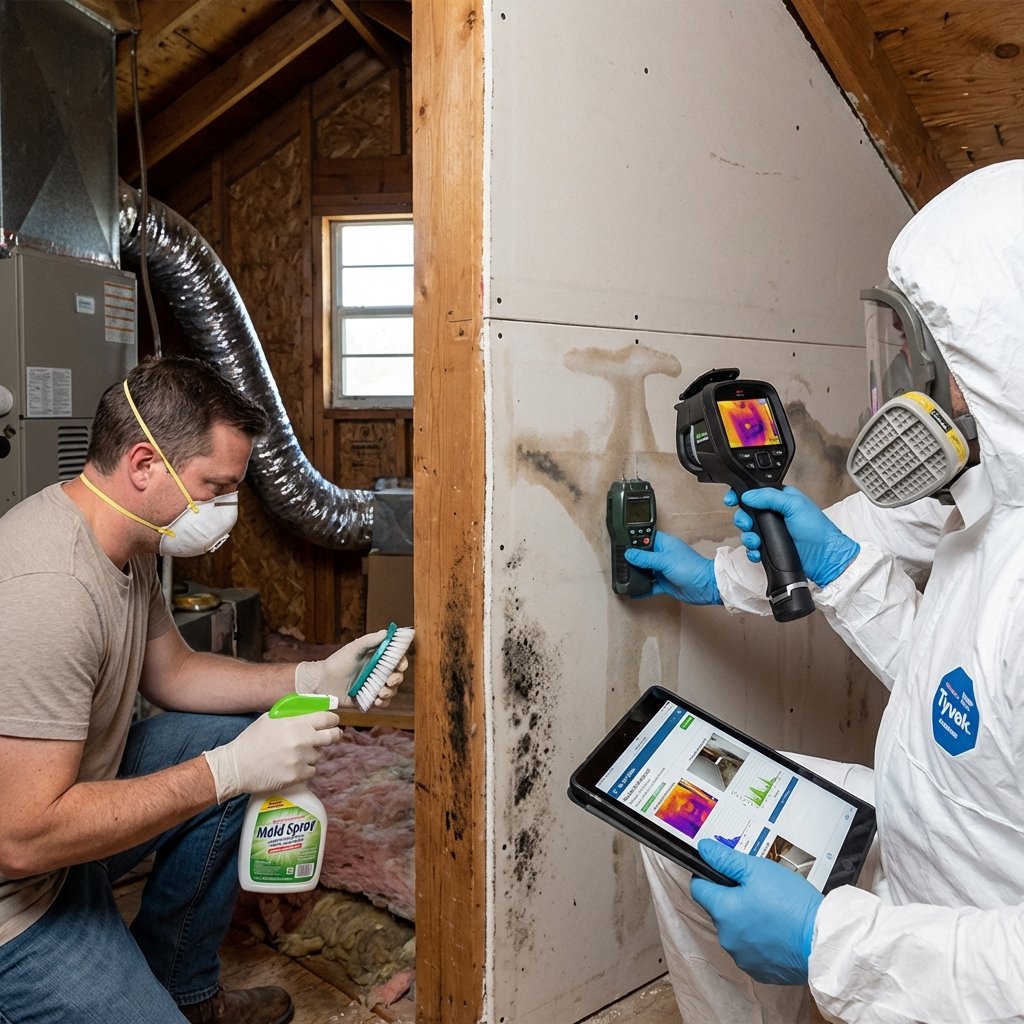
Finally, we create a remediation protocol specific to your situation. It might include duct cleaning, sealant application, humidity control recommendations, or insulation upgrades. Each step addresses the underlying cause, not just the visible symptom.
DIY Methods Fail to Address Root Causes We Identify
When we inspect homes where DIY mold treatment has been attempted, we regularly discover the same pattern: homeowners treated the symptom while the root cause continued unchecked.
A common example is condensation in ducts caused by poor attic ventilation. You can spray every inch of your ductwork, but if warm attic air continues creating condensation on cool ducts, mold will return within weeks. We identify the ventilation deficiency and resolve it. The mold doesn’t come back because the environment that fed it no longer exists.
Another frequent scenario involves moisture intrusion from roof leaks or improper grading. Mold appears in an upper-floor closet or attic space. DIY cleanup fails because the water source remains active. We locate the leak, repair it, and dry out the affected area properly before treatment. That’s the difference between a temporary fix and a permanent solution.
Dryer vent issues also seed mold problems more often than homeowners realize. A clogged or poorly vented dryer vent deposits moisture directly into your attic or crawlspace. We clean and optimize dryer vents as part of our contamination prevention strategy because we’ve seen too many mold problems that originated from ignored dryer vent maintenance.
Next step: Before attempting any DIY cleanup, identify whether moisture is actively entering the affected area. If it is, mold treatment won’t hold without addressing the moisture source.
Specialized Equipment and Certification Standards We Meet
Our mold remediation team uses equipment that extends far beyond what’s available at hardware stores. We operate HEPA-filtration air scrubbers that capture mold spores at 0.3 microns. We use negative air pressure systems to contain contamination and prevent cross-contamination to other areas of your home during cleanup.
Our duct cleaning equipment includes rotary brushes and industrial vacuums designed specifically for contaminated systems. We don’t use generic carpet cleaning equipment adapted for ducts. We use tools built for the job.
We’re certified through the Institute of Inspection, Cleaning and Restoration Certification (IICRC) and comply with EPA mold remediation guidelines. This certification requires ongoing education, technical testing, and adherence to documented standards. It means our protocols are defensible, transparent, and backed by industry best practices.
We also maintain appropriate insurance coverage for mold remediation work. If something goes wrong, you’re protected. DIY work leaves you entirely exposed.
Our technicians use personal protective equipment suited to the contamination level. They’re trained in proper disposal of contaminated materials and follow local regulations for hazardous waste handling. This isn’t just about following rules; it’s about preventing cross-contamination and protecting our team and your family.
Actionable insight: Ask any service provider about their IICRC certification, insurance coverage, and specific equipment they use. These aren’t just credentials; they’re proof they meet professional standards.
Fire and Smoke Damage: Why Professional Duct Cleaning Matters
Mold remediation often leads us to address related contamination issues, particularly fire and smoke damage in ducts. Texas experiences seasonal wildfires and occasional house fires. Smoke contamination travels through your entire HVAC system in minutes.
DIY approaches to smoke-contaminated ducts fail almost universally. Homeowners assume running the system will clear smoke odors, but smoke residue coats ductwork, circulates throughout your home, and permanently embeds in insulation and duct linings. Surface cleaning doesn’t remove embedded particulates.
We use industrial-grade duct cleaning equipment combined with ozone treatment and sealant application to address smoke contamination comprehensively. We also replace contaminated insulation and repair ductwork damaged by heat or water used during fire suppression.
The urgency here is important: contaminated ducts actively degrade your indoor air quality every time you run your system. We’ve documented cases where smoke damage in ducts created persistent respiratory issues for months after the initial fire.
Professional treatment after fire damage isn’t optional; it’s essential to restoring safe indoor air and preventing long-term health effects.
Pest Contamination in HVAC Systems Requires Certified Treatment
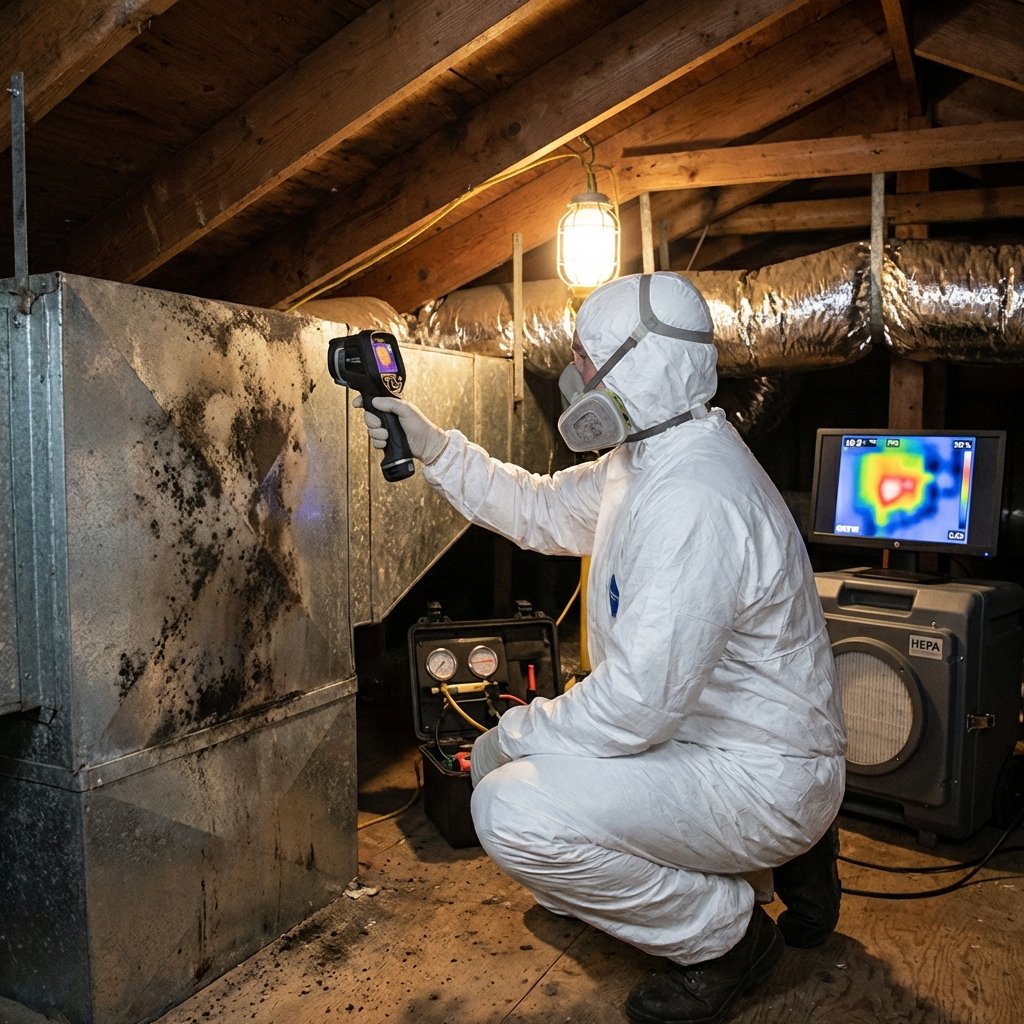
Pest droppings, urine, and decomposing rodent carcasses in ductwork create biohazard conditions that demand professional remediation. We encounter this contamination regularly in Texas homes, particularly in attic spaces and crawlspaces where rodent access is easiest.
DIY cleanup of pest-contaminated ducts exposes you to serious health risks. Rodent droppings carry hantavirus, leptospirosis, and other pathogens. Handling contaminated insulation without proper PPE and equipment poses real danger. We’ve heard too many homeowners describe DIY cleanup that left them ill for weeks.
Our process includes identifying and sealing pest entry points, removing contaminated insulation, cleaning and disinfecting ductwork, and installing protective barriers to prevent recontamination. We coordinate with pest control specialists when ongoing infestation is the root cause.
Pest contamination also explains why some homes have persistent odors despite cleaning. Dead rodents in wall cavities or attics don’t disappear on their own. Professional remediation locates and removes them.
What to do: If you notice foul odors from vents or suspect rodent activity in ducts, don’t attempt cleanup yourself. Contact us for a contamination assessment before the problem spreads.
Our Comprehensive Remediation vs Surface-Level Solutions
The core distinction between what we do and what DIY approaches accomplish comes down to comprehensiveness. We don’t stop when visible mold is gone; we verify the contamination is eliminated using post-remediation verification testing.
Our approach includes:
- Complete duct inspection and documentation before and after treatment
- Moisture source identification and correction
- Full-system HEPA cleaning with industrial equipment
- Contaminated material removal and proper disposal
- Duct sealing to prevent future contamination entry
- HVAC system performance testing to ensure proper airflow
- Recommendations for ongoing maintenance and monitoring
We create a remediation report documenting what was found, what was treated, what equipment was used, and what post-remediation testing confirms. This isn’t just for your records; it protects your home’s value and your family’s health with documented evidence that remediation was performed to professional standards.
Surface-level solutions skip most of these steps. They address the visible problem and hope it doesn’t return. When it inevitably does, you’re back to square one, having wasted time and money on incomplete treatment.
How Our Technicians Prevent Contamination Spread During Cleanup
A critical mistake in DIY mold and contamination cleanup is failing to contain the work area. When you disturb mold or contaminated ductwork, you aerosolize spores and particles throughout your home. You’re making the problem worse, not better.
Our process begins with containment. We seal off work areas, create negative air pressure to direct any spore movement toward HEPA filtration, and establish clear protocols for technician movement and equipment handling. We prevent contamination from spreading to unaffected areas.
We use barrier materials to isolate ductwork during cleaning. We establish specific cleanup protocols for equipment and materials. Every step is designed to prevent cross-contamination.
Our technicians change into protective gear at the site, use dedicated equipment for each work area, and follow decontamination procedures when transitioning between contaminated and clean spaces. These practices eliminate the risk of spreading contamination that you’d face attempting DIY work.
We also brief you on post-remediation precautions. If we’re treating ductwork, you’ll know not to run your system during certain phases. We manage the timeline to minimize your home’s exposure to active contamination.
Key takeaway: Contamination containment is what separates professional remediation from cleanup that accidentally spreads the problem throughout your home.
Timeline and Cost Comparison: Professional vs Repeated DIY Attempts
Let’s be direct about the financial reality. Professional remediation costs money upfront. A comprehensive duct cleaning and mold treatment might run $2,000-$5,000 depending on system size and contamination extent. That feels substantial.
Now consider the cost of repeated DIY attempts. You buy cleaning supplies, spend weekends working in contaminated areas, and the problem returns within weeks or months. You repeat the process. You miss work or use vacation time. You deal with ongoing health issues. You eventually call a professional anyway, but now you’ve already invested hundreds of dollars and months of time.
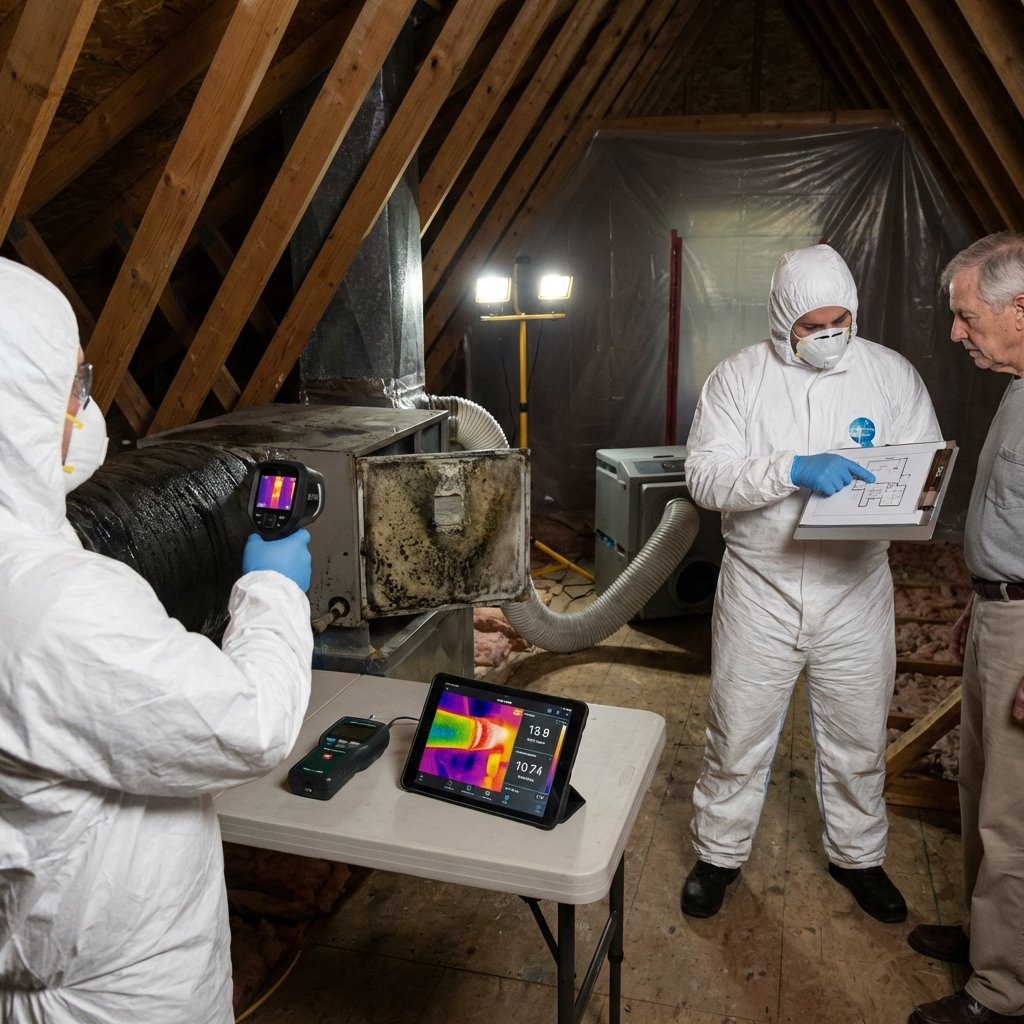
We’ve calculated cases where homeowners spent $3,000-$4,000 on repeated DIY attempts and contractor calls before finally investing in comprehensive professional remediation. They could have solved the problem once and properly for less total cost.
Timeline matters too. Professional remediation typically completes in one or two visits depending on contamination extent. You’re done. The problem is solved. DIY approaches drag on indefinitely because they don’t address root causes.
There’s also the hidden cost of health impact. If incomplete mold treatment contributes to respiratory issues, allergies, or infections, medical costs accumulate quickly. That risk alone justifies professional treatment.
Bottom line: Professional remediation is expensive upfront but economical when you factor in the cost of repeated failed attempts and health consequences avoided.
Why Austin and San Antonio Homeowners Choose Our Proven Approach
We’ve worked in Austin and San Antonio long enough to understand our local conditions deeply. Texas humidity and heat create specific mold environments. Our techniques are refined for these conditions. We’ve treated thousands of homes across these markets and know what works.
Our customers choose us because we deliver results that hold. We don’t create false confidence with temporary fixes. We address root causes, document our work, and stand behind the remediation with ongoing support.
Our free estimates give you transparent understanding of what’s actually wrong and what professional treatment entails. You’ll know what you’re investing in before we begin.
We’re available for same-day or next-day service because we understand that contamination issues feel urgent. You shouldn’t wait weeks for an appointment when your indoor air quality is compromised.
Our technicians are local, trained, and certified. You’re not dealing with a national franchise sending whoever is available. You’re working with professionals who understand your home and your neighborhood’s specific challenges.
Perhaps most importantly, you get clarity. We’ll tell you honestly whether your situation requires professional remediation or whether limited DIY work is appropriate. We’re not pressuring you toward expensive solutions you don’t need. We’re recommending professional treatment because your specific contamination requires it.
If you’ve noticed mold, experienced smoke or fire damage, suspect pest contamination, or dealt with recurring air quality issues, we’re ready to assess your situation. Contact us today for a free service estimate and discover what comprehensive professional remediation actually involves. Your home’s air quality and your family’s health are too important for incomplete treatment.
For further reading: Air duct cleaning matters, Pet-related air duct cleaning.
If you’re dealing with dust, poor airflow, mold in your ducts, or a clogged dryer vent — don’t wait. These issues can affect your health and safety. Go Air Ducts Group are the local experts in air duct cleaning, mold removal, dryer vent cleaning, and attic insulation. Call now for a free inspection and same-day service in Austin and San Antonio.
Frequently Asked Questions (FAQ)
When should we call a professional instead of handling mold cleanup ourselves?
We recommend calling our team when mold covers an area larger than 10 square feet, when it’s located in your HVAC system or air ducts, or if you have health concerns like allergies or respiratory issues. DIY attempts often miss contamination hidden within ductwork and wall cavities, which can spread mold spores throughout your home and worsen indoor air quality. Our certified technicians use specialized equipment to identify and safely remediate all affected areas, preventing the problem from returning.
What makes professional mold remediation different from what homeowners can do?
We conduct a thorough assessment to find root causes like moisture sources and air duct contamination that DIY methods typically miss. Our certified process includes proper containment to prevent spore spread, EPA-approved treatment protocols, and verification testing to ensure complete remediation. We also address underlying issues in your HVAC system and insulation that contribute to mold growth, so you don’t face repeated problems after cleanup.
How much does professional mold remediation cost compared to repeated DIY attempts?
While our initial assessment and remediation require an investment, we provide a free estimate so you understand the exact scope of work needed. Many homeowners find that repeated DIY attempts waste both time and money while failing to solve the problem, ultimately costing more than hiring us once to do it right. We serve Austin and San Antonio with transparent pricing and can discuss financing options during your consultation.