Managing Ventilation in a High-Volume Culinary Environment
Commercial kitchens are unique environments where the HVAC system must work overtime to manage heat, humidity, and the microscopic byproducts of cooking. Over time, even the most advanced systems in Austin restaurants can fall victim to “Sick Building Syndrome” if the ductwork is neglected. At Soto Restaurant, the ventilation system had begun to accumulate a complex layer of dust, fine grease particles, and airborne contaminants.
This buildup is more than an aesthetic issue; it creates significant mechanical resistance. When debris coats the interior of the ductwork, the HVAC blowers must work harder to push air through the building, leading to increased energy consumption and premature wear on expensive mechanical components. Furthermore, in a restaurant setting, maintaining superior indoor air quality is a non-negotiable standard for food safety and patron comfort.
The Solution: A NADCA-Standard Deep Clean
To address these challenges, our technicians implemented a strategic cleaning plan tailored specifically to the layout of the Soto Restaurant facility. We utilize a methodology rooted in the standards set by the National Air Duct Cleaners Association (NADCA), which is the gold standard for high-level commercial hygiene.
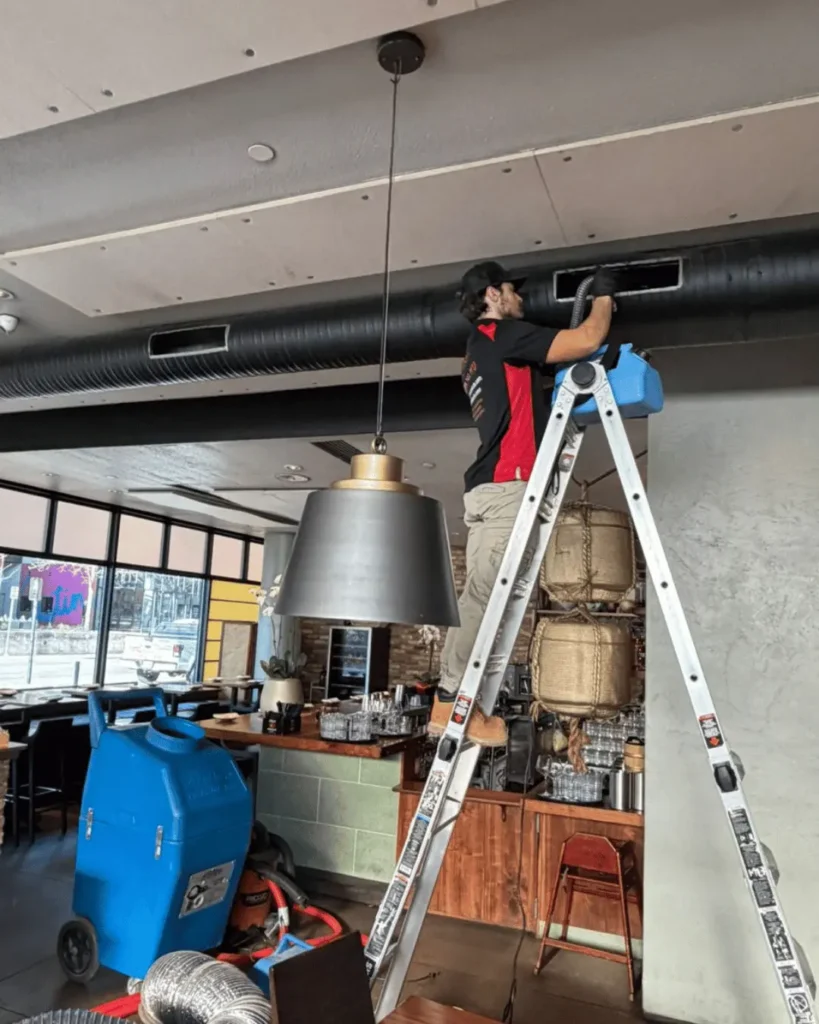
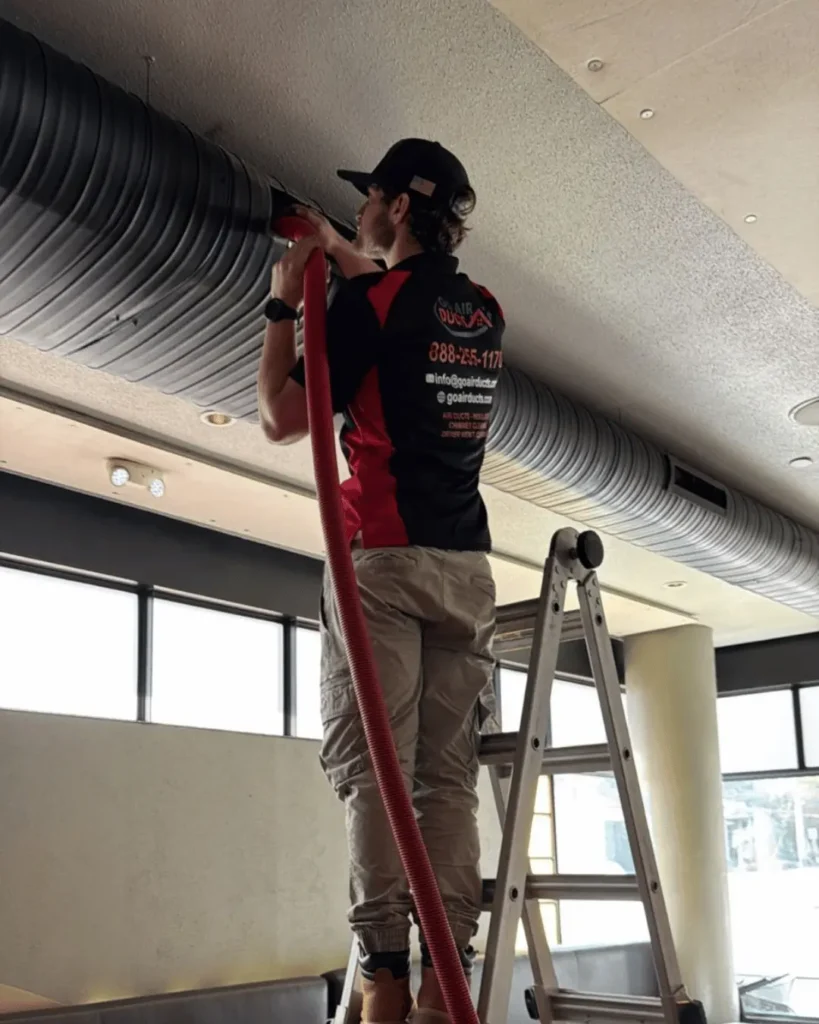
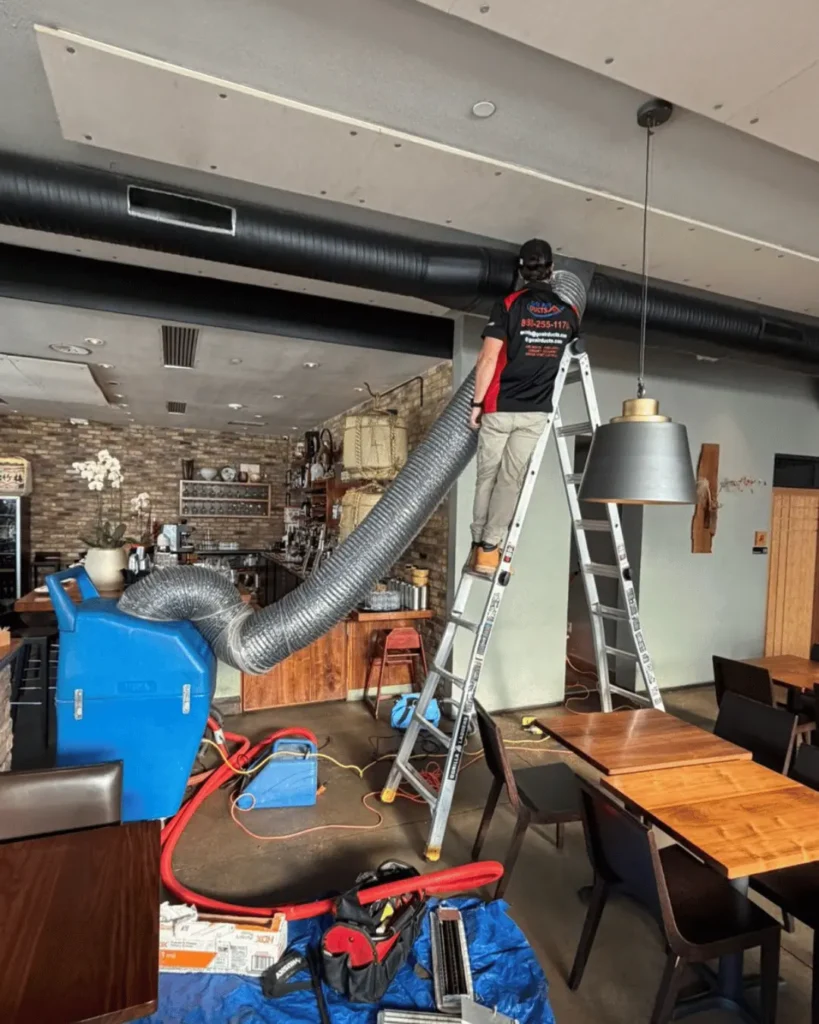
Our approach centered on “Source Removal.” Rather than simply moving dust around, we utilized high-powered, HEPA-filtered vacuum collection systems combined with specialized agitation tools. These tools, including pneumatic whips and brushes, are designed to dislodge stubborn particulates from the galvanized steel surfaces of the ducts without damaging the integrity of the seals or insulation. By creating a continuous state of negative pressure within the system, we ensured that no dislodged dust or contaminants escaped into the dining or food preparation areas during the service.
Technical Execution: Precision Cleaning for Austin’s Commercial Sector
The project at Soto Restaurant required a phased execution to ensure zero disruption to their business operations. Our Austin-based crew performed the service during off-hours, allowing for a total system “reset.” The process involved several critical stages:
- System Assessment: We began with a multi-point inspection to identify high-accumulation zones, particularly near the intake vents and transition points where grease-laden air often settles.
- Containment and Protection: All furniture, kitchen equipment, and prep surfaces were protected with high-grade plastic sheeting to maintain a sterile environment.
- Mechanical Agitation: Using specialized commercial-grade whips, we broke the static bond between the contaminants and the duct walls. This is vital in a restaurant where the air often contains higher moisture levels, making dust more “sticky” than in a standard office building.
- HEPA-Filtered Extraction: The dislodged material was pulled directly into our containment units, ensuring that 99.97% of particulates, including mold spores and fine allergens, were captured and removed from the premises.
The visual evidence from the project, captured in our progress photos, showed a dramatic transition from darkened, debris-laden passages to clean, reflective metal surfaces. This level of cleanliness is essential for maintaining a balanced HVAC system that distributes cool, filtered air evenly across the restaurant.