The Challenge: Identifying Restricted Airflow and Thermal Transfer Issues
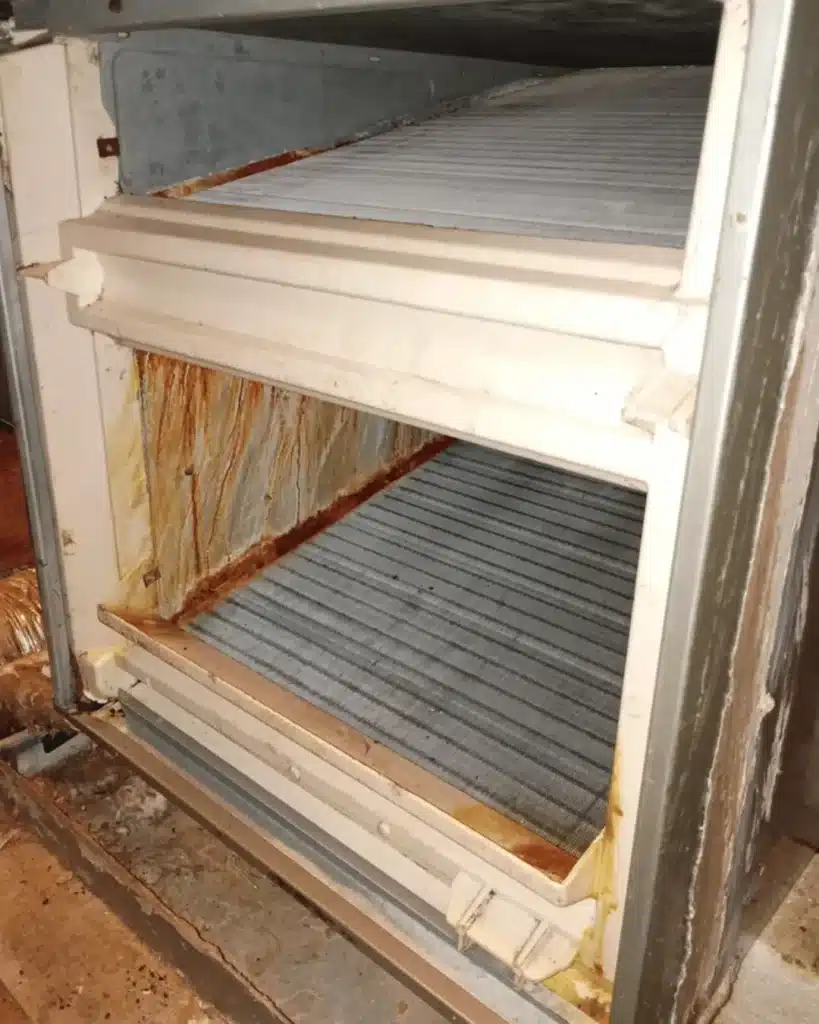
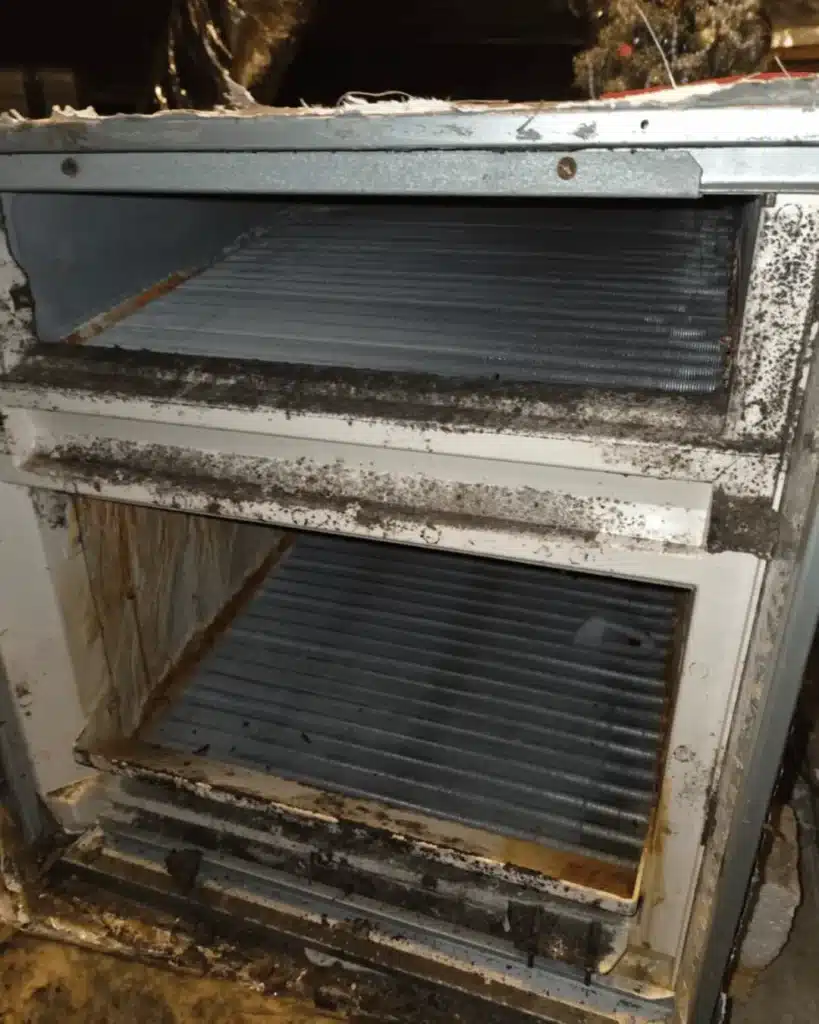
Upon our arrival at the Austin property, the primary symptom was a classic case of system strain. The HVAC unit was running for extended cycles without ever reaching the desired thermostat setting. Our initial diagnostic revealed that while the blower motor was functioning, the air passing through the vents was minimal. When we accessed the indoor air handler, the culprit was immediately apparent: the evaporator coil was encased in a thick layer of compacted dust, pet dander, and organic biofilm.
In the humid climate of Central Texas, the evaporator coil is constantly wet due to the condensation process. This moisture acts as a magnet for airborne particulates that bypass the furnace filter. Over time, this mixture creates a “mat” of debris that physically blocks the narrow aluminum fins of the coil. This doesn’t just block air; it creates an insulating barrier that prevents the refrigerant inside the coils from absorbing heat from your home’s air. For this Austin homeowner, the system was essentially “suffocating,” leading to higher wear and tear on the compressor and a significant loss in dehumidification capabilities.
The Solution: A Multi-Stage Chemical and Mechanical Restoration
To resolve this, we implemented a professional-grade evaporator coil cleaning protocol. We eschew “surface-only” cleaning in favor of a deep-penetration method that reaches the center of the coil, “A-frame” or “Slab” configuration. Because this coil was heavily impacted, a simple brush-off would have been insufficient; we needed to break down the biological bond between the debris and the metal.
Our team utilized a specialized, non-acidic foaming cleanser designed specifically for HVAC applications. This “self-rinsing” foam expands deep into the fins, lifting deeply embedded dirt to the surface where it can be safely flushed away. According to the U.S. Department of Energy, a dirty evaporator coil can increase energy consumption by up to 30%, as the system must work significantly harder to achieve the same cooling effect. By restoring the metal-to-air contact, we aimed to return the system to its original SEER (Seasonal Energy Efficiency Ratio) rating.
Technical Execution: The Deep Cleaning Process in Austin
Precision is paramount when working with sensitive aluminum fins and copper tubing. Our Austin technicians followed a meticulous sequence to ensure the coil was cleaned without risking a refrigerant leak or water damage to the property:
- Access and Containment: We carefully opened the plenum and removed the access panels. We utilized protective drop cloths and specialized “coil bags” to ensure that any runoff was contained and directed safely into the primary drain system.
- Mechanical Pre-Cleaning: Before applying liquids, we used soft-bristle brushes and high-static vacuums to remove the heavy “blanket” of dust on the intake side of the coil.
- Chemical Agitation: The foaming agent was applied and allowed to dwell. This is a critical step in Austin homes where high humidity often leads to “Dirty Sock Syndrome”, a bacterial growth on the coil that causes foul odors. The cleanser effectively neutralizes these odors at the source.
- Fin Straightening: During the inspection, we noticed several areas where the delicate aluminum fins had been bent. We used a precision “fin comb” to realign them, ensuring that airflow was perfectly laminar and unobstructed.
- Sanitization and Rinsing: Once the foam had done its work, we performed a gentle low-pressure rinse to clear the debris into the condensate pan, followed by a verification that the primary and secondary drain lines were completely clear.
The visual results, as documented in our project photos, showed a transformation from a grey, clogged mass to a gleaming, silver finish. This restoration allows for maximum thermal transfer, meaning the air coming out of the vents is not only faster but significantly colder.