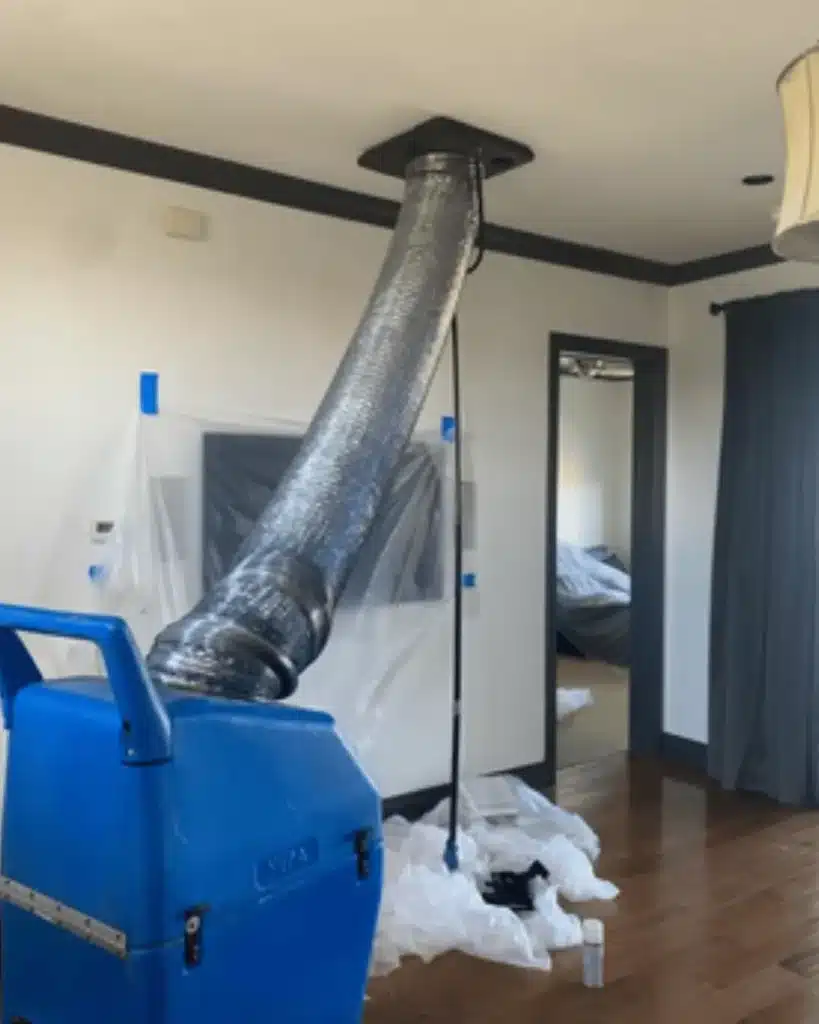
Preventing Cross-Contamination During Duct Cleaning
The primary concern for many San Antonio residents when considering air duct cleaning is the fear that the process will actually make the home dirtier. Traditional cleaning methods that rely on simple shop vacuums or “blow-and-go” techniques often dislodge dust only to have it blow out through the registers and settle on carpets, curtains, and upholstery. In this specific project, the home’s ductwork had decades of accumulated skin cells, pet dander, and fine construction debris that required a high-pressure solution.
Without proper containment, the fine particulates found in San Antonio HVAC systems can become airborne and stay suspended for hours, posing a significant respiratory risk to those with asthma or sensitive immune systems. Our challenge was to create a “closed-loop” environment where the debris could be agitated, captured, and filtered out with 99.97% efficiency, ensuring the indoor air quality remained pristine throughout the duration of the service.
The Science of Negative Pressure and HEPA Filtration
The cornerstone of our professional approach is the use of a high-output HEPA Negative Air Machine. By connecting this powerful vacuum system directly to the main trunk line of the HVAC system, we essentially turn the entire network of ducts into one giant vacuum. This creates a state of negative pressure, meaning air is constantly being pulled into the ducts from the rooms, rather than blowing out.
This is a critical distinction in professional air duct cleaning. By maintaining this constant suction, we ensure that as our agitation tools break loose the “caked-on” debris inside the vents, the material is immediately swept toward the collection unit. We chose a unit equipped with a Certified HEPA (High-Efficiency Particulate Air) Filter. According to the U.S. Department of Energy, HEPA filters are designed to capture 99.97% of all particles that are 0.3 microns or larger. This includes mold spores, bacteria, and even some viruses, providing a level of filtration that standard vacuum systems simply cannot match.
Connecting the System in San Antonio
Our San Antonio technicians followed a rigorous technical protocol to ensure the negative air machine was utilized to its full potential. The project involved several key phases of execution:
- System Isolation: We began by sealing off every supply and return register in the home with specialized adhesive film. This concentrates the vacuum’s power on a single branch of the ductwork at a time, maximizing the velocity of the air being pulled through the system.
- The Main Connection: We cut a precision access hole into the main supply plenum and attached a large-diameter flexible hose connected to the HEPA Negative Air Machine. This creates a direct path for the debris to travel from the vents into our containment system.
- Airstream Agitation: While the negative air machine was running, we used pneumatic “whips” and rotating brushes at each vent. The high-velocity air pulled by the machine acts as a carrier, whisking away the dislodged particulates before they have a chance to settle.
- Verification and Filtration: All extracted material passed through a multi-stage filtration system. The pre-filters captured large debris, while the final HEPA stage ensured that the air being exhausted back into the work area was cleaner than the air originally in the room.
The visual evidence from our project photos shows the sheer volume of contaminants captured, materials that, without the use of a negative air machine, would likely have been recirculated through the San Antonio home every time the air conditioner kicked on.