
Table of Contents
- Why Local HVAC Codes Matter for Your Texas Home
- San Antonio HVAC Code Requirements and Permit Process
- Austin Historic District HVAC and Duct Cleaning Rules
- How Historic Preservation Affects Your Air Duct Work
- Chimney and Dryer Vent Codes in Major Texas Cities
- Why We Stay Current on All Local Regulations
- Energy Efficiency Codes and Insulation Requirements
- Common Permit Mistakes Homeowners Make
- Our Process for Code-Compliant HVAC Services
- How to Get Your Free Estimate and Compliance Review
- Frequently Asked Questions (FAQ)
Why Local HVAC Codes Matter for Your Texas Home
Building codes exist for a reason. When you work on your HVAC system, ducts, chimney, or insulation, local codes protect your safety, energy efficiency, and home value. We’ve seen homeowners spend thousands on unlicensed work only to discover that their system violates city codes, creating liability issues and complicating future home sales.
Austin and San Antonio enforce different standards based on their unique building needs. Austin’s rapid growth has led to stricter energy efficiency requirements, while San Antonio’s historic neighborhoods carry preservation rules that affect how and where you can install or modify ductwork. Both cities require permits for major HVAC work, and both expect certified technicians.
The good news: understanding these requirements upfront saves you money and prevents costly rework. We navigate these codes daily, so your project moves forward without delays or surprises.
Action step: If you’re planning any HVAC, duct, or insulation work, verify your property’s code jurisdiction now. Historic homes especially need early review to avoid mid-project complications.
San Antonio HVAC Code Requirements and Permit Process
San Antonio operates under the Texas Energy Code combined with local amendments. For most residential HVAC installations and significant repairs, a permit is required. The process is straightforward but does take time.
Here’s what typically triggers a permit requirement in San Antonio:
- Full HVAC system replacement
- Ductwork modifications or additions
- Major insulation installations
- Chimney work involving venting changes
- Dryer vent installation or relocation
We submit your permit application with sealed plans and a scope of work. The city usually responds within 5-10 business days. Inspections happen at roughing stage (when ducts are installed but not sealed) and again at completion. Our certified technicians coordinate directly with inspectors to ensure smooth approvals.
San Antonio’s local code also requires ductwork to meet specific sealing and leakage standards. Loose or poorly sealed ducts lose conditioned air and raise your energy bills by 15-30 percent. During our work, we seal all connections with mastic and mesh tape per code specifications.
Action step: Don’t hire unlicensed contractors. Verify licensing through the Texas Department of Licensing and Regulation website before signing any contract.
Austin Historic District HVAC and Duct Cleaning Rules
Austin’s Historic District and Contributing Properties face additional scrutiny. If your home sits within these boundaries, exterior HVAC modifications, new ductwork penetrations through walls, and even visible chimney repairs may require Historic Landmark Commission (HLC) approval before you can start.
This doesn’t mean you can’t upgrade your HVAC. It means you need to plan carefully and work with the HLC early. We’ve handled dozens of historic projects in Austin’s Central, Mueller, and downtown neighborhoods. The key is designing solutions that maintain the home’s character while improving performance.
For interior ductwork and air duct cleaning, historic guidelines rarely restrict your work. However, if your renovation requires new supply or return vents on exterior walls, you’ll need HLC sign-off. This typically takes 2-4 weeks, depending on the review board’s schedule.
Interior air duct cleaning proceeds without permits, but if your ducts are original and contain asbestos insulation (common in homes built before 1980), we follow EPA protocols for safe handling and removal.
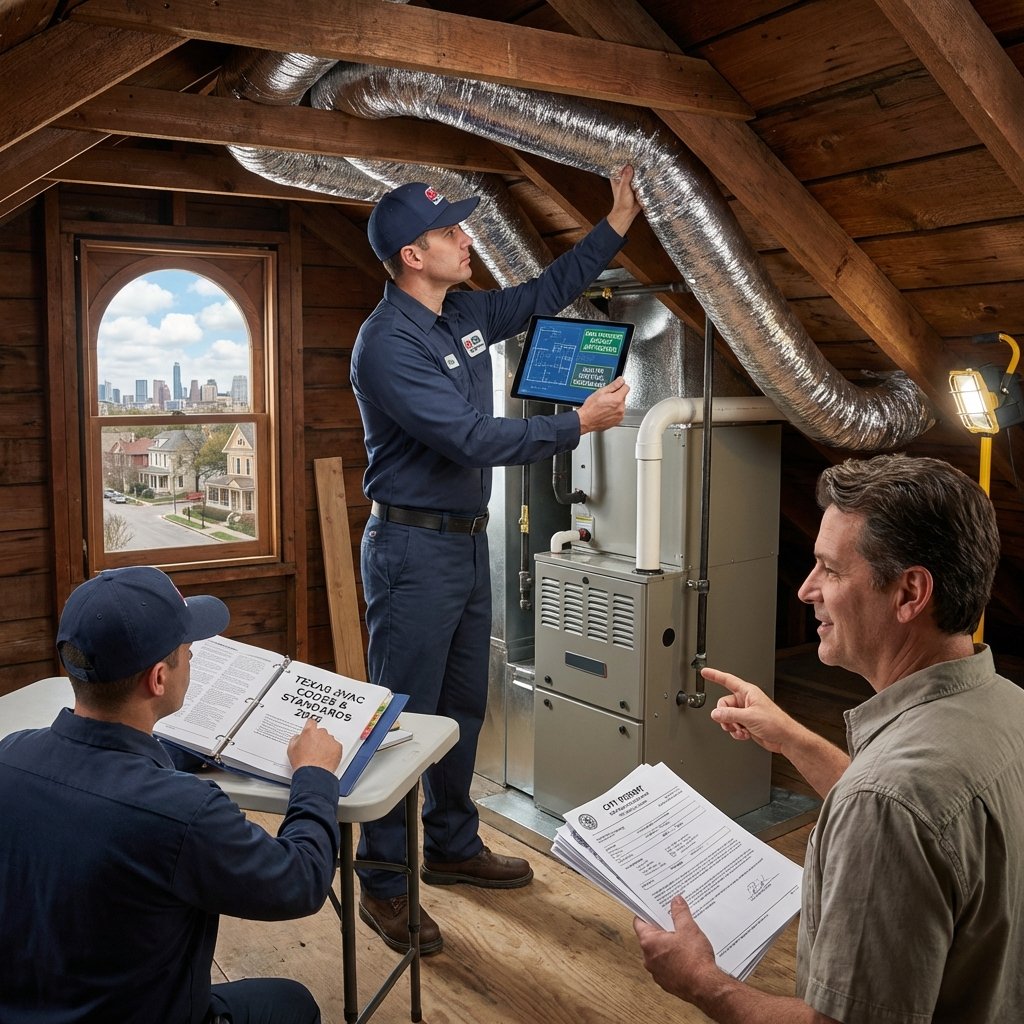
Action step: Check the Austin Historic Landmark Commission database to confirm your property’s status before planning any HVAC upgrades.
How Historic Preservation Affects Your Air Duct Work
Historic preservation rules focus on exterior appearance and structural integrity. Interior systems like ductwork have flexibility, but you may need to route ducts differently than a new home would.
In older Austin homes, we often work around original floor plans and architectural features that newer code would eliminate. Drop ceilings provide space for horizontal runs; attic access allows us to design efficient layouts without cutting through load-bearing walls. The extra planning time pays off through better airflow and system longevity.
When historic homes need insulation upgrades, we prioritize blown-in cellulose or fiberglass in attic and wall cavities. These methods don’t change the home’s exterior appearance. Rigid foam board insulation, while efficient, requires careful planning to avoid visible exterior changes that HLC might flag.
We also factor in the home’s original ventilation strategy. Historic homes often relied on natural draft chimneys and operable windows. Modern HVAC systems work best when we seal and condition the home properly while preserving any character features. This balance is where our experience matters most.
Action step: If you own a historic home, request our free compliance review. We’ll assess your property’s code status and help you plan upgrades that satisfy both preservation rules and modern comfort needs.
Chimney and Dryer Vent Codes in Major Texas Cities
Chimneys and dryer vents fall under specific safety codes across Dallas, Houston, Austin, and San Antonio. Improper installation creates fire risks, carbon monoxide hazards, and efficiency losses.
San Antonio and Austin require:
- Chimney inspections by certified technicians annually if the chimney is actively used
- Dryer vents must be fully ducted to exterior (no wall terminations in occupied spaces)
- Dryer vent ducts cannot exceed 35 feet in length without field inspection and approval
- Chimney caps and dampers must be present and functional
- All venting must slope toward exterior termination points to prevent condensation backup
We’ve encountered homes with dryer vents terminat ing inside attics or crawlspaces, creating moisture and mold. This violates code and creates real safety hazards. Our dryer vent cleaning and inspection includes verifying proper termination and airflow.
Chimney work carries additional scrutiny. Gas fireplaces need different venting than wood-burning appliances. Water heater venting has its own rules. We inspect, clean, and repair chimneys to current code, including proper flashing, height above roofline, and interior lining condition.
Action step: Schedule a chimney inspection this season if you haven’t had one in the past year. Early detection of cracks, creosote buildup, or improper sizing prevents fires and costly repairs.
Why We Stay Current on All Local Regulations
Building codes update every few years. Texas adopted new energy codes in 2024 affecting insulation R-values, ductwork efficiency standards, and HVAC sizing calculations. Austin added local amendments focusing on carbon footprint reduction. San Antonio updated seismic and wind resistance standards for exterior equipment mounting.
We invest in ongoing training for our certified technicians and management team. Our compliance officer monitors code changes and updates our project checklists accordingly. When a new code rolls out, we’ve already trained our crews before your project starts.
This commitment protects you. If a code change affects your work, we handle modifications at no surprise cost because we’ve planned for compliance from day one. We also maintain relationships with local building departments, which means faster permit approvals and fewer inspection pushbacks.
You benefit from our regional focus. We don’t treat Austin and San Antonio the same. We know each city’s specific requirements, building department preferences, and common problem areas. That depth of knowledge prevents costly mistakes.
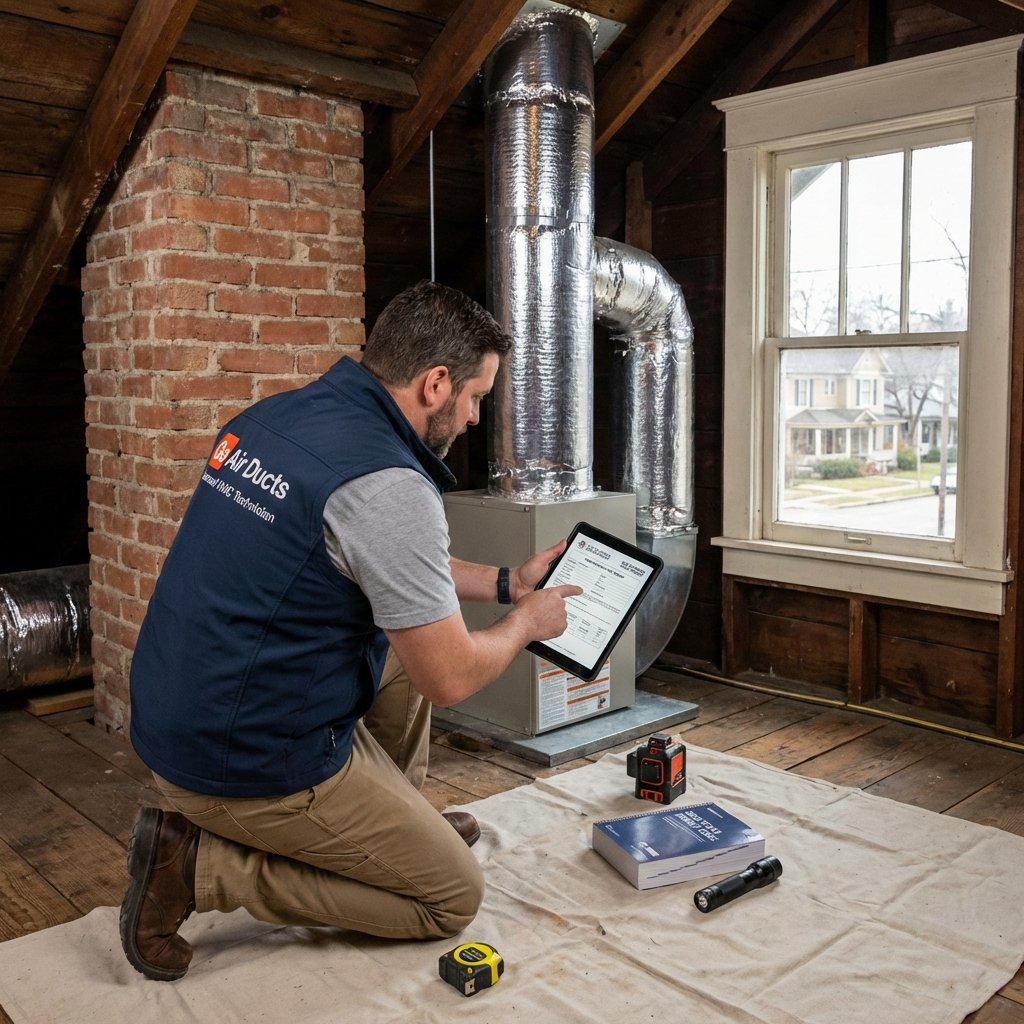
Action step: Ask any contractor about their code compliance training. If they seem unfamiliar with recent updates or hesitant to discuss permits, keep looking.
Energy Efficiency Codes and Insulation Requirements
Modern energy codes mandate specific insulation levels based on climate zone and building component. Central Texas falls into IECC Climate Zone 2A, requiring:
- Attic insulation: R-38 minimum (R-49 recommended for new construction)
- Wall insulation: R-13 minimum (varies by wall type)
- Basement and crawlspace: R-10 or R-13 depending on configuration
Many homes we inspect run R-19 or less in attics, especially in older San Antonio properties. Upgrading to R-38 reduces heating and cooling costs by 10-20 percent, pays for itself in 5-8 years, and satisfies current code if you’re planning renovations.
Ductwork insulation also matters. Supply ducts in unconditioned spaces (attics, crawlspaces) must be R-8 minimum. We inspect existing ductwork during air duct cleaning and note insulation gaps, tears, or absence. Poor duct insulation costs you comfort and efficiency.
When we perform air duct cleaning before heating season, we assess the entire system’s code compliance. If ducts lack insulation or show excessive leakage, we recommend upgrades and provide cost-benefit projections.
Action step: Get an attic insulation inspection. If your home measures below R-38, an upgrade often qualifies for utility rebates, offsetting out-of-pocket costs significantly.
Common Permit Mistakes Homeowners Make
We see three major permit errors repeatedly:
Skipping the permit entirely. Some homeowners hire unlicensed crews to avoid permitting costs and time. This creates liability. If your home floods and the HVAC system fails, unpermitted work may void insurance claims. Future buyers’ lenders often require proof of permitted work. The short-term savings evaporate fast.
Underestimating timelines. Permits take 1-3 weeks in both San Antonio and Austin, plus inspection scheduling. Plan for 4-6 weeks total. We always communicate realistic timelines upfront so you’re not caught off-guard.
Ignoring historic requirements. Austin homeowners sometimes start exterior work only to discover HLC approval is required mid-project. The work halts, costs climb, and frustration sets in. We verify status before you commit.
Failing to coordinate multiple trades. If your project involves HVAC, insulation, and plumbing, each might trigger separate permits and inspections. Scheduling conflicts create delays. We coordinate inspections to bundle approvals and accelerate your project.
Action step: Before hiring anyone, ask for their contractor license number and verify it’s active and in good standing. A two-minute online check prevents months of headaches.
Our Process for Code-Compliant HVAC Services
We start every project with a compliance assessment. Our technicians review your home’s code jurisdiction, any historic designations, and the specific work scope. If permits are needed, we handle the application and coordinate all inspections.
Here’s our standard approach:
- Free estimate with compliance review and code analysis
- Permit application and submission (we manage this entirely)
- Scheduling inspection appointments and site coordination
- Execution with certified technicians who know local requirements
- Final inspection walkthrough with city inspector
- Certificate of Completion provided to you for your records
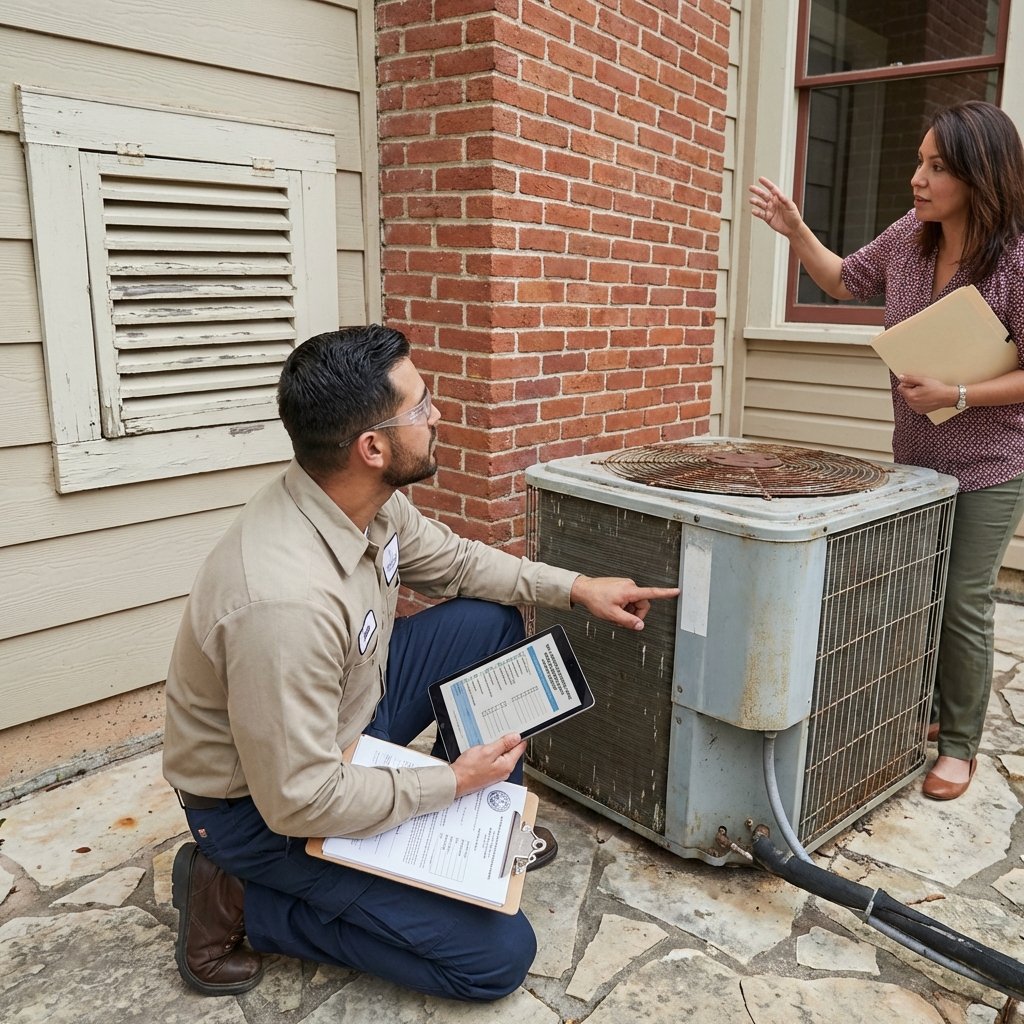
For air duct work specifically, we clean, seal, and insulate per code. We document everything with photos and reports so you have proof of compliant work if questions arise later.
Our commitment to code compliance isn’t just legal protection. It means your HVAC system performs as designed, your energy bills stay reasonable, and your home maintains value. Code-compliant work lasts longer and attracts fewer problems down the road.
We also provide upfront transparency on costs. Permit fees vary, but we quote them separately so you know exactly what permitting adds to your project. There are no surprises when the bill arrives.
Action step: Call us for a free estimate. We’ll assess your property’s code status and provide a detailed proposal including permits, timelines, and costs.
How to Get Your Free Estimate and Compliance Review
Reach out to us directly through our website or phone. Schedule a time that works for you. One of our certified technicians will visit your home, assess your HVAC, ductwork, chimney, and insulation, and review code requirements specific to your property.
We’ll discuss what work makes sense, what code requires, and what upgrades would improve efficiency and comfort. Our estimate includes all permitting, labor, materials, and inspections so you can make an informed decision.
If you’re in Austin or San Antonio and planning any HVAC, air duct cleaning, chimney, or insulation work, code compliance should be your baseline expectation, not an afterthought. We’ve built our reputation on delivering professional, permitted, code-compliant work that homeowners trust.
Let’s make sure your system is safe, efficient, and ready for years of reliable performance.
Action step: Contact us today for your free compliance review. We’ll answer all your code questions and help you move forward with confidence.
For further reading: Air duct services.
If you’re dealing with dust, poor airflow, mold in your ducts, or a clogged dryer vent — don’t wait. These issues can affect your health and safety. Go Air Ducts Group are the local experts in air duct cleaning, mold removal, dryer vent cleaning, and attic insulation. Call now for a free inspection and same-day service in Austin and San Antonio.
Frequently Asked Questions (FAQ)
Do we handle HVAC permits and code compliance for historic homes in Austin and San Antonio?
Yes, we specialize in code-compliant HVAC work for historic properties across both cities. Our team understands the unique requirements that historic preservation districts impose, including ventilation restrictions, exterior ductwork rules, and aesthetic considerations that standard homes don’t face. We manage the permit process from start to finish so you don’t have to navigate complex local regulations alone.
What building codes apply to air duct cleaning and dryer vent services in these areas?
We follow San Antonio’s residential HVAC code standards and Austin’s building codes, which govern duct sizing, sealing requirements, and ventilation safety. Dryer vents must terminate properly outside your home and meet specific diameter requirements for safety and efficiency. Our technicians stay updated on all current codes to ensure every service we provide meets or exceeds local standards.
Why should I get a compliance review before starting HVAC work on my property?
Our free estimates include a compliance review that identifies any permit requirements, code violations, or upgrades needed for your specific situation. This upfront assessment saves you from costly rework later and ensures your HVAC project moves through the permitting process without delays. We’ve seen homeowners make expensive mistakes by skipping this step, so we always recommend understanding your obligations before starting any work.