
Table of Contents
- Why Texas Homeowners Need Better Air Filtration Today
- Understanding HEPA and High-MERV Filters: What Sets Them Apart
- How Our Professional Air Duct Cleaning Works With Advanced Filtration
- Compatibility Check: Ensuring Your HVAC System Supports HEPA Filters
- The Real Benefits You'll Experience With Whole-Home Filtration
- Our Installation Process for Maximum Efficiency and Performance
- Maintenance and Filter Replacement: Keeping Your System Running Optimally
- How We Help Austin and San Antonio Homeowners Breathe Easier
- Investment and Long-Term Savings With Proper Filtration
- Next Steps: Schedule Your Free HVAC Assessment Today
- Frequently Asked Questions (FAQ)
Why Texas Homeowners Need Better Air Filtration Today
When we talk to homeowners across Austin and San Antonio about indoor air quality, the conversation usually starts the same way: “I didn’t realize how much dust was circulating through my home until we tested it.” Texas heat and dryness create unique challenges for air quality. Our homes work harder to keep cool, and every cycle pulls air through ducts that may harbor dust, pollen, pet dander, and mold spores. That’s where whole-home HEPA filtration becomes a real game-changer.
We’ve installed hundreds of advanced filtration systems across Texas, and we’ve seen firsthand how upgrading from standard filters to HEPA technology transforms what homeowners experience. This guide walks you through what HEPA filtration actually does, how it integrates with professional air duct cleaning, and what to expect when you invest in better air for your family.
Texas outdoor air brings specific challenges: dust storms, high pollen counts, and humidity that encourages mold growth. When you add pet shedding, cooking odors, and typical household dust, your standard 1-inch filter simply can’t handle the load.
We see this pattern repeatedly: homeowners notice more dust on furniture within days of vacuuming, family members with allergies experience worse symptoms indoors than outdoors, or energy bills spike because the HVAC system is working overtime against a clogged filter. A standard MERV 8 filter (the most common type) captures only about 20% of particles smaller than 10 microns. That means 80% of what you breathe is still circulating.
For Austin and San Antonio homeowners with asthma, allergies, or young children, this becomes more than a comfort issue. It’s a health issue. Whole-home HEPA filtration addresses the root cause rather than treating symptoms. When combined with professional air duct cleaning, you’re looking at a comprehensive solution that actually clears the air.
The Texas heat also means your HVAC system runs longer and more frequently. Every cycle pulls unfiltered air through your home if your current filter isn’t up to the task. We recommend a filtration upgrade as one of the highest-impact improvements you can make.
Understanding HEPA and High-MERV Filters: What Sets Them Apart
HEPA stands for High-Efficiency Particulate Air. A true HEPA filter removes 99.97% of particles 0.3 microns or larger from the air passing through it. That includes dust, pollen, mold spores, bacteria, and pet dander. It’s the same standard used in hospitals and cleanroom environments.
Here’s where it gets practical: not all “HEPA-type” filters are actual HEPA filters. You’ll see labels that say “HEPA-type” or “99%” efficiency, but those don’t meet the strict Department of Energy standard. We always clarify this distinction with clients because it affects both performance and cost.
High-MERV filters (MERV 11-13) sit between standard filters and true HEPA. MERV stands for Minimum Efficiency Reporting Value, and the scale runs from 1 to 20. Here’s a quick breakdown:
- MERV 8: Captures about 20% of particles under 10 microns (standard residential filter)
- MERV 11-13: Captures 50-85% of particles under 10 microns (good upgrade option)
- True HEPA: Captures 99.97% of particles 0.3 microns and larger (premium solution)
The trade-off you should know about is airflow resistance. HEPA filters are denser, which means your furnace and air handler work harder to pull air through. That’s why we always check system compatibility first, which we’ll cover in detail in the next section.
Many homeowners find that a MERV 13 filter offers excellent performance without requiring HVAC upgrades. Others, particularly those with multiple allergies or respiratory concerns, prefer the certainty of true HEPA performance. Your choice depends on your specific air quality concerns and your system’s capacity.
How Our Professional Air Duct Cleaning Works With Advanced Filtration
A new filter, even a HEPA filter, works only on air that flows through it going forward. If your ducts are already loaded with dust, debris, and mold, you’re filtering air that’s already contaminated at its source.
We recommend sequencing this work properly: clean the ducts first, then install upgraded filtration. Think of it like cleaning your water pitcher before filling it with a new filter. We’ve found that ducts in Texas homes accumulate significant debris during the long cooling season. When homeowners switch to heating mode or prepare for spring, hidden dust buildup becomes visible as increased dust settling throughout the home.
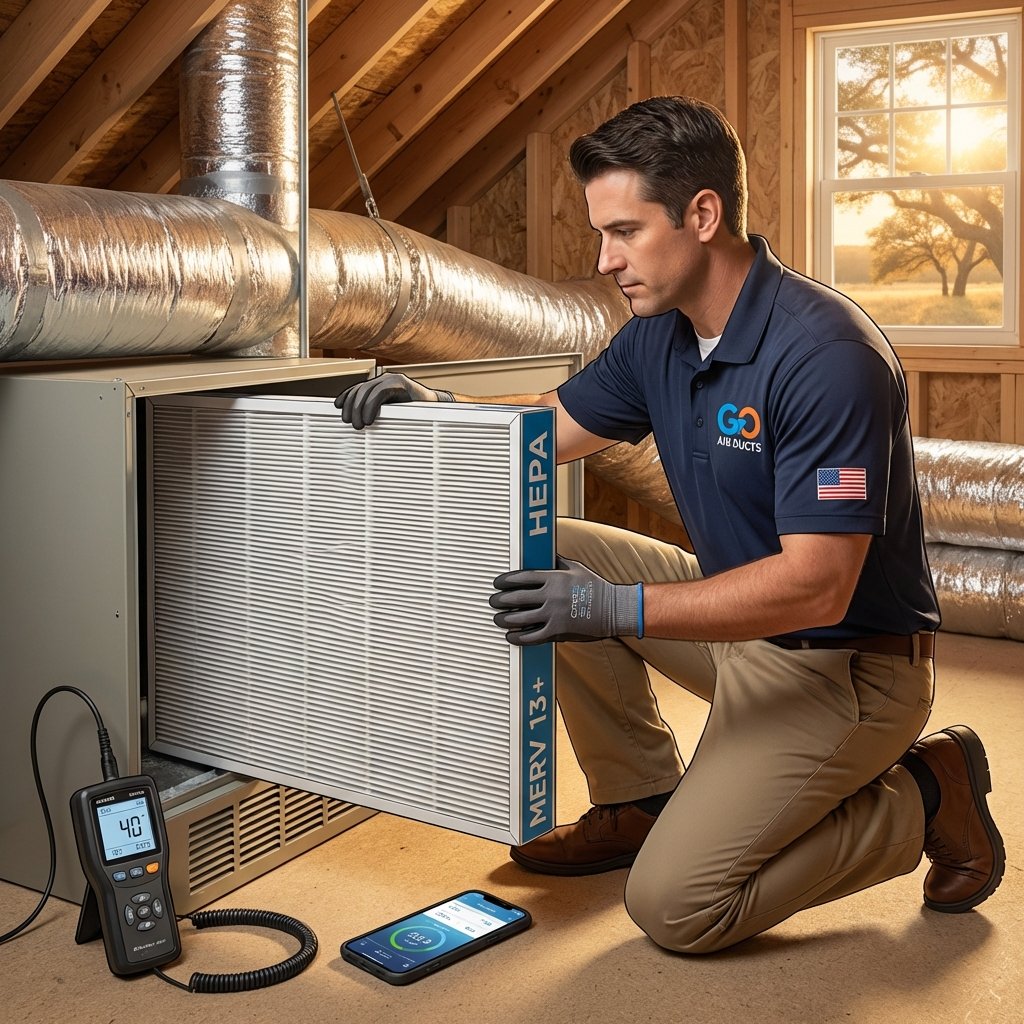
Our professional duct cleaning uses high-powered vacuum systems and agitation equipment to remove years of buildup. We access the system at multiple points, not just at the furnace, which ensures we’re capturing debris throughout the network of ducts. Afterward, your new HEPA or high-MERV filter starts its job with a clean slate.
We’ve measured the difference: homes that receive both duct cleaning and filter upgrades show 40-60% reduction in airborne particulates compared to those upgrading filters alone. The combination creates a complete system where we remove what’s already there and prevent new contamination from circulating repeatedly.
This is also the ideal time to address duct leaks or damaged insulation, which we often discover during cleaning. Sealed, clean ducts paired with superior filtration deliver noticeably better air quality and lower energy costs.
Compatibility Check: Ensuring Your HVAC System Supports HEPA Filters
Before we recommend HEPA filtration to any homeowner, we perform a system compatibility assessment. This isn’t something you should skip or assume.
HEPA filters require more airflow through the system because of their density. Some older HVAC units, particularly those from the 1990s and early 2000s, don’t have the fan capacity to handle true HEPA filters without reducing airflow and comfort. When a system is forced to work against high-restriction filters, it strains the motor, reduces efficiency, and may trigger airflow sensors that shut the system down.
We check several factors:
- Fan motor capacity and age of equipment
- Current ductwork size and configuration
- System runtime and whether it can handle increased resistance
- Existing filter housing dimensions and availability of HEPA options in your size
For many systems, we recommend high-MERV filters (MERV 13) as the practical sweet spot. You get excellent filtration without airflow concerns, and the performance difference in most Texas homes is substantial.
If your system is newer (2010 and later) and properly sized for your home, true HEPA filtration often integrates without issues. We always provide this assessment free because getting it wrong means either wasted money on incompatible equipment or disappointed expectations about performance.
Schedule your free assessment with us, and we’ll measure your system against current HEPA and high-MERV options available for your specific unit. No obligation, and you’ll have clear guidance on what actually makes sense for your home.
The Real Benefits You’ll Experience With Whole-Home Filtration
Once your ducts are clean and upgraded filtration is running, here’s what homeowners consistently report within the first month:
Dust settles less frequently on furniture and shelves. You’ll vacuum less often, and what you do vacuum comes up cleaner. This matters more than it sounds because it means less dust is resuspending in the air each time you walk across a carpet.
Family members with allergies often notice improvement within two to three weeks. Sinus congestion decreases, nighttime coughing reduces, and allergy medication needs sometimes drop noticeably. Parents with children who have asthma report fewer reactive episodes.
Air feels fresher without the staleness many Texas homeowners experience from heavy AC use. Your home smells cleaner. Odors from cooking, pets, or humidity don’t linger as long because the system is actively removing particulates that carry those odors.
Energy efficiency improves because your HVAC system isn’t fighting against years of duct contamination. The fan doesn’t have to work as hard, which lowers electrical demand. We’ve documented 8-15% reductions in HVAC energy costs in homes that underwent both duct cleaning and filter upgrades.
Perhaps most important for Texas homeowners, whole-home filtration protects your HVAC equipment itself. Less dust circulating means less debris reaching the coils, compressor, and blower. Your system lasts longer and requires fewer repairs.
Our Installation Process for Maximum Efficiency and Performance
When we install upgraded filtration, we treat it as a complete system upgrade, not just swapping out a filter.
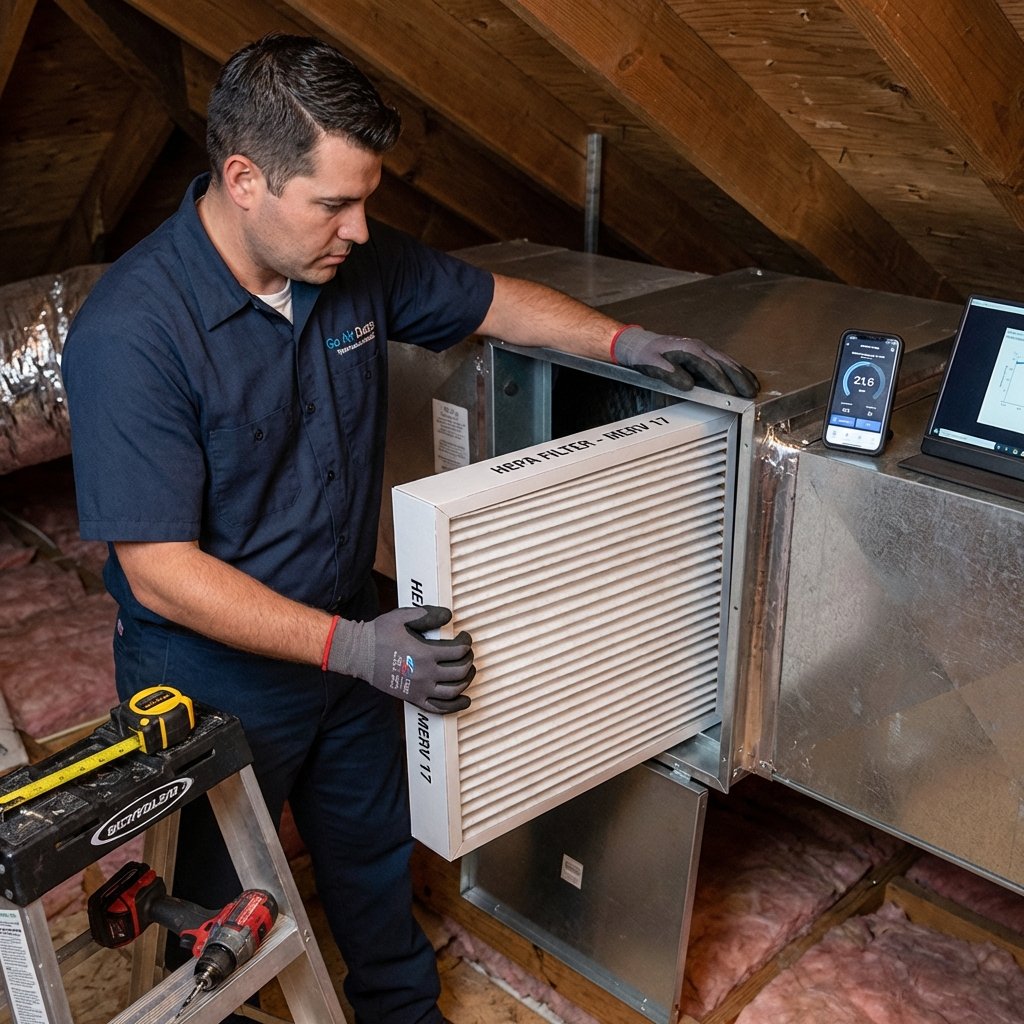
First, we size the filter housing correctly. This sounds basic, but standard 1-inch filter frames can’t accommodate true HEPA filters. We discuss options: upgrading to a media filter housing that holds larger-capacity filters, installing a whole-home HEPA unit in a separate enclosure, or building a custom filter rack. Each approach has cost and performance implications, and we present options so you understand the trade-offs.
Second, we ensure proper sealing around the filter to prevent bypass. If air can flow around a filter instead of through it, the filter’s effectiveness drops dramatically. We check gaskets, frame fit, and ductwork connections before we consider the job complete.
Third, we establish a maintenance schedule and show you what to monitor. A clogged filter defeats the entire purpose, so understanding when and how to check your filter becomes part of living with upgraded filtration.
We also document your system configuration so you’ll know exactly what size filter to order when it’s time to replace it. We provide recommendations for replacement filters from reputable manufacturers that we know perform reliably in Texas conditions.
The entire process typically takes 2-4 hours depending on your system’s configuration. We schedule this at a time convenient for you, often coordinating it with duct cleaning if you’re doing both upgrades at the same time.
Maintenance and Filter Replacement: Keeping Your System Running Optimally
A HEPA or high-MERV filter isn’t a “set it and forget it” component. The denser the filter, the more frequently it accumulates particles and needs replacement.
We recommend checking your filter every 30 days, particularly if you have pets or live in a high-pollen area. A visual inspection takes 30 seconds. If the filter looks gray or dirty, it’s ready for replacement. Texas dust and heat accelerate this timeline compared to cooler, less dusty climates.
Standard replacement intervals we see in our service area:
- MERV 8 filters: every 90 days
- MERV 13 filters: every 60 days in most homes, more frequently if you have pets
- True HEPA filters: every 30-45 days depending on household conditions
Most homeowners find it easier to set a calendar reminder or use a smart home app that tracks filter changes. We also offer filter subscriptions where we deliver the correct size to your door on schedule, eliminating guesswork.
Clogged filters create problems we’d rather you avoid: reduced airflow, temperature inconsistency between rooms, increased energy costs, and potential system shutdown. We’ve seen homeowners skip filter changes and wonder why their energy bills spiked and comfort dropped. The filter is usually the culprit.
If you’re not naturally inclined to monitor this yourself, we recommend our maintenance service plans. We perform seasonal HVAC inspections and handle filter changes as part of the service, which keeps your system optimized year-round.
How We Help Austin and San Antonio Homeowners Breathe Easier
We’ve worked in Austin and San Antonio long enough to understand the specific air quality challenges each area faces. Austin’s explosive growth brought increased construction dust and ozone concerns during hot months. San Antonio’s proximity to agricultural areas means pollen seasons that hit hard.
Both cities experience the same reality: indoor air quality becomes critical when outdoor air quality struggles. We’ve helped hundreds of families address allergies, mold concerns, and dust accumulation through professional duct cleaning combined with upgraded filtration.
What sets our approach apart is that we don’t just install equipment and leave. We explain what we found during duct cleaning, show you the difference clean ducts make, and help you understand your filtration options in plain language. We answer questions about maintenance, performance expectations, and long-term care.
When you work with us, you’re getting local expertise backed by certified HVAC technicians who understand how Texas weather and home construction patterns affect air quality. We provide free service estimates, same-day response availability, and the kind of customer service that earned us strong local ratings and repeat referrals.
We also handle related services that integrate with filtration upgrades: dryer vent cleaning (which prevents lint from circulating into your home), chimney inspection and repair (which affects overall system balance), and attic insulation upgrades (which reduce dust infiltration from unconditioned spaces).
Investment and Long-Term Savings With Proper Filtration
Let’s talk money because this is a real decision with genuine costs and genuine returns.
A high-MERV filter upgrade costs roughly $150-300 for housing modifications plus $40-60 per filter replacement. Over a year with four filter changes, you’re looking at $325-540 annually in filters and occasional housing maintenance.
A whole-home true HEPA system or media filter upgrade runs $800-2,000 installed, depending on your system configuration. Filter replacement costs $30-80 per filter, and you’ll replace them 4-6 times yearly, bringing annual operating costs to $300-600.
Professional air duct cleaning runs $400-800 for most homes, performed every 3-5 years.
That total investment sounds significant until you calculate the return. Reduced HVAC energy costs average $100-200 annually. Fewer equipment repairs and extended system lifespan add another $200-400 in annual savings when averaged over 10 years. Reduced allergy medication, fewer sick days, and improved sleep quality for family members with respiratory concerns don’t have a dollar amount, but homeowners consistently tell us this matters more than the financial savings.
For most homeowners, the investment breaks even within 3-4 years when you factor in energy savings plus extended equipment lifespan. Beyond that, it’s pure benefit.
We work with homeowners on different budget scenarios. If you’re not ready for true HEPA, we recommend starting with MERV 13 and professional duct cleaning. As your system ages or budget allows, you can upgrade further. The goal is steady improvement in air quality, not necessarily the most expensive solution immediately.
Next Steps: Schedule Your Free HVAC Assessment Today
If you’re breathing harder than usual to get air through your current filter, noticing more dust throughout your home, or dealing with allergy symptoms that worsen indoors, it’s time to upgrade.
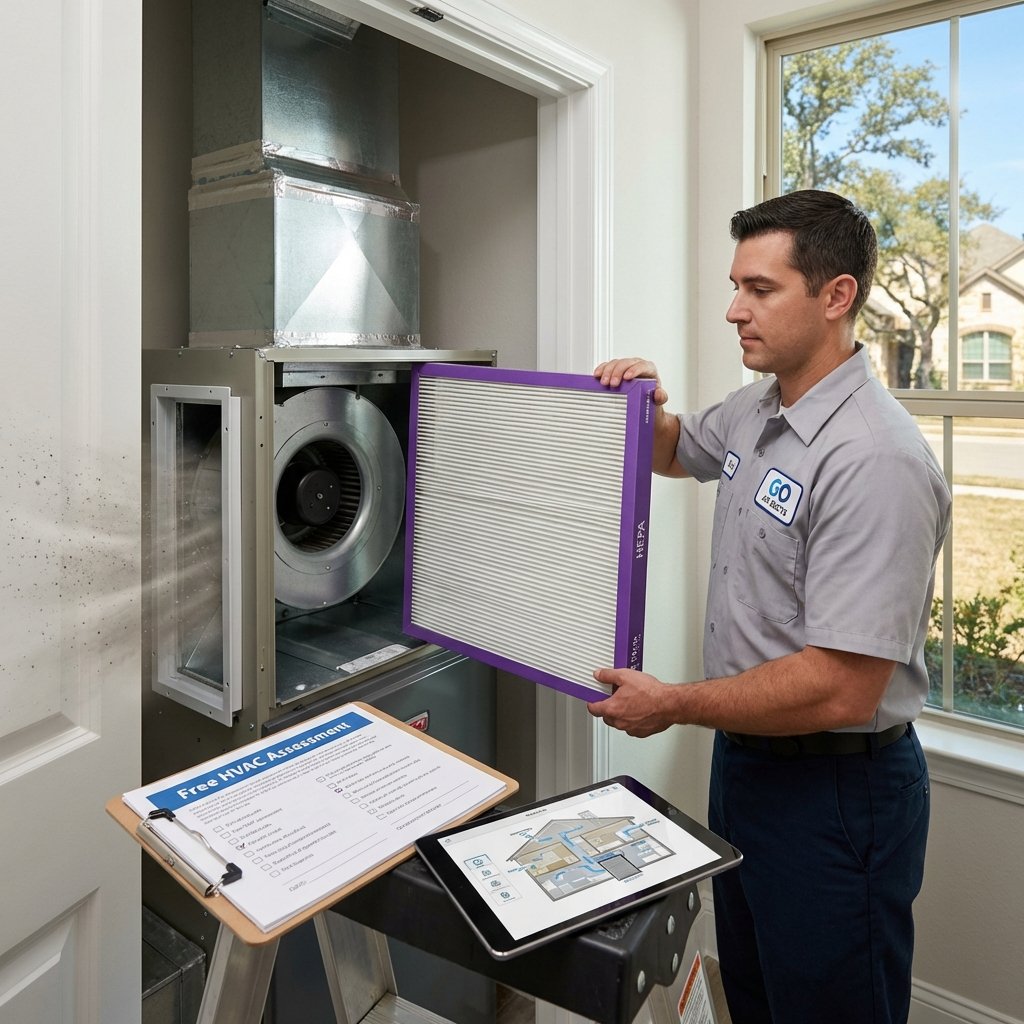
We offer free assessments where we inspect your ductwork, evaluate your current HVAC system, and recommend filtration options that match your specific situation and budget. No pressure, no obligation. We’ll explain what we find and what actually makes sense for your home.
Contact us today to schedule your assessment. We serve Austin, San Antonio, Dallas, and Houston with same-day response and professional service that’s earned us strong local trust. Breathe easier knowing your home’s air quality is protected by proven solutions from a team that understands Texas homes and Texas air challenges.
If you’re dealing with dust, poor airflow, mold in your ducts, or a clogged dryer vent — don’t wait. These issues can affect your health and safety. Go Air Ducts Group are the local experts in air duct cleaning, mold removal, dryer vent cleaning, and attic insulation. Call now for a free inspection and same-day service in Austin and San Antonio.
Frequently Asked Questions (FAQ)
What makes HEPA filters different from standard air filters we might already have?
HEPA filters capture 99.97% of particles as small as 0.3 microns, while standard filters typically catch larger particles at lower efficiency rates. We recommend HEPA or high-MERV filters because they’re particularly effective for Texas homeowners dealing with allergens, dust, and humidity-related air quality issues. However, not all HVAC systems can support HEPA filters due to airflow restrictions, which is why we always perform a compatibility check first.
Why does our air duct cleaning work better when paired with whole-home filtration?
Our air duct cleaning removes built-up dust, debris, and contaminants from your system, but upgrading to HEPA filtration prevents those particles from accumulating again. We’ve found that this combination gives our Austin and San Antonio customers the best long-term results for maintaining clean air throughout their homes. Without the upgraded filtration after cleaning, homeowners often see dust buildup return within months.
How often do we recommend replacing HEPA filters to keep our system running efficiently?
We suggest replacing HEPA filters every 6 to 12 months depending on your household’s dust levels, pets, and usage patterns. During our maintenance visits, we check filter condition and can help you establish a replacement schedule that works for your home. A clogged filter forces your system to work harder and reduces both air quality and efficiency, so staying on top of replacements saves you money and keeps your indoor air cleaner.