
🕑 13 min read
Table of Contents
- Why Mold in Your Ducts Is a Health Concern for San Antonio Families
- Sign 1: Visible Dark Growth on Duct Interiors and Supply Vents
- Sign 2: Musty Odors Coming from Your HVAC System
- Sign 3: Increased Allergy Symptoms and Respiratory Issues Indoors
- Sign 4: Water Stains and Moisture Around Air Vents
- Sign 5: Discolored Insulation Around Ductwork and Crawl Spaces
- Why DIY Mold Removal Puts Your Family at Risk
- How We Safely Remove Mold and Restore Your Air Quality
- Our Professional Duct Cleaning Process Eliminates Mold at the Source
- What to Expect During Your Free Mold Assessment
- Preventing Future Mold Growth in Your San Antonio Home
- Schedule Your Professional Duct Inspection Today
- Frequently Asked Questions (FAQ)
Why Mold in Your Ducts Is a Health Concern for San Antonio Families
Mold in your air ducts isn’t just a cosmetic problem. It’s a silent threat circulating through every room of your home, spreading spores with every cycle of your HVAC system. In San Antonio’s warm, humid climate, ductwork mold thrives in conditions most homeowners don’t even know exist. We’ve inspected hundreds of homes across the city and found that mold colonization often goes undetected until families start experiencing health issues or notice obvious warning signs.
The good news: catching mold early and addressing it professionally prevents serious health complications and expensive remediation down the road. This guide walks you through the five most critical signs we see in San Antonio homes, why they matter, and exactly what to do about them.
Your HVAC system moves air through your home roughly 10-15 times per day. If that air is carrying mold spores from contaminated ducts, your family is breathing them in constantly. This isn’t theoretical risk. Mold exposure triggers documented health responses: allergic reactions, asthma attacks, sinus infections, and respiratory inflammation, especially in children, elderly residents, and anyone with immune sensitivities.
San Antonio’s climate compounds the problem. High humidity levels, especially during summer months and after heavy rain, create the exact moisture conditions mold needs to flourish. Ducts in attics, crawl spaces, or poorly sealed returns pull in humid air and trap it. When that air meets cooler duct surfaces or existing moisture from condensation, mold germination begins.
We’ve seen this pattern repeatedly: families struggle with persistent allergy symptoms, visit their doctors multiple times, get prescribed medications or inhalers, and only discover the real culprit when they finally call for an HVAC inspection. By then, mold colonies have been growing for months or years. Professional ductwork inspection and mold detection identifies the problem before it becomes a family health crisis.
Sign 1: Visible Dark Growth on Duct Interiors and Supply Vents
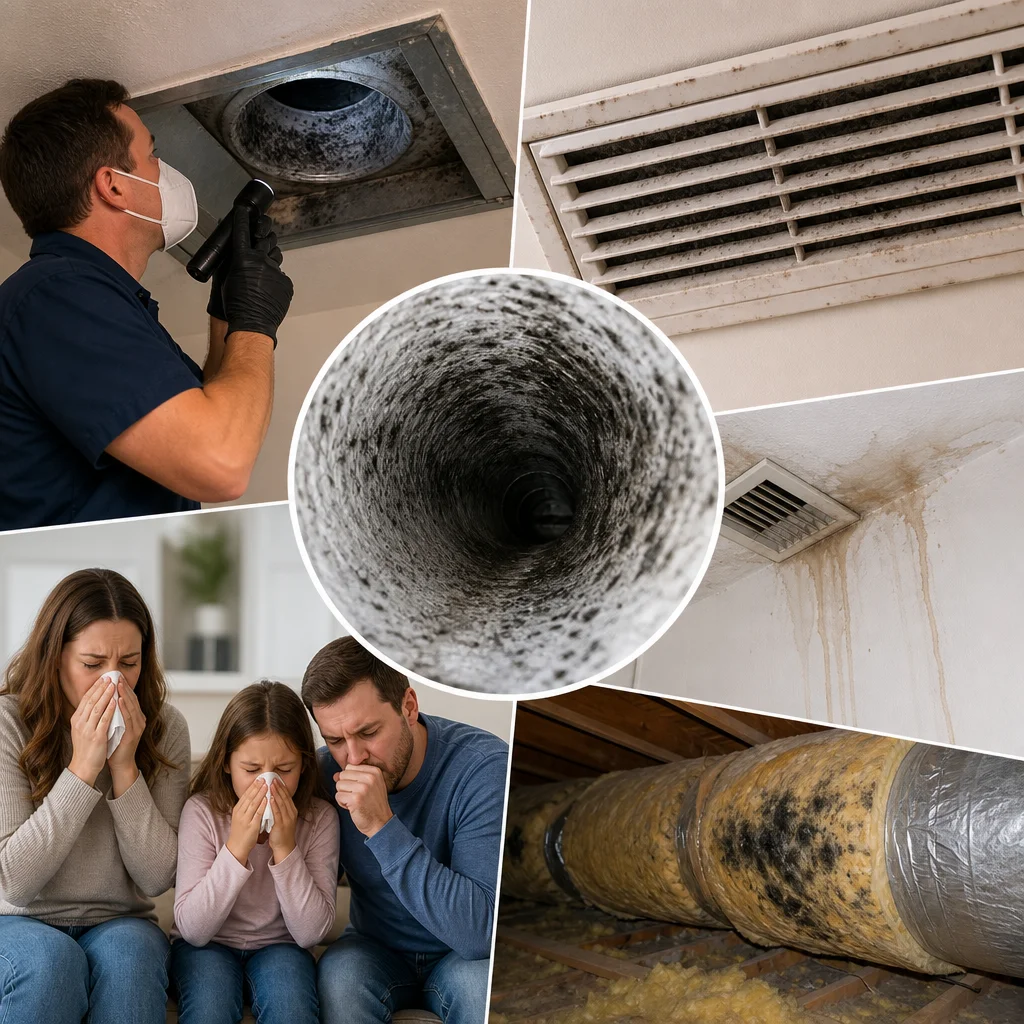
The most obvious indicator is also the most commonly missed. Many homeowners don’t actually look inside their ducts or vents, so they never spot the early warning signs. Mold in ducts appears as dark patches, streaking, or fuzzy growth on the interior surfaces of flexible ductwork or on the inside of metal duct sections and vents.
If you remove a vent cover and see black, green, or gray discoloration on the ductwork itself or around the vent opening, that’s mold. It often starts in small colonies and expands outward. The color and texture depend on the mold species, but dark growth almost always indicates active fungal colonization, not just dust accumulation.
During our inspections, we use specialized cameras to peer deep into ducts where eyes alone can’t reach. This allows us to spot mold growth at the source, not just at visible vents. If visible growth is present at one vent, mold is almost certainly spreading through connected ductwork sections as well.
Action step: Turn off your HVAC system and remove a few return-air vent covers. Shine a flashlight inside and look for dark discoloration. If you see anything suspicious, schedule a professional ductwork inspection and cleaning rather than attempting to clean it yourself.
Sign 2: Musty Odors Coming from Your HVAC System
A musty, stale smell from your vents is your nose detecting organic decay. That’s mold breaking down organic matter inside your ducts. Many homeowners dismiss this as normal HVAC odor or assume it’s just dust, but true mustiness indicates biological growth.
The scent is usually strongest when your system first cycles on, especially after sitting idle overnight or during cool mornings when moisture condenses inside ducts. If you notice the smell intensifies in specific rooms, it often means mold concentration is higher in those duct runs.
We recommend running your hand over a cloth and wiping the inside of a return vent. If the cloth smells distinctly earthy or musty after contact, mold is present. This isn’t a diagnostic test to replace professional inspection, but it’s a quick reality check that something biological is growing in your system.
Action step: If musty smells persist after changing your air filter, don’t use air fresheners to mask the problem. Contact us for a free mold assessment and find out what’s actually causing the odor.
Sign 3: Increased Allergy Symptoms and Respiratory Issues Indoors
Health symptoms often appear before physical evidence becomes visible. Families living with mold in ducts report clusters of symptoms: more frequent sneezing, nasal congestion that doesn’t match seasonal patterns, persistent sore throats, or worsening asthma control despite medication adjustments.
A telltale pattern we see repeatedly is symptoms that improve when people leave the house and worsen within hours of returning home. This happens because mold spores are actively being distributed through your ducts. If multiple family members experience respiratory symptoms simultaneously during certain times of day (like when the HVAC runs), that’s a strong indicator of indoor air contamination.
Children are particularly vulnerable because their lungs are still developing and their immune systems are less mature. If your kids develop new allergies or their existing asthma worsens without explanation, indoor mold should be on your investigation list.
Action step: Track symptoms over two weeks. Note when they start, if they’re worse in specific rooms, and if they improve when you’re away from home. This pattern data helps us diagnose the problem faster during your inspection.
Sign 4: Water Stains and Moisture Around Air Vents
Mold cannot exist without moisture. If you see water stains, dark rings, or damp spots around vent openings or on the ceiling near vents, your ducts are pulling in or retaining excessive moisture. This is the exact environment where mold thrives.
Water stains develop when condensation builds up on duct surfaces or when humidity levels inside your ducts exceed the dew point temperature. In San Antonio’s climate, this happens easily during summer when your AC is running constantly. Cold duct surfaces meet warm, humid return air, and moisture condenses on the ductwork interior.
Stains are especially common in attic ducts because attics get extremely hot in summer, and the temperature differential between the outdoor air and the inside of your AC ducts is enormous. This creates aggressive condensation. Crawl space ducts face similar challenges from ground moisture and humidity.
Action step: Check the ceiling around vents, especially in attics and crawl spaces. If you see water stains or feel dampness around ductwork, you’re dealing with a moisture problem that needs professional remediation. Don’t delay, as moisture-driven mold spreads quickly.
Sign 5: Discolored Insulation Around Ductwork and Crawl Spaces
Ductwork is often wrapped in fiberglass insulation. When mold infests ducts, that insulation becomes a perfect growth medium. You’ll notice the insulation turning dark, becoming spongy, or developing a different texture than it had originally.
This is especially visible in attics and crawl spaces where you can actually see the ductwork. Discolored insulation is a red flag because it indicates mold has been present long enough to colonize the insulation material itself. At this point, the problem has moved beyond surface contamination.
We recommend a careful visual inspection of any exposed ductwork during attic inspections. Healthy insulation is white, light gray, or pink (depending on the product). Any dark discoloration or soft spots suggests mold damage and requires professional removal and likely insulation replacement.
Action step: If you have attic access, look at exposed ductwork during daylight. Take photos of any suspicious discoloration and include them when you request your free mold assessment.
Why DIY Mold Removal Puts Your Family at Risk
Attempting to clean mold from ducts yourself creates serious problems. First, mold spores become airborne when disturbed. DIY cleaning without proper containment systems spreads mold spores throughout your home, increasing exposure rather than reducing it. This can trigger acute health reactions, especially in family members with respiratory sensitivities.
Second, you likely won’t reach all the mold. Mold colonies extend deep into ductwork where you can’t see. Incomplete removal means the fungus continues growing and spreading. You’ll spend money, time, and effort, only to find the problem returns within weeks.
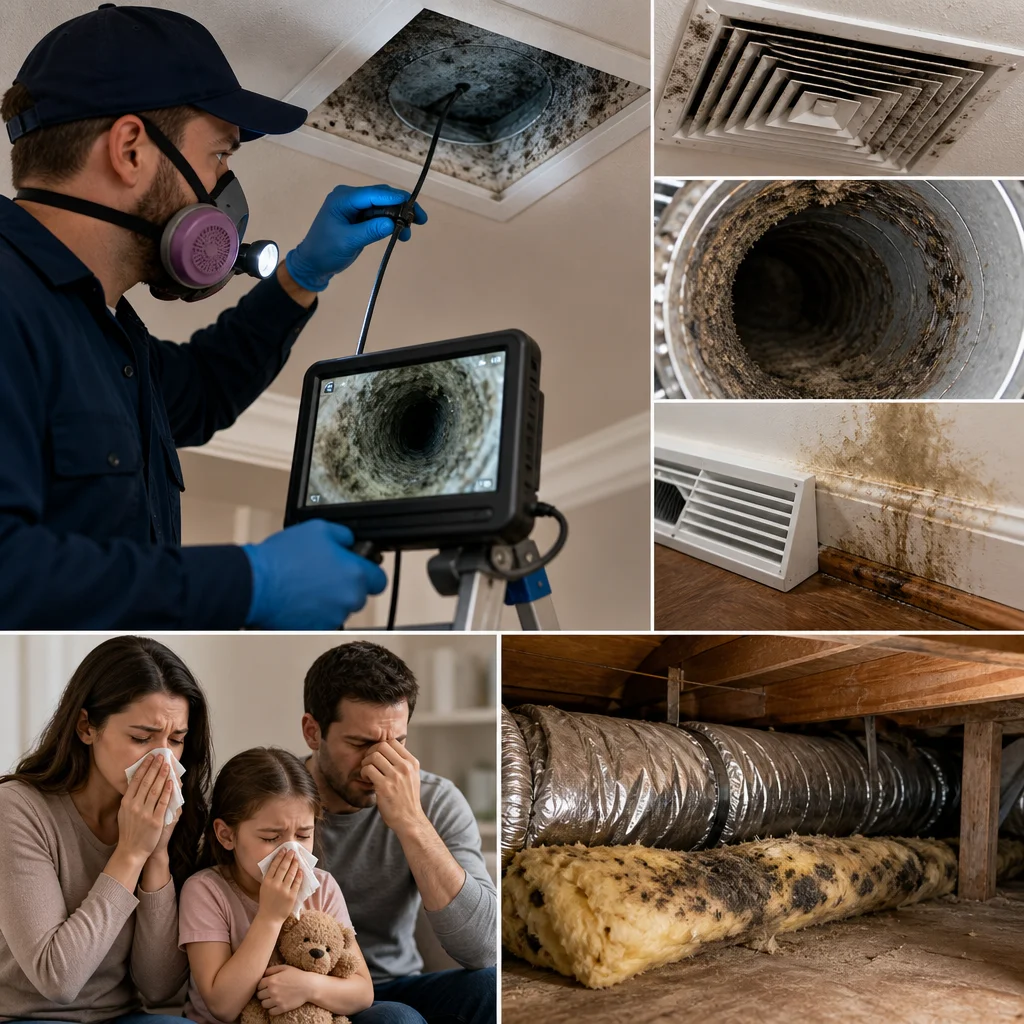
Third, improper removal techniques can damage ductwork, tear insulation, or create new moisture entry points. We’ve encountered homes where amateur cleaning efforts left ducts more compromised than before, actually accelerating mold regrowth.
Professional DIY vs pro mold removal comparisons consistently show that hiring certified technicians is both safer and more cost-effective long-term. You’re not just paying for labor. You’re paying for equipment, expertise, containment protocols, and the guarantee that mold is completely eliminated, not just temporarily hidden.
How We Safely Remove Mold and Restore Your Air Quality
Our process begins with containment. Before we touch anything, we isolate the affected ductwork and surrounding areas using negative pressure systems and sealed barriers. This ensures mold spores stay contained and don’t spread to unaffected parts of your home.
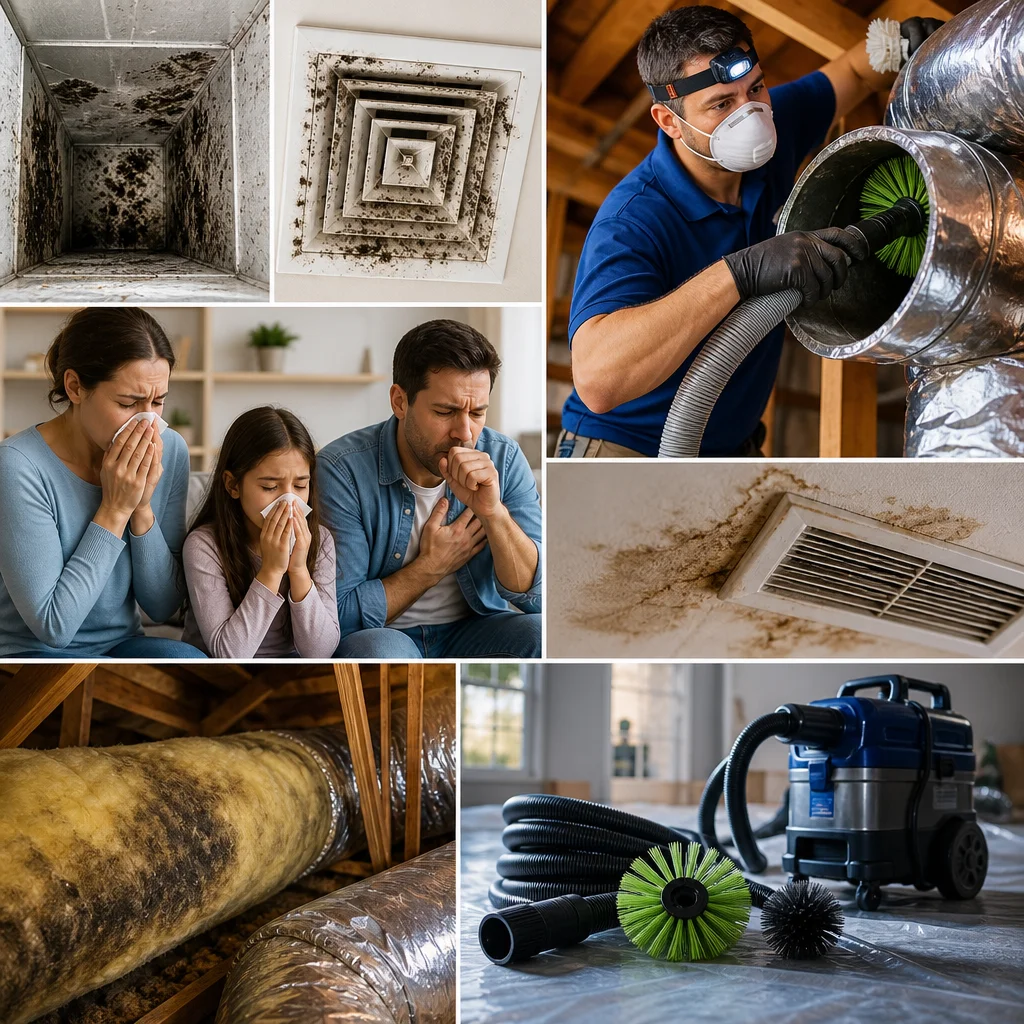
Next, we use industrial-grade equipment to remove mold at the source. This includes high-powered vacuums with HEPA filtration, antimicrobial treatments, and specialized brushing systems designed to dislodge mold colonies from every surface inside your ducts. We don’t just clean the visible sections. We clean the entire connected ductwork system because mold spreads through airflow pathways.
After physical removal, we apply EPA-approved antimicrobial treatments to prevent regrowth. These treatments are safe for residential use but hostile to mold germination. We also address the moisture problem that allowed mold to grow in the first place, whether that means improving duct insulation, sealing air leaks, or recommending changes to your ventilation system.
Finally, we test air quality post-treatment to verify that mold spore levels have returned to normal. This gives you documented proof that your indoor air is clean and safe again.
Our Professional Duct Cleaning Process Eliminates Mold at the Source
Professional duct cleaning designed specifically for mold remediation is fundamentally different from standard dust removal. It requires specialized equipment: source-capture vacuums with HEPA filters, inspection cameras, antimicrobial applicators, and containment systems that most homeowners don’t own and can’t rent affordably.
Our certified technicians access ductwork from multiple points, ensuring complete coverage. We inspect insulation for damage and replace compromised sections. We identify and seal air leaks that pull in outdoor humidity. We check for condensation issues and recommend solutions like duct wrap upgrades or improved ventilation balance.
Professional duct cleaning services paired with mold remediation typically take 4-6 hours for a whole-house system, depending on your home’s layout. We work systematically to ensure nothing is missed and nothing is spread.
The result is ductwork that’s not just clean, but treated and protected against future mold growth. Your HVAC system becomes a source of clean air again, not a delivery system for mold spores.
What to Expect During Your Free Mold Assessment
When you call us for your free assessment, we schedule a time that works with your schedule. Our technician arrives with inspection equipment and begins a visual walkthrough of your home, paying special attention to areas where you’ve noticed symptoms or signs.
We’ll remove vent covers and look inside. We’ll access your attic and crawl space if accessible. We’ll use a camera to inspect deeper ductwork sections. We’ll assess insulation condition, check for moisture problems, and evaluate your HVAC system’s overall operation.
This inspection typically takes 30-45 minutes. After we finish, we explain what we found in clear, practical terms. No pressure, no complicated jargon. If mold is present, we tell you exactly where it is, how extensive the problem is, and what remediation will cost. If we don’t find mold, we’ll identify other air quality issues that might be affecting your home.
You’ll leave with a detailed estimate, a clear timeline for work, and honest recommendations tailored to your specific situation.
Preventing Future Mold Growth in Your San Antonio Home
Once we’ve removed mold, preventing regrowth means managing moisture and airflow. The two primary strategies are humidity control and duct sealing.
Humidity control starts with your air conditioning system. Properly functioning AC removes humidity from your home. If your system isn’t sized correctly or isn’t running efficiently, humidity stays elevated and mold risk increases. We can evaluate your AC performance and recommend upgrades if necessary.
Duct sealing prevents outdoor humidity from entering your system. Leaky return ducts pull in unconditioned, humid air from attics and crawl spaces. Sealing these leaks is one of the highest-impact improvements you can make. Properly sealed and insulated ducts stay dry and mold-resistant.
Additionally, maintain your HVAC system with regular filter changes, annual tune-ups, and periodic professional cleaning. These practices prevent dust and biological growth from accumulating in the first place.
For ongoing peace of mind, consider annual ductwork inspections, especially during San Antonio’s humid months. Early detection of moisture problems prevents mold from establishing a foothold.
Schedule Your Professional Duct Inspection Today
Mold in ductwork is a problem that grows worse the longer it goes unaddressed. Every day your HVAC system runs with mold inside is another day your family breathes contaminated air and the fungus expands further.
We serve San Antonio and surrounding areas with certified, experienced technicians who specialize in exactly this type of problem. We offer same-day and next-day service, transparent pricing with no hidden fees, and a satisfaction guarantee on all our work.
Contact Go Air Ducts today to schedule your free mold assessment. Call us or visit our website to book your inspection. We’ll identify the problem, explain your options clearly, and get your family back to breathing clean, safe air.
Your health is too important to guess about. Let our expertise give you answers and solutions.
If you’re dealing with dust, poor airflow, mold in your ducts, or a clogged dryer vent — don’t wait. These issues can affect your health and safety. Go Air Ducts Group are the local experts in air duct cleaning, mold removal, dryer vent cleaning, and attic insulation. Call now for a free inspection and same-day service in Austin and San Antonio.
Frequently Asked Questions (FAQ)
How quickly can we schedule a mold inspection for my San Antonio home?
We typically schedule free mold assessments within 24 to 48 hours of your initial contact. Our certified HVAC technicians will conduct a thorough inspection of your ductwork and identify any mold growth, moisture issues, or conditions that could lead to contamination. Once we complete the assessment, we’ll provide you with a detailed report and our recommended remediation plan at no charge.
What makes professional mold removal safer than handling it ourselves?
Mold remediation requires specialized equipment, containment protocols, and proper disposal methods to prevent spore spread throughout your home. When we remove mold from your ducts, we use HEPA filtration, negative pressure containment, and EPA-approved cleaning agents to eliminate the problem at its source without risking your family’s health. Attempting DIY removal can actually disturb mold colonies and circulate contaminated air through your HVAC system.
How long does your duct cleaning and mold removal process take?
Our professional ductwork cleaning and mold remediation typically takes 4 to 6 hours depending on your home’s duct layout and contamination severity. We’ll complete the job in one visit whenever possible, restore your system to full operation, and leave your home cleaner than when we arrived. Our technicians will walk you through what we’ve done and provide maintenance recommendations to prevent future mold growth.