
🕑 9 min read
Table of Contents
- 1. Assess Your Current Attic Ventilation System
- 2. Install Vapor Barriers During Insulation Upgrades
- 3. Choose Mold-Resistant Insulation Materials
- 4. Maintain Proper Attic Humidity Levels
- 5. Seal Air Leaks to Prevent Moisture Intrusion
- 6. Schedule Regular Professional Attic Inspections
- 7. Address Roof Leaks Before They Damage Insulation
- Frequently Asked Questions (FAQ)





1. Assess Your Current Attic Ventilation System
San Antonio’s hot, humid climate creates ideal conditions for mold growth, especially in attics where moisture accumulates undetected. We’ve seen countless homes where improper attic insulation led to mold colonies spreading across framing, joists, and ductwork, causing health issues and expensive repairs. The problem isn’t just about having insulation, it’s about having the right insulation installed correctly with moisture control in mind.
The good news: mold in attic insulation is preventable. We help homeowners across San Antonio and Austin protect their homes by addressing the root causes of moisture buildup before they become problems. This guide walks you through seven proven strategies we recommend to our clients, based on real-world results from hundreds of attic inspections and installations.
Your attic ventilation is the first line of defense against moisture accumulation. Poor ventilation traps humid air that cools and condenses on insulation, creating perfect breeding grounds for mold. We’ve found that many San Antonio homes have undersized or blocked vents that can’t handle our region’s moisture load.
Start by checking whether your attic has adequate soffit vents (intake) and ridge vents or roof vents (exhaust). A standard rule is one square foot of ventilation for every 150 square feet of attic space, though high-humidity climates like ours often benefit from the more aggressive 1:120 ratio. If you see dark staining, musty odors, or visible mold spots near vents, your ventilation is likely insufficient.
Look for common blockages we encounter regularly:
- Insulation piled against soffit vents, blocking fresh air intake
- Debris, bird nests, or wasp nests clogging roof vents
- Gable vents that are closed or heavily obstructed
- Ductwork or HVAC components restricting airflow paths
The action step: Walk your attic with a flashlight and note vent locations and condition. If you spot blockages, clear them immediately. If your home was built before 2000, it likely needs ventilation upgrades to meet current humidity control standards.
2. Install Vapor Barriers During Insulation Upgrades
A quality vapor barrier is your insurance policy against moisture reaching insulation fibers. When we upgrade insulation in San Antonio homes, we always install vapor barriers on the warm side of the insulation (the side facing heated living spaces), not the cold side. Many DIY approaches and older installations get this backwards, trapping moisture where mold thrives.
The vapor barrier works by slowing moisture diffusion, giving your ventilation system time to expel humid air before it condenses. We typically recommend continuous polyethylene sheets or kraft-faced batts with perforated facings, depending on your attic configuration and existing conditions.
Here’s what matters:
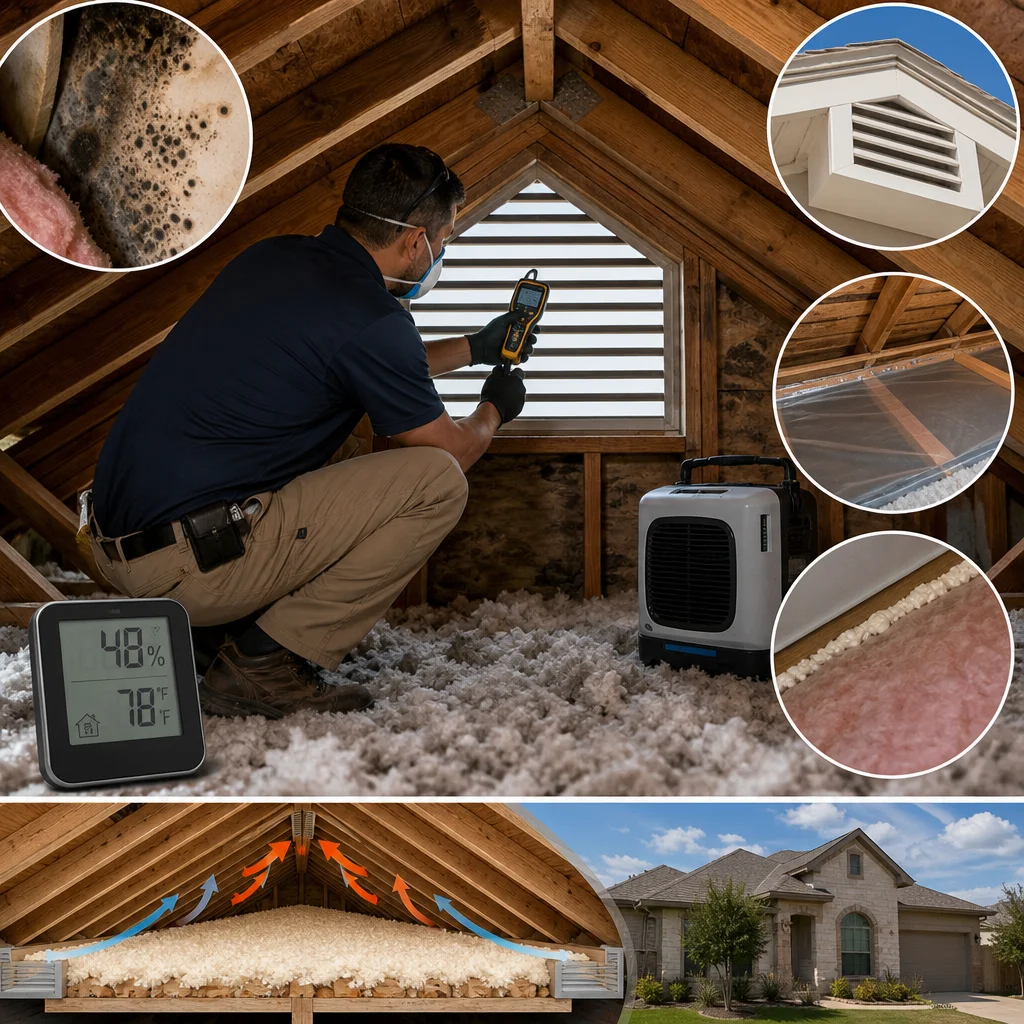
- Ensure barriers overlap by at least 6 inches and are sealed at seams
- Don’t install barriers directly against the roof deck (condensation can still form in winter)
- Pair barriers with proper attic ventilation for maximum effectiveness
- Replace damaged or missing barriers during any insulation work
When we install blow-in insulation in Austin and San Antonio, we first verify or upgrade vapor barriers to match your home’s current humidity exposure. This preventive step costs far less than mold remediation later.
3. Choose Mold-Resistant Insulation Materials
Not all insulation materials handle moisture equally. Traditional fiberglass batts absorb moisture readily and provide a food source for mold. We recommend mold-resistant alternatives for attics in high-humidity regions.
Our top choices for San Antonio homes:
- Closed-cell spray foam: Creates a moisture barrier, doesn’t absorb water, and seals air gaps simultaneously
- Cellulose with borate treatment: Treated to resist mold and insects, though it requires flawless vapor barrier support
- Mineral wool batts: Naturally mold-resistant and retain less moisture than fiberglass
- Fiberglass faced with antimicrobial coatings: A budget-friendly option if spray foam isn’t feasible
The key difference: mold-resistant materials either repel water or include chemical treatments that inhibit fungal growth. We avoid standard fiberglass batts in high-risk attics because they’re cheap to buy but expensive to replace once mold colonizes them.
Cost-wise, mold-resistant materials typically run 20-40% more upfront, but you avoid the hidden costs of mold remediation, health impacts, and insulation replacement. When we’re recommending materials for a client, we ask about their history with moisture issues, roof leak frequency, and budget. Most find that the upgrade protects their investment in the home.
4. Maintain Proper Attic Humidity Levels
Mold doesn’t grow in dry conditions. The target humidity level for most attics is below 60%, with ideal performance around 40-50%. San Antonio’s outdoor humidity regularly exceeds 70%, so your attic needs active moisture control, not just passive ventilation.
Here’s how humidity accumulates in attics:
- Bathroom and kitchen exhaust vents directed into attics instead of outside (we see this constantly)
- Laundry dryer vents venting into attic spaces
- Inadequate soffit ventilation that can’t handle daily humidity load
- Air leaks from heated living spaces carrying moist air into cold attics
Start by tracing all exhaust sources. If you have bathroom fans, range hoods, or dryer vents terminating in your attic instead of through exterior walls, that’s your first correction. We recommend getting a humidity meter (under $20) and checking attic levels in summer. Readings above 70% mean your current ventilation and moisture control aren’t keeping up.
In extreme cases where ventilation alone can’t control humidity, we recommend installing a roof-mounted attic fan or dehumidifier as a secondary control. It’s a reasonable investment compared to mold remediation costs.
5. Seal Air Leaks to Prevent Moisture Intrusion

Air leaks are moisture highways. Every gap where warm, humid air escapes from living spaces into your attic deposits moisture that your ventilation has to handle. Sealing these leaks reduces the moisture burden your ventilation system faces, making every other strategy more effective.
Common leak points we find during inspections:
- Gaps around bathroom exhaust ducts
- Unsealed areas where HVAC ducts penetrate attic framing
- Cracks around electrical boxes and light fixtures in ceiling
- Gaps along top plates of interior walls
- Poorly sealed attic access panels
When we seal air leaks in San Antonio homes, we use low-expansion spray foam and fire-rated caulk around high-temperature areas. This reduces the warm, moist air load entering your attic by 30-50%, dramatically improving conditions for your insulation.
The payoff extends beyond mold prevention: sealed attics cost less to heat and cool, so your energy bills drop while your comfort improves. Addressing leaks first makes your mold prevention strategy far more effective.
6. Schedule Regular Professional Attic Inspections
Most mold in attic insulation is invisible until it’s advanced. Professional inspections catch early signs before they become expensive problems. We recommend annual inspections for San Antonio homes, or every two years at minimum, particularly after heavy rains or if you’ve had prior moisture issues.
During a thorough inspection, we check for:
- Visible mold or discoloration on insulation, framing, or sheathing
- Moisture staining or water damage patterns
- Vent blockages or obstructions
- Damaged vapor barriers or missing insulation
- Pest activity that could compromise barriers
- Signs of roof leaks or condensation
Early detection matters enormously. A small mold spot caught during routine inspection might require localized cleanup and ventilation adjustment. Left undetected for a year or two, that same spot becomes a remediation project costing thousands. We’ve worked with homeowners who regret not scheduling inspections sooner.
Our professional inspections include detailed moisture mapping and recommendations tailored to your home’s specific conditions. If we identify problems, we provide written estimates for corrections, so you’re never surprised by costs.
7. Address Roof Leaks Before They Damage Insulation
Roof leaks are the fastest path to mold in attic insulation. Even small leaks create localized moisture pockets where mold establishes quickly. We’ve found that San Antonio’s severe weather and old roof systems create conditions where leaks go unnoticed for months, allowing substantial mold colonies to develop.
The warning signs:
- Dark staining or discoloration on attic framing or insulation
- Water dripping or pooling in specific attic areas after rain
- Musty odors concentrated in one section of the attic
- Damaged or curled shingles visible from outside
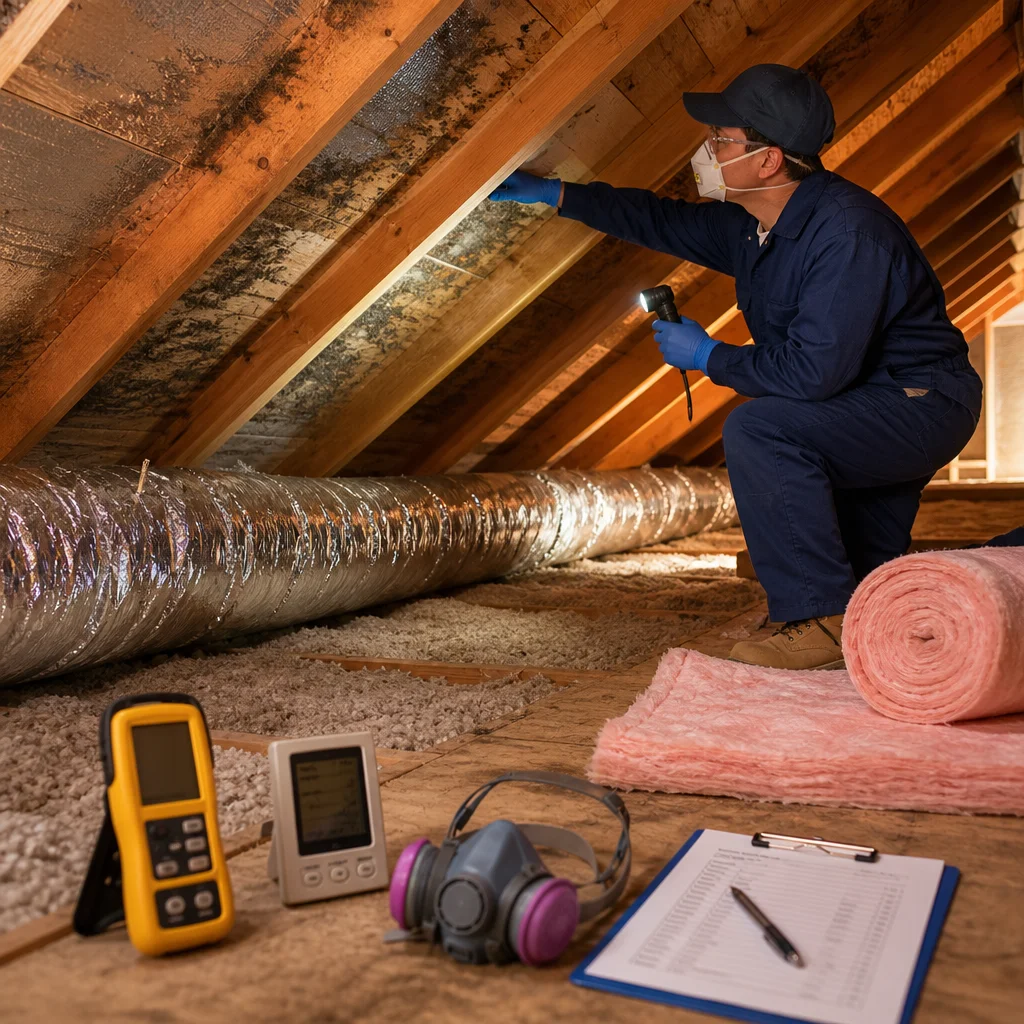
Don’t delay on roof repairs. Moisture-damaged insulation loses its R-value and becomes a liability rather than an asset. If a leak has already saturated insulation, replacement is usually the only safe option to prevent mold spread.
If you discover a roof leak, we recommend immediate action: have a roofer inspect and repair the source, then let the affected area dry completely before re-insulating. Applying new insulation over wet or moist areas guarantees mold problems within weeks.
Getting Your Attic Moisture-Protected
Mold in attic insulation isn’t inevitable, even in San Antonio’s humid climate. The strategies above work because they address moisture at every level: intake (ventilation), residence (vapor barriers and material choice), and removal (air sealing and humidity control).
We handle attic insulation and mold prevention for hundreds of San Antonio and Austin homeowners annually. Our certified technicians understand the local climate challenges and know exactly which combinations of strategies work for different home types and conditions. We provide free service estimates where we assess your current attic conditions, identify specific risks, and recommend targeted solutions.
If you’re concerned about mold in your attic insulation or want to upgrade your current setup, contact us for a professional inspection. We’ll give you a clear picture of your attic’s health and the most cost-effective path to protection.
For further reading: Prevent mold in attic insulation.
If you’re dealing with dust, poor airflow, mold in your ducts, or a clogged dryer vent — don’t wait. These issues can affect your health and safety. Go Air Ducts Group are the local experts in air duct cleaning, mold removal, dryer vent cleaning, and attic insulation. Call now for a free inspection and same-day service in Austin and San Antonio.
Frequently Asked Questions (FAQ)
How do we help prevent mold in attic insulation?
We assess your current ventilation, install vapor barriers, and recommend mold-resistant insulation materials tailored to San Antonio’s climate. Our certified technicians also seal air leaks and maintain proper humidity levels to create an environment where mold cannot thrive. We handle the complete process, from inspection through installation, so you don’t have to worry about moisture problems damaging your insulation.
What’s the best way to know if our attic needs professional inspection?
We recommend scheduling a professional inspection if you notice musty odors, water stains on ceilings, high utility bills, or visible mold growth. San Antonio’s humidity makes attics particularly vulnerable to moisture issues, which is why we suggest annual inspections for most homeowners. Our free estimates include a thorough attic assessment so we can identify any ventilation, insulation, or moisture concerns before they become costly problems.
Why does attic moisture control matter for our home’s health and efficiency?
Excess moisture in your attic leads to mold growth, structural damage, and compromised insulation that wastes energy and increases your heating and cooling costs. When we control moisture through proper ventilation and vapor barriers, we protect both your home’s integrity and your family’s indoor air quality. We’ve found that homeowners who invest in moisture control see lower energy bills and fewer respiratory issues within their households.