
🕑 10 min read
What is the best high-efficiency HVAC system for San Antonio?
The best system balances high SEER efficiency, correct sizing for San Antonio's heat, and clean ductwork to deliver the rated savings. An oversized or poorly matched unit wastes energy. Go Air Ducts helps San Antonio homeowners choose and support high-efficiency HVAC systems that lower bills and keep homes comfortable in 2026.
Table of Contents
- 1. Variable Speed Compressors: The Smart Cooling Choice
- 2. Smart Thermostats: Control and Savings You Can Track
- 3. High SEER Rating Systems: Understanding Energy Efficiency Standards
- 4. Proper Ductwork Sealing: Why Most Installations Underperform
- 5. Regular Professional Maintenance: The Often-Ignored Performance Factor
- 6. Air Duct Cleaning: Restoring Your System's Full Efficiency
- 7. Energy-Efficient Insulation Upgrades: Complementing Your HVAC Investment
- Frequently Asked Questions (FAQ)
1. Variable Speed Compressors: The Smart Cooling Choice
If you’re cooling a San Antonio home, your air conditioning system works harder than most. Summer temperatures regularly exceed 95 degrees, and inefficient units rack up energy bills fast. We’ve helped hundreds of homeowners across San Antonio understand that buying the right HVAC system is only half the battle. The other half is how it’s installed, maintained, and supported by complementary upgrades like ductwork sealing and insulation.
This guide covers the high-efficiency HVAC features and upgrades that actually deliver measurable savings and comfort improvements for Texas homes.
A variable speed compressor adjusts its output based on cooling demand instead of running at full blast whenever the system kicks on. Think of it like a car accelerating smoothly instead of jerking between idle and highway speed.
Standard compressors cycle on and off completely. When they’re running, they’re running hard, which spikes energy use and creates temperature swings. Variable speed units ramp up or down, maintaining steady temperatures while using less energy overall. For San Antonio’s intense summer heat, this means your system can handle peak loads when it needs to without wasting power during mild mornings or evenings.
Why this matters for efficiency:
- 10-15% lower energy consumption compared to single-stage units
- Quieter operation (less jarring compressor cycling)
- Better humidity control, which is crucial in Texas
- Longer equipment lifespan from reduced mechanical stress
We recommend variable speed compressors as a non-negotiable feature in any high-efficiency system for Texas homeowners. Ask your HVAC contractor specifically about compressor type before signing a contract.
Action takeaway: When comparing quotes, don’t just look at SEER ratings. Ask vendors whether their equipment uses variable speed compressors and request energy usage comparisons for San Antonio’s climate specifically.
2. Smart Thermostats: Control and Savings You Can Track
A smart thermostat learns your schedule, adjusts temperatures automatically, and gives you real-time visibility into energy consumption. This isn’t a luxury anymore; it’s the fastest way to recover investment in a new HVAC system.
Basic programmable thermostats require manual adjustments. Smart models use occupancy sensors, weather forecasts, and learning algorithms to optimize run times. A homeowner in North Austin we worked with installed a smart thermostat alongside a new high-efficiency unit and saw a 12% reduction in cooling costs within the first month, simply because the system wasn’t cooling an empty house.
Key features that drive efficiency:
- Remote control via smartphone (adjust temps while away)
- Energy usage reports that show daily and monthly patterns
- Geofencing (automatically adjusts temperature based on your location)
- Compatibility with voice assistants for hands-free operation
- Integration with HVAC alerts for maintenance reminders
Smart thermostats typically cost $200-400 installed, but they reduce cooling costs enough to pay for themselves in one to two seasons on a hot Texas summer.
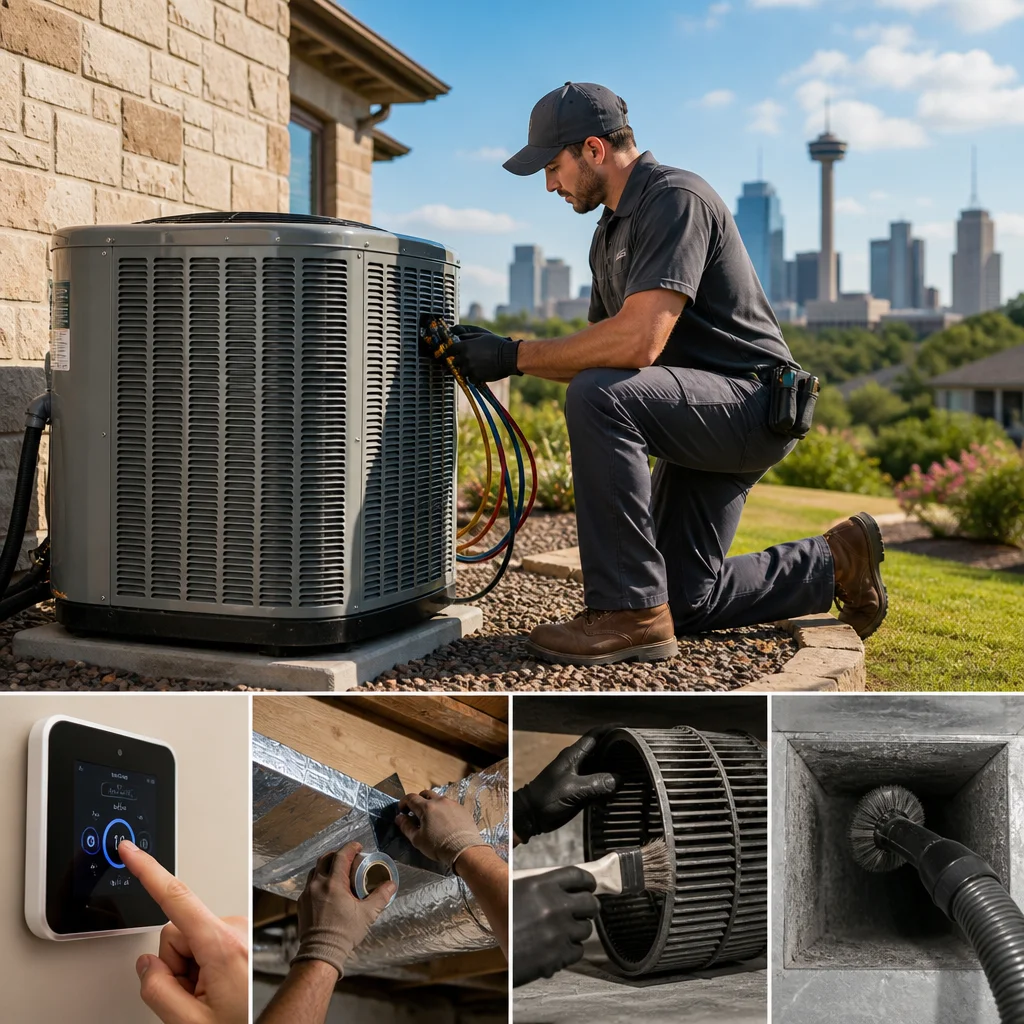
Action takeaway: After purchasing a high-efficiency system, invest in a smart thermostat as your first upgrade. Compare Ecobee, Nest, and Honeywell models for San Antonio to ensure compatibility with your new equipment before installation.
3. High SEER Rating Systems: Understanding Energy Efficiency Standards
SEER stands for Seasonal Energy Efficiency Ratio. It measures how many units of cooling output you get per unit of energy input over a season. Higher SEER means lower operating costs.
Current minimum federal standards for new systems are SEER 13. High-efficiency systems typically range from SEER 16 to SEER 20+. The difference between a SEER 13 and SEER 18 unit can mean $300-500 in annual savings for homes cooling 2,000+ square feet in San Antonio’s climate.
SEER rating breakdown:
- SEER 13-15: Meets federal minimums; moderate efficiency
- SEER 16-17: High efficiency; noticeable energy savings
- SEER 18+: Premium efficiency; best long-term savings and performance
The catch is that SEER ratings are lab-tested under ideal conditions. Real-world performance depends heavily on installation quality, ductwork integrity, and proper system maintenance.
A perfectly installed SEER 16 system will outperform a poorly installed SEER 20 unit. This is why we always emphasize proper ductwork sealing and professional installation over chasing the highest SEER number alone.
Action takeaway: Set SEER 16 as your minimum for San Antonio. Calculate payback period by multiplying annual savings times system lifespan (typically 15 years) to justify the upfront cost difference.
4. Proper Ductwork Sealing: Why Most Installations Underperform
Here’s the uncomfortable truth: most HVAC contractors install new high-efficiency systems into homes with leaky ductwork, and the homeowner never knows the system is operating at 60-70% of its rated capacity.
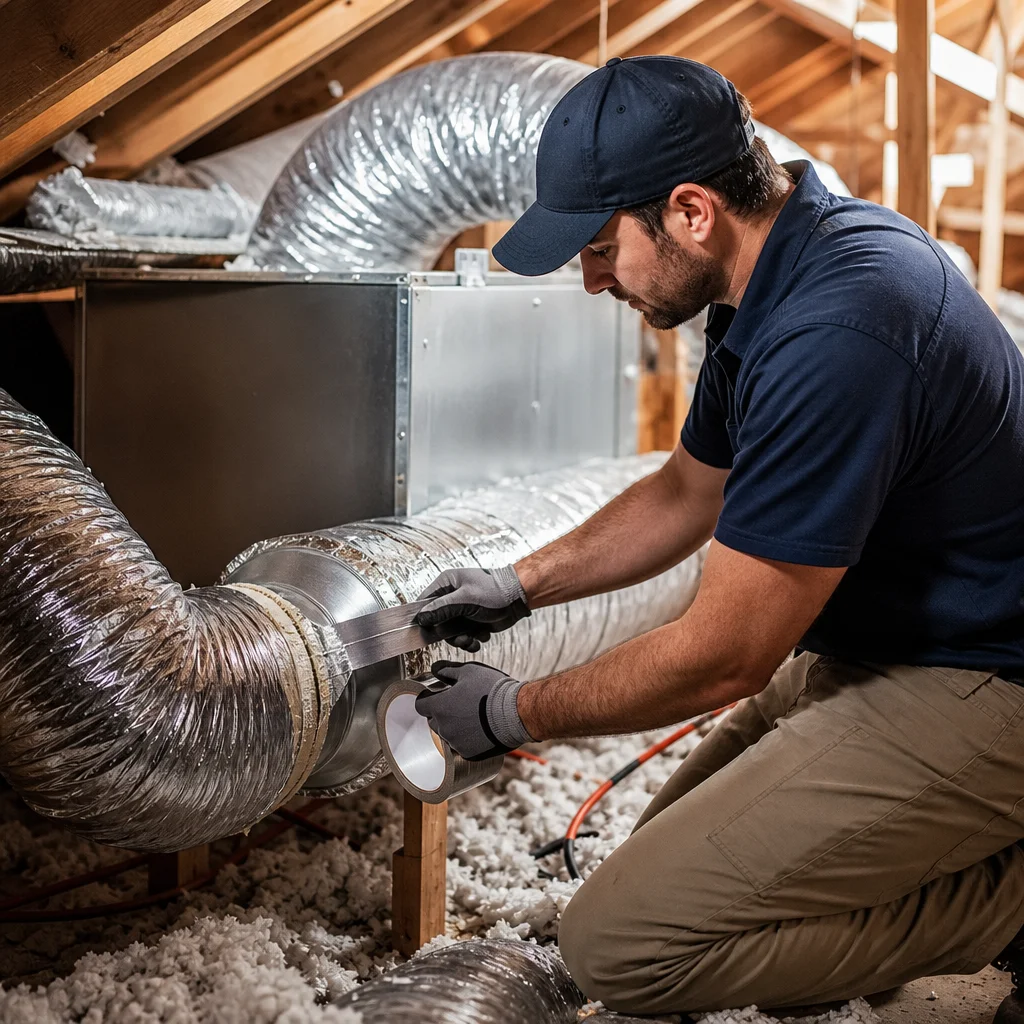
Unsealed ducts lose conditioned air in attics, walls, and crawlspaces before it reaches your rooms. We’ve found ducts with 15-20% leakage rates during routine inspections in San Antonio. That means one out of every five dollars you spend cooling your home is literally disappearing into your attic.
When you invest in a high-efficiency system, sealing ducts should happen first. Flex duct gets checked for holes and crimps. Hard ductwork gets mastic seal applied at every joint. We also pressure-test ducts before and after sealing to verify actual improvements.
Common ductwork problems we see:
- Disconnected return ducts that pull unconditioned air from crawlspaces
- Cracked insulation allowing cold loss in summer
- Flex ducts kinked or crushed during insulation work
- Improper duct sizing for the new system’s airflow
Without sealed ducts, a SEER 18 system performs like a SEER 12 unit. Sealing typically costs $800-2,000 but delivers immediate energy savings and comfort improvements.
Action takeaway: Request a duct leakage test (blower door test) before buying a new system. If you already have a system, schedule a ductwork inspection and sealing. This is where real efficiency gains happen.
5. Regular Professional Maintenance: The Often-Ignored Performance Factor
New systems don’t stay efficient without care. We recommend professional maintenance twice yearly: once before cooling season and once before heating season.
Maintenance includes coil cleaning, refrigerant charge verification, electrical component inspection, and airflow testing. A system running low on refrigerant might seem fine to a homeowner but is working 20-30% harder than design specs, wasting energy and shortening equipment life.
Many San Antonio homeowners think annual maintenance is optional. It’s not. Warranty coverage on high-efficiency systems often requires documented maintenance from a certified technician. Skip maintenance, and you lose the warranty when a compressor fails.
What professional maintenance prevents:
- Refrigerant leaks (slow loss of cooling efficiency)
- Clogged evaporator coils (reduced airflow and efficiency)
- Dirty condenser coils (reduced heat rejection)
- Motor bearing wear (eventual failure)
The cost is typically $150-250 per visit. The return is 5-15% efficiency maintenance and avoiding $3,000-5,000 compressor replacements.
Action takeaway: Schedule maintenance appointments at the start of spring and fall. Set calendar reminders now so you don’t procrastinate. Ask your contractor to provide written reports showing what was inspected and cleaned.
6. Air Duct Cleaning: Restoring Your System’s Full Efficiency
Clean ducts are an extension of maintenance. Over time, dust, pollen, mold spores, and debris accumulate inside ductwork, restricting airflow and forcing your system to work harder.
We see this regularly in San Antonio homes. Customers complain about weak airflow in bedrooms or notice higher utility bills, and a camera inspection reveals significant dust and debris buildup inside ducts. Once we perform professional duct cleaning, airflow improves dramatically and energy consumption drops.
Dirty air ducts also reduce indoor air quality, aggravating allergies and asthma. In humid San Antonio summers, dust buildup can trap moisture and promote mold growth inside ducts, creating health risks.
Signs your ducts need cleaning:
- Visible dust around vent grilles
- Musty or stale odors from vents
- Higher energy bills with no explanation
- Weak airflow in multiple rooms
- Dust clouds when the system first turns on
Professional duct cleaning typically costs $500-1,200 for a residential system and should be paired with sealing any leaks found during the process. Many homeowners see energy bill reductions of 5-10% after cleaning.
Action takeaway: Get a duct inspection before assuming you need cleaning. Request camera footage so you can see the actual condition. If cleaning is needed, ensure your contractor also checks for and seals any leaks discovered.
7. Energy-Efficient Insulation Upgrades: Complementing Your HVAC Investment
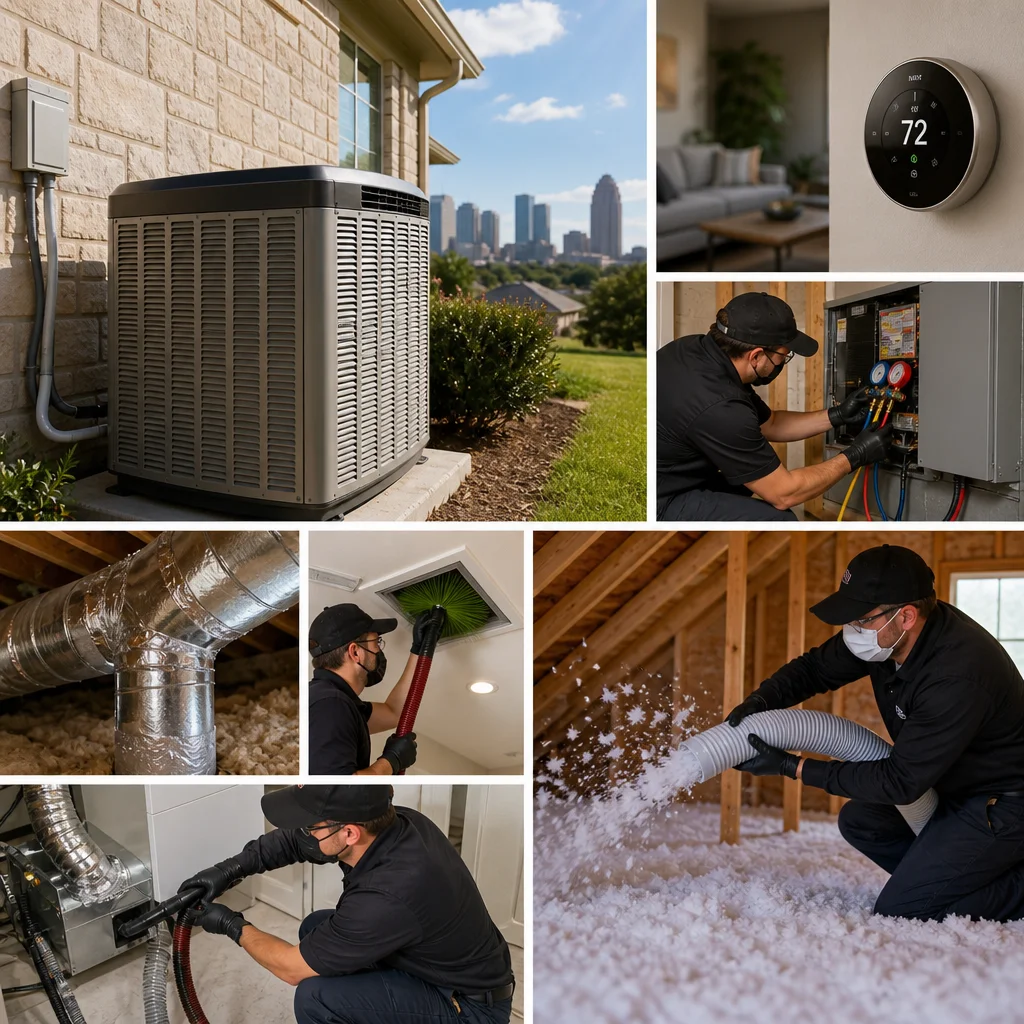
Your HVAC system is only as efficient as your home’s thermal envelope. Poor insulation in the attic, walls, or crawlspace forces your system to work overtime, especially during San Antonio’s brutal summers.
Many homes built before 2000 have R-19 or R-21 attic insulation, which is below current standards (R-38 to R-60 for our climate). If your home loses conditioned air through thin insulation, a new high-efficiency system won’t save you money because it’s fighting a losing battle against outdoor heat.
We often recommend insulation upgrades alongside HVAC installation. Typical San Antonio homes benefit from additional attic insulation, sealing air leaks around ductwork in the attic, and addressing crawlspace insulation if present.
Insulation improvements that pair with HVAC upgrades:
- Attic insulation increase (biggest impact in Texas homes)
- Sealing air leaks around penetrations and ductwork
- Crawlspace insulation and vapor barriers
- Pipe insulation to prevent heat loss in summer
The combination of a high-efficiency system, sealed ducts, and upgraded insulation typically delivers 25-35% energy savings compared to older systems in homes with poor insulation baseline.
Action takeaway: Get an energy audit before or immediately after HVAC installation. This identifies where your home is losing conditioned air. Prioritize attic insulation first, as it delivers the fastest payback in San Antonio’s climate.
—
High-efficiency HVAC systems are an investment, but the real savings come from treating your system as part of a complete home comfort and efficiency strategy. We recommend starting with professional system and ductwork inspection so you understand exactly what you’re working with. From there, prioritize sealed ducts and insulation upgrades alongside your new equipment.
We’re here to help San Antonio homeowners make these decisions with confidence. Our team provides free estimates and energy audits to show exactly how much you can save with the right upgrades. Ready to get started? Contact us today for a consultation with a certified HVAC specialist.
If you’re dealing with dust, poor airflow, mold in your ducts, or a clogged dryer vent — don’t wait. These issues can affect your health and safety. Go Air Ducts Group are the local experts in air duct cleaning, mold removal, dryer vent cleaning, and attic insulation. Call now for a free inspection and same-day service in Austin and San Antonio.
Frequently Asked Questions (FAQ)
How much can we save with a high efficiency HVAC system in San Antonio?
Our customers typically see energy bill reductions of 20-40% when upgrading to a high SEER-rated system, especially when combined with proper ductwork sealing and insulation. The exact savings depend on your current system’s age, your home’s insulation quality, and your usage habits. We recommend getting a free estimate from our team so we can assess your specific situation and calculate realistic savings for your property.
Why does our air duct cleaning improve HVAC efficiency?
Over time, dust and debris accumulate inside your ducts, forcing your system to work harder to push air through your home. When we clean your ducts professionally, we restore proper airflow, which allows your HVAC system to operate at its designed efficiency level. This is especially important in San Antonio’s climate, where air conditioning runs frequently and contamination builds up quickly.
What’s the difference between SEER and SEER2 ratings we should know about?
SEER2 is the newer efficiency standard we now use to rate systems, and it reflects real-world conditions more accurately than the older SEER rating. Systems with the same SEER number may have different SEER2 ratings, so when we recommend equipment, we focus on SEER2 to give you the most honest picture of performance and savings. Our team can explain how these ratings translate to your actual energy costs during your consultation.