
🕑 11 min read
What are the signs an evaporator coil needs cleaning?
Warning signs include weak cooling, longer run times, higher energy bills, musty odors, ice on the coil, and increased dust. These mean the coil is dirty and restricting performance. Go Air Ducts provides professional evaporator coil cleaning to restore cooling, efficiency, and air quality before problems grow.
Table of Contents
- When Your AC Starts Telling You It’s Time for Help
- What Your Evaporator Coil Does and Why It Matters
- Sign 1: Weak Airflow From Your Vents
- Sign 2: Warm Air Coming From Your AC System
- Sign 3: Unusual Odors or Musty Smells in Your Home
- Sign 4: Ice Buildup on Your AC Unit
- Sign 5: Higher Energy Bills Without Increased Usage
- Sign 6: Visible Mold or Moisture Around Your System
- Sign 7: Strange Noises Coming From Your HVAC Unit
- Why Professional Cleaning Beats DIY Attempts
- How Our Evaporator Coil Cleaning Process Works
- Schedule Your Free HVAC Inspection and Estimate Today
- Frequently Asked Questions (FAQ)
When Your AC Starts Telling You It’s Time for Help
Your air conditioning system is constantly working to keep your Texas home comfortable, but many homeowners don’t realize that one critical component can silently underperform without any obvious warning. The evaporator coil is the unsung hero of your AC system, and when it gets dirty, your entire comfort level and energy costs suffer.
We’ve spent years serving Austin, San Antonio, Dallas, and Houston homeowners, and one pattern stands out: people often wait too long to address evaporator coil problems. By the time they call us, their systems have already lost efficiency, their energy bills have climbed, and some have even developed indoor air quality issues like mold growth or musty odors.
The good news? Most of these problems are preventable with timely professional cleaning. Recognizing the warning signs early saves you money, extends your system’s lifespan, and keeps your indoor air quality at its best.
What Your Evaporator Coil Does and Why It Matters
The evaporator coil is located inside your AC unit, typically in or near your furnace. Its job is simple but essential: it absorbs heat from the air inside your home and transfers it to refrigerant that carries that heat outside. Without a properly functioning evaporator coil, your air conditioner simply cannot cool your home effectively.
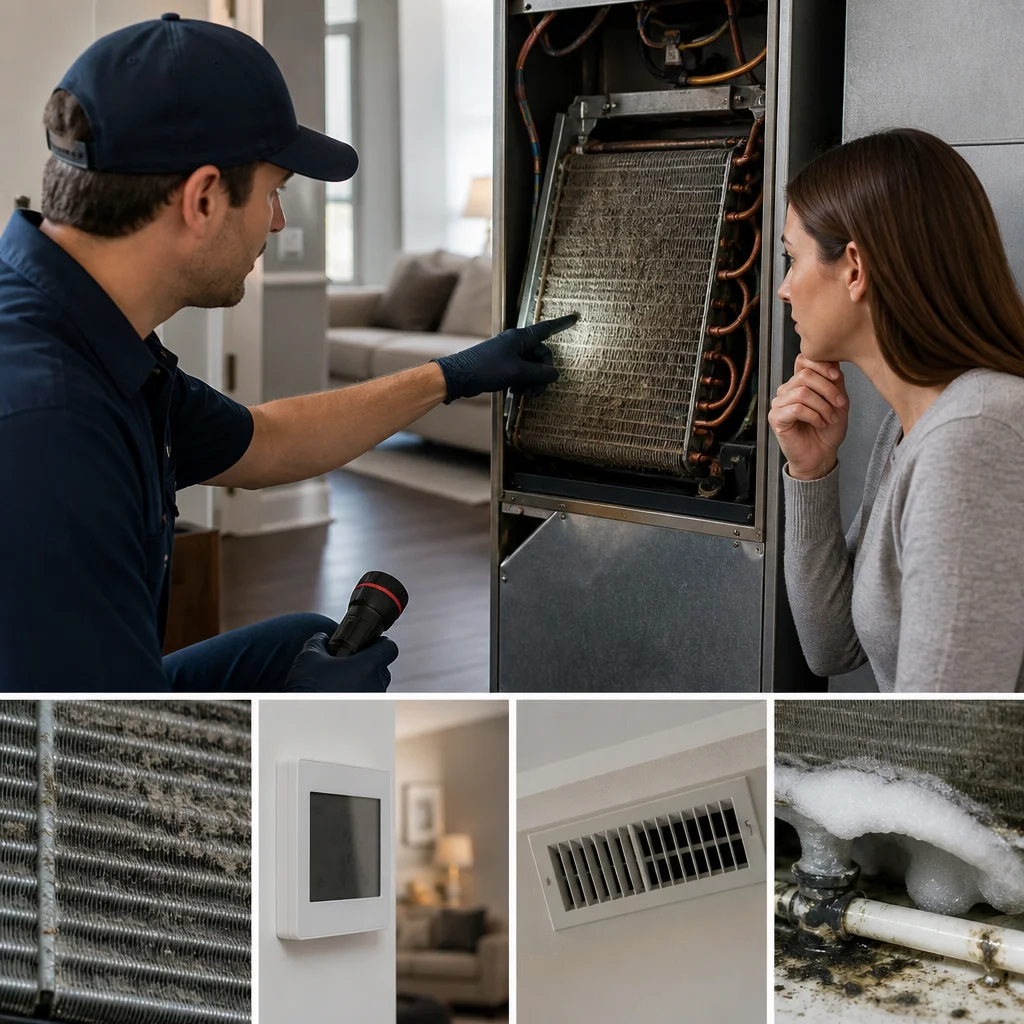
Here’s what happens when the coil gets dirty. Dust, pollen, pet dander, and mold spores accumulate on the coil’s fins, creating an insulating layer that blocks heat transfer. Your system works harder to achieve the same cooling effect, your energy bills climb, and the coil itself can develop frost or ice buildup due to restricted airflow.
Over time, dirty coils can also trap moisture, creating the perfect environment for mold growth. In a humid climate like Texas, this becomes more than a comfort issue—it becomes a health concern. Understanding how dirty coils impact HVAC efficiency helps you see why proactive maintenance matters.
Sign 1: Weak Airflow From Your Vents
One of the first things homeowners notice is that air coming from their vents feels less forceful than it used to. You might find yourself adjusting your thermostat higher or closing some vents because the air distribution feels uneven.
Weak airflow often points to a dirty evaporator coil. When the coil becomes clogged, it restricts air movement through your system. Your blower fan has to work harder to push air across a restricted surface, and the result is reduced output at your registers.
To check this yourself, place your hand near a return air vent and feel the pull of air. Compare that to your supply vents. If the supply air feels noticeably weaker than it should, schedule an inspection. Weak airflow isn’t just uncomfortable—it’s a sign your system is straining, which accelerates wear and drives up energy consumption.
Sign 2: Warm Air Coming From Your AC System
If your AC is running but the air coming out of your vents feels lukewarm instead of cool, your evaporator coil is likely the culprit. This is one of the most direct indicators that the coil can no longer transfer heat efficiently.
When a coil is heavily contaminated, the refrigerant moving through it can’t absorb enough heat from the warm air passing over it. The result is cool air, but not cold air. Some homeowners describe it as their AC “not working as well as it used to,” even though the system runs constantly.
This problem gets worse in the Texas heat. During the hottest months, your system works at maximum capacity just to maintain temperature. A dirty coil compounds the problem, potentially leaving your home at 78 or 79 degrees when you’ve set it for 72.
Sign 3: Unusual Odors or Musty Smells in Your Home
Musty or stale odors coming from your air vents are a red flag that shouldn’t be ignored. These smells typically indicate mold or bacterial growth on your evaporator coil or in the ductwork connected to it.
In our humid Texas climate, moisture naturally accumulates on cooling coils. When a coil is dirty and clogged, that moisture can’t drain properly. Stagnant water mixed with dust creates a breeding ground for mold spores and bacteria. The air your system circulates then carries those odors throughout your home.
This isn’t just a comfort issue. Mold spores can aggravate allergies, asthma, and respiratory issues, especially for children and elderly family members. If you notice unusual smells, don’t delay. The longer mold grows, the more extensive the cleaning job becomes.
Sign 4: Ice Buildup on Your AC Unit
This is a serious sign that demands immediate attention. Ice forming on your outdoor AC unit or inside your indoor unit indicates that your evaporator coil temperature has dropped below freezing.
Here’s why this happens: when your coil is clogged, airflow across it is restricted. The refrigerant cools the coil surface to very low temperatures, but the reduced airflow means heat isn’t being transferred efficiently. Moisture on the coil begins to freeze. Left unchecked, this ice buildup can damage your compressor and cause catastrophic system failure.
We’ve seen homeowners ignore this warning sign, thinking their system will eventually thaw and work again. In reality, ice buildup is your system’s way of telling you it’s in distress. Turn off your AC, let the ice melt naturally, and call a professional immediately. Don’t try to remove ice manually, as you risk damaging the coil.
Sign 5: Higher Energy Bills Without Increased Usage
Examine your electricity bills over the last few months. If your usage hasn’t changed but your bills have climbed 15 to 30 percent, your AC system is likely working much harder than it should be.
A dirty evaporator coil is one of the most common causes of rising energy costs. When the coil can’t transfer heat efficiently, your compressor runs longer cycles and works at higher pressures. Over a summer cooling season, this can add hundreds of dollars to your energy bill.
The math is straightforward: cleaning your coil typically costs less than a month of extra energy consumption. Most homeowners who invest in professional evaporator coil cleaning recover that investment within a single cooling season through lower utility bills.
Sign 6: Visible Mold or Moisture Around Your System
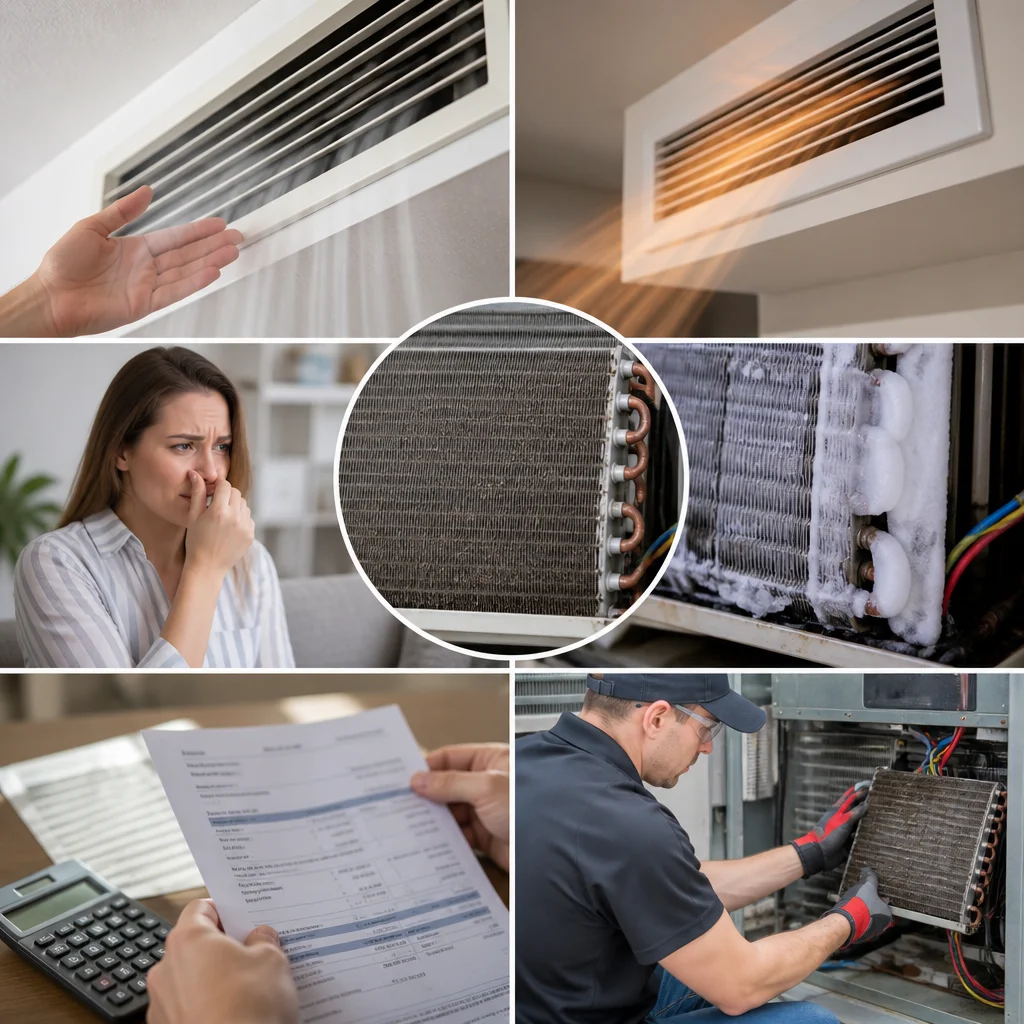
If you can see moisture pooling around your indoor unit, or you notice visible mold growth on the coil or surrounding components, your system has a serious problem that requires professional attention.
Mold growing on your evaporator coil indicates that moisture isn’t draining properly and conditions are right for rapid mold colonization. This contamination doesn’t stay isolated to the coil—mold spores spread through your ductwork and circulate throughout your home every time your system runs.
Don’t attempt to clean this yourself with household products. Mold inside HVAC systems requires professional equipment and specialized cleaning agents to eliminate completely. DIY attempts often spread spores further or leave behind residue that allows mold to regrow.
Sign 7: Strange Noises Coming From Your HVAC Unit
Unusual sounds like hissing, gurgling, or clicking from your indoor or outdoor unit can signal multiple problems, but they often relate to coil issues. Hissing might indicate refrigerant leakage (which can cause ice buildup on the coil), while gurgling suggests moisture problems that often stem from clogged coils and improper drainage.
When your evaporator coil is clogged and airflow is restricted, your blower fan has to work harder, sometimes causing unusual vibrations or grinding sounds. These noises are your system’s way of communicating distress.
Don’t ignore strange sounds. Schedule an inspection to identify the source before a minor issue becomes an expensive repair.
Why Professional Cleaning Beats DIY Attempts
Many homeowners consider cleaning their evaporator coil themselves to save money. In theory, it makes sense—how hard can it be? In practice, DIY coil cleaning is risky and often ineffective.
Here’s what’s involved in proper evaporator coil cleaning:
The coil sits in a confined space with multiple connections to refrigerant lines, electrical components, and drainage systems. Disturbing these connections risks creating refrigerant leaks, electrical hazards, or water damage. Professional coil cleaning vs DIY methods reveals why professionals recommend against amateur attempts.
We use specialized equipment including industrial-strength coil cleaner, pressurized rinses, and vacuum extraction to remove all contamination. We also inspect your drainage system, verify proper airflow, and check refrigerant levels. Homeowners simply don’t have access to this equipment or the training to use it safely.
Additionally, improper cleaning can damage the delicate aluminum fins on your coil, reducing their effectiveness permanently. The cheapest “cleaning” is the one that creates bigger problems down the road.
How Our Evaporator Coil Cleaning Process Works
When you schedule professional evaporator coil cleaning with us, here’s what to expect.
We start with a thorough inspection and diagnostic. Our certified HVAC technicians assess your coil’s condition, check your system’s refrigerant levels, verify proper drainage, and measure airflow. This helps us understand how dirty your coil is and whether there are related issues like ductwork problems or mold contamination.
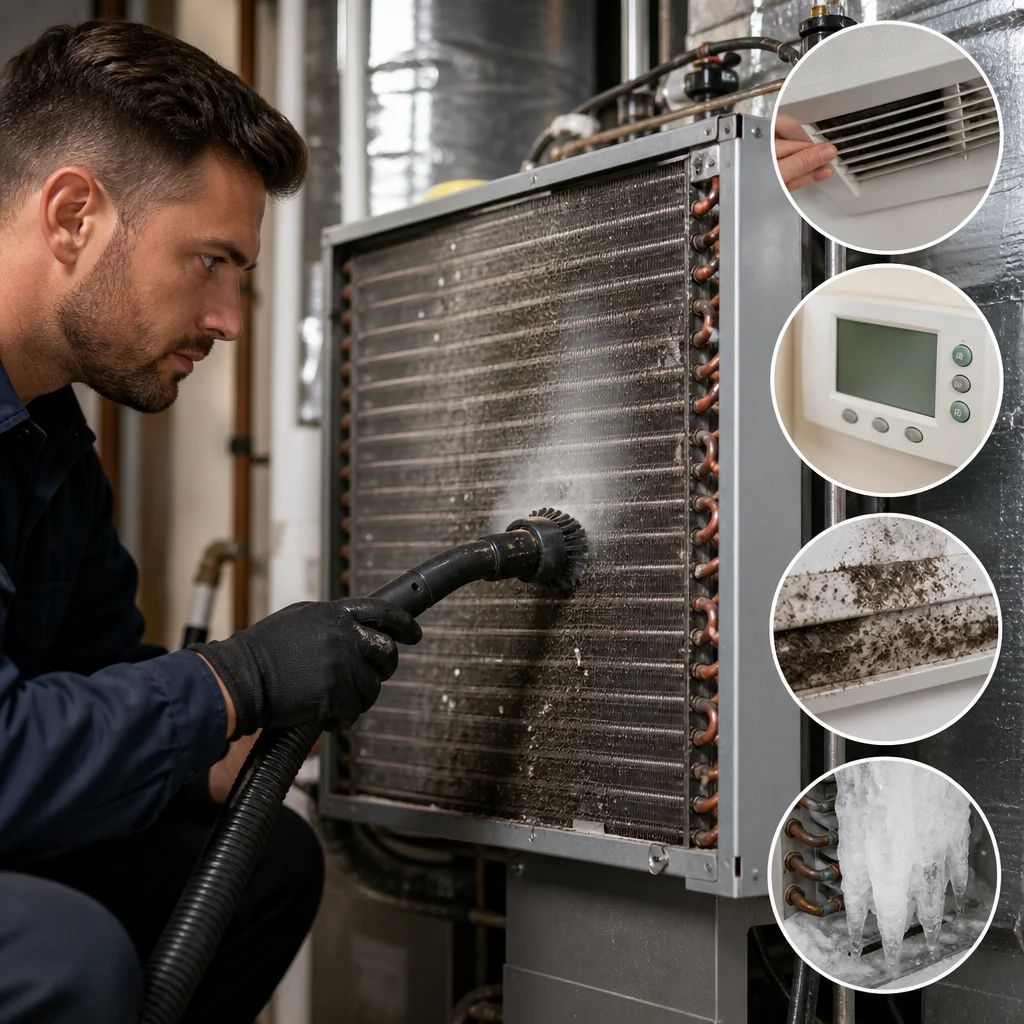
Next, we safely isolate your system and access the evaporator coil. We apply industry-approved coil cleaner and let it work to break down buildup. Using specialized equipment, we rinse away all cleaner residue and contamination, then extract excess moisture using professional-grade vacuums.
We inspect your drain pan and drainage line to ensure water flows freely. Proper drainage is critical for preventing future mold growth. Finally, we run your system, verify proper cooling output, and confirm that your airflow has improved.
Throughout the process, we follow manufacturer guidelines and EPA regulations. You’re not just getting a cleaner coil—you’re getting a system that runs efficiently and safely.
Schedule Your Free HVAC Inspection and Estimate Today
Your evaporator coil is too important to ignore. If you’ve noticed any of these warning signs, schedule your free inspection with our team in Austin, San Antonio, Dallas, or Houston today.
We’ll diagnose your system’s condition, explain what we find, and provide a transparent estimate with no surprises. Many homeowners are surprised to learn how much their energy bills will drop after professional coil cleaning.
Don’t wait until ice buildup damages your compressor or mold spores affect your family’s health. Contact Go Air Ducts today and take the first step toward a more efficient, cleaner AC system. Our certified technicians are ready to help.
For further reading: Deep coil cleaning.
If you’re dealing with dust, poor airflow, mold in your ducts, or a clogged dryer vent — don’t wait. These issues can affect your health and safety. Go Air Ducts Group are the local experts in air duct cleaning, mold removal, dryer vent cleaning, and attic insulation. Call now for a free inspection and same-day service in Austin and San Antonio.
Frequently Asked Questions (FAQ)
How often should we have our evaporator coil cleaned?
We recommend scheduling professional evaporator coil cleaning every 1-2 years for most homes, though this depends on factors like your local climate, system usage, and whether you have pets or allergies. If you notice any of the seven warning signs from our article, we’d suggest getting an inspection right away rather than waiting for your next scheduled service. Our certified technicians can assess your specific situation during a free estimate and recommend the best maintenance plan for your home.
Can we clean our evaporator coil ourselves, or do we need a professional?
We strongly advise against DIY evaporator coil cleaning because accessing the coil requires dismantling your AC unit, and improper handling can damage delicate fins or refrigerant lines. Our technicians have specialized tools and training to safely clean the coil without compromising your system’s performance or your home’s air quality. When you try to save money on this one, you often end up spending more on repairs down the road.
What’s the difference between a dirty evaporator coil and other AC problems?
We find that a dirty evaporator coil creates very specific symptoms like weak airflow, musty odors, ice buildup, and higher energy bills, whereas other AC issues might show different warning signs. During our free inspection, we’ll pinpoint whether your problem stems from a dirty coil or something else entirely, so you’re never guessing or paying for unnecessary work. This diagnostic clarity is why many of our Austin and San Antonio customers trust us to handle their indoor air quality concerns.