
🕑 10 min read
How do you safely remove mold from air ducts in Austin?
Safe duct mold removal follows a professional process: inspection, containment, HEPA-based removal, antimicrobial treatment, and source correction to prevent regrowth. Go Air Ducts provides complete air duct mold removal in Austin, eliminating contamination safely and helping protect your home's air quality long-term.
Table of Contents
- Why Mold in Your Air Ducts Threatens Your Austin Home
- Health Risks from Mold in HVAC Systems
- How to Spot Mold Growth in Your Ductwork
- Our Professional Air Duct Mold Removal Process
- Why DIY Mold Removal Fails and Spreads Contamination
- Preventing Future Mold Growth in Your Air Ducts
- How Our Certified Technicians Protect Your Home
- HVAC System Testing After Mold Removal
- Choosing Between Duct Cleaning and Full Remediation
- Timeline and Cost Expectations for Mold Removal
- Frequently Asked Questions (FAQ)
Why Mold in Your Air Ducts Threatens Your Austin Home
Mold thrives in three conditions: darkness, moisture, and organic material. Your air ducts check all three boxes. Dead skin cells, dust, pet dander, and debris accumulate naturally inside ductwork. Add humidity from Austin’s climate or moisture from condensation in your system, and you’ve created a breeding ground.
When mold colonizes inside ducts, it doesn’t stay contained. Every time your HVAC system cycles, spores spread throughout your home. You’re essentially distributing contaminated air to every room. This happens quietly, and most homeowners don’t realize there’s a problem until symptoms appear or they spot visible discoloration.
The longer mold grows unchecked, the larger the colony becomes and the harder it is to remove. Early detection saves money and protects your home faster. If you’ve noticed musty odors from your vents or suspect moisture problems in your attic or crawl space, mold in your ducts could already be present.
Professional mold removal stops the problem at its source, protects your family’s health, and restores the efficiency of your HVAC system. Austin’s humid subtropical climate creates ideal conditions for mold growth, especially in ducts where moisture accumulates and air circulation slows. We’ve addressed this issue for hundreds of homeowners across Austin and San Antonio.
Health Risks from Mold in HVAC Systems
Mold exposure carries real health consequences, especially for children, elderly family members, and anyone with respiratory conditions. When mold spores circulate through your ducts, they enter your lungs with every breath. For sensitive individuals, this triggers allergies, asthma attacks, and chronic respiratory irritation.
Even healthy people can develop problems with prolonged exposure. Symptoms include persistent coughing, nasal congestion, throat irritation, and sinus infections that don’t respond well to typical treatment. Some people develop headaches or fatigue that seems unexplained until the mold source is discovered.
Certain mold species produce toxins called mycotoxins. While not all mold is highly toxic, you shouldn’t wait to find out what type is growing in your home. Black mold and other dangerous varieties thrive in HVAC systems. The safest approach is treating any visible mold as a health threat and addressing it immediately through professional remediation.
How to Spot Mold Growth in Your Ductwork
Visual inspection is your first line of defense. Look around your home’s air return vents and supply registers. Mold typically appears as black, green, or white fuzzy patches. You might also notice dark staining or discoloration on duct surfaces visible through vents or in your attic.
Smell is another strong indicator. Mold produces a distinctive musty odor that’s hard to ignore once you recognize it. If your home smells damp or moldy when the HVAC system runs, duct contamination is a leading suspect. Pay attention to whether the smell intensifies when you first turn on your AC or heating.
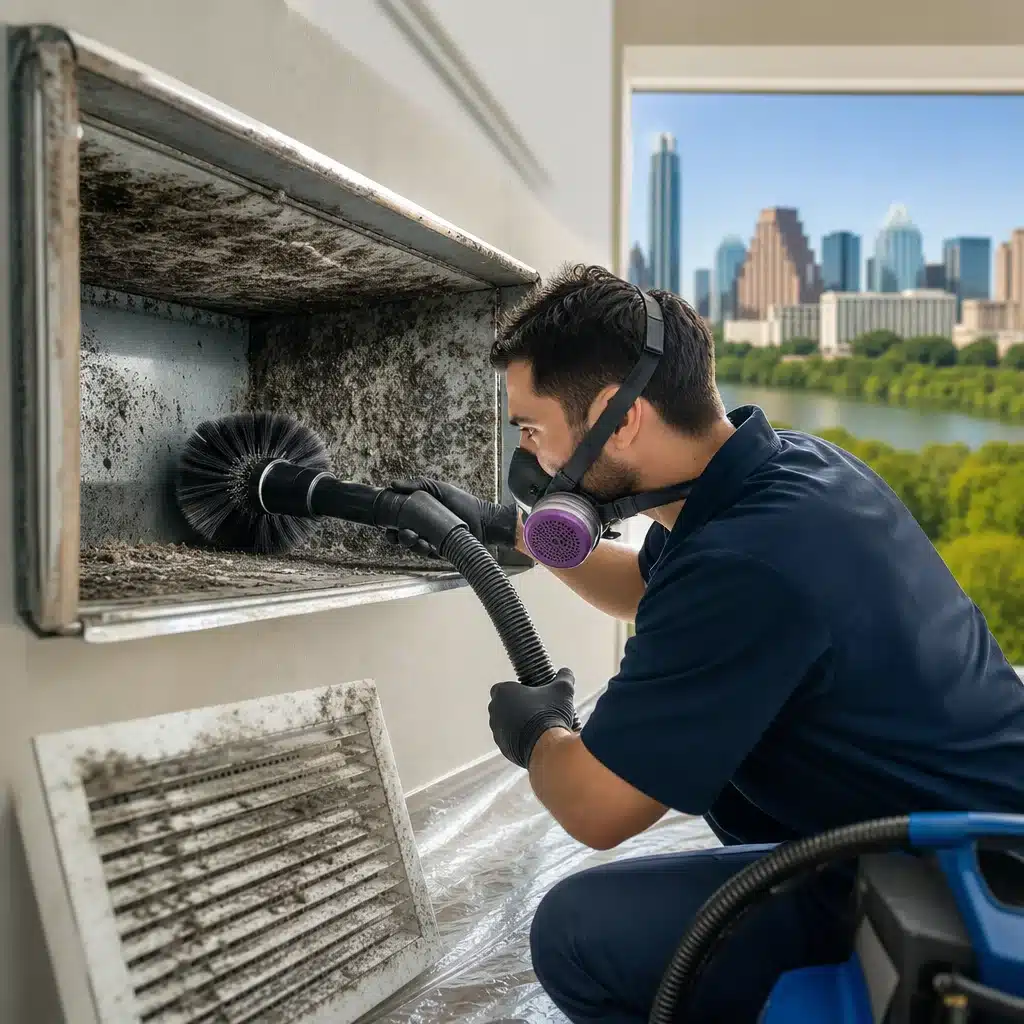
Additional warning signs include:
- Increased allergy or asthma symptoms indoors
- Visible water stains near ductwork in the attic or basement
- Condensation on supply registers or return air grills
- A humid feeling inside despite running your AC
- Pest activity near ducts (mold attracts insects)
Our technicians perform thorough ductwork inspection and cleaning using video cameras and moisture detection tools. This gives you a clear picture of what’s actually happening inside your system before any work begins. Schedule an inspection if you’ve noticed any of these warning signs.
Our Professional Air Duct Mold Removal Process
We approach mold remediation as a complete system treatment, not just a surface cleanup. Our process starts with containment. We isolate the contaminated areas to prevent spores from spreading during removal. This means sealing off the work area and using negative air pressure equipment to capture any particles released.
Next, our certified technicians remove all contaminated insulation and debris from affected ductwork sections. We physically clean every surface using approved HVAC-safe cleaning methods and antimicrobial treatments. We don’t just spray chemicals; we address the underlying moisture that allowed mold to grow in the first place.
Once cleaned, we apply EPA-approved mold inhibitors to prevent regrowth. We also replace damaged ductwork sections or insulation that can’t be adequately cleaned. This ensures you’re not recreating the problem with contaminated materials left inside.
The final step involves post-remediation testing to verify that mold levels have returned to normal. We document everything so you have proof that your home’s air ducts are safe and clean.
Why DIY Mold Removal Fails and Spreads Contamination
Attempting mold removal yourself almost always makes the problem worse. Standard household cleaners don’t penetrate deep into ductwork or kill mold spores effectively. Wiping down visible mold while leaving spores behind means the colony regrows within weeks.
More dangerously, disturbing mold without proper containment sends millions of spores into the air. You end up contaminating other areas of your home that were previously unaffected. This is especially problematic if family members with respiratory sensitivities are present during cleanup.
Improper mold removal can also create liability issues if someone’s health is affected afterward. Our professional team has the training, equipment, and insurance to handle remediation safely and with documented results. We understand Austin’s humidity patterns and HVAC system configurations, which matters significantly when addressing deep duct contamination.
For details on why professional services outweigh DIY attempts, our guide on DIY vs professional guarantees breaks down the practical and financial differences.
Preventing Future Mold Growth in Your Air Ducts
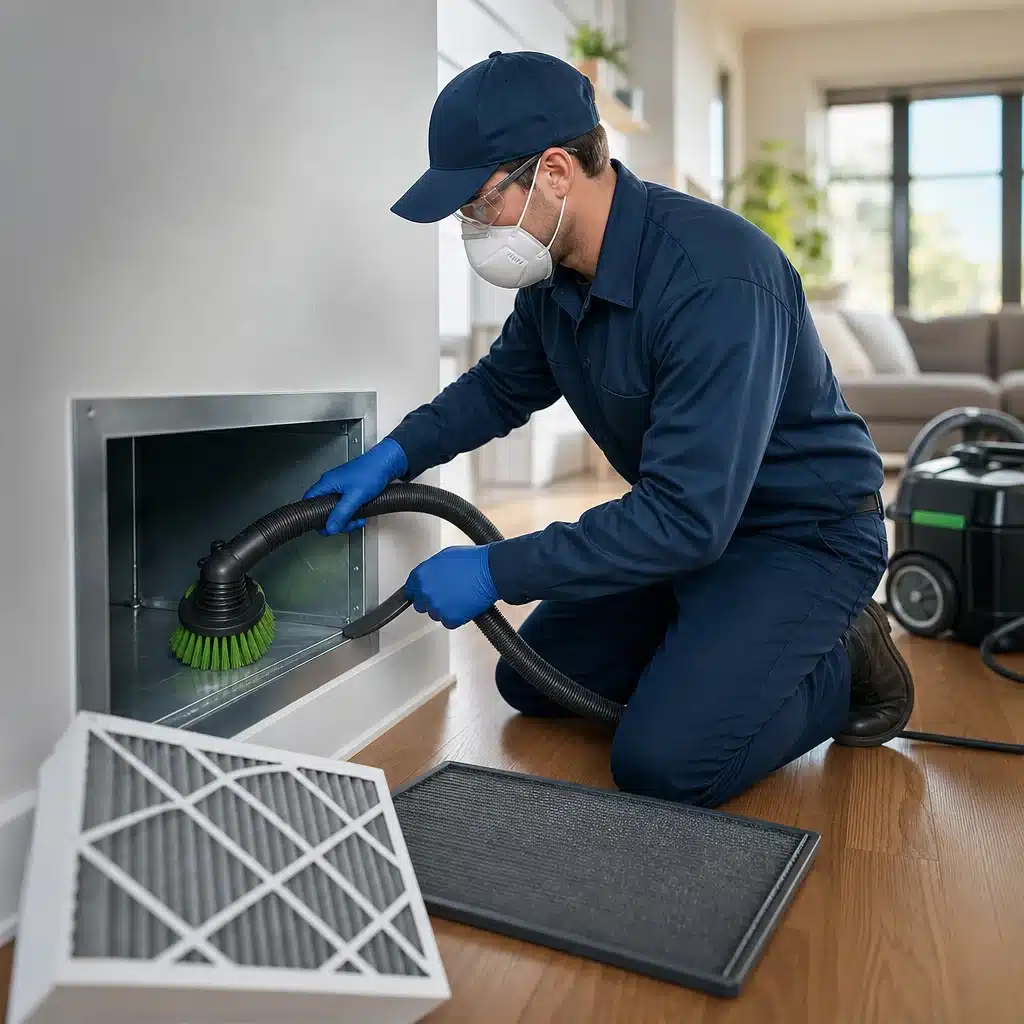
Prevention is always easier and cheaper than remediation. The most important step is controlling humidity. Austin’s moisture-heavy air means your air conditioning system is already working hard to dehumidify. Make sure your AC drains are clear and functioning properly. A blocked condensation drain allows water to pool inside your ductwork, creating perfect mold conditions.
Seal air leaks in your ductwork and around your system. Leaks pull in unconditioned air from attics or basements, introducing moisture and dust. During our inspections, we often find unsealed ducts that are the root cause of mold problems.
Schedule regular air duct cleaning every 3 to 5 years. This removes the dust and debris that mold feeds on. In high-humidity environments like Austin, consider the shorter interval. We also recommend installing or upgrading your air filter to higher MERV ratings, which captures more particles before they accumulate in ducts.
Finally, ensure your attic or crawl space has proper ventilation and isn’t holding excess moisture. Many duct mold problems originate from above, where humidity builds up and condenses on cool ductwork. A free inspection lets us identify moisture sources specific to your home and recommend targeted fixes.
How Our Certified Technicians Protect Your Home
Our team holds certifications in mold remediation, HVAC systems, and indoor air quality. These aren’t just credentials hanging on a wall; they represent hands-on training and ongoing education about Austin’s specific climate challenges. Our certified Austin mold technicians understand how Texas heat and humidity interact with residential HVAC systems.
We use professional-grade equipment including fiber optic cameras, moisture meters, and specialized cleaning tools designed for ductwork. We follow industry protocols developed by the National Air Duct Cleaners Association (NADCA) and EPA guidelines for mold remediation. This means your home gets the same standard of care that commercial buildings require.
We also provide clear communication throughout the process. You’ll know exactly what we found, what we’re doing about it, and what steps prevent future problems. We respect your time and your home, working efficiently without cutting corners. This transparency helps you understand the investment and feel confident in the remediation approach.
HVAC System Testing After Mold Removal
Verification is crucial. After completing remediation, we conduct air quality testing to confirm that mold levels in your ducts have returned to acceptable ranges. We take samples from multiple locations within your ductwork system to ensure thorough cleaning.
We also test your HVAC system’s performance. Mold contamination often reduces airflow and system efficiency. After remediation, your system should run more quietly, cool or heat more evenly, and consume less energy. We verify that condensation issues are resolved and that your system maintains proper humidity levels.
You receive a detailed report documenting pre-remediation conditions, the work completed, and post-remediation test results. This documentation is valuable for your records and proves to future buyers that your home’s HVAC system has been professionally maintained and treated. Having this proof of remediation protects your home’s resale value.
Choosing Between Duct Cleaning and Full Remediation
Not every mold situation requires complete duct replacement. The difference depends on the extent of contamination and whether it’s limited to specific areas or spread throughout your system.
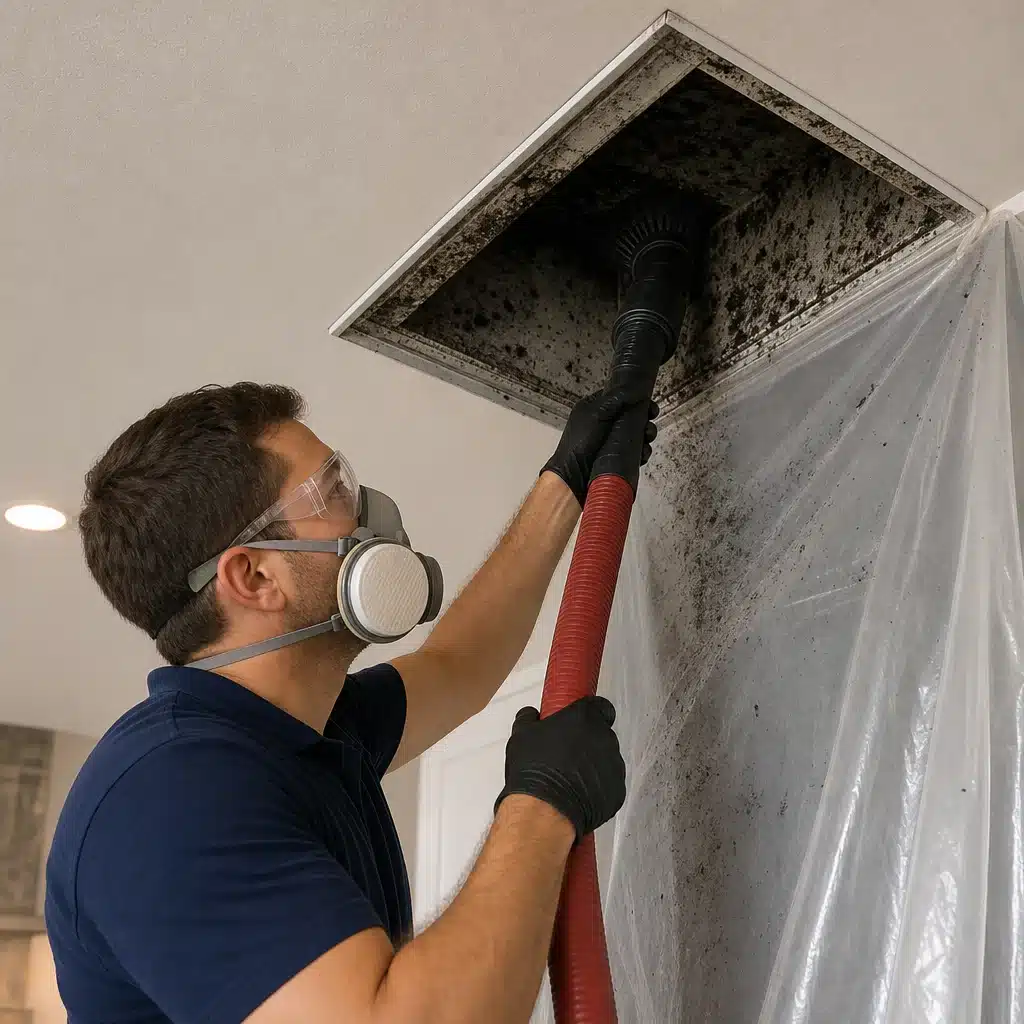
Standard duct cleaning addresses surface dust and light contamination. It’s suitable for preventative maintenance or minor mold concerns caught early. Full remediation is necessary when mold has actively colonized significant duct sections or when moisture damage has compromised the duct integrity itself.
During our free inspection, we’ll assess your specific situation and recommend the appropriate level of service. Some homes need aggressive remediation with duct replacement. Others benefit from thorough professional cleaning combined with moisture control improvements. We won’t oversell unnecessary work, but we also won’t recommend a surface-level fix for a serious problem. This tailored approach ensures you’re making a smart investment specific to your home’s conditions.
Timeline and Cost Expectations for Mold Removal
Professional air duct mold removal in Austin typically takes 1 to 3 days, depending on system size and contamination severity. A small 2-bedroom home with localized mold might finish in a single day. Larger homes or extensive contamination can take longer.
Costs vary widely. Basic duct cleaning ranges from $400 to $800. Full mold remediation with containment, cleaning, treatment, and testing typically costs $1,500 to $4,000. Ductwork replacement adds to that expense. These are investments in your home’s value and your family’s health, not minor expenses.
We offer free service estimates, so you’ll know the exact cost before we start any work. We also work with homeowners on scheduling to minimize disruption to your daily routine. Many customers find that the health improvements and energy savings justify the investment quickly. Contact us today for a no-obligation quote and timeline estimate specific to your home.
If you’re dealing with dust, poor airflow, mold in your ducts, or a clogged dryer vent — don’t wait. These issues can affect your health and safety. Go Air Ducts Group are the local experts in air duct cleaning, mold removal, dryer vent cleaning, and attic insulation. Call now for a free inspection and same-day service in Austin and San Antonio.
Frequently Asked Questions (FAQ)
How quickly can we get to your home if you suspect mold in your air ducts?
We understand that mold concerns require prompt attention, which is why we offer same-day and next-day service appointments across Austin and San Antonio. Our dispatch team coordinates with our certified technicians to find the fastest available slot for your specific location. Once we arrive, we conduct a thorough inspection and can typically begin remediation work immediately if needed.
What makes professional mold removal better than cleaning the ducts ourselves?
DIY attempts often spread mold spores throughout your home and into other areas of your HVAC system, actually worsening the problem. We use specialized containment equipment, HEPA filtration, and EPA-approved antimicrobial treatments that eliminate mold at its source without contaminating your living spaces. Our technicians are certified in mold remediation protocols and follow industry standards to ensure complete removal and prevent recurrence.
How do we prevent mold from returning after we finish the remediation?
We address the root cause of your mold issue by identifying and fixing moisture sources in your ductwork and HVAC system. After remediation, we recommend regular maintenance schedules and can install dehumidification systems or upgrade your insulation to maintain proper airflow and humidity levels. We also provide guidance on seasonal maintenance practices that keep your ducts dry and mold-free year-round.