
🕑 10 min read
Table of Contents
- Why Mold in Air Ducts Threatens Your Family's Health
- How Mold Grows Inside Your HVAC System
- Signs Your Air Ducts Need a Professional Mold Inspection
- Our Comprehensive Mold Inspection Process
- What We Do When We Find Mold Contamination
- Preventing Future Mold Growth in Your System
- Why Austin Homeowners Trust Go Air Ducts for Mold Solutions
- Schedule Your Free Air Duct Mold Inspection Today
- Frequently Asked Questions (FAQ)
Why Mold in Air Ducts Threatens Your Family’s Health
Mold in air ducts isn’t something you can ignore. Unlike dust buildup, which simply makes your system work harder, mold actively compromises the air your family breathes every single day. At Go Air Ducts, we’ve inspected hundreds of Austin and San Antonio homes where mold was silently circulating through the ductwork, causing health problems, odors, and system damage that homeowners didn’t even realize were connected to their HVAC system.
If you’ve noticed musty smells, allergies that seem worse indoors, or visible mold around vents, an air duct mold inspection isn’t optional. It’s the first step toward reclaiming your home’s air quality and protecting your family’s health.
Mold spores traveling through your ductwork reach every room in your home. Unlike other contaminants, mold spores are microscopic and easily inhaled. Once they settle in your lungs and nasal passages, they can trigger allergic reactions, respiratory irritation, and asthma attacks, especially in children, elderly family members, and people with compromised immune systems.
The danger compounds because your HVAC system runs multiple times per day, continuously cycling mold-contaminated air. A person spending eight hours sleeping in a bedroom with a mold-affected duct nearby is exposed constantly. Over weeks and months, this exposure accumulates.
We’ve seen families where one person complained of unexplained coughing while another had persistent sinus infections. Once we discovered mold in their ductwork and performed remediation, symptoms improved dramatically. The connection often goes undiagnosed because homeowners and even doctors don’t immediately think to look inside the hidden ductwork.
Beyond health, mold compromises your HVAC efficiency and can spread to other parts of your home, including attic insulation and wall cavities. Addressing it early prevents expensive structural damage and protects your investment in your home.
Take action: If anyone in your household has unexplained respiratory symptoms or allergies that worsen indoors, mention it during a free consultation. We can often spot warning signs during an initial walkthrough.
How Mold Grows Inside Your HVAC System
Mold needs three things to thrive: moisture, organic matter, and darkness. Your air ductwork provides all three.
Moisture accumulates in ducts for several reasons. Air conditioning naturally produces condensation as cold refrigerant cools warm indoor air. If your ducts aren’t properly insulated or if they run through hot attics (common in Texas homes), condensation builds up on duct surfaces. Humidity levels above 60% create an ideal breeding ground. Austin and San Antonio’s climate, especially during spring and early summer, often pushes indoor humidity higher than homeowners realize.
Organic matter is abundant in ducts. Dust settling inside contains skin cells, pet dander, pollen, and other particles that mold uses as food. A dirty duct system with years of buildup is essentially a buffet for mold spores.
The darkness inside sealed ductwork means mold grows without any inhibiting sunlight. Unlike mold on a bathroom wall, which you catch quickly, duct mold spreads invisibly until a serious problem develops.
We’ve found that homes with poor attic ventilation, leaky ductwork, or improperly maintained air conditioning systems are particularly vulnerable. One home we inspected had a small roof leak that sent water into the attic, where it saturated the supply ductwork above. By the time the homeowner noticed a musty smell, mold had colonized a ten-foot section of duct.
What to do next: Check your attic for any visible water stains near ductwork, and listen for condensation dripping inside ducts during cooling season. These are warning signs that moisture is collecting.
Signs Your Air Ducts Need a Professional Mold Inspection
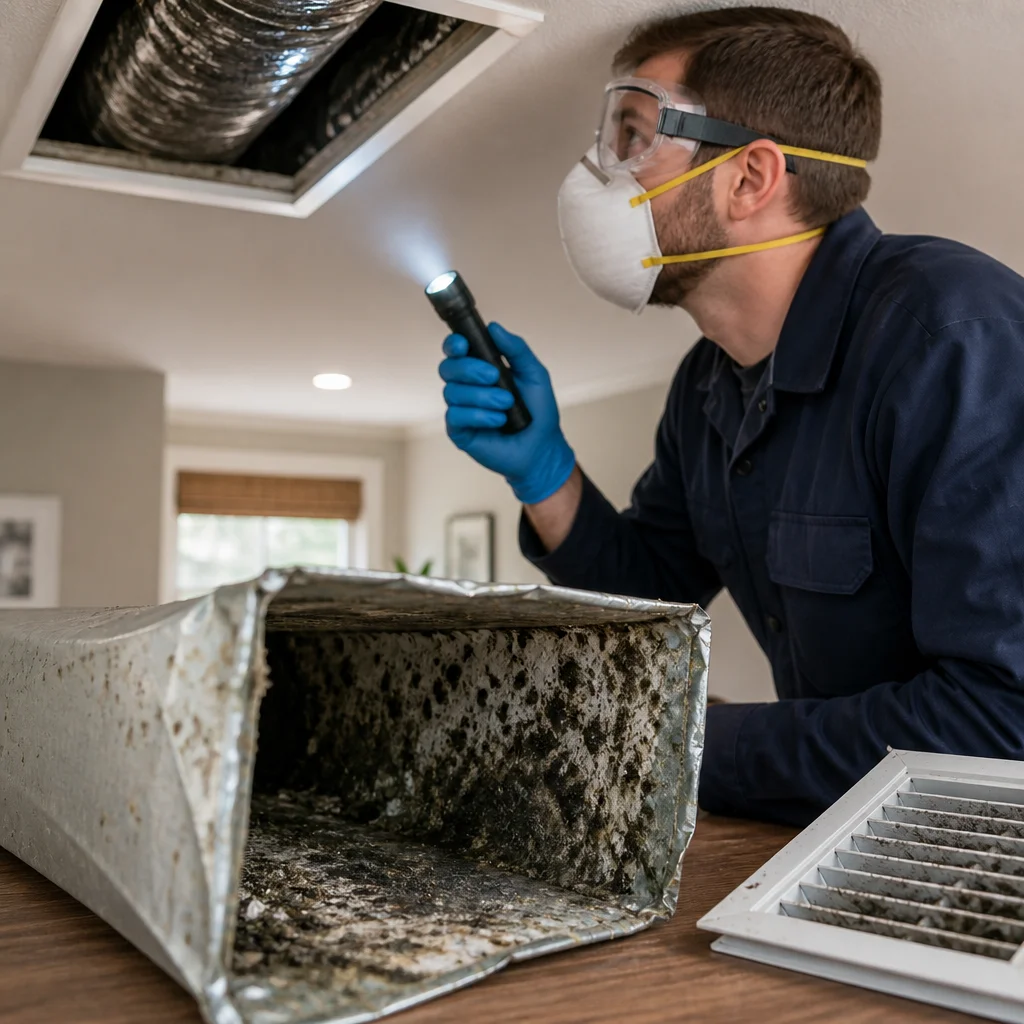
Visible mold around vent registers is the most obvious sign, but it’s often the last warning before a serious problem. By then, contamination inside the ducts is usually extensive.
Watch for these earlier indicators:
- Musty, earthy odors coming from vents, especially when the AC first kicks on
- Increased allergy symptoms, sneezing, or congestion that improves when you leave the house
- Visible dust or debris around vent registers
- Unexplained respiratory irritation or coughing, particularly at night
- Dark streaks or discoloration inside ductwork visible through return air vents
- Moisture or condensation visible on duct surfaces in your attic
Timing matters, too. If these symptoms appeared after water damage, a roof leak, or a basement flood, mold in ducts becomes much more likely. Austin homeowners often discover problems after heavy spring rains or after their air conditioner runs constantly during summer heat waves.
We also recommend an inspection if your home is over 15 years old and you’ve never had ductwork professionally cleaned. Mold in air ducts often develops gradually, especially in homes with inconsistent maintenance or poor ventilation.
Next step: Schedule a professional ductwork inspection if you’ve noticed any of these signs. Early detection prevents the problem from spreading.
Our Comprehensive Mold Inspection Process
We don’t guess. Our mold inspection process uses professional-grade equipment and certified technicians who know exactly what to look for.
Here’s how we protect your home:
Visual inspection and moisture assessment. We examine all accessible ductwork in your attic, crawlspace, and behind walls. We use moisture meters to measure humidity levels inside ducts and identify areas where condensation is likely forming. This tells us where mold is most likely to grow.
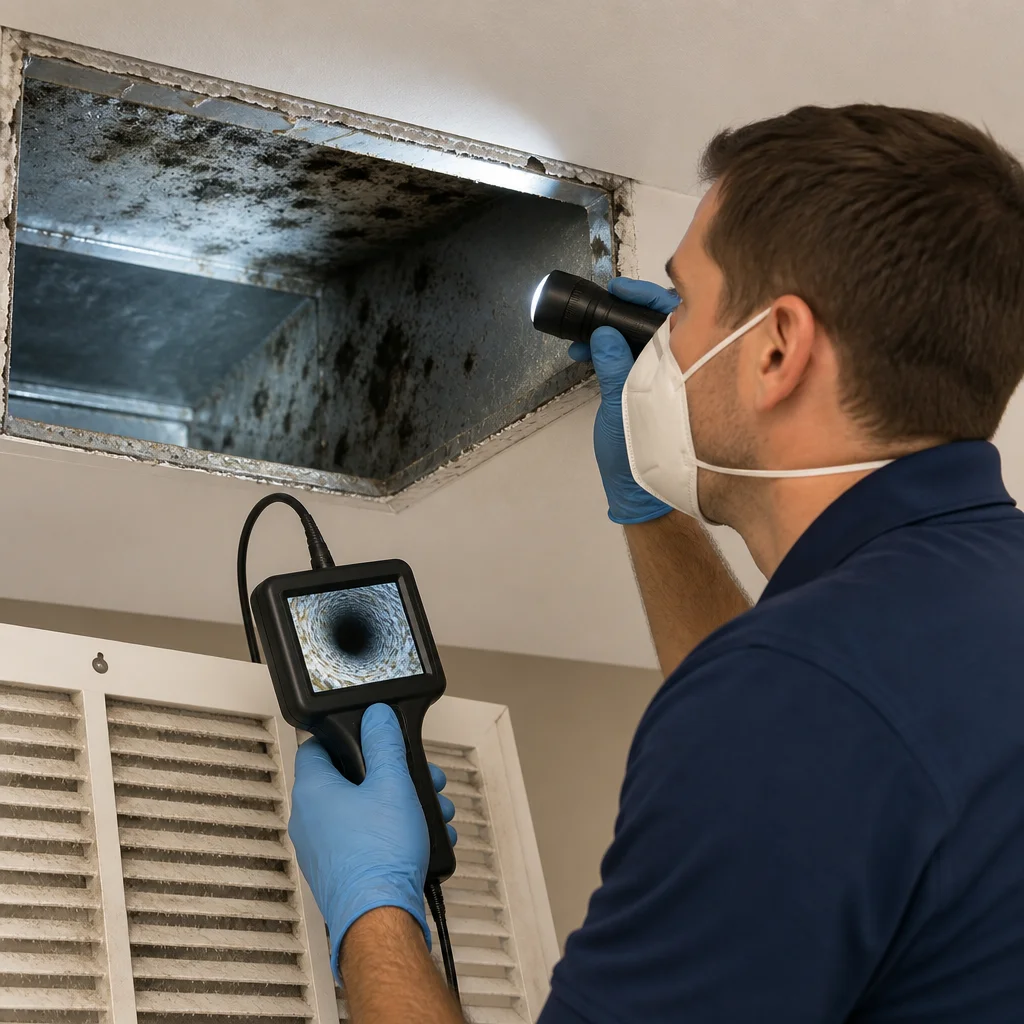
Borescope camera inspection. We insert a small camera deep into your ductwork to examine the interior surfaces that the naked eye can’t reach. This is where mold often hides. The borescope shows us exactly what’s inside, whether it’s mold, mildew, or just heavy dust accumulation.
Air quality testing. For homes where we suspect serious contamination, we collect air samples to test for mold spore counts. This gives us objective data about whether your indoor air quality is compromised and helps us determine the severity of remediation needed.
Documentation and reporting. We provide a detailed report with photos, findings, and specific recommendations. If mold is present, we explain exactly where it is, how extensive it is, and what needs to happen next.
The entire inspection takes 1-2 hours depending on your home’s size and ductwork layout. We’re thorough because a missed area means mold continues circulating through your home.
Our commitment: We offer free service estimates so you understand the scope and cost before committing to any work.
What We Do When We Find Mold Contamination
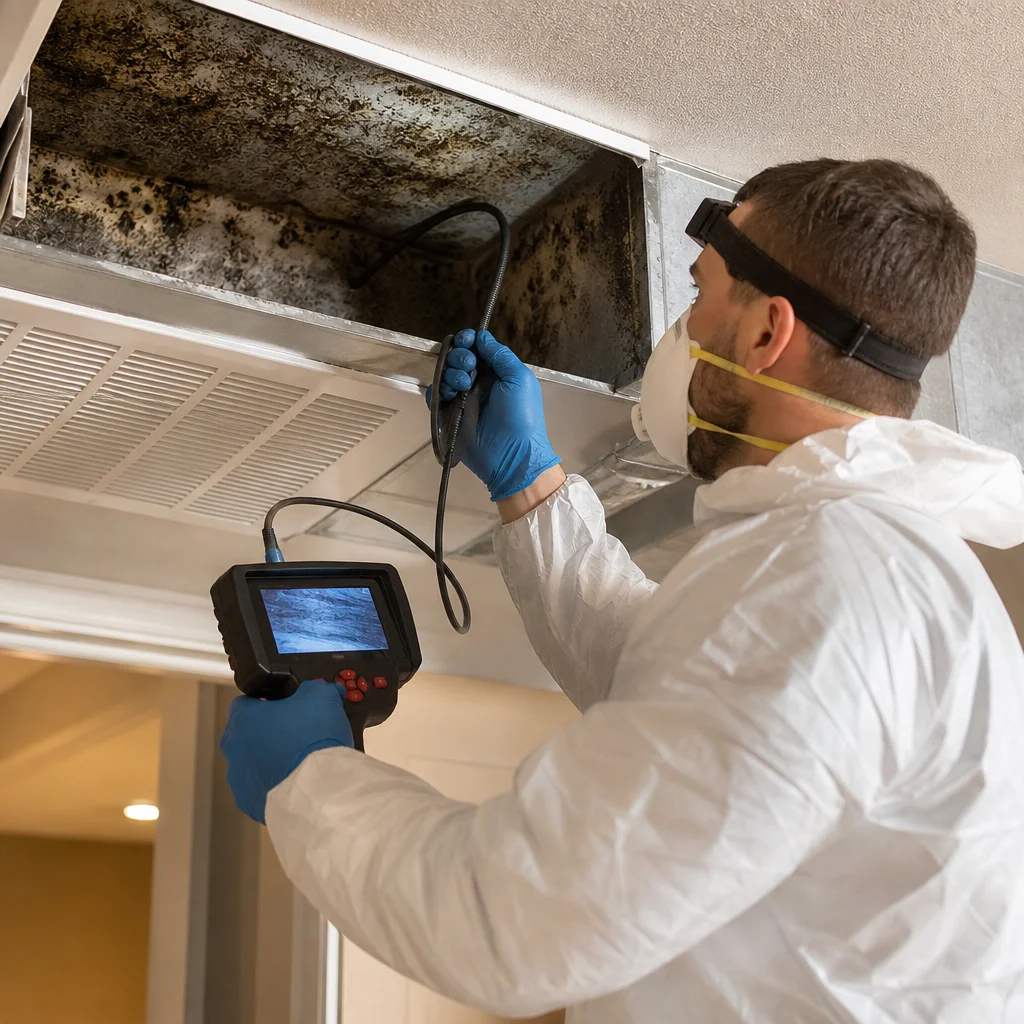
Finding mold triggers a specific remediation protocol. We don’t just clean around it; we eliminate it completely and prevent regrowth.
If contamination is light to moderate, our mold duct cleaning services include:
- Complete ductwork cleaning using high-powered vacuum systems and brush agitation to remove all mold colonies and spores
- Professional-grade disinfection and antimicrobial treatment to kill remaining mold and prevent regrowth
- HEPA filtration to capture all particles during the process so mold doesn’t spread to other areas of your home
- Duct sealing to prevent future moisture intrusion and contamination
For severe cases, affected duct sections may need replacement. This is rare, but when mold has penetrated duct materials deeply or when structural integrity is compromised, replacement is the safest option.
We also address the root cause. If moisture is the culprit, we might recommend:
- Improved attic ventilation to reduce humidity
- Duct insulation upgrades to prevent condensation
- Dryer vent inspection and cleaning (dryer vents are surprisingly common sources of moisture)
- HVAC disinfecting solutions to keep your system protected long-term
One Austin home we worked on had mold stemming from a clogged dryer vent that was pushing humid air into the attic, saturating the ductwork above. Cleaning the ducts was necessary, but replacing the dryer vent was the real fix.
What happens next: After remediation, we recommend a follow-up inspection in 30 days to confirm the problem is fully resolved.
Preventing Future Mold Growth in Your System
Prevention is always easier than remediation. Once we’ve addressed an existing mold problem, these practices keep your ducts clean and dry.
Maintain consistent humidity levels. Keep indoor humidity between 30-50%. If your home tends toward high humidity, especially in bedrooms and basements, a dehumidifier is a worthwhile investment. We often recommend this for homes in San Antonio and Austin where summer humidity can spike.
Change your air filter regularly. A dirty filter restricts airflow and causes temperature drops that increase condensation. We recommend checking your filter monthly and changing it every 60-90 days, or more often if you have pets or allergies.
Schedule annual HVAC maintenance. Have your system professionally serviced once a year, ideally before cooling season. A technician will check refrigerant levels, clean the condenser coil, and ensure your AC isn’t producing excess moisture.
Inspect and clean dryer vents annually. Dryer vents are a frequently overlooked source of moisture and mold. A clogged vent forces humid air back into your home and can contribute to attic moisture problems.
Address roof leaks and water intrusion immediately. Any sign of water entering your attic near ductwork requires urgent attention. Water damage and mold develop fast in Texas heat.
Consider duct sealing. Leaky ducts allow humid outdoor air to mix with your conditioned air, introducing moisture into your system. Sealing ducts improves efficiency and reduces moisture problems.
Action item: Schedule your annual HVAC maintenance now if you haven’t already. Prevention costs far less than dealing with mold contamination.
Why Austin Homeowners Trust Go Air Ducts for Mold Solutions
We’ve been serving Austin, San Antonio, Dallas, and Houston for years, and our reputation is built on thorough inspections, honest assessments, and complete solutions.
Our technicians are certified in mold identification and remediation. We don’t use guesswork or one-size-fits-all approaches. Every home is different, and we tailor our recommendations to your specific situation and budget.
We also understand that mold contamination is stressful. You’re concerned about your family’s health and worried about costs. We communicate clearly about what we find, why it matters, and what your options are. We’ve had homeowners tell us that our transparency and professionalism made them feel confident making decisions about their home.
Beyond mold, we handle the full spectrum of air quality issues: dryer vent cleaning, chimney inspection, certified mold duct technician services, attic insulation, and HVAC system cleaning. When we finish a mold remediation project, we often discover other issues that could compromise air quality or energy efficiency. We address those too, but only when they’re genuinely needed.
Our local expertise matters. We know how Austin’s humidity patterns, summer heat, and spring storms affect homes. We know which neighborhoods tend to have higher moisture problems and which homes are most vulnerable to mold growth. That knowledge helps us catch problems early and recommend preventive measures that actually work in our climate.
Schedule Your Free Air Duct Mold Inspection Today
If you’re concerned about mold in your air ducts, the best first step is a professional inspection. We’ll give you a clear picture of what’s happening inside your ductwork and what needs to happen next.
Call us today or visit our website to request your free service estimate. We serve Austin, San Antonio, Dallas, and Houston with fast response times and flexible scheduling. Most inspections can be completed within a few days, and we’ll provide a detailed report and recommendations in writing.
Your family’s indoor air quality is too important to leave to chance. Let us help you breathe easier.
If you’re dealing with dust, poor airflow, mold in your ducts, or a clogged dryer vent — don’t wait. These issues can affect your health and safety. Go Air Ducts Group are the local experts in air duct cleaning, mold removal, dryer vent cleaning, and attic insulation. Call now for a free inspection and same-day service in Austin and San Antonio.
Frequently Asked Questions (FAQ)
How do we detect mold in air ducts during inspection?
We use specialized equipment including borescopes and moisture meters to visually inspect your ductwork and identify contamination that’s not visible to the naked eye. Our certified technicians also conduct air quality testing to measure spore levels and determine the extent of mold growth throughout your system. If we find contamination, we provide you with detailed findings and photos so you understand exactly what we’re dealing with.
What happens if we find mold during your inspection?
We’ll explain your remediation options, which typically include professional cleaning, duct sealing, and antimicrobial treatments to eliminate active mold and prevent regrowth. Depending on the severity and location, we may recommend additional services like insulation replacement or HVAC component upgrades. We never pressure you into unnecessary work, and we always provide a clear estimate before proceeding with any treatment.
Why is mold in air ducts a bigger concern in Austin?
Our region’s humidity levels create ideal conditions for mold growth inside ductwork, especially if your system has moisture issues or poor drainage. We’ve found that Austin homes with older HVAC systems or inadequate insulation are particularly vulnerable to duct contamination. That’s why we recommend annual inspections for our local customers to catch problems early before they affect your family’s health.