
🕑 10 min read
What does multifamily duct cleaning cost in Austin?
Cost depends on the number of units, system design, and access, so property managers get a per-property quote. Go Air Ducts provides Austin property managers with transparent multifamily duct cleaning estimates and efficient service that protects resident air quality while keeping building maintenance budgets predictable.
Table of Contents
- Why Multifamily Properties Need Professional Duct Cleaning
- Common Duct Problems Affecting Tenant Health and HVAC Efficiency
- What Factors Drive Duct Cleaning Costs for Apartments
- How We Calculate Your Specific Cleaning Estimate
- The Real Cost of Skipping Professional Duct Cleaning
- Our Transparent Pricing for Austin Multifamily Properties
- Why Choosing Go Air Ducts Saves Money Long Term
- Scheduling Your Free Professional Assessment Today
- Frequently Asked Questions (FAQ)
Why Multifamily Properties Need Professional Duct Cleaning
Managing a multifamily property in Austin means balancing tenant satisfaction, regulatory compliance, and operational costs. One maintenance area that directly impacts both tenant health and your bottom line is air duct cleanliness. When dust, mold, and debris accumulate in your building’s HVAC system, it affects everything from energy efficiency to indoor air quality complaints.
We work with apartment complex owners and property managers across Austin regularly, and we’ve learned that understanding duct cleaning costs upfront helps you make smarter decisions about maintenance budgets. This guide walks you through pricing factors, what to expect, and why professional cleaning is an investment, not just an expense.
Multifamily buildings operate differently than single-family homes. Your HVAC systems run continuously, handling air for dozens or hundreds of units. That constant use means dust, debris, and contaminants accumulate faster and in greater volumes.
Tenants also generate varied indoor air quality challenges. Pet dander, cooking byproducts, and humidity from bathrooms all circulate through shared ductwork. In Austin’s climate, moisture in air ducts creates ideal conditions for mold growth, which we see frequently during inspections.
Beyond tenant complaints, clean ducts directly affect HVAC performance. When debris clogs ductwork, your system works harder to push air, driving up energy costs. For a 100-unit complex, that inefficiency compounds across hundreds of monthly tenant utility bills and your base building systems.
Professional duct cleaning removes accumulated contaminants that regular filter changes can’t address. We use specialized equipment to access every section of your ductwork, including areas behind walls and in attic spaces where debris concentrates.
Next step: Schedule a free walkthrough assessment of your building’s HVAC system to identify current conditions and potential issues.
Common Duct Problems Affecting Tenant Health and HVAC Efficiency
We discover the same recurring issues across Austin multifamily properties. Understanding these problems helps you anticipate maintenance needs and explain the value of cleaning to your board or ownership.
Dust and debris buildup is the most common finding. Apartment buildings generate constant dust from foot traffic, cooking, and general occupancy. Over months, this settles inside ducts, restricting airflow and forcing your HVAC system to compensate. Tenants notice reduced comfort and file complaints about uneven heating or cooling.
Mold growth is particularly prevalent in Texas humidity. Condensation forms inside ducts, especially in poorly insulated sections or near bathroom exhaust returns. Mold in air ducts triggers allergic reactions and respiratory complaints, creating liability concerns and tenant retention issues.
Pest debris and droppings accumulate in ductwork, especially in older buildings with outdoor air intakes. Rodents and insects leave behind materials that degrade indoor air quality and create health hazards.
Duct leaks and disconnections often go unnoticed until energy bills spike or comfort complaints increase. Leaks waste conditioned air, forcing your system to work longer and harder. In multifamily buildings, even small leaks compound across multiple units.
Odor problems develop when stagnant air, moisture, and debris create musty or unpleasant smells that tenants attribute to mold or poor maintenance.
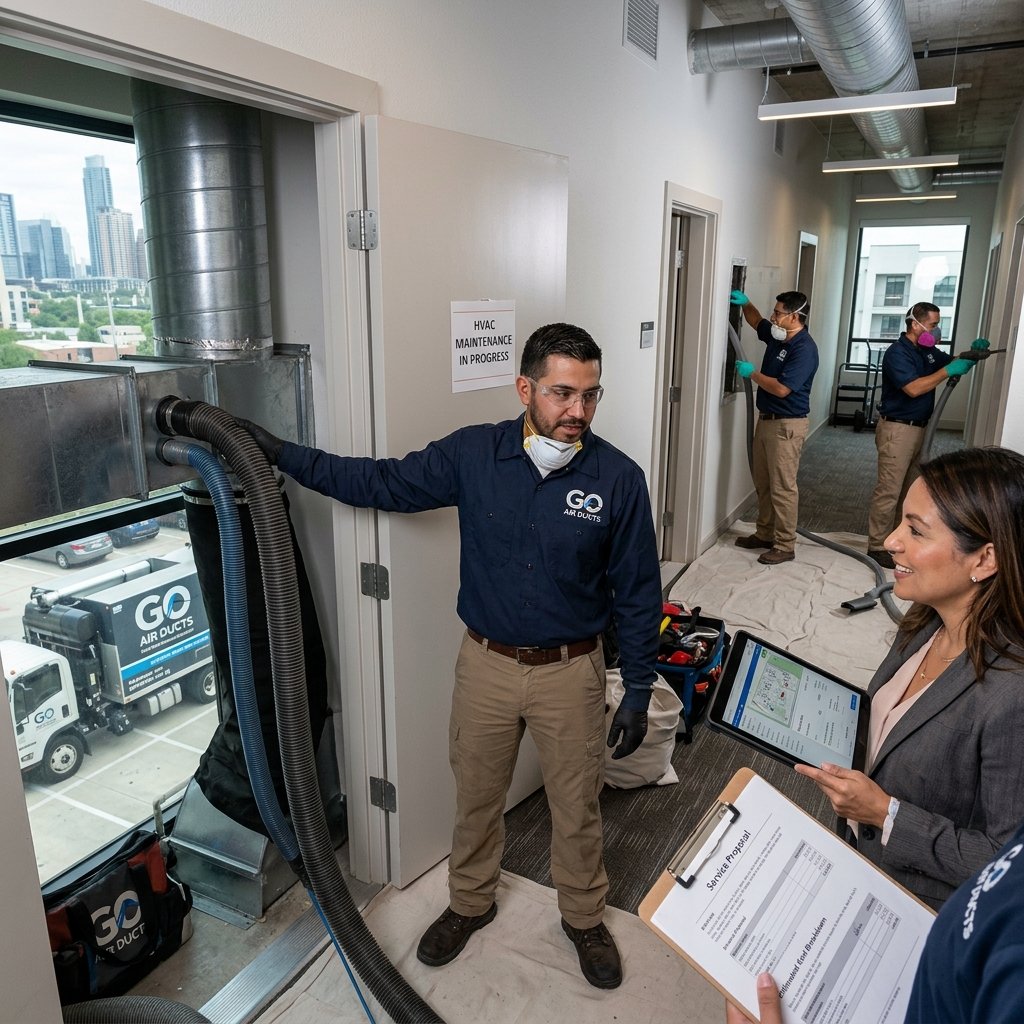
Each of these issues reduces system efficiency and creates tenant friction. Common duct problems often require professional diagnosis, which is why our free assessments give you a clear picture of what needs attention.
What Factors Drive Duct Cleaning Costs for Apartments
Multifamily duct cleaning costs vary significantly based on several concrete factors. Understanding these helps you budget accurately and compare quotes fairly.
Building size and ductwork complexity are primary drivers. A 50-unit building with simple linear ductwork costs less than a 150-unit complex with multiple roof zones, basement returns, and separate commercial areas. We measure ductwork in linear feet and evaluate accessibility, which directly influences labor time and equipment needs.
Contamination level matters substantially. Light dust accumulation can be addressed with standard cleaning. Moderate mold or heavy debris requires specialized antimicrobial treatments and extended cleaning time. Severe contamination (common in older buildings) may require duct replacement sections, which increases overall cost.
Accessibility of ductwork affects labor intensity. Buildings where ducts are easily accessible in attics or mechanical rooms cost less than properties requiring rooftop work, crawlspace entry, or opening walls to reach ductwork.
Number of zones and separate HVAC systems increases complexity. A building with centralized HVAC requires one comprehensive cleaning. A complex with individual unit systems or multiple rooftop units requires proportionally more work.
Additional services beyond basic duct cleaning add to your estimate. Dryer vent cleaning, return air filter box cleaning, and humidity control assessments are common add-ons that improve overall system performance.
Timing and scheduling can influence pricing. Routine maintenance during slower seasons typically costs less than emergency cleaning during peak heating or cooling periods.
In Austin’s market, multifamily duct cleaning ranges from $2,500 to $15,000+ depending on these variables. Smaller 40-50 unit buildings typically run $3,500-$6,000, while larger 100+ unit complexes range $8,000-$15,000 or more.
How We Calculate Your Specific Cleaning Estimate
Our estimation process is straightforward and transparent. We don’t rely on guesswork or generic formulas.
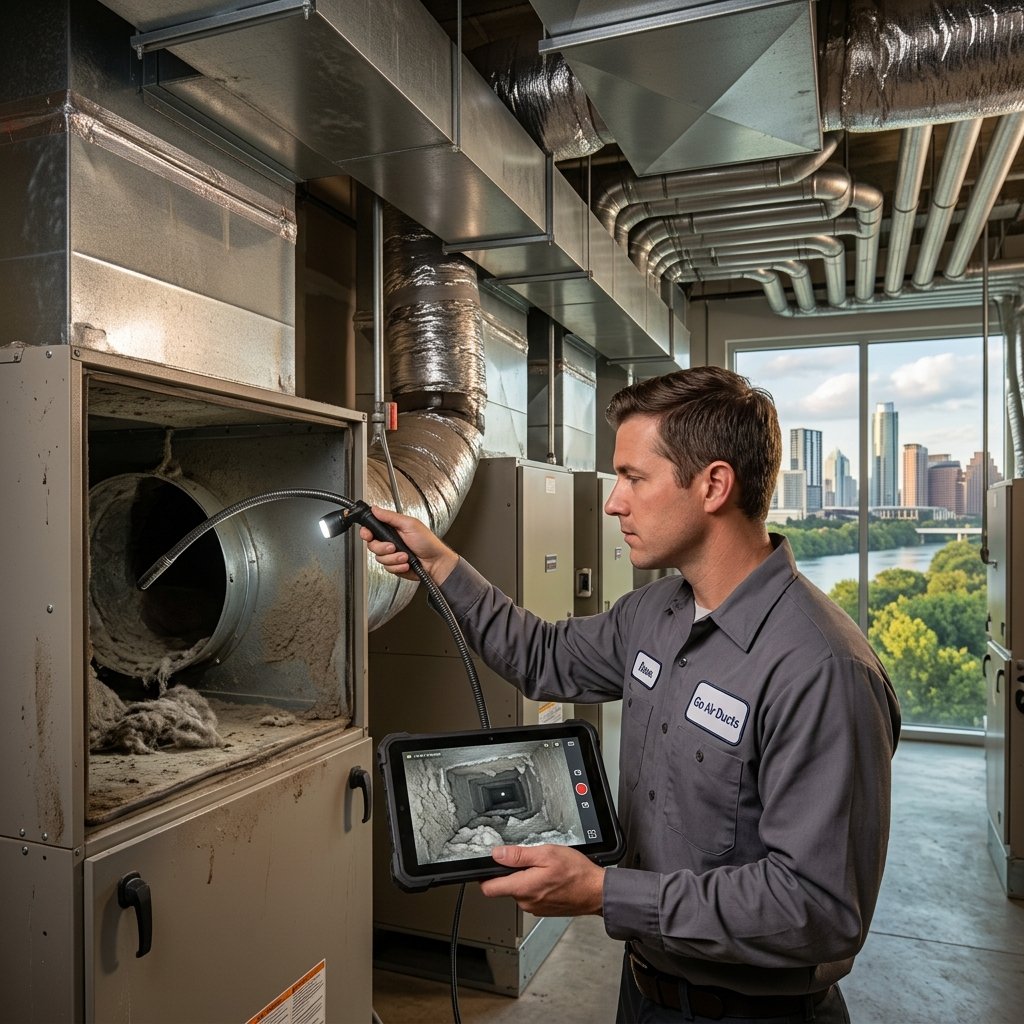
First, we conduct a physical walkthrough of your building’s HVAC system. Our technician inspects accessible ductwork, evaluates the mechanical room, checks return air plenums, and documents existing conditions. We take photos and notes of contamination levels, duct layout, and any visible damage.
Next, we measure your ductwork. Using blueprints or direct measurement, we calculate total linear feet of supply and return ductwork. This forms the foundation of our pricing model.
We assess the level of contamination. Light dust costs less to remove than moderate mold or heavy debris. We inspect for leaks, disconnections, and insulation damage that might require repair beyond cleaning.
We evaluate accessibility and special conditions. If we need rooftop equipment, extended ladders, or crawlspace entry, that factors into labor estimates.
Finally, we discuss any additional services that would improve performance, such as dryer vent cleaning or return air filter box cleaning.
Our written estimate breaks down labor, equipment, materials, and any additional services so you see exactly what you’re paying for. We don’t add surprise charges after work begins.
The Real Cost of Skipping Professional Duct Cleaning
Deferring duct cleaning might save money in the short term, but the long-term costs almost always exceed the cleaning investment.
Energy waste is the biggest hidden cost. A study by the U.S. Department of Energy found that ductwork with significant contamination forces HVAC systems to work 15-25% harder. For a multifamily building, that translates to thousands of dollars annually in wasted energy. Over five years without cleaning, you’re spending far more on utility costs than a professional cleaning would cost.
Tenant turnover and complaints create operational friction. When tenants experience poor airflow, temperature inconsistencies, or odors related to dirty ducts, complaints increase and lease renewals decline. Replacing tenants costs money and creates vacancy periods. A professional cleaning demonstrates proactive property management and supports tenant retention.
HVAC system failure and repair costs accelerate when ducts are heavily contaminated. Forcing an HVAC system to work harder shortens equipment life. Replacing a rooftop unit or central air handler in a multifamily building runs $5,000-$15,000 or more. Preventive duct cleaning extends equipment life significantly.
Health-related liability emerges when mold or debris in ducts trigger tenant illness complaints. Documentation of preventive maintenance protects you legally. Ignoring known contamination creates exposure if a tenant claims health impacts.
Reduced property value and appeal affects your bottom line during sale or refinancing. Inspectors and appraisers look at HVAC maintenance history and system cleanliness. Properties with documented preventive care command better valuations.
We typically see property managers spend $8,000-$12,000 on professional cleaning every 3-5 years. When compared to energy waste alone, that investment pays for itself in the first year for most buildings.
Our Transparent Pricing for Austin Multifamily Properties
We price multifamily duct cleaning based on measurable factors, not guesses. Here’s what our clients typically invest:
50-75 unit buildings: $3,500-$5,500. These smaller complexes usually have straightforward ductwork and moderate contamination. Standard labor and equipment typically cover the job.
75-125 unit buildings: $5,500-$9,000. Mid-size complexes generally require 2-3 technicians and more specialized equipment for accessible attic or rooftop ducts.
125-200 unit buildings: $9,000-$13,000. Larger properties with complex zones, multiple HVAC systems, or older ductwork require extended labor and thorough contamination treatment.
200+ unit buildings: $13,000-$18,000+. Premium properties or complexes with significant contamination require extensive labor, specialized equipment, and potentially duct sealing or repair.
These estimates include standard duct cleaning with our truck-mounted HEPA filtration system. They do not include optional add-ons like antimicrobial treatment, duct sealing, or return air filter box replacement, which are priced separately based on scope.
We offer financing options for larger projects, which spreads costs across multiple months and makes budgeting easier for property managers.
Why Choosing Go Air Ducts Saves Money Long Term
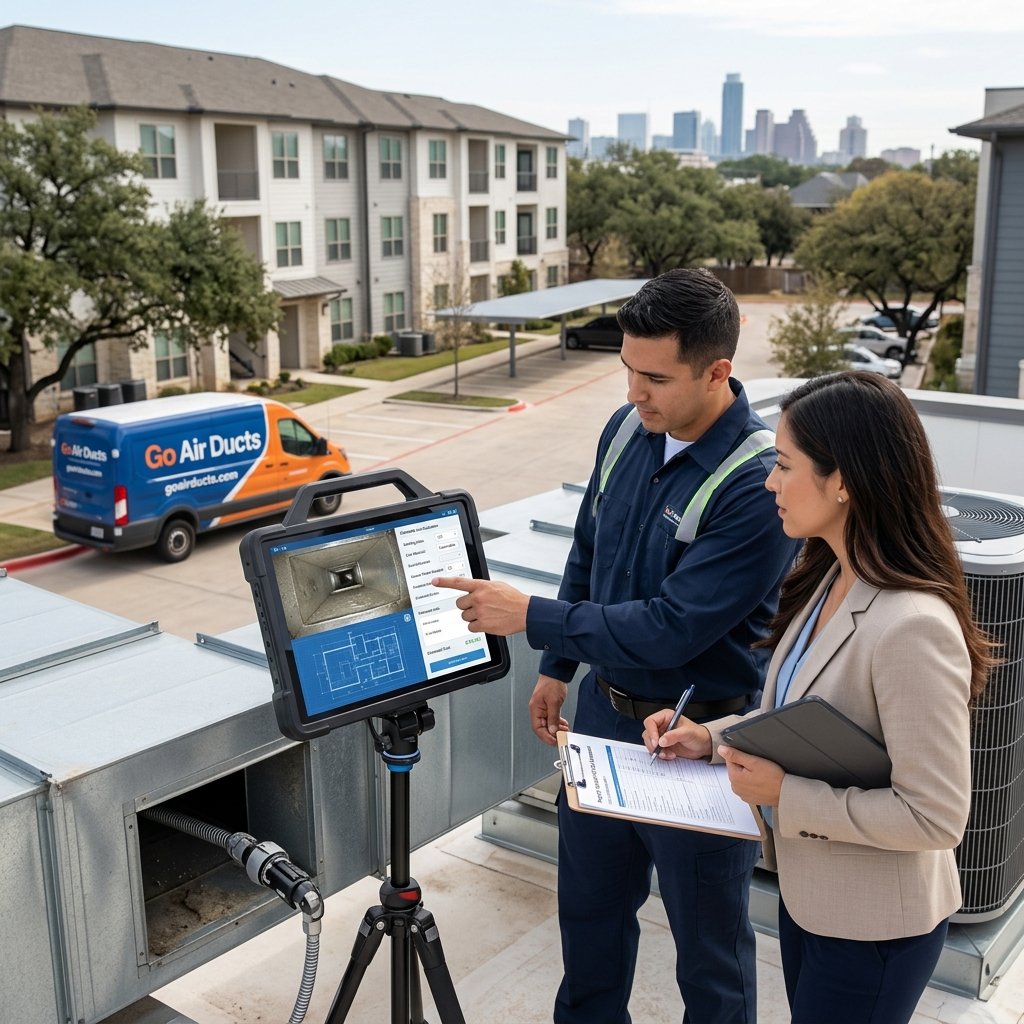
Our approach differs from generic HVAC contractors because we focus on multifamily properties and understand the unique demands of apartment buildings.
We use truck-mounted HEPA filtration equipment specifically designed for large-scale ductwork cleaning. This equipment is far more effective than portable systems, removing more contaminants in less time, which reduces labor costs.
Our technicians are certified and trained in HVAC maintenance best practices. They identify issues beyond contamination, such as duct leaks or insulation damage, and recommend cost-effective repairs that prevent future emergencies.
We provide detailed post-cleaning reports documenting the condition of your ductwork before and after cleaning. This documentation supports property compliance, tenant communication, and insurance claims if needed.
We schedule multifamily projects efficiently, often completing large buildings in one or two days, minimizing disruption to tenant comfort and building operations.
We stand behind our work with satisfaction guarantees. If you’re not satisfied with results, we return and make it right.
Scheduling Your Free Professional Assessment Today
The first step toward understanding your duct cleaning costs is a professional assessment. We evaluate your building’s specific conditions and provide a detailed, written estimate with no obligation.
Contact us today to schedule your free multifamily assessment. Air Duct Cleaning in Austin is our specialty, and we serve property managers across Austin, San Antonio, Dallas, and Houston.
Call us for same-day scheduling options, or request an estimate online. We’ll review your building’s HVAC system, answer your questions, and provide transparent pricing based on your actual needs. Let’s help you maintain clean, efficient ducts and healthy indoor air for your tenants.
If you’re dealing with dust, poor airflow, mold in your ducts, or a clogged dryer vent — don’t wait. These issues can affect your health and safety. Go Air Ducts Group are the local experts in air duct cleaning, mold removal, dryer vent cleaning, and attic insulation. Call now for a free inspection and same-day service in Austin and San Antonio.
Frequently Asked Questions (FAQ)
What’s included in our multifamily duct cleaning estimate for Austin properties?
We assess the total linear footage of your ductwork, the number of units, accessibility challenges, and current system condition to provide an accurate price. Our estimate covers the entire cleaning process including equipment setup, duct vacuuming, debris removal, and system testing to ensure proper airflow throughout your property. We also identify any repairs or additional services your system may need, so you understand the full scope upfront.
How much can we typically save property managers on energy costs after professional duct cleaning?
We’ve seen multifamily properties reduce their HVAC energy consumption by 15-30% once we remove accumulated dust and debris that restricts airflow. When your system doesn’t have to work as hard to maintain tenant comfort, your monthly utility bills decrease noticeably, which directly improves your operating margins. The savings often cover our service cost within the first year, making this one of the best investments we help property managers make.
Why should we schedule duct cleaning before tenant turnover seasons in Austin?
We recommend cleaning your ducts before major turnover periods because clean air quality directly impacts tenant satisfaction and retention rates. When prospective tenants walk into units with fresh, clean air and properly functioning HVAC systems, they’re more likely to sign leases and renew them. We can schedule our work around your turnover timeline to ensure your properties show their best and function their most efficient.