🕑 10 min read
Table of Contents
- Why Water Damage Leads to Mold in Your Air Ducts
- The Health Risks of Mold Growth in HVAC Systems
- How We Assess Mold Damage in Your Ductwork
- Professional Air Duct Mold Remediation Process
- Comparing DIY Methods vs. Professional Restoration
- Why Go Air Ducts is Your Best Choice for Mold Remediation
- Prevention Strategies After Water Damage Events
- Timeline and Recovery for Your HVAC System
- Choosing the Right Service Partner in Texas
- Frequently Asked Questions (FAQ)





Why Water Damage Leads to Mold in Your Air Ducts
When a water event strikes your Texas home, the damage doesn’t stop at walls and floors. Your HVAC system and ductwork absorb moisture for weeks after the initial incident, creating an ideal breeding ground for mold. We’ve seen this pattern countless times across Austin and San Antonio: homeowners handle the obvious cleanup, but overlook the hidden threat growing inside their air ducts. That oversight can cost thousands in medical bills, additional remediation, and system replacement.
The good news is that professional air duct mold remediation, when done right, stops the problem before it spreads through your entire home. We’ll walk you through exactly what needs to happen, why DIY approaches fall short, and how to protect your family’s air quality moving forward.
Your ductwork is designed to move air, not shed water. When flooding, burst pipes, or roof leaks introduce moisture into your HVAC system, that water gets trapped in the insulation lining your ducts, inside the metal seams, and around joints where condensation pools naturally.
Here’s the critical timeline: mold spores begin germinating within 24 to 48 hours in damp environments. Texas humidity amplifies this process significantly. Unlike a wet carpet you can dry with fans and dehumidifiers, the interior surfaces of your ductwork remain moist and hidden from view. Your system’s warm air circulation actually accelerates mold colonization by creating the exact temperature and humidity conditions mold needs to thrive.
We regularly encounter homes where homeowners didn’t realize water had infiltrated their ductwork at all. A basement flood might seem contained, but if your return air plenum connects to that basement area, contaminated water has a direct pathway into your system. Sump pump failures, foundation cracks, and poorly sealed duct transitions are common culprits we find during inspections.
The Health Risks of Mold Growth in HVAC Systems
Mold in your air ducts isn’t just an efficiency problem; it’s a respiratory hazard that circulates directly into every room of your home. Every time your system cycles, it disperses mold spores, mycotoxins, and volatile organic compounds throughout your living spaces.
The health impact hits vulnerable groups hardest:
- Children and elderly residents develop persistent coughing, asthma aggravation, and sinus infections from prolonged exposure
- People with compromised immunity face serious respiratory infections and allergic reactions
- Undiagnosed allergies suddenly emerge or intensify as mold exposure compounds over weeks
We’ve worked with families who attributed recurring illness to seasonal allergies, only to discover their ductwork was the source. One San Antonio family dealt with their child’s chronic bronchitis for three months before we identified mold colonies throughout their return ducts. The remediation and thorough cleaning resolved the symptoms within weeks.
Beyond health concerns, mold-contaminated ductwork reduces your HVAC system’s efficiency by 20-40%, forcing your unit to work harder and driving up energy bills. The mold also damages insulation and corrodes metal duct components, shortening your system’s lifespan.
How We Assess Mold Damage in Your Ductwork
Professional assessment is non-negotiable for water-damaged HVAC systems. We start with a comprehensive visual inspection using specialized equipment that allows us to see deep into your ductwork without invasive demolition.
Our assessment process includes:
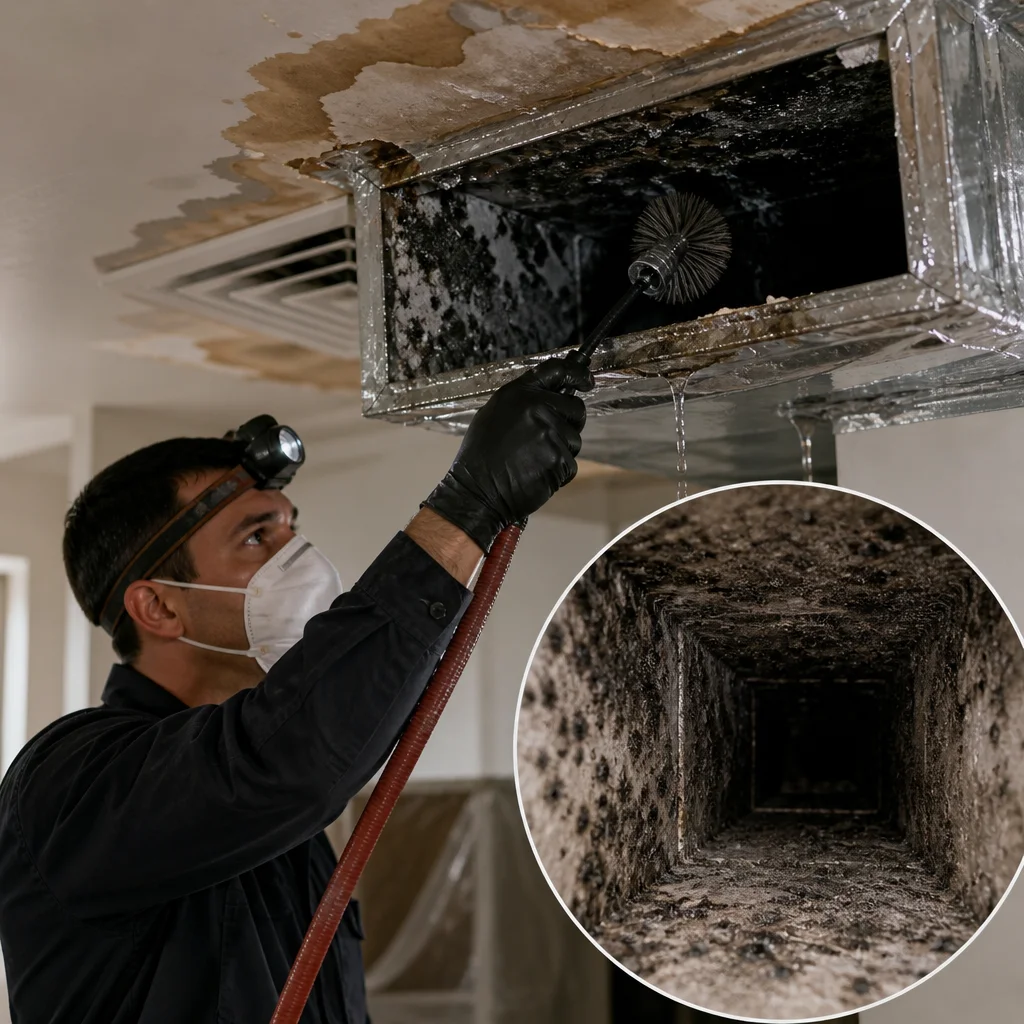
- Moisture mapping: We use thermal imaging and moisture meters to identify saturated areas throughout your system
- Spore testing: Air samples and surface cultures confirm mold presence and identify specific species
- System integrity evaluation: We check seals, insulation condition, and ductwork structural damage from water exposure
- Return vs. supply analysis: We distinguish between contaminated return air (which pulls from your home) and supply ducts (which distribute treated air), as each requires different remediation approaches
This data-driven approach prevents the guesswork that leads to incomplete remediation. We’ve encountered homes where competing contractors claimed the problem was “just some moisture” when our testing revealed extensive mold throughout the plenum and branch ducts. Accurate diagnosis saves you money and protects your family.
Our air duct mold remediation service begins with this thorough assessment, ensuring we address every contaminated area.
Professional Air Duct Mold Remediation Process
True remediation goes far beyond spraying fungicide. We follow a multi-stage protocol that eliminates mold at the source and prevents recurrence.
Stage 1: System Isolation and Containment
We seal off your ductwork to prevent mold spores from spreading during the cleaning process. Your HVAC system remains offline until remediation is complete.
Stage 2: Deep Cleaning and Mold Removal
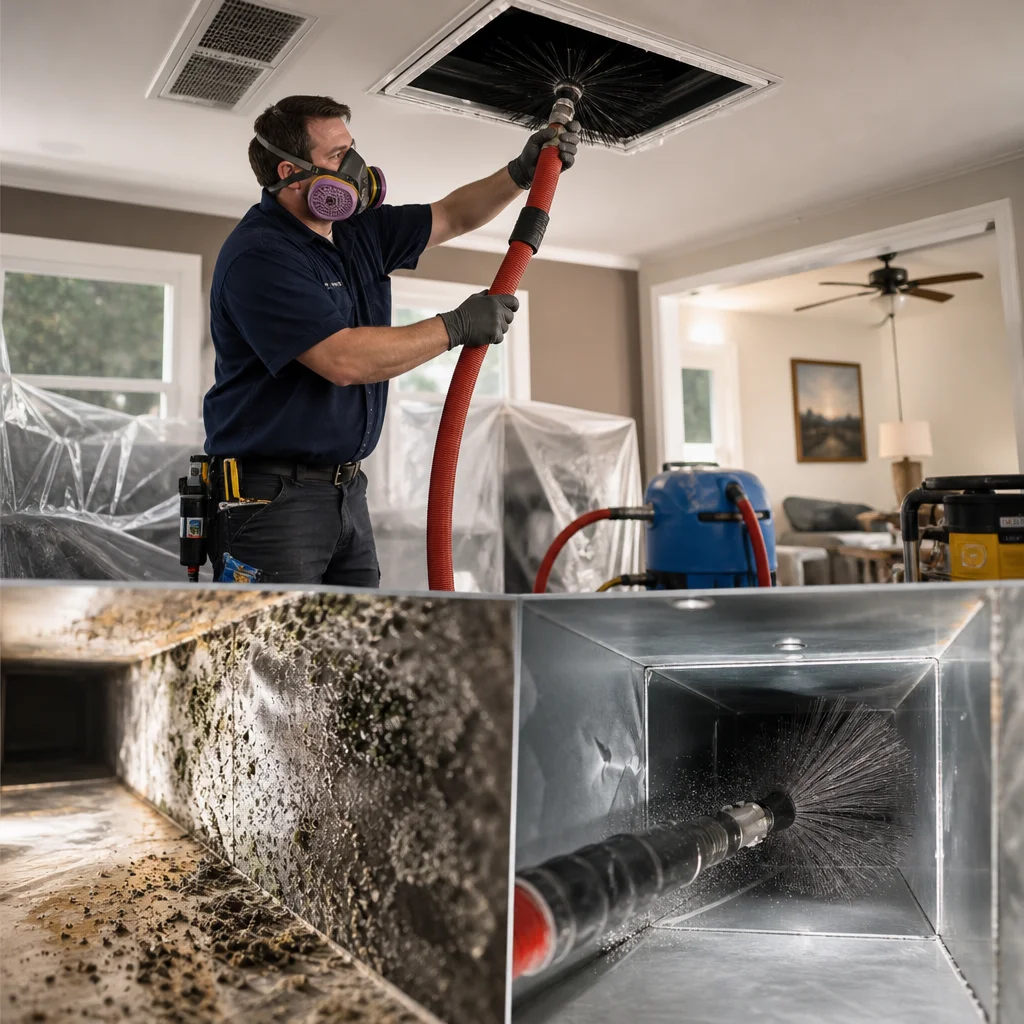
We use industrial-grade duct cleaning equipment with HEPA filtration to extract all mold-contaminated insulation, debris, and buildup. High-pressure air systems dislodge stubborn growth from metal surfaces. For heavily colonized ducts, manual removal of insulation may be necessary.
Stage 3: Antimicrobial Treatment
After physical removal, we apply EPA-approved antimicrobial treatments to all interior surfaces. This kills remaining spores and creates a protective barrier against recolonization during the drying phase.
Stage 4: Structural Drying
Industrial dehumidifiers and air movers bring your ductwork’s moisture content down to safe levels (typically below 15% relative humidity). This phase usually takes 3-7 days, depending on water damage severity.
Stage 5: Verification and System Restart
We conduct post-remediation air testing to confirm mold levels are within acceptable ranges before restarting your HVAC system. This documentation protects both your health and your insurance claim.
Comparing DIY Methods vs. Professional Restoration
You might be tempted to save money with over-the-counter mold spray or a standard duct cleaning service. We understand the impulse, but this approach creates serious problems.
DIY shortcomings:
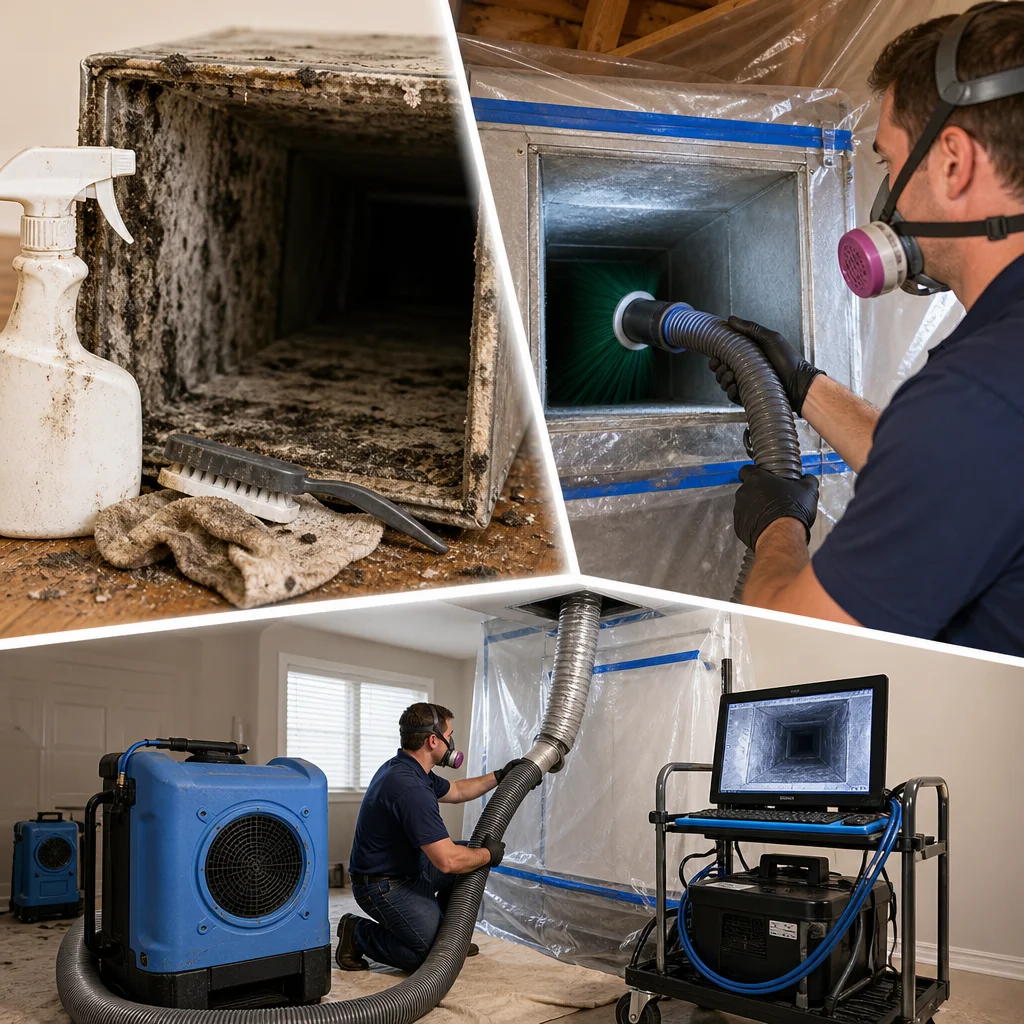
- Spray treatments don’t reach deep into ductwork where the majority of mold colonization occurs
- Standard duct cleaning isn’t designed for mold remediation and lacks the antimicrobial protocols needed for water-damaged systems
- Incomplete drying leaves moisture trapped in insulation, reigniting mold growth within weeks
- No documentation of remediation weakens insurance claims and creates liability if health issues emerge later
We’ve inherited jobs where homeowners attempted DIY remediation first. In every case, mold had spread deeper into the system, requiring more extensive (and expensive) professional work than if they’d called us immediately after the water event.
Professional restoration specifically addresses water damage recovery with equipment and protocols that DIY tools simply cannot match. The antimicrobial treatments, industrial drying, and verification testing aren’t luxuries; they’re essential for eliminating the problem permanently.
Why Go Air Ducts is Your Best Choice for Mold Remediation
We’re not just another duct cleaning company offering post-flood services. We specialize in water damage recovery across Austin, San Antonio, Dallas, and Houston, with specific expertise in how Texas humidity and seasonal weather patterns accelerate mold growth in HVAC systems.
Here’s what sets our approach apart:
- Certified HVAC technicians trained in mold remediation and water damage assessment, not just basic cleaning crews
- Advanced diagnostic tools including thermal imaging, moisture meters, and air quality testing for accurate problem identification
- Comprehensive remediation protocols that address structural damage, insulation replacement, and system resealing when needed
- Insurance coordination support to streamline claims and documentation
- Free service estimates so you understand the scope and cost upfront without pressure
We also offer duct repair after water damage, addressing not just mold but structural issues the water event created. Torn insulation, corroded seams, and failed connections all compromise your system’s performance and create pathways for future contamination.
When you call us, you’re getting a trusted local partner who understands Texas homes, Texas weather, and Texas humidity challenges. We’ve completed hundreds of post-water-damage HVAC restorations, and we know exactly what questions to ask and what problems to anticipate.
Prevention Strategies After Water Damage Events
Once we’ve remediated mold, protecting against recurrence requires ongoing attention. Water events leave your home vulnerable to repeat contamination, especially during Texas’s rainy season.
Key prevention measures:
- Improve drainage and grading around your foundation to divert water away from your home
- Seal foundation cracks and gaps where water enters during heavy rain
- Install or upgrade sump pump systems in basements or crawl spaces, with battery backup during power outages
- Ensure HVAC return ducts are sealed in moisture-prone areas like basements and crawl spaces
- Schedule preventive duct inspections every 2-3 years to catch moisture problems before mold develops
- Maintain dehumidifiers in basements and crawl spaces, keeping relative humidity below 55%
- Clean gutters and downspouts regularly to prevent overflow and foundation saturation
We recommend scheduling a post-remediation inspection 6 months after remediation to verify moisture levels have remained stable. This proactive approach catches any developing problems before they escalate.
Timeline and Recovery for Your HVAC System
Understanding the recovery timeline helps you plan your household’s adjustment during remediation.
Days 1-3: Assessment, moisture mapping, and spore testing Days 3-10: Active cleaning and antimicrobial treatment (system offline) Days 7-14: Structural drying with dehumidifiers running 24/7 Day 14-21: Post-remediation testing and system restart Weeks 3-4: Follow-up moisture verification
Most homeowners regain full HVAC operation within 3-4 weeks of initial contact. Until then, managing indoor temperature requires temporary cooling strategies, especially critical during Texas summers.
Your insurance coverage typically begins once we’ve issued our initial damage assessment, so documentation from our professional inspection supports faster claim processing. Don’t wait to schedule this; every day the system remains offline and ductwork remains damp increases mold spread and complicates recovery.
Choosing the Right Service Partner in Texas
When water damage strikes, you need a partner who moves fast, communicates clearly, and delivers results that protect your family. Not all duct cleaning companies have the expertise, equipment, or credentials for mold remediation after water damage.
Look for these essentials:
- Certified technicians with HVAC training and mold remediation credentials
- Professional assessment tools for accurate diagnosis, not guesswork
- Insurance coordination experience to support your claim
- Transparent pricing with free estimates and no surprise charges
- Local expertise specific to your region’s climate challenges
- Warranty coverage on remediation work
Go Air Ducts meets every one of these standards. We’re rooted in Texas communities, we understand the unique challenges water damage creates in our climate, and we’re committed to restoring both your system and your peace of mind.
Contact us today for a free air duct mold assessment. Our certified technicians will inspect your system, explain exactly what needs to happen, and provide a transparent estimate with no hidden fees. Same-day inspections are often available for emergency situations.
Your home’s air quality and your family’s health depend on it. Let’s get your HVAC system cleaned, remediated, and protected.
For further reading: HVAC mold protection.
If you’re dealing with dust, poor airflow, mold in your ducts, or a clogged dryer vent — don’t wait. These issues can affect your health and safety. Go Air Ducts Group are the local experts in air duct cleaning, mold removal, dryer vent cleaning, and attic insulation. Call now for a free inspection and same-day service in Austin and San Antonio.
Frequently Asked Questions (FAQ)
How quickly can we respond to mold in my air ducts after water damage?
We typically schedule assessments within 24-48 hours of your call, as time is critical when mold begins growing in your ductwork following water damage. Our certified technicians will inspect your system, identify affected areas, and outline our remediation approach. We understand that water damage creates urgency, and our goal is to prevent mold from spreading throughout your home.
What makes professional mold remediation better than cleaning the ducts myself?
We use specialized equipment like thermal imaging and moisture detection tools that identify mold you can’t see with the naked eye, especially deep within your ductwork where DIY methods fail to reach. Our remediation process includes antimicrobial treatments and proper ventilation protocols that standard duct cleaning doesn’t address. Attempting DIY removal can actually spread mold spores throughout your home, making the problem worse.
Will our HVAC system need replacement after mold damage?
Most systems we treat remain fully functional once we complete our professional remediation process, though this depends on the extent of water exposure and how quickly we address it. We assess structural integrity, component damage, and contamination levels to recommend whether restoration or replacement makes sense for your situation. Our transparent evaluation helps you understand exactly what your system needs to operate safely again.