
🕑 9 min read
Table of Contents
- Why Austin Homeowners Are Facing Rising Duct Replacement Costs
- Criteria for Evaluating Air Duct Replacement Pricing
- Key Factor 1: Home Size and Duct System Layout
- Key Factor 2: Duct Material and Insulation Type
- Key Factor 3: Accessibility, Attic Conditions, and Labor
- Key Factor 4: Indoor Air Quality and Mold Remediation Needs
- How Go Air Ducts Delivers Transparent, Accurate Estimates
- Comparison Summary of Cost Drivers and Savings Opportunities
- Selection Guide: Why Go Air Ducts Is the Right Choice for Austin Homes
- Schedule Your Free Air Duct Estimate With Go Air Ducts
- Frequently Asked Questions (FAQ)





Why Austin Homeowners Are Facing Rising Duct Replacement Costs
If you have called for a duct quote in Austin recently, you have probably noticed that numbers are higher than they were a few years ago. We see this across our service calls in Austin and San Antonio. Labor rates have climbed, materials cost more, and many older homes in neighborhoods like Circle C, Brodie Oaks, and South Austin have ductwork that was never designed for today’s heavier cooling loads.
Several local conditions push costs up:
- Long cooling seasons. Austin systems often run from March through November, which wears out ductwork faster than in milder climates.
- Attic heat. Summer attic temperatures regularly exceed 130 degrees, so ducts that were undersized or poorly insulated lose efficiency and sometimes fail early.
- Aging housing stock. Many homes built in the 1980s and 1990s have flex duct runs that have sagged, crushed, or separated at joints.
The result is that a replacement that might have seemed optional a decade ago now often becomes necessary. Knowing what drives the price helps you judge whether a quote is fair.
Criteria for Evaluating Air Duct Replacement Pricing
Not every estimate is built the same way, and comparing totals alone can be misleading. When we write up a replacement proposal, we evaluate and document the following:
- Scope. Does the quote cover the full system or only certain runs? Are returns included?
- Materials. Is the duct type, gauge, and insulation rating specified?
- Sealing and connections. Are joints sealed with mastic or foil tape rather than standard tape?
- Access and labor. Is the work priced for your attic conditions and crawl space?
- Air quality steps. Does the price include cleaning, sanitizing, or mold assessment where needed?
- Warranty. What is covered on materials and workmanship, and for how long?
A useful test: ask each company to list the duct material, insulation R-value, and sealing method in writing. Quotes that cannot answer these questions clearly are harder to compare and often leave gaps that show up later.
Key Factor 1: Home Size and Duct System Layout
Square footage is the starting point, but layout matters just as much. A 2,000 square foot single-story home with a central return and short duct runs is much simpler to replace than a two-story home where ducts snake through multiple floors and tight chases.
Here is what we look at during a walkthrough:

- Number of supply and return registers. More outlets mean more branches to fabricate and connect.
- Run length. Long runs from the air handler to distant rooms add material and time.
- Floor configuration. Two-story homes often need additional trunk lines and balancing dampers.
- Air handler location. Units in tight closets or on high platforms take more time to access.
Mini-scenario: A homeowner in Westlake with a 3,200 square foot two-story home had quotes that differed by nearly $2,000. The lower quote assumed a simple layout that did not match the actual register count. Ask for a register-by-register layout in your estimate so you know exactly what is being priced.
Action step: Count your supply and return registers and note which floors they serve. Bring that list to any estimate appointment.
Key Factor 2: Duct Material and Insulation Type
Material choice has one of the biggest effects on both upfront cost and long-term performance. Most Austin replacements involve one of three approaches:
- Flexible insulated duct. This is the most common option for residential attics. It is faster to install and generally lower in cost, but its performance depends heavily on proper installation. Sagging or kinked runs restrict airflow.
- Sheet metal ductwork. Galvanized steel is more durable and holds its shape. It costs more and takes longer to fabricate, but it is often preferred for complex layouts and long service life.
- Hybrid systems. Many homes use sheet metal trunk lines with flexible branches to balance cost and performance.
Insulation matters just as much as the duct itself. In Austin attics, a duct with inadequate insulation can lose a significant share of its cooled air before it reaches a room. We typically recommend insulation rated to meet or exceed current local efficiency expectations, along with mastic sealing at every joint.
For a deeper comparison, see our guide on flexible versus sheet metal ducts.
Action step: Ask your installer to state the insulation R-value and the sealing method in the quote.
Key Factor 3: Accessibility, Attic Conditions, and Labor
Labor often makes up the largest share of a replacement invoice, and access conditions are the main reason. An open attic with plenty of working room is far faster to work in than a low-clearance space with roof trusses in the way.
Factors that raise labor time include:
- Low attic clearance that requires crawling and limits how much material can be handled at once.
- Heat exposure during summer installs, which slows crews and requires water and breaks.
- Tight or obstructed access through hatches, closets, or narrow passages.
- Existing damage such as crushed insulation, water staining, or pest activity that must be addressed first.
- Coordination with other trades like electricians or roofers working in the same space.
Scheduling also affects cost. Installs during Austin’s peak summer months can be harder to book and may carry premium pricing. Planning a replacement for early spring or late fall can sometimes reduce labor-related charges.
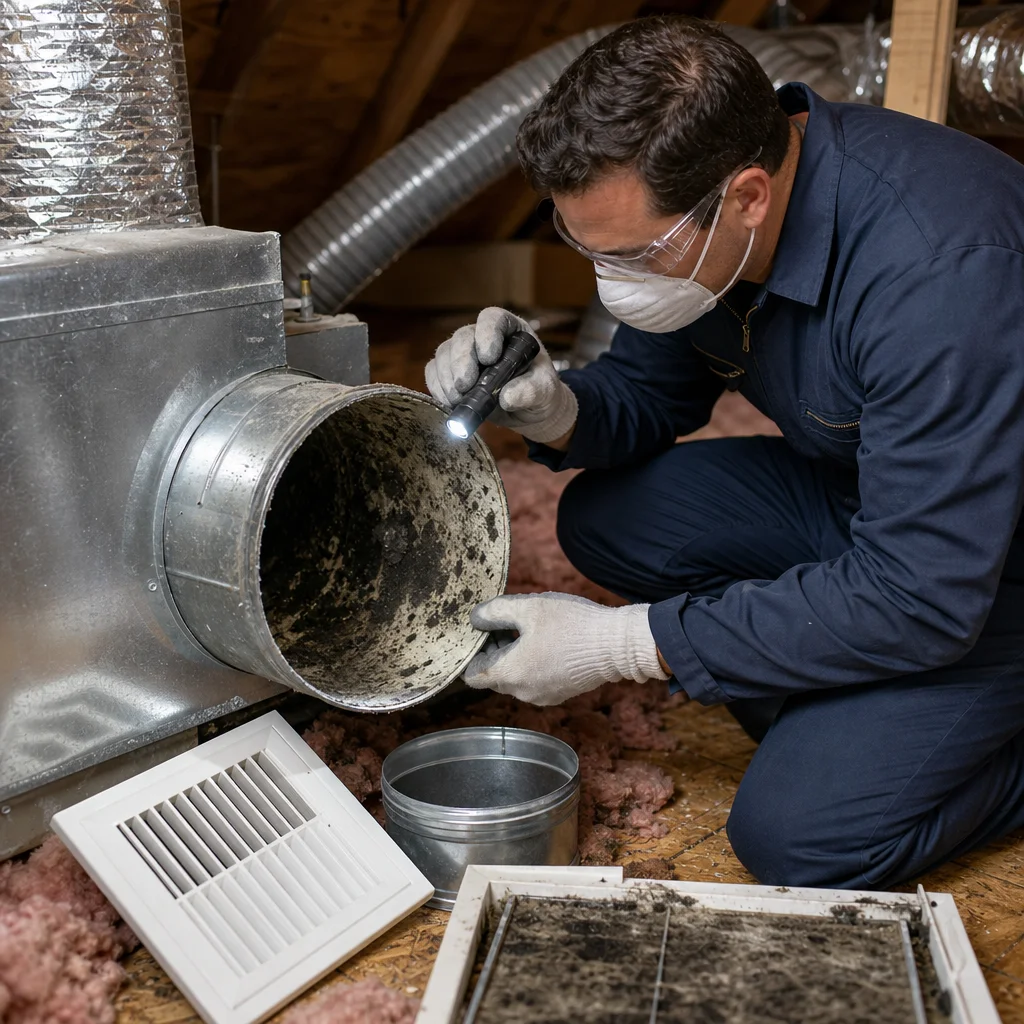
Action step: Describe your attic access and any known issues to the estimator before the visit so the crew arrives prepared.
Key Factor 4: Indoor Air Quality and Mold Remediation Needs
Replacing ducts is an opportunity to address air quality, but it can also reveal problems that add to the scope. Mold growth inside ducts is more common than most homeowners expect, especially where condensation forms on cold surfaces or where ducts have been exposed to humidity.
Signs that air quality work may be needed include:
- Musty odors when the system turns on
- Visible dust or debris around registers
- Allergy symptoms that worsen indoors
- Dark staining or fuzzy growth inside accessible duct sections
- Past water leaks near the air handler or attic
When mold is present, remediation must be handled before or during replacement. Attempting to install new ducts over contaminated material can spread spores through the home. Our team evaluates these conditions during the estimate so the scope reflects what is actually there. For a closer look at what this involves, read about Austin mold remediation costs and an Austin duct mold inspection.
Action step: If you notice any of the signs above, request a mold inspection as part of your estimate so the price reflects the full job.
How Go Air Ducts Delivers Transparent, Accurate Estimates
We built our estimating process around one goal: giving Austin homeowners a number they can trust. Here is what that looks like in practice:
- On-site assessment. A certified technician measures the system, checks attic conditions, and inspects existing ducts for damage or contamination.
- Register-level layout. Every supply and return is documented, so you can see exactly what is included.
- Material specification. Duct type, gauge, insulation R-value, and sealing method are written out in the proposal.
- Itemized pricing. Labor, materials, cleaning, and any remediation are listed separately.
- Free estimate. There is no charge for the assessment or the written proposal.
This approach means fewer surprises after work begins. If something changes during installation, we explain the reason and the cost impact before proceeding.
Comparison Summary of Cost Drivers and Savings Opportunities
Here is a quick reference for the main drivers and where savings are realistic:
| Cost Driver | Impact on Price | Savings Opportunity | |—|—|—| | Home size and layout | High | Simplify runs where possible; combine work with other upgrades | | Duct material | Medium to high | Choose the material that fits your layout rather than overbuilding | | Insulation rating | Medium | Meeting code-level insulation prevents costly rework | | Attic access and labor | High | Clear access paths and schedule outside peak season | | Mold remediation | Variable | Early inspection prevents spread and larger remediation bills | | Sealing and balancing | Low to medium | Proper sealing improves efficiency and lowers energy bills |
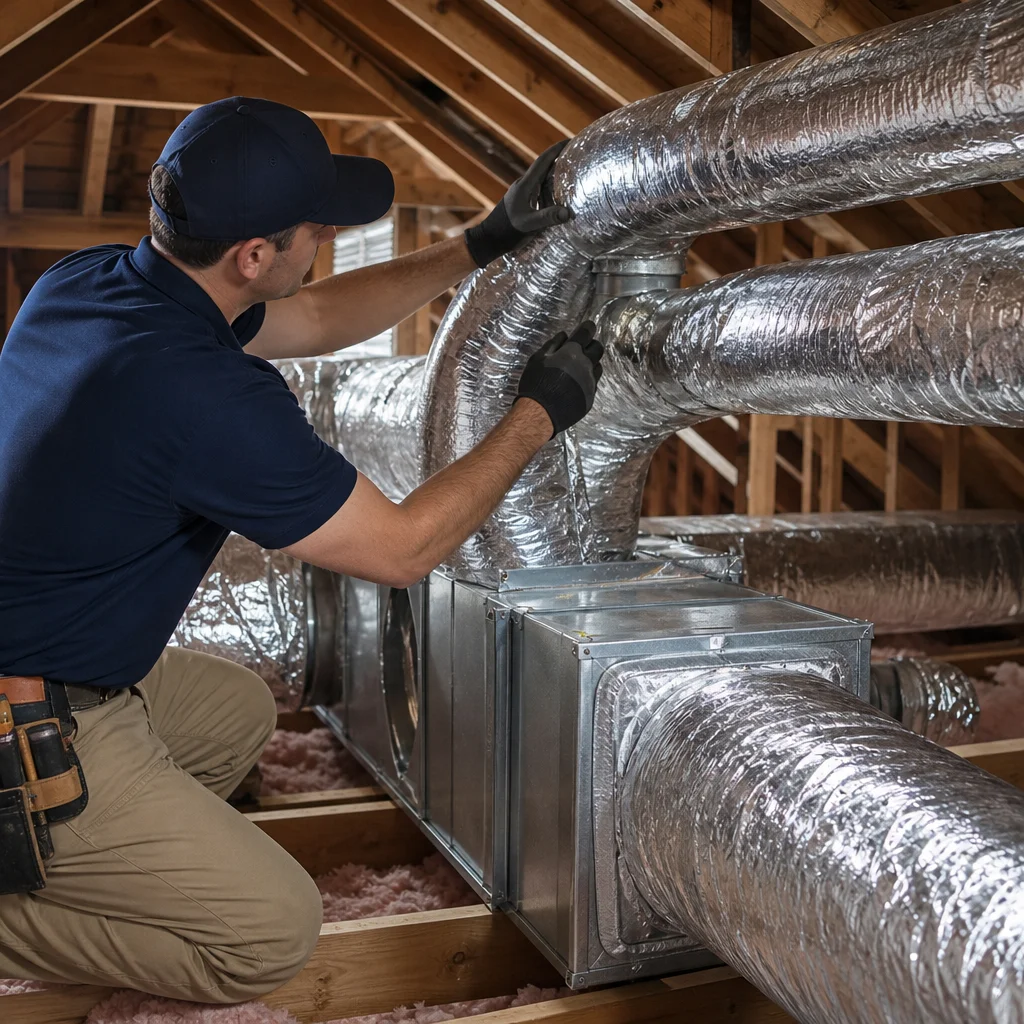
Savings often come from doing the job right the first time. Undersized or poorly sealed ducts waste energy every month, which adds up over the life of the system. Pairing replacement with duct insulation services can also improve comfort and reduce utility costs.
For broader efficiency planning, our guide to Austin HVAC upgrade options covers how ductwork fits into the larger system.
Selection Guide: Why Go Air Ducts Is the Right Choice for Austin Homes
Choosing a contractor is as important as the cost itself. When we evaluate what matters most for Austin homeowners, these points stand out:
- Certified HVAC technicians who understand how Austin’s heat and humidity affect duct performance.
- Full-service capability covering duct replacement, cleaning, mold assessment, insulation, chimney services, and dryer vent cleaning in one team.
- Clear, written estimates with materials, insulation ratings, and remediation steps spelled out.
- Local experience across Austin and San Antonio, including the attic conditions and housing styles common in these areas.
- Fast response for homeowners dealing with urgent airflow or air quality concerns.
We do not treat duct replacement as a standalone sale. We look at how your ducts, insulation, and air handling work together, then recommend the scope that delivers lasting comfort and efficiency for your home. That whole-system view is what sets our work apart.
Schedule Your Free Air Duct Estimate With Go Air Ducts
If your ducts are old, your energy bills keep climbing, or your home has persistent dust or odors, now is a good time to get an accurate number. Our certified technicians will assess your system, explain the cost drivers in plain language, and provide a written proposal at no charge.
Ready to get started? Contact Go Air Ducts to schedule your free estimate in Austin or San Antonio. Same-day scheduling is often available for urgent airflow or air quality concerns. We will give you a clear, accurate price and a plan you can trust.
If you’re dealing with dust, poor airflow, mold in your ducts, or a clogged dryer vent — don’t wait. These issues can affect your health and safety. Go Air Ducts Group are the local experts in air duct cleaning, mold removal, dryer vent cleaning, and attic insulation. Call now for a free inspection and same-day service in Austin and San Antonio.
Frequently Asked Questions (FAQ)
How much does air duct replacement cost in Austin?
At Go Air Ducts, we find that most Austin homes fall within a wide range, because the final figure depends on square footage, the number of runs and returns, and the material chosen. We give every homeowner a written estimate after an on-site inspection so you can see exactly what drives your price. Our free estimates make it easy to compare options before you commit.
How do we determine whether our ducts need replacement or just cleaning?
We inspect the system for crushed or disconnected sections, persistent moisture, rust, and mold growth inside the ductwork. If the ducts are structurally sound and only dusty, we recommend professional cleaning, which costs far less than replacement. When damage is widespread, we explain why replacement is the more cost-effective long-term choice.
Do you offer financing or insurance-related guidance for duct replacement?
We can walk you through the scope of work and documentation that many homeowners need for insurance claims, especially after water damage or mold issues. For larger projects, we discuss payment options during your estimate so the cost fits your budget. Our team will answer your questions clearly before any work begins.