
🕑 10 min read
Table of Contents
- Why Austin Homeowners Need Better Ductwork
- Key Criteria for Choosing Air Duct Replacement
- Our Recommended Air Duct Replacement Solution
- How Our Solution Improves Indoor Air Quality
- Energy Efficiency and Insulation Benefits
- Comparing Duct Replacement Options Side by Side
- Pricing, Estimates, and Financing Considerations
- Why Go Air Ducts Is the Definitive Choice in Austin
- How to Get Started With a Free Estimate
- Frequently Asked Questions (FAQ)





Why Austin Homeowners Need Better Ductwork
Austin homes take a beating from the climate. Summers push cooling systems hard for months, and the humidity that rolls in from the Gulf makes every hidden problem worse. When ductwork is leaky, undersized, or coated in years of dust, the effects show up as uneven rooms, high utility bills, and air that never feels quite clean.
In our work across Central Texas, we see the same issues repeatedly:
- Leaky joints and disconnected runs that pull hot attic air or crawlspace dust into the system
- Dust and debris buildup that clogs returns and reduces airflow
- Moisture in the ducts that can lead to mold growth, especially in older homes with poor insulation
- Undersized or crushed flex duct that forces the blower to work harder than it should
A homeowner in an older Westlake or Tarrytown home might notice that the upstairs bedrooms never cool down, while the living room feels like a refrigerator. That is usually a ductwork problem, not a thermostat problem.
What to do next: Walk each floor with the system running and note which rooms feel noticeably warmer or cooler. Those patterns point to where your ductwork needs attention.
Key Criteria for Choosing Air Duct Replacement
Not every duct problem calls for full replacement. Repair and cleaning can solve many issues. Replacement makes the most sense when the existing ductwork cannot be salvaged. Use these criteria to decide:
- Age and material. Ducts older than 15 to 20 years, or those made of damaged fiberglass liner or crushed flex, often cannot be sealed effectively.
- Extent of damage. If more than a few sections are torn, collapsed, or permanently contaminated, replacement is usually more cost-effective than piecemeal repair.
- Sizing and layout. Ductwork that was never sized correctly for the home will keep underperforming even after cleaning. A proper load calculation should guide the design.
- Air sealing quality. New ducts are only as good as their installation. Look for mastic or approved foil tape sealing, not cheap tape that fails within a few seasons.
- Insulation rating. In Austin’s attics, ducts routinely reach temperatures that can exceed 130 degrees. Insulation value matters.
- Access and disruption. A good plan minimizes wall and ceiling damage and gets your home back to normal quickly.
What to do next: Gather any previous repair invoices and the age of your system. Those records help a technician decide quickly whether replacement is justified.
Our Recommended Air Duct Replacement Solution
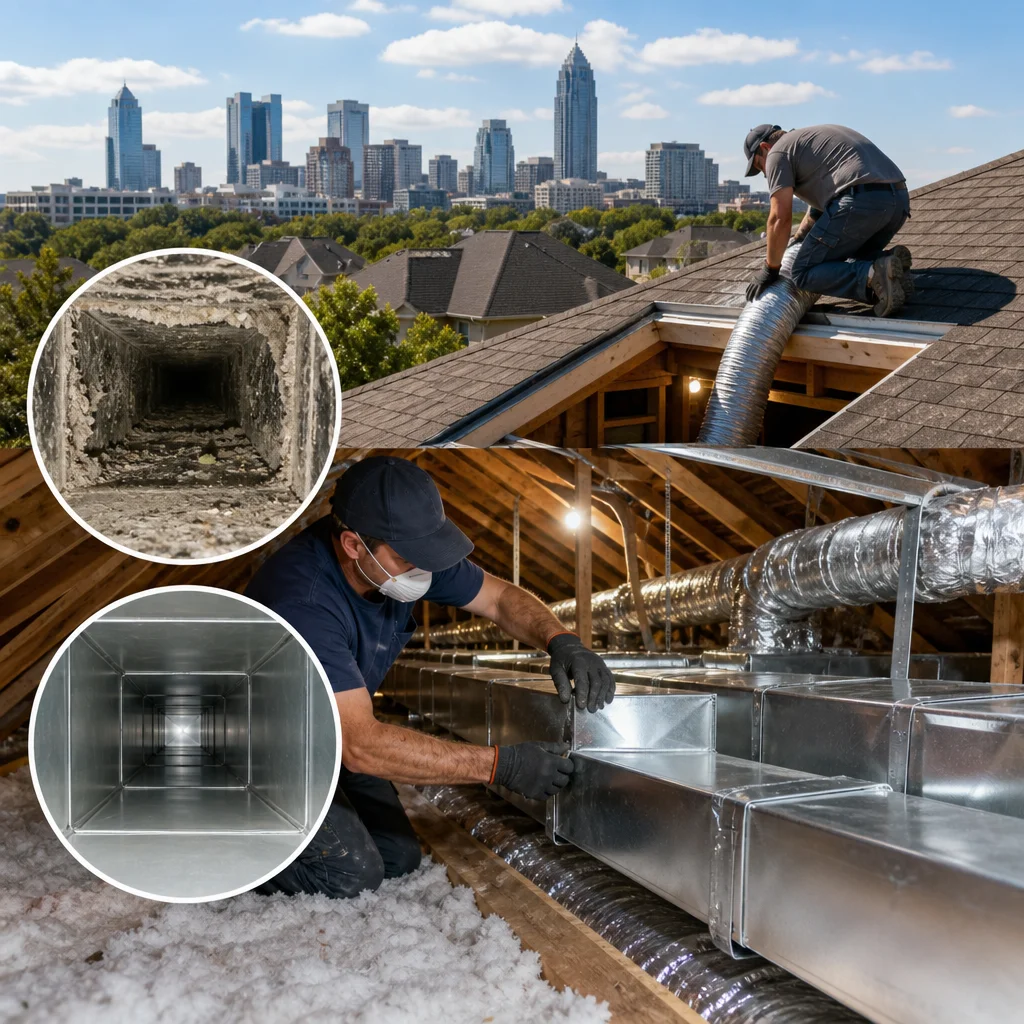
For most Austin homes, we recommend a fully sealed, properly sized sheet metal duct system with rigid or semi-rigid trunk lines, short and well-supported branch runs, and integrated insulation. This is the approach we use through our ductwork replacement services.
Here is what that looks like in practice:
- Load-based design. We calculate heating and cooling loads for each room before we size a single duct, so every room gets the airflow it actually needs.
- Sheet metal trunks and fittings. Metal holds its shape, resists crushing, and can be sealed completely with mastic at every joint.
- Short, smooth branch runs. Fewer bends mean less static pressure and quieter operation.
- Sealed and tested connections. We pressure-test the system before we close the walls, so leaks are found on day one rather than years later.
- Matched insulation. Ducts in unconditioned attics receive insulation rated for Austin’s heat, which protects both efficiency and comfort.
Homeowners in older neighborhoods often ask whether they can get by with patching. In most cases, we find that patched systems lose airflow faster than expected, and the homeowner ends up paying for the same work twice.
What to do next: Ask any installer to show you their load calculation and sealing test results. A company that cannot provide them is guessing.
How Our Solution Improves Indoor Air Quality
Indoor air quality often gets blamed on the air itself, when the real source is the ductwork carrying it. Dust, pollen, pet dander, and moisture collect inside leaky or poorly maintained ducts, then get pushed into every room each time the system runs.
A properly installed, sealed system improves air quality in several ways:
- Fewer contaminants entering the airstream. Sealed joints keep attic dust, insulation fibers, and crawlspace moisture out of the supply air.
- Less moisture buildup. Correct sizing and sealing reduce the conditions that support mold growth inside the ducts.
- Better filtration performance. Consistent airflow lets your filter do its job without strain, and that matters for allergy sufferers.
- Easier cleaning when needed. Smooth metal ducts with clean access points are far easier to maintain than tangled, undersized flex.
For Austin families dealing with seasonal allergies, which are a serious issue in this region, the change can be noticeable within a week of the system being balanced.
What to do next: If anyone in your home has allergies or asthma, mention it when you schedule your assessment so we can recommend filtration and ventilation options that fit your needs.
Energy Efficiency and Insulation Benefits
Leaky ducts in an Austin attic can waste a significant share of the energy your system produces. Conditioned air escapes into the hot attic, and the blower works longer to deliver the same comfort. Duct losses are one of the most common reasons homeowners see cooling bills climb year after year.
Here is how replacement and insulation help:
- Reduced leakage. Sealed connections keep conditioned air where it belongs.
- Lower heat gain. Insulated ducts stay cooler, so the air arriving at your vents is closer to the temperature the system sent.
- Shorter run times. A system that delivers air efficiently cycles less and wears less.
- More consistent rooms. Balanced airflow reduces hot and cold spots without constantly adjusting the thermostat.
Our duct insulation services are designed to pair with replacement work, so the insulation is installed correctly from the start. Insulating ducts that are still leaking only solves part of the problem.
What to do next: Check your attic on a hot afternoon. If the ducts feel hot to the touch or the insulation is compressed, flattened, or missing, that is a clear signal to schedule an evaluation.
Comparing Duct Replacement Options Side by Side
Homeowners typically weigh three approaches. Here is how they compare:
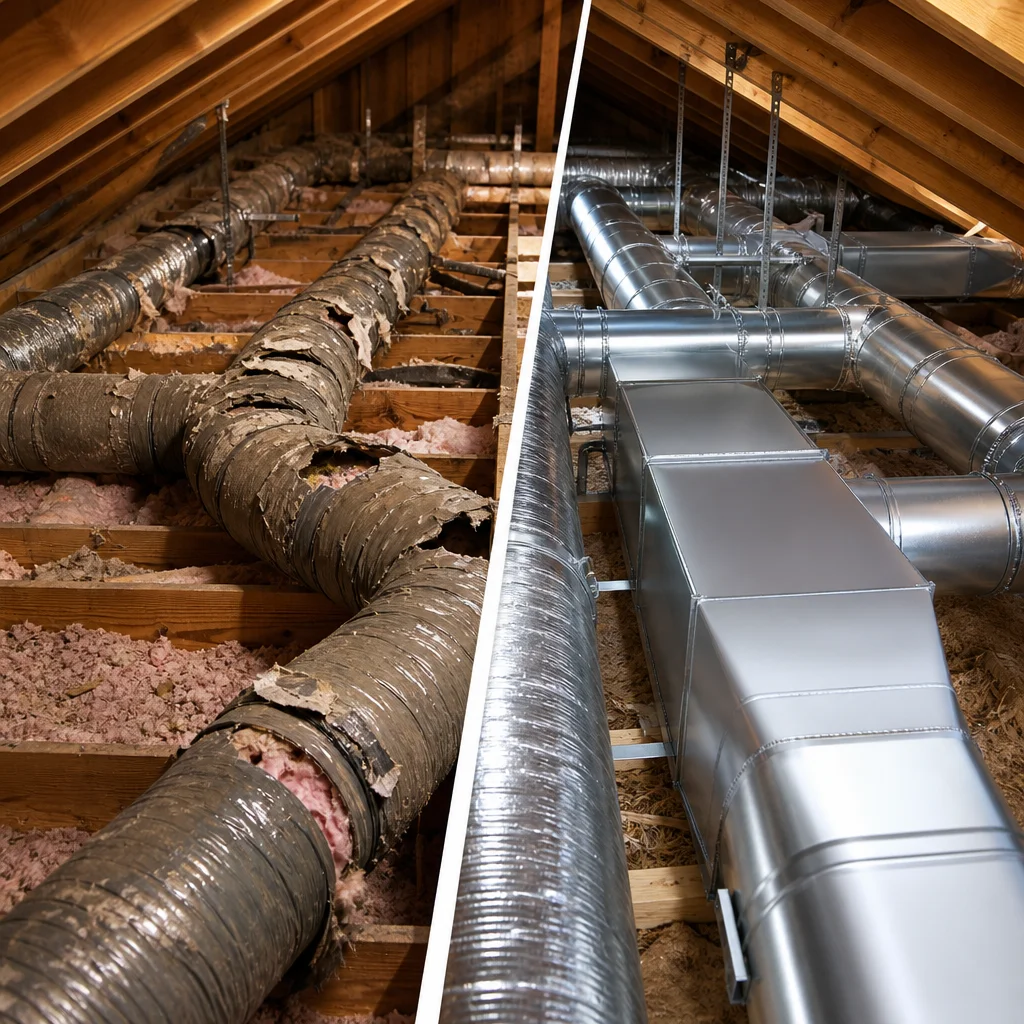
| Option | Best For | Typical Lifespan | Air Quality | Efficiency | Disruption | |—|—|—|—|—|—| | Spot repair and sealing | Small, isolated leaks in newer ducts | Short to moderate | Limited improvement | Modest gains | Low | | Cleaning only | Dust buildup without structural damage | Depends on condition | Good if ducts are sound | Little change | Low | | Full sealed sheet metal replacement | Aging, damaged, or poorly sized systems | Long-term | Strongest improvement | Highest gains | Moderate |
Spot repair works when the problem is limited and the rest of the system is sound. Cleaning helps when contamination is the main issue. Full replacement costs more upfront but addresses structural problems, sizing, and sealing in one project.
What to do next: If your ducts are more than 15 years old or have had multiple repairs, full replacement is often the better value, even though the initial number is higher.
Pricing, Estimates, and Financing Considerations
Austin air duct replacement costs vary widely based on home size, duct layout, attic or crawlspace access, insulation requirements, and the number of supply and return runs. Our Austin replacement cost factors guide explains these variables in more detail.
When you compare estimates, look for these details:
- Written scope of work that lists sheet metal, insulation, sealing method, and testing
- Load calculation or sizing documentation that justifies the design
- Clear warranty terms covering both labor and materials
- Disruption and cleanup plan so you know what to expect in your home
Be cautious of estimates that are dramatically lower than others without explanation. Low bids often leave out sealing, insulation, or proper sizing.
Financing can make larger projects more manageable. Many homeowners spread the cost over time, and some qualify for utility or energy rebate programs. Our duct replacement rebates resource outlines current options for Austin and San Antonio residents.
What to do next: Request a written estimate that itemizes each component, then ask about financing and rebate eligibility before you decide.
Why Go Air Ducts Is the Definitive Choice in Austin
Go Air Ducts has built its reputation on doing the job correctly the first time. Our technicians are certified, our designs are based on load calculations rather than guesswork, and every replacement is sealed and pressure-tested before we leave.
Here is what sets us apart for Austin homeowners:
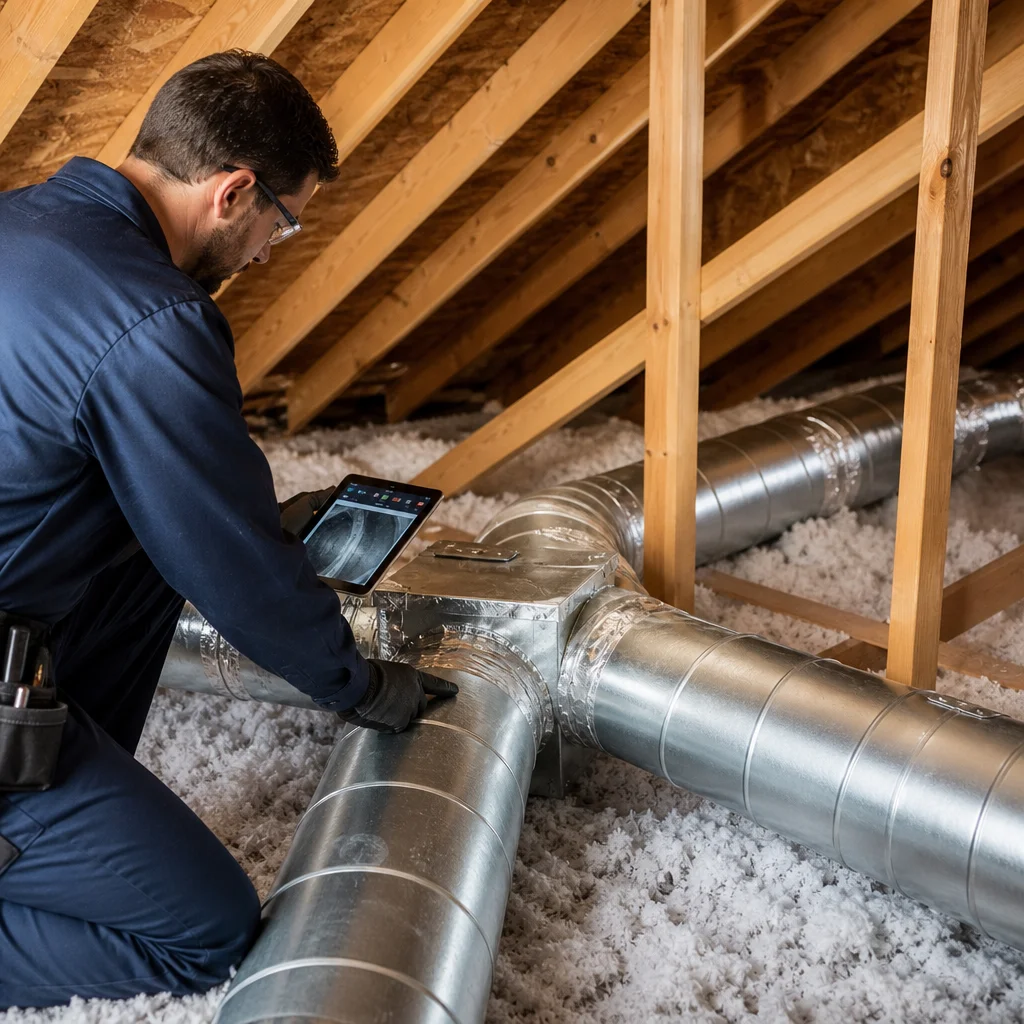
- Certified HVAC technicians who understand Central Texas attic conditions and humidity
- Engineered sizing and sealed sheet metal systems built to last
- Integrated insulation and air-sealing expertise that addresses efficiency and air quality together
- Free, no-pressure estimates with itemized written scopes
- Fast response times for homeowners who need service quickly
- Full-service capability including air duct cleaning, dryer vent cleaning, chimney services, and insulation, all under one roof
We serve Austin and San Antonio homeowners who want a trusted local expert, not a rotating cast of subcontractors. When your home’s comfort and air quality are on the line, you deserve a team that stands behind its work.
What to do next: Compare our scope and warranty against any other estimate you receive. We are confident the difference will be clear.
How to Get Started With a Free Estimate
Getting started is simple and carries no obligation:
- Call or request online. Tell us your home’s age, your main comfort concerns, and any air quality issues.
- Schedule an on-site inspection. A certified technician will check your ductwork, attic or crawlspace, and existing system.
- Receive a written estimate. You will get an itemized scope, timeline, and pricing with no pressure to decide on the spot.
- Choose your plan. Once you are ready, we schedule installation and walk you through what to expect.
Many Austin homeowners can have a same-day inspection when they call early in the day. If your system is struggling now, call us and we will prioritize your visit.
What to do next: Contact Go Air Ducts today to book your free estimate and start breathing easier in your Austin home.
If you’re dealing with dust, poor airflow, mold in your ducts, or a clogged dryer vent — don’t wait. These issues can affect your health and safety. Go Air Ducts Group are the local experts in air duct cleaning, mold removal, dryer vent cleaning, and attic insulation. Call now for a free inspection and same-day service in Austin and San Antonio.
Frequently Asked Questions (FAQ)
Do you replace all of the ductwork in a home, or only the sections that are damaged?
We assess the full system before recommending a scope of work. In many Austin homes, we can replace only the damaged or undersized runs and keep sound sections in place, which lowers cost without sacrificing performance. When the existing ductwork is widespread, leaky, or poorly sized, we will recommend a full replacement and explain the reasoning in writing before any work begins.
How long does a typical air duct replacement take in Austin?
Most residential replacements take between one and three days, depending on the home’s size, the number of runs, and access through attics, crawl spaces, or slab-level routing. We schedule work to minimize disruption to your household and clean up the job site at the end of each day. Once the new system is installed, we test airflow and static pressure to confirm it performs as designed.
Will we need to be home during the installation?
You do not need to be home for the entire project, but we do ask that someone be available at the start and at the final walkthrough to approve the work. We will review the schedule with you in advance, explain where our technicians will be working, and note any areas that need to be cleared. Our team keeps you informed of progress so there are no surprises during the installation.