
🕑 11 min read
What are the best mini-splits for older Austin homes?
Older Austin homes often lack ducts or have uneven comfort, making ductless mini-splits an efficient, flexible solution with zoned control. Go Air Ducts recommends and installs mini-split systems suited to older homes, improving comfort and air quality while avoiding costly ductwork retrofits.
Table of Contents
- Why Older Austin Homes Need Ductless Mini-Split Solutions
- The Problem with Traditional Duct Systems in Historic Properties
- How Ductless Mini-Splits Outperform Ducted Alternatives
- Our Top Ductless Mini-Split System Recommendations
- Installation Criteria We Use to Evaluate Each System
- Energy Efficiency and Cost Savings Comparison
- Professional Installation Process and Timeline
- Why Go Air Ducts Delivers Superior Mini-Split Retrofits
- Financing Options for Your Home Upgrade
- Getting Started with Your Free Installation Estimate
- Frequently Asked Questions (FAQ)
Why Older Austin Homes Need Ductless Mini-Split Solutions
Austin’s historic homes are beautiful, but their original HVAC systems often aren’t. Many of these properties were built without ductwork or with aging systems that struggle to keep up with Texas heat. If you own an older Austin home and you’re frustrated with hot spots, high energy bills, or complicated retrofitting options, we have a solution that doesn’t require tearing into walls: ductless mini-split systems.
We’ve installed dozens of mini-split setups across Austin and San Antonio, and we’ve learned exactly what works best for older homes. This guide shares our professional recommendations and what to expect from the installation process.
Historic homes in Austin often lack the ductwork that modern central air systems need. Even when ducts exist, they’re frequently positioned in crawl spaces, attics, or behind plaster walls that you don’t want to disturb. Traditional duct retrofits in these situations can cost $8,000 to $15,000 and involve significant disruption.
Ductless mini-splits solve this problem elegantly. They deliver heating and cooling through small wall-mounted indoor units that connect to an outdoor condenser via thin refrigerant lines. No massive ducts. No reconstruction. Just efficient climate control that preserves your home’s character.
For Austin homeowners concerned about indoor air quality and energy costs, mini-splits offer another advantage: they’re exceptionally efficient and allow you to cool individual zones rather than heating or cooling your entire home at once. If you spend most of your time in the living areas and rarely use upstairs bedrooms, you can condition only the spaces you occupy.
The Problem with Traditional Duct Systems in Historic Properties
Traditional ductwork works well in homes built with space for distribution systems. In older Austin properties, that’s rarely the case. We frequently encounter homes where:
- Ductwork would require cutting through original wood beams or plaster walls
- Crawl space ductwork sits on soil, accumulating moisture and mold
- Attic ducts are exposed to temperature extremes that reduce efficiency
- Duct leaks waste energy significantly, especially in older installations where connections have deteriorated
We’ve also seen homeowners stuck with “solutions” that damage their property. One recent client hired another contractor to run ducts through her century-old home. The result: torn insulation, patched drywall, and $12,000 in repairs that weren’t part of the original estimate.
Beyond physical damage, traditional ducts in older homes collect more dust, mold, and debris because they’re harder to access and maintain. If indoor air quality is a priority, ductless systems eliminate that entire category of problems.
How Ductless Mini-Splits Outperform Ducted Alternatives
We recommend mini-splits not because they’re trendy, but because they outperform traditional systems in older homes on multiple fronts.
Efficiency: Ductless systems are inherently more efficient than ducted alternatives. Traditional ducts lose 15-30% of conditioned air to leakage and poor insulation. Mini-splits avoid this loss entirely. You’re paying to cool or heat only the air delivered directly into your rooms.
Zoning: You can condition different rooms at different temperatures simultaneously. Your main living area can stay at 72 degrees while a little-used bedroom stays at 78. This flexibility translates to significant energy savings over time.
Installation speed: A typical mini-split retrofit takes 1-2 days versus 3-5 days for duct installation. Minimal disruption means you’re not living in chaos while your home is being upgraded.
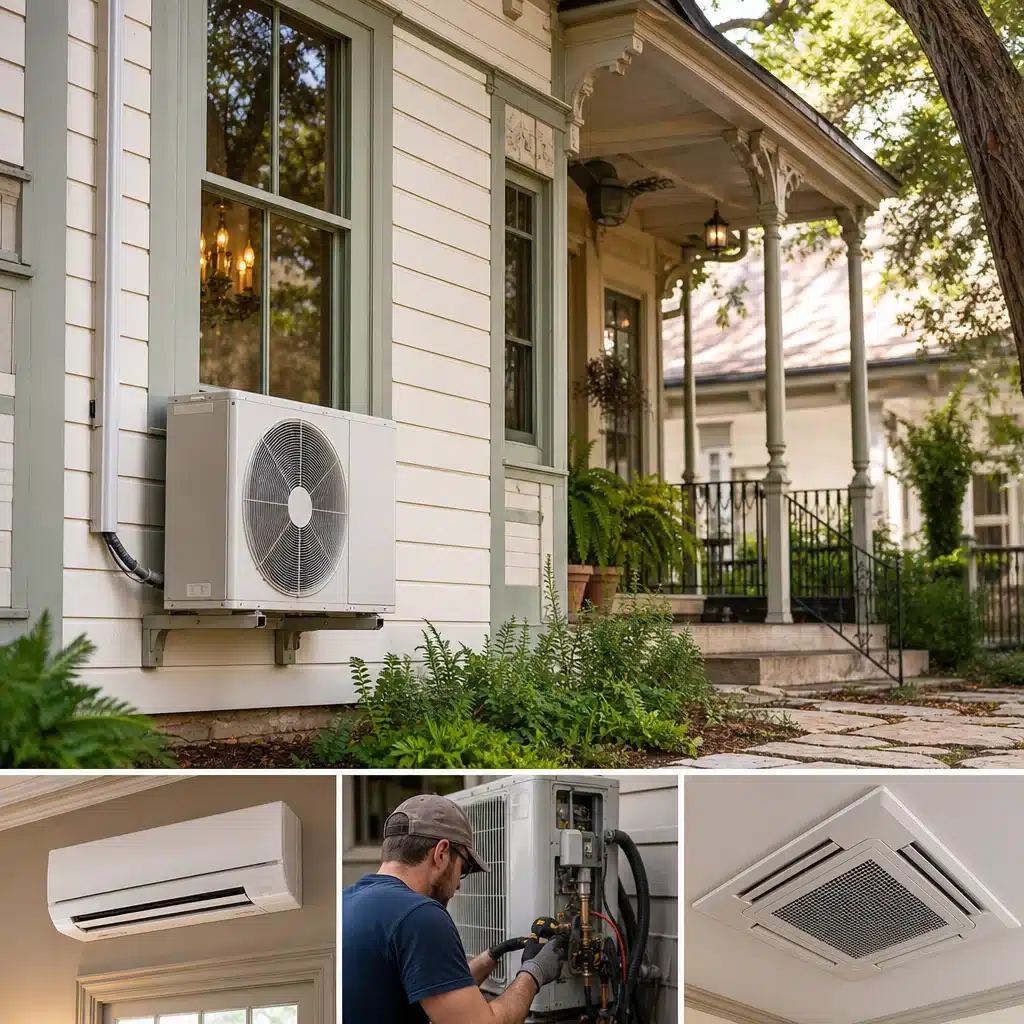
Air quality: Without ducts, there’s no enclosed space for dust, mold, and debris to accumulate. The sealed indoor units are easy to clean and maintain, and many feature advanced filtration that improves your home’s air quality.
Noise levels: Modern ductless units operate at 22-26 decibels on low speed, quieter than many central systems running through ductwork.
For homes where energy-efficient HVAC in Austin is a priority, mini-splits consistently deliver better performance than retrofit ducts in constrained spaces.
Our Top Ductless Mini-Split System Recommendations
Based on our installation experience and client satisfaction, we recommend these proven systems for older Austin homes:
Mitsubishi Electric Hyper-Heating INVERTER (H2i): This is our top choice for Austin homeowners. The technology automatically adjusts compressor speed based on demand, maximizing efficiency without cycling on and off constantly. It handles our hot summers exceptionally well and includes advanced humidity control. Expect to pay $3,500-$5,500 for a single-zone system before installation.
Daikin Emura: Daikin units are known for durability and quiet operation. The Emura line offers sleek indoor design that appeals to homeowners concerned about aesthetics. Performance is comparable to Mitsubishi, with excellent customer support throughout Texas.
LG Dual Inverter: LG systems offer competitive pricing and strong efficiency ratings. We’ve installed many in Austin homes and they’ve proven reliable over time. Good choice if budget is a consideration without sacrificing performance.
Fujitsu Halcyon: Fujitsu deserves mention for their reliability and extensive Texas service network. Their systems work well in older homes and often qualify for utility rebates in the Austin area.
The right system depends on your budget, the number of zones you need, and your specific room layouts. We evaluate each home individually to ensure the recommendation matches your needs and constraints.
Installation Criteria We Use to Evaluate Each System
When we propose a mini-split solution, we’re not just selling equipment. We evaluate whether the system will actually solve your problem and perform well long-term.
Cooling capacity: Austin summers demand adequate cooling power. We size systems based on room square footage, insulation quality, window exposure, and solar heat gain. An undersized unit will run constantly and cost more to operate. An oversized unit cycles inefficiently and wastes energy.
Noise and placement: Older homes often have open living spaces where noise matters. We position indoor units in locations where they distribute air effectively without creating drafts or noise issues. This sometimes means recommending multiple smaller units instead of one large one.
Electrical requirements: Mini-splits require dedicated circuits and sometimes panel upgrades. We assess your home’s electrical infrastructure before recommending a system. Some homes need minor updates; others require more involved work.
Refrigerant line routing: We plan the path for refrigerant lines to minimize visual impact and ensure proper system operation. In historic homes, we often run lines through existing crawl spaces or behind soffits rather than along exterior walls.
Aesthetic integration: In Austin’s historic neighborhoods, visual appeal matters. We discuss indoor unit placement and color options upfront to ensure the system complements your home’s character rather than detracting from it.
Energy Efficiency and Cost Savings Comparison
Let’s talk numbers. A typical older Austin home using a window unit or aging central system pays roughly $200-$350 monthly for cooling during summer months.

A properly sized and installed ductless mini-split reduces that to approximately $120-$180 monthly. Over a full year, you’re looking at $1,000-$2,000 in savings. Most of our clients see ROI within 6-8 years, and the systems last 15-20 years.
Beyond direct cooling costs, mini-splits reduce strain on your electrical system, lower peak demand charges if your utility uses time-of-use rates, and often qualify for energy rebates. Check with Austin Energy or your local utility for potential rebates on efficient system upgrades.
We’ve also seen clients combine mini-split installation with energy-efficient air duct replacement for existing ducts serving other parts of the home, or with attic insulation rebates to maximize overall efficiency gains.
Professional Installation Process and Timeline
Here’s what to expect when we install a ductless mini-split in your Austin home.
Day 1 – Morning: We assess electrical requirements, confirm placement for indoor and outdoor units, and mark refrigerant line routing. We’ll discuss any adjustments needed to accommodate your preferences.
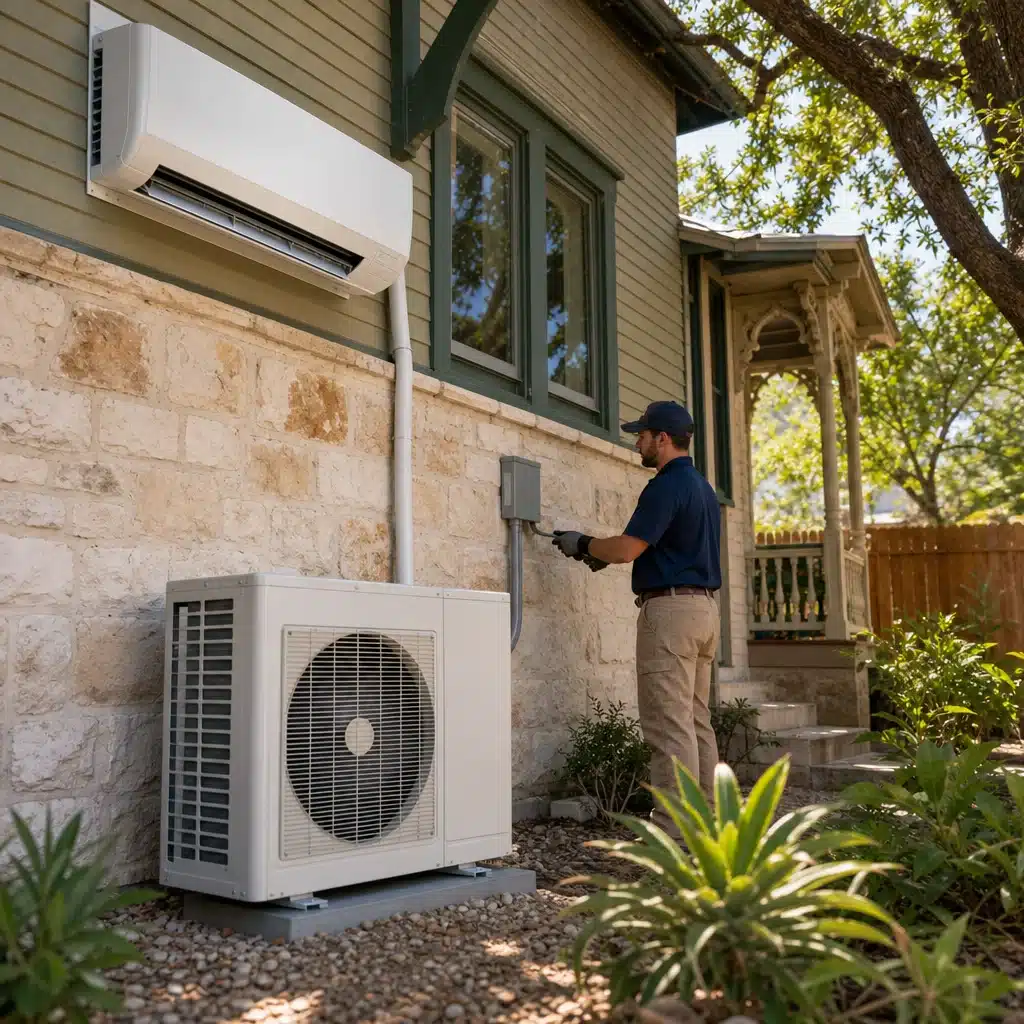
Day 1 – Afternoon: Installation begins. We mount the outdoor condenser, typically placed on a side wall, rooftop, or ground-level pad away from living spaces. Interior unit installation follows, including wall mounting and securing refrigerant lines.
Day 2: We complete refrigerant line installation, electrical connections, and system testing. The entire process takes approximately 16-20 hours of labor for a single-zone system. Multi-zone installations (cooling multiple rooms) add time proportionally.
Testing and startup: We run full diagnostics, test heating and cooling modes, calibrate thermostats, and walk you through operation. Most homeowners are comfortable using the system within minutes.
We schedule installations to minimize disruption. Many of our clients appreciate the speed compared to duct retrofit projects that demand 4-5 days of wall cutting and reconstruction.
Why Go Air Ducts Delivers Superior Mini-Split Retrofits
We’re not just installers; we’re Austin-based HVAC specialists with deep experience in older homes. Here’s what sets our work apart.
Our technicians hold EPA certification and are trained on systems from every major manufacturer. We don’t push one brand; we recommend what actually works best for your specific home and budget.
We handle the complete installation in-house. No subcontractors, no surprises. You’re working directly with experienced professionals who understand Austin’s older housing stock and the unique challenges these homes present.
We include a comprehensive warranty: full labor warranty on installation and manufacturer warranties on equipment. If something fails within the first year due to our workmanship, we fix it at no charge.
Beyond installation, we provide maintenance support. A properly maintained mini-split operates efficiently for its entire lifespan. We offer annual service packages including filter cleaning, refrigerant checks, and seasonal inspections.
Most importantly, we’re local. We understand Austin’s climate, local building codes, and the specific concerns homeowners in historic neighborhoods care about. We’re not a franchise following a national playbook; we’re your neighbors with expertise in your community.
Financing Options for Your Home Upgrade
Cost shouldn’t be the barrier to upgrading your home’s climate control. We offer several paths to make mini-split installation affordable.
Standard payment: For customers paying upfront, we provide a competitive quote with clear line-item pricing. No hidden fees.
Financing plans: We work with third-party lenders offering 12-24 month payment plans with competitive interest rates. Most homeowners qualify easily. We handle the application process for you.
HVAC system rebates: Austin Energy and other utilities offer periodic rebates on efficient cooling system upgrades. We help you identify which programs you qualify for and manage the paperwork.
Texas energy efficiency tax credits: Some system upgrades qualify for federal or state tax credits. We provide documentation to ensure you claim what you’re entitled to.
Most of our mini-split projects total $4,500-$7,500 installed, which often breaks down to roughly 40-60 dollars monthly when financed over 24 months. That’s less than your current cooling costs in many cases.
Getting Started with Your Free Installation Estimate
If you own an older Austin or San Antonio home and mini-split cooling sounds like the right solution, we’re ready to help. The first step is a free, no-obligation site assessment.
Get a free installation estimate by calling us or completing our online form. We’ll schedule a convenient time, tour your home, discuss your cooling challenges, and provide a detailed quote with no pressure to decide immediately.
During your assessment, we’ll explain exactly how a mini-split would work in your specific home, show you placement options, discuss system sizing, and answer every question you have. We’ll be transparent about costs, timeline, and what to expect.
We serve Austin, San Antonio, Dallas, and Houston. Same-day consultations are often available. Most homeowners find the conversation clarifies whether a mini-split is the right investment for their situation.
Ductless mini-split systems represent the best solution we’ve found for older Austin homes seeking efficient, reliable climate control without the disruption and cost of traditional duct retrofits. Let us show you how one can transform your home’s comfort and energy efficiency.
If you’re dealing with dust, poor airflow, mold in your ducts, or a clogged dryer vent — don’t wait. These issues can affect your health and safety. Go Air Ducts Group are the local experts in air duct cleaning, mold removal, dryer vent cleaning, and attic insulation. Call now for a free inspection and same-day service in Austin and San Antonio.
Frequently Asked Questions (FAQ)
Are ductless mini-split systems a good fit for my older Austin home?
We find that ductless mini-splits are ideal for older homes because they don’t require extensive ductwork installation, which can be costly and disruptive in historic properties. Our customers with aging homes appreciate that we can retrofit these systems without major structural modifications, and they typically see improved comfort and lower energy bills within the first month of operation.
How long does it take us to install a ductless mini-split system?
We typically complete a standard ductless mini-split installation in one to two days, depending on your home’s layout and the number of indoor units you need. Our certified technicians work efficiently to minimize disruption while ensuring every connection meets our quality standards, and we’ll walk you through the system before we leave.
What kind of savings can we help you achieve with a ductless system?
We’ve seen our Austin clients reduce their cooling costs by 20 to 40 percent after switching to ductless mini-splits, especially compared to aging central air systems that lose efficiency through leaky ducts. The exact savings depend on your current system and usage habits, which is why we provide a detailed energy comparison during your free estimate.