
🕑 11 min read
Table of Contents
- Why Your Duct Choice Matters for San Antonio Homes
- Understanding Flexible Ductwork: Construction and Applications
- Understanding Sheet Metal Ducts: Benefits and Performance
- Durability and Lifespan Comparison
- Energy Efficiency Considerations for Texas Climate
- Installation and Maintenance Differences
- Cost Analysis and Long-Term Value
- Air Quality and Contamination Risks
- Our Expert Recommendation for San Antonio Properties
- How We Help You Choose the Right Solution
- Next Steps: Getting Your Professional Assessment
- Frequently Asked Questions (FAQ)





Why Your Duct Choice Matters for San Antonio Homes
Your ductwork is the circulatory system of your HVAC system. It’s what carries heated or cooled air from your equipment into every room of your home. In San Antonio, where summer heat regularly climbs above 95 degrees and humidity can make your home feel stuffy, choosing the right duct material directly impacts your comfort, energy bills, and indoor air quality.
We’ve inspected thousands of San Antonio homes, and we see the same pattern repeatedly: poorly chosen or aging ductwork causes energy waste, uneven temperatures, and dust accumulation that triggers allergies. The difference between flexible ducts and sheet metal isn’t just about cost or aesthetics. It affects how efficiently your system runs, how long it lasts, and whether you’ll face mold or contamination issues down the road.
Understanding your options upfront saves you money and headaches. Let’s break down both choices so you can make an informed decision for your property.
Understanding Flexible Ductwork: Construction and Applications
Flexible ducts consist of a spiral wire core wrapped in plastic or aluminum reinforcement, with an inner liner typically made of polyester or aluminum. This design allows the duct to bend and fit into tight spaces, which is why HVAC contractors often prefer them for retrofit projects and complex layouts.
Flexible ducts work well in specific situations:
- Connecting rigid main ducts to supply vents in attics or crawl spaces
- Routing around existing obstacles in older homes
- Reaching areas where sheet metal installation would require extensive framing
- New construction with planned routing from the start
The flexibility makes installation faster and labor costs lower. In San Antonio’s many mid-century homes with tight crawl spaces, flexible ducts have solved countless installation challenges we’ve faced on job sites.
However, flexibility comes with tradeoffs we’ll explore in the sections ahead.
Understanding Sheet Metal Ducts: Benefits and Performance
Sheet metal ducts are fabricated from galvanized steel or aluminum, formed into rigid rectangular or round sections, and sealed at joints with mastic or tape. They’re the industry standard for primary ductwork runs because they offer superior performance in almost every measurable way.
Sheet metal provides several real advantages:
- Stronger structural integrity that resists crushing and maintains shape over decades
- Smoother interior surfaces that reduce friction and airflow resistance
- Better sealing capability at joints, which prevents air leakage
- Greater resistance to temperature fluctuations typical of attic environments
- Significantly longer effective lifespan in harsh Texas conditions
When we inspect homes with original sheet metal ducts from 30 or 40 years ago, they often still perform well. Try finding flexible ducts that old in working condition.
Sheet metal does require more careful installation planning and typically costs more upfront, but the performance difference justifies the investment for main trunk lines and long runs.
Durability and Lifespan Comparison
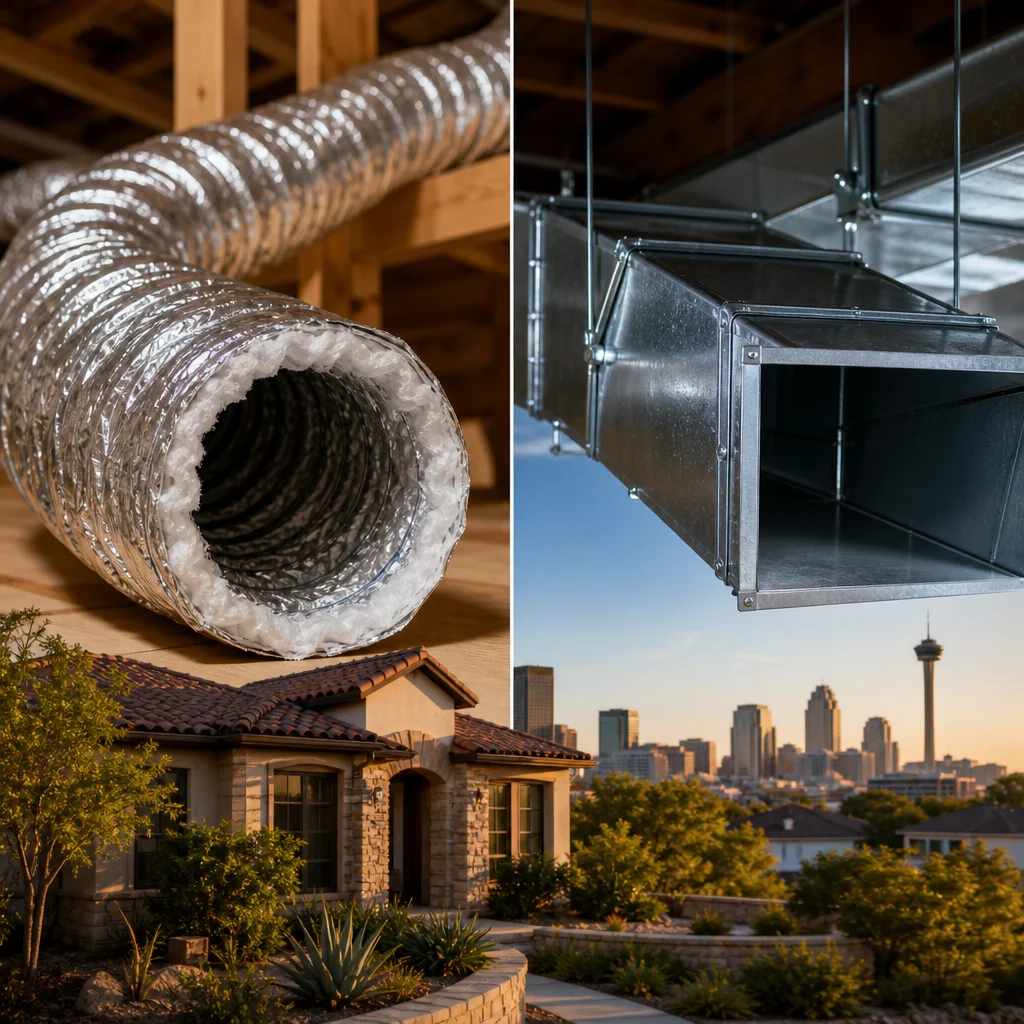
This is where material choice really separates long-term winners from recurring problems.
Flexible ducts typically last 10 to 15 years under normal conditions. In San Antonio’s hot, humid climate with temperature swings between your air-conditioned home and 130-degree attics, that timeline often compresses. The plastic liner becomes brittle, the wire spiral corrodes, and the outer jacket degrades from UV exposure if routed through unconditioned spaces.
We’ve pulled apart plenty of 12-year-old flexible ducts and found the inner lining cracked and separated from the outer jacket. That separation creates air pockets, reduces efficiency, and can trap moisture and mold.
Sheet metal, by contrast, routinely lasts 30 to 40 years or longer. Galvanized steel resists rust better than most people expect, especially when installed with proper slope and drainage provisions. Aluminum versions perform equally well. We regularly inspect homes with original sheet metal ductwork from the 1980s that still moves air cleanly and efficiently.
The durability gap is significant enough that we recommend sheet metal for any main ductwork run you plan to keep for more than 10 years. Flexible ducts make sense only for temporary connections or areas where replacement doesn’t require major reconstruction.
Energy Efficiency Considerations for Texas Climate
San Antonio’s climate creates specific challenges for ductwork efficiency. Your summer cooling load is enormous, and any inefficiency in your ducts directly increases your electric bill.
Sheet metal ducts minimize friction loss. The smooth interior surface allows air to move freely with less pressure drop, which means your blower motor works less hard and uses less energy. Over a summer, that difference compounds into measurable savings.
Flexible ducts have higher friction losses because the corrugated interior acts like a washboard for moving air. This forces your HVAC system to work harder to achieve the same airflow. In a long run of flexible ductwork, you might lose 15 to 30 percent efficiency compared to sheet metal.
Sealing also matters greatly. Flexible ducts are notorious for developing small tears and separations at connection points. These leaks bypass your conditioned air directly into unconditioned spaces, which wastes energy immediately. Sheet metal, when sealed properly with mastic at all joints, maintains air-tight performance for decades.
For San Antonio homeowners watching their summer electric bills, sheet metal ducts offset their higher installation cost through measurable energy savings. A properly sealed sheet metal system typically reduces cooling costs by 5 to 15 percent compared to a leaky flexible system.
Installation and Maintenance Differences
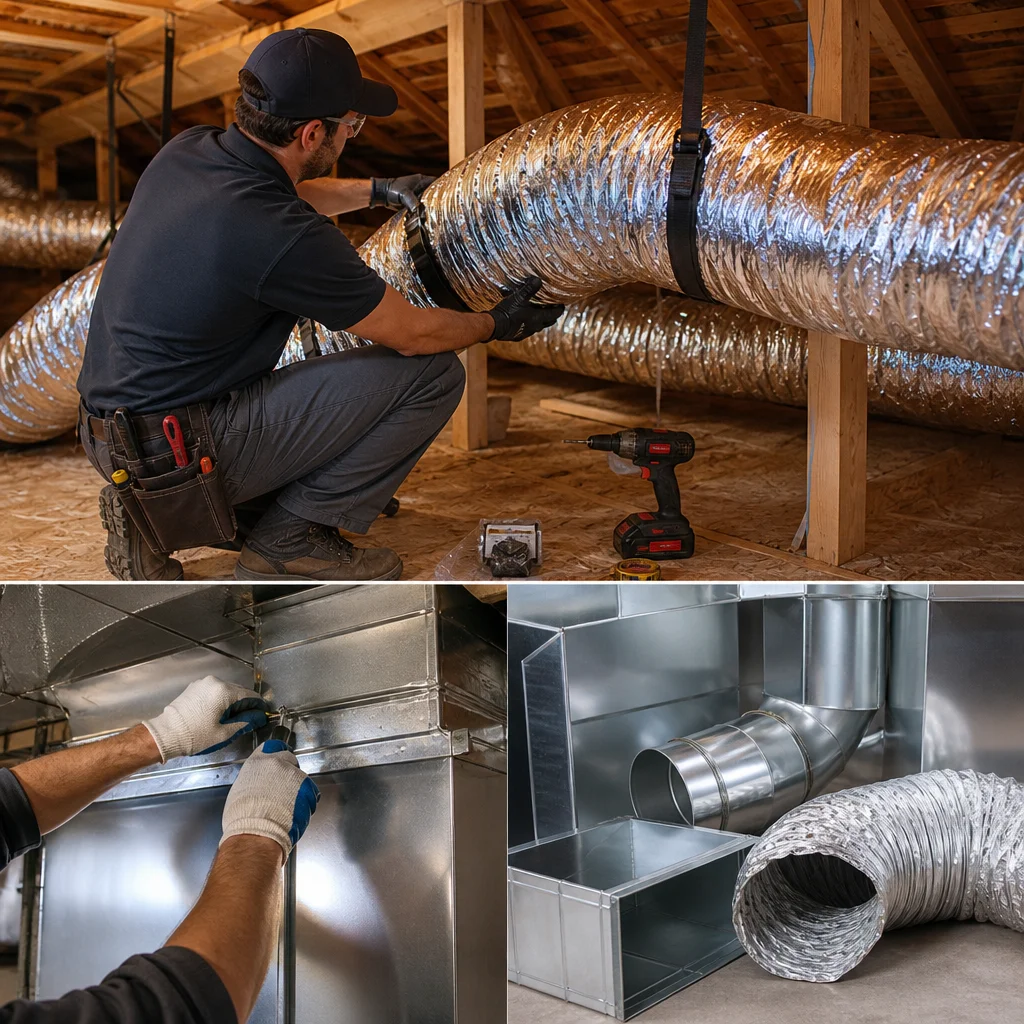
Flexible ductwork is faster and cheaper to install. A technician can route it through tight spaces without fabrication, which keeps labor costs down. This speed is attractive if you’re in a hurry.
Installation quality, however, is harder to control with flexible ducts. Improper bends can crimp the interior, reducing airflow. Inadequate support allows the duct to sag and trap condensation. Poor connection technique leaves gaps where air leaks out.
Sheet metal requires more planning and precision. Ductwork must be fabricated to exact measurements, routes need to be mapped out, and connections demand careful sealing. This takes longer and costs more upfront, but the payoff is consistency and longevity.
For maintenance, flexible ducts present a real problem: they can’t be cleaned internally like sheet metal can. Once dust and debris accumulate inside, you’re often replacing the section entirely. Sheet metal ducts can be accessed, inspected, and professionally cleaned if needed.
We use video inspection equipment to look inside ducts during our assessments. We can see exactly what’s happening inside sheet metal runs. With flexible ducts, we often have to make decisions based on external signs alone.
Cost Analysis and Long-Term Value
Initial installation costs favor flexible ducts. A retrofit project using flexible connections might run 20 to 30 percent less than sheet metal throughout, primarily due to faster labor.
That’s where the cost advantage ends.
Over 20 years, sheet metal costs less per year of service. Here’s the math:
- Flexible ductwork installed at $3,000 with a 12 to 15-year lifespan costs roughly $200 to $250 per year of service, plus one major replacement.
- Sheet metal installed at $4,500 with a 30 to 40-year lifespan costs roughly $115 to $150 per year of service, with minimal replacement needs.
Energy efficiency amplifies the savings. A homeowner in San Antonio who saves 10 percent on cooling costs might recoup the sheet metal premium in 3 to 5 years through lower electric bills alone.
If you’re staying in your home long-term, sheet metal is the better investment. If you’re flipping a property in 5 years, flexible ducts might look attractive despite their real-world drawbacks.
Air Quality and Contamination Risks
This issue matters most to San Antonio homeowners dealing with allergies, dust, or mold concerns.
Flexible ducts trap contaminants more easily. The corrugated interior catches dust, dander, and pollen. The plastic lining absorbs moisture, creating an ideal environment for mold and mildew growth. We’ve opened flexible ducts in homes with musty odors and found significant mold colonies inside. The homeowner had no way to access or clean those areas effectively.
Sheet metal ducts are smoother and shed contaminants more easily. Moisture drains out instead of pooling. If mold does develop, the smooth surface allows it to be cleaned or treated more effectively. Video inspection reveals problems early.
For homeowners with respiratory issues or allergies, sheet metal provides better air quality over time. The ducts stay cleaner naturally and can be maintained professionally when needed.
If indoor air quality is a concern for your household, we recommend sheet metal with a professional air duct cleaning schedule as part of your regular maintenance. We can inspect your current system with video equipment to identify any existing contamination and recommend the best course of action.
Our Expert Recommendation for San Antonio Properties
After inspecting and maintaining thousands of San Antonio homes, we recommend sheet metal as the standard choice for primary ductwork runs. Here’s why:
For main trunk lines and primary supply runs: Sheet metal delivers superior performance, longevity, and energy efficiency. The long-term value justifies the upfront cost, especially in San Antonio’s demanding climate.
For secondary connections and retrofits: Flexible ducts can serve a purpose when routing from main lines to individual vents, particularly in existing homes where rerouting sheet metal isn’t practical. Use them selectively, not as your primary system.
For air quality and health: Sheet metal reduces contamination risk naturally and allows for professional cleaning and inspection when needed.
For energy cost control: Sheet metal’s lower friction and air-tight sealing directly reduce your cooling costs in our hot climate.
The only exception is when building constraints make sheet metal physically impossible. Even then, we’d recommend upgrading later rather than accepting poor performance permanently.
How We Help You Choose the Right Solution
We don’t sell a one-size-fits-all answer. Every San Antonio home has different needs, layouts, and budget considerations.
Our process starts with a free professional assessment. We inspect your current ductwork visually and with video equipment if needed. We identify any existing problems like leaks, disconnections, or contamination. We map your system’s layout and discuss your concerns about energy bills, comfort, or air quality.
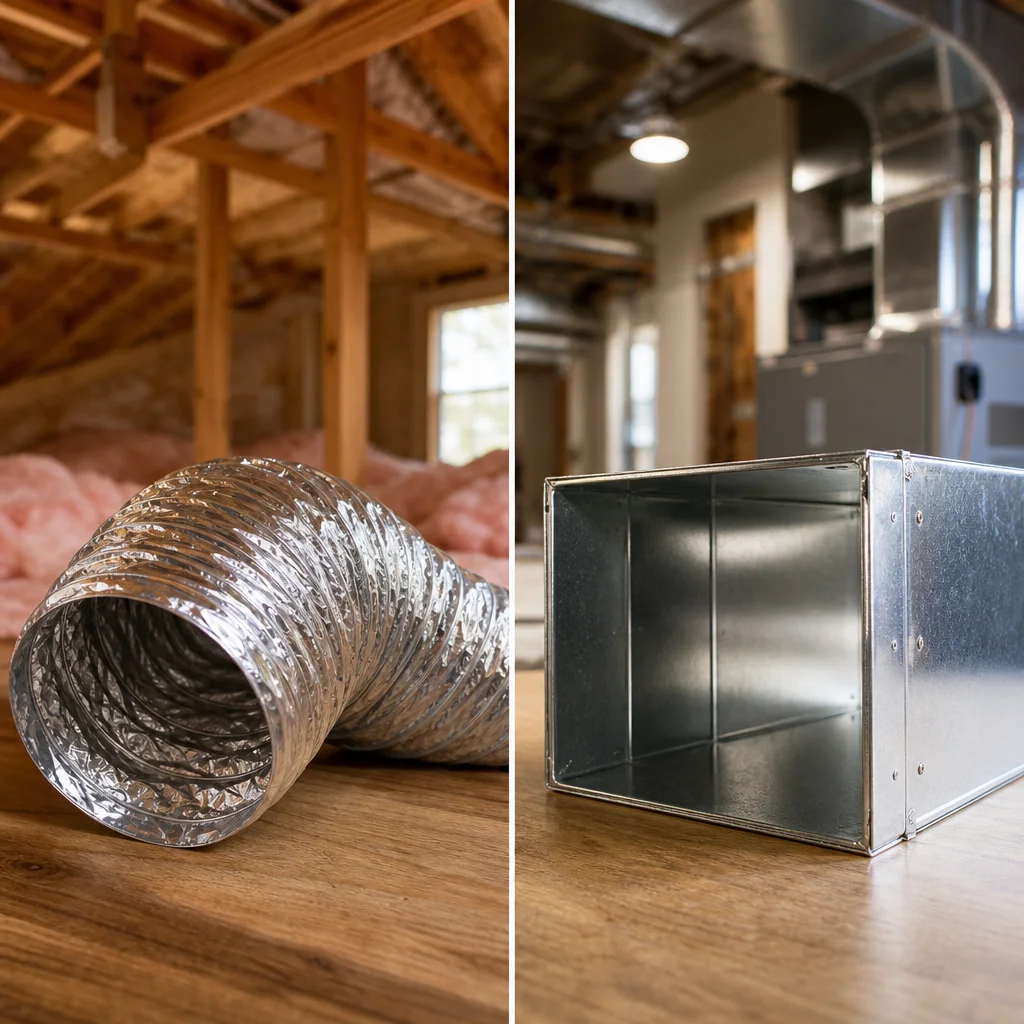
From there, we provide clear recommendations with specific options and pricing. If you’re replacing ductwork, we explain whether sheet metal makes sense for your main runs and where flexible connections might be appropriate. If you’re upgrading an existing system, we show you the costs and benefits of different approaches.
Our certified HVAC technicians have real job-site experience with both materials in Texas homes. We’re not pushing you toward the most expensive option. We’re recommending what actually works best for your specific situation and your long-term goals.
If air quality concerns exist, we can also recommend duct remediation solutions or professional cleaning to address contamination in your current system before you invest in new ductwork.
Next Steps: Getting Your Professional Assessment
The difference between flexible and sheet metal ducts isn’t just technical. It directly affects your comfort, your energy bills, and your indoor air quality for years to come.
Here’s what we recommend:
- Schedule a free professional assessment with our team. We’ll inspect your current ductwork, identify any problems, and give you honest recommendations based on your home’s specific needs.
- Ask us specific questions about your situation. Do you have high summer electric bills? Air quality concerns? Plans to stay in your home long-term? Each factor influences whether sheet metal is the right investment for you.
- Get a detailed quote that shows you exactly what you’re paying for and the long-term value you’ll receive.
We serve San Antonio and the surrounding areas with same-day and next-day service availability. Call us today or visit our website to book your free assessment. Our goal is helping you make a decision that keeps your home comfortable, efficient, and healthy for years to come.
Your ductwork is too important to guess about. Let’s get it right.
For further reading: Flexible vs sheet metal ducts.
If you’re dealing with dust, poor airflow, mold in your ducts, or a clogged dryer vent — don’t wait. These issues can affect your health and safety. Go Air Ducts Group are the local experts in air duct cleaning, mold removal, dryer vent cleaning, and attic insulation. Call now for a free inspection and same-day service in Austin and San Antonio.
Frequently Asked Questions (FAQ)
What’s the difference between flexible and sheet metal ducts for San Antonio homes?
We find that flexible ducts work well for tight spaces and retrofits because they’re easier to install, while sheet metal ducts offer superior durability and airflow in most residential applications. Sheet metal tends to last longer and resists contamination better, but flexible ducts come at a lower upfront cost. For most San Antonio homes, we recommend sheet metal as the primary choice, though flexible ducts serve specific purposes in your system.
How does the Texas heat and humidity affect which ductwork I should choose?
Our experience shows that sheet metal ducts handle Texas humidity better since they resist moisture buildup and mold growth more effectively than flexible options. The intense summer heat can degrade flexible ducts over time, especially if they’re exposed to direct sunlight in attics. We typically recommend sheet metal for your main trunk lines and reserve flexible ducts only for short runs in conditioned spaces.
Will choosing the right ductwork actually save us money on energy bills?
We’ve seen measurable savings when homeowners upgrade to properly sized sheet metal ducts because they minimize air leaks and maintain better airflow efficiency in our climate. A well-sealed, efficient duct system can reduce your cooling costs by 10-15%, which adds up significantly over time. We’re happy to evaluate your current system and show you exactly what energy improvements you can expect with an upgrade.