
🕑 11 min read
What insulation and attic ventilation is best for Texas homes?
The best combination pairs proper attic insulation with balanced intake and exhaust ventilation to block heat and manage moisture, preventing mold and high bills. Go Air Ducts installs insulation and attic ventilation solutions for Texas homes that work together to improve comfort, efficiency, and air quality.
Table of Contents
- Understanding Your Attic's Insulation and Ventilation Challenges
- Why Proper Ventilation Matters for Texas Homes
- Key Criteria We Use to Recommend Solutions
- Fiberglass Insulation with Ridge and Soffit Vents
- Blown-in Cellulose Insulation Systems
- Spray Foam Insulation for Superior Performance
- Attic Ventilation Fan Options and Benefits
- How We Balance Insulation R-Value with Airflow
- Our Comprehensive Assessment Process
- Why Our Integrated Approach Delivers Superior Results
- Getting Your Free Attic Evaluation Today
- Frequently Asked Questions (FAQ)
Understanding Your Attic’s Insulation and Ventilation Challenges
Your attic is working harder than you probably realize. In Texas, it’s where heat accumulates during scorching summers and where moisture tends to linger year-round, creating an environment that challenges both insulation performance and structural integrity. Many homeowners we meet don’t realize that poor attic conditions directly impact energy bills, indoor comfort, and long-term roof health.
The core problem is this: insulation and ventilation aren’t separate systems. They work together. Without proper airflow, even excellent insulation can trap moisture and lose effectiveness. Without adequate insulation, your ventilation system has to work overtime to compensate for temperature swings. Austin and San Antonio homeowners face a particular challenge because our humid subtropical climate creates moisture issues that colder climates don’t experience as severely.
Common problems we encounter include uneven insulation coverage (especially in older homes), insufficient ridge vents, blocked soffit vents, and attics that feel scorching to the touch even after your air conditioning runs all night. The result: higher utility bills, HVAC systems that cycle more frequently than necessary, and potential mold growth in hidden spaces.
Understanding these dynamics is the first step toward a solution that actually works.
Why Proper Ventilation Matters for Texas Homes
Ventilation in your attic serves three critical functions: removing heat, managing moisture, and preventing structural damage. In Texas, heat buildup is obvious. But moisture control is equally important and often overlooked.
Our humidity levels create condensation issues that can quietly damage roof decking, trusses, and insulation batts. We’ve found that many homes without adequate soffit and ridge vents develop mold in air ducts and attic spaces that eventually spreads into living areas. Proper attic ventilation keeps moisture from accumulating in the first place.
When ventilation is properly balanced, you also reduce the load on your HVAC system. A well-ventilated attic stays 10 to 15 degrees cooler than one without adequate airflow, which directly reduces how hard your air conditioning has to work during the day. This translates to measurable savings on your energy bills and extends the lifespan of your equipment.
Texas heat also demands that your attic can release that thermal load efficiently. Without ridge vents or soffit vents working in tandem, hot air gets trapped and radiates down into your living spaces. This is why proper ventilation design should be part of any insulation upgrade we recommend.
Key Criteria We Use to Recommend Solutions
We don’t recommend the same insulation and ventilation package to every homeowner. Variables that matter include your home’s age, current insulation levels, roof pitch, existing ductwork layout, and your specific energy concerns.
Our assessment considers these factors:
- Current R-value and coverage gaps – Older homes often have uneven insulation with thin spots that undermine overall performance
- Soffit and ridge vent availability – Many attics lack adequate passive ventilation infrastructure
- Moisture history – Signs of past condensation or mold indicate ventilation problems that need addressing
- Budget and energy goals – Some solutions offer faster ROI; others prioritize long-term efficiency
- HVAC interaction – We examine whether ductwork is sealed properly and whether your system can handle improved insulation efficiency
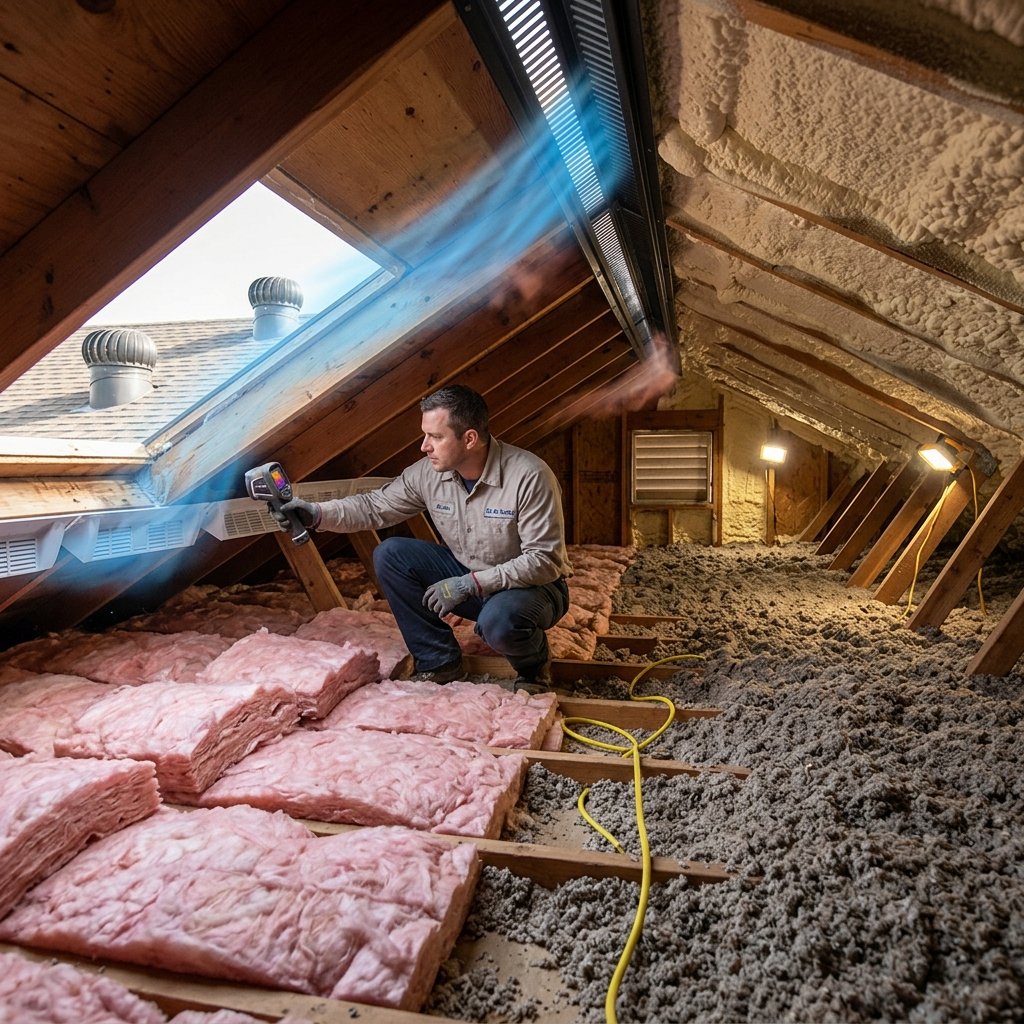
This is why our best insulation services in Austin always begin with a detailed inspection rather than generic recommendations. What works for a 1970s ranch home differs significantly from what a newer construction property requires.
Fiberglass Insulation with Ridge and Soffit Vents
Fiberglass remains the most common insulation material in Texas homes, and for good reason. It’s cost-effective, widely available, and performs well when installed correctly with proper ventilation support.
Fiberglass batts work best when combined with continuous ridge vents along your roof peak and soffit vents under the eaves. This setup creates a passive airflow path that naturally removes heat and moisture without requiring electricity. Hot air exits through the ridge vent while cooler air enters through soffit vents, creating continuous circulation.
The challenge with fiberglass alone is that it requires meticulous installation. Gaps, compressions, or batts installed backward reduce effectiveness dramatically. We’ve inspected countless attics where previous installers left gaps around penetrations or failed to fully cover the attic floor. These gaps act like holes in your thermal envelope.
For homeowners on a moderate budget, we recommend fiberglass batts paired with a comprehensive soffit-to-ridge ventilation audit. We’ll identify blocked vents, add soffit vents where missing, and ensure proper baffle installation so insulation never blocks airflow. This combination typically costs less than spray foam but delivers solid energy improvements when done correctly.
Blown-in Cellulose Insulation Systems
Blown-in cellulose offers a significant advantage: it conforms to irregular attic spaces, fills cavities around obstructions, and eliminates the compression issues common with fiberglass batts. If your attic has numerous pipes, electrical penetrations, or odd angles, cellulose adapts better.
Cellulose is made from recycled paper treated with fire retardants, making it an environmentally conscious choice without sacrificing performance. It achieves R-value similar to fiberglass but with better coverage consistency because it’s applied as a loose fill rather than pre-cut batts.
One consideration: cellulose is more moisture-sensitive than fiberglass. In attics without proper ventilation, it can absorb moisture and lose R-value over time. This is why we always ensure adequate ventilation is in place before recommending cellulose in humid Texas climates. Once you have soffit and ridge vents working properly, cellulose performs exceptionally well and typically costs less than spray foam.
We often recommend cellulose for attic retrofit projects where you’re adding insulation to existing coverage. The installation process is cleaner (no handling of fiberglass batts), and the end result is typically more uniform thermal protection.
Spray Foam Insulation for Superior Performance
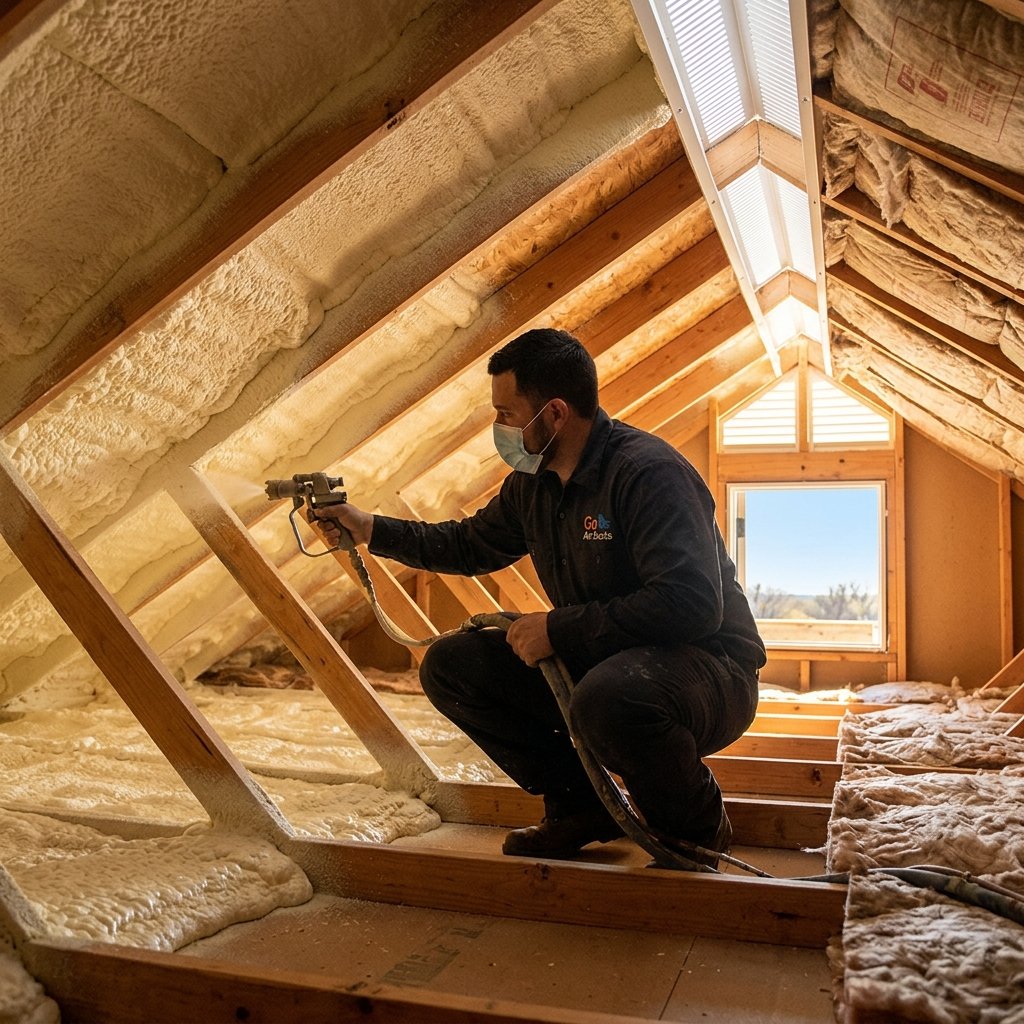
Closed-cell spray foam delivers the highest R-value per inch and creates an air-sealed barrier that fiberglass and cellulose can’t match. For homeowners willing to invest in premium performance, spray foam is the definitive choice.
Spray foam adheres to rafters, trusses, and roof sheathing, creating an integrated thermal and air seal. It eliminates the air leaks that plague traditional insulation. In humid climates like Texas, this air-sealing capability prevents warm, moist air from entering the attic in the first place, which is why spray foam performs so well even in high-humidity environments.
The tradeoff is cost and a different ventilation approach. Spray foam is typically two to three times more expensive than fiberglass, but the energy savings and comfort improvement justify the investment for many homeowners. Additionally, because spray foam creates such an effective seal, you can use a lower ventilation rate and even eliminate ridge vents in some applications (though we still recommend them for moisture management).
We’ve installed spray foam in homes throughout Austin and San Antonio where homeowners struggled with temperature swings, high cooling costs, or existing moisture issues. The results are typically dramatic: cooler attics, lower utility bills, and elimination of moisture-related problems.
Attic Ventilation Fan Options and Benefits
Beyond passive ventilation, powered attic fans accelerate heat removal during peak summer hours. These fans draw hot air from the attic and exhaust it outside, reducing attic temperatures and the cooling load on your HVAC system.
Attic fans are particularly useful in homes with limited passive ventilation capacity or homes where roof design doesn’t accommodate optimal ridge and soffit vent placement. A 1500 to 3000 CFM fan can reduce attic temperatures by 20-30 degrees on hot days.
The consideration is energy use. Attic fans consume electricity, so they’re most cost-effective when your utility rate is low and your cooling costs are high. In Texas, summer cooling dominates your energy bill, so attic fans typically pay for themselves within 3 to 5 years through reduced air conditioning runtime.
We recommend combining attic fans with proper passive ventilation rather than relying on fans alone. A hybrid approach gives you baseline cooling from passive airflow plus supplemental cooling when temperatures spike.
How We Balance Insulation R-Value with Airflow
The optimal solution balances two competing interests: you want high insulation R-value (resistance to heat flow) but also adequate airflow to prevent moisture and heat accumulation. Too much insulation with poor ventilation creates problems. Excellent ventilation without insulation wastes cooling and heating energy.
Our approach considers your home’s climate zone, roof design, and existing conditions. For attics in Central Texas, we typically recommend R-38 to R-49 insulation paired with continuous soffit and ridge ventilation. This range provides excellent energy efficiency while maintaining the airflow necessary for moisture management and heat removal.
If you’re considering spray foam, we can achieve comparable energy performance with lower R-value because the air-sealing component eliminates energy loss from infiltration. This is why homes with spray foam often perform better than those with higher-R-value traditional insulation that has air leaks.
The key is conducting a thorough energy audit that accounts for your existing conditions rather than assuming a one-size-fits-all recommendation. Your home’s specific needs are different from your neighbor’s, and we design solutions accordingly.
Our Comprehensive Assessment Process
When you schedule an evaluation, our certified technicians inspect your attic for current insulation type, R-value, coverage gaps, ventilation configuration, and signs of moisture or pest damage. We photograph problem areas and create a detailed report with specific recommendations.
We measure soffit and ridge vent placement, check for blocked vents, examine ductwork (especially to understand how humidity affects ductwork and HVAC efficiency), and identify any mold or moisture concerns. This assessment typically takes 30 to 45 minutes and is completely free.
Based on findings, we provide a customized recommendation that outlines the specific insulation material, ventilation improvements, and any mold remediation or duct sealing needed. We explain the energy impact, upfront cost, and expected payback period so you can make an informed decision.
Our report includes options: a budget-friendly approach, a mid-range solution, and a premium option if you want maximum performance. This way, you understand the tradeoffs between cost, efficiency, and comfort improvement.
Why Our Integrated Approach Delivers Superior Results
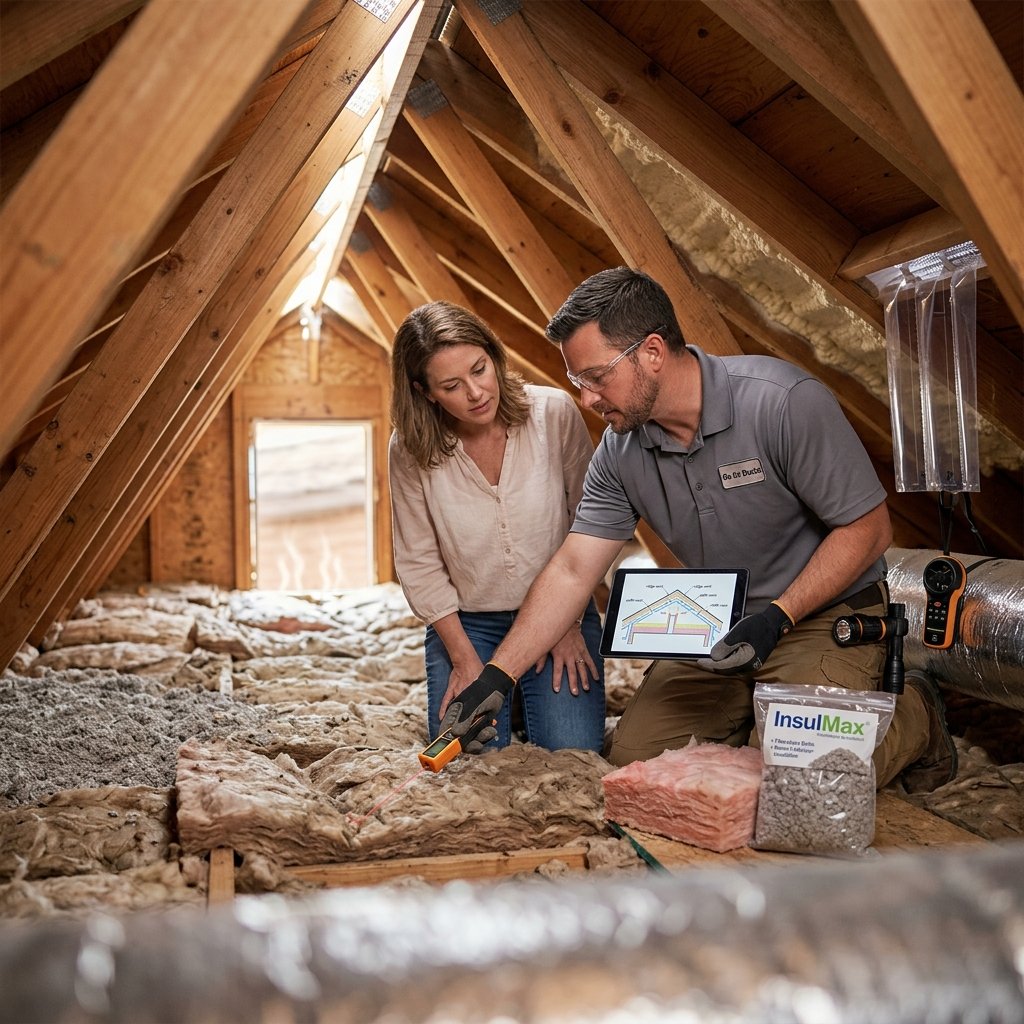
Many contractors treat insulation and ventilation as separate tasks. We don’t. We design insulation and ventilation as an integrated system because that’s how they actually function in your attic.
This integration means we identify and seal air leaks before insulation goes in. We ensure ventilation pathways are clear and balanced. We address moisture sources that might compromise insulation performance. We verify ductwork is properly sealed so your HVAC system isn’t working against your insulation improvements.
This comprehensive approach is why homeowners who use our insulation service in Austin and San Antonio consistently report lower utility bills, improved comfort, and confidence that their investment is protected. We’re not just adding insulation; we’re upgrading your entire attic system.
Because we handle air duct cleaning, mold remediation, and HVAC maintenance alongside insulation installation, we catch problems that specialists in only one area might miss. A home with mold in ducts needs attic ventilation fixed before new insulation goes in. A home with sealed soffit vents won’t benefit from premium insulation until those vents are opened. Our integrated perspective prevents costly mistakes.
Getting Your Free Attic Evaluation Today
Your attic’s condition directly impacts your comfort, energy bills, and long-term home value. Rather than guessing about what your home needs, schedule our free comprehensive assessment. We’ll deliver specific recommendations tailored to your home’s actual conditions and your budget.
Call us today or visit our website to book your evaluation. Our certified technicians serve Austin, San Antonio, Dallas, Houston, and surrounding areas with same-day and next-day availability in most cases. We’ll inspect your attic, explain what we find, and provide a detailed proposal with no pressure and no obligations.
The right insulation and ventilation solution is within reach. Let’s identify it for your home.
If you’re dealing with dust, poor airflow, mold in your ducts, or a clogged dryer vent — don’t wait. These issues can affect your health and safety. Go Air Ducts Group are the local experts in air duct cleaning, mold removal, dryer vent cleaning, and attic insulation. Call now for a free inspection and same-day service in Austin and San Antonio.
Frequently Asked Questions (FAQ)
What insulation R-value should we recommend for Texas attics?
We typically recommend R-38 to R-60 for most Texas homes, depending on your specific location and cooling needs. Since our state experiences intense summer heat, we assess your current insulation levels and local climate zone to determine the optimal R-value that balances energy efficiency with cost-effectiveness. We’ll provide a personalized recommendation during our free assessment.
Why is attic ventilation as important as insulation in Texas?
We’ve found that proper ventilation prevents moisture buildup and excessive heat accumulation that can damage your roof and reduce insulation effectiveness. Texas heat can cause attic temperatures to exceed 150 degrees, which deteriorates insulation quality over time. We design ventilation systems that work alongside your insulation to maintain consistent temperatures and protect your entire attic space.
How long does an attic insulation and ventilation upgrade typically take?
We usually complete these projects in one to three days, depending on your attic size and the complexity of your ventilation needs. Our certified technicians work efficiently while maintaining quality standards, and we’ll discuss the timeline during your free estimate. We’ll also coordinate around your schedule to minimize disruption to your daily routine.