
🕑 10 min read
How do you safely remediate mold in Austin air ducts?
Safe mold remediation means sealing off the system, removing contamination with HEPA equipment, applying antimicrobial treatment, and verifying results, never just spraying over it. Go Air Ducts follows this professional process for Austin homes, eliminating duct mold at the source and helping prevent it from returning.
Table of Contents
- Why Mold in Air Ducts Threatens Your Home's Health
- Signs Your Austin Home Has Mold in the Ducts
- How Professional Mold Remediation Differs from DIY Attempts
- Our Comprehensive Mold Inspection and Assessment Process
- Advanced Cleaning and Sanitization Techniques We Use
- Preventing Future Mold Growth in Your HVAC System
- Why Go Air Ducts Delivers Superior Mold Remediation Results
- Choosing Professional Service Over Band-Aid Solutions
- Frequently Asked Questions (FAQ)
Why Mold in Air Ducts Threatens Your Home’s Health
Mold in your air duct system is more than an ugly discovery. It’s a silent threat that circulates contaminated air through every room of your home, potentially triggering respiratory issues, allergies, and long-term indoor air quality problems. Austin’s humid climate creates ideal conditions for mold growth inside ductwork, and many homeowners don’t realize the problem exists until symptoms appear.
We’ve inspected thousands of Austin and San Antonio homes, and mold in air ducts ranks among the most common issues we find. The good news: proper mold remediation stops the problem at its source and prevents recurrence when done correctly.
Mold spores travel through your ductwork every time your HVAC system runs. Unlike surface mold you can see and clean, mold colonizing inside ducts circulates microscopic spores directly into the air you and your family breathe daily. This continuous exposure creates cumulative health risks, particularly for children, elderly family members, and anyone with existing respiratory conditions.
The threat goes beyond allergies. Prolonged mold exposure can trigger asthma attacks, bronchitis-like symptoms, and immune system stress. Additionally, mold feeding on dust and debris inside ducts degrades your HVAC system’s efficiency, forcing your unit to work harder and driving up energy costs.
Austin’s climate amplifies the problem. Our warm, humid weather (especially during summer months) combined with temperature fluctuations creates moisture pockets inside ducts where mold thrives. If your ductwork has any air leaks, condensation issues, or poor insulation, mold colonization becomes nearly inevitable without professional intervention.
What to do next: Schedule a professional inspection if anyone in your home experiences unexplained respiratory symptoms or you detect musty odors near vents.
Signs Your Austin Home Has Mold in the Ducts
Identifying mold early prevents it from spreading deeper into your system. Watch for these clear indicators:
Visible symptoms:
- Black, green, or orange spots around vent registers and grilles
- Musty, earthy odors when your HVAC system runs
- Visible mold growth inside accessible ductwork (attic or basement sections)
- Water staining or discoloration on duct insulation
Health and performance signals:
- Increased sneezing, coughing, or congestion among household members
- Seasonal allergy symptoms that worsen indoors
- Reduced airflow from vents in specific rooms
- Dust accumulation returning quickly after cleaning
System indicators:
- Condensation visible on ductwork during humid months
- Visible moisture or water pooling near HVAC components
- A damp or wet smell from your air handler or ducts
Many homeowners mistake these signs for general HVAC maintenance needs. The distinction matters: standard air duct cleaning removes dust, but mold remediation requires specialized sanitization and moisture control to prevent regrowth.
If you notice multiple signs, don’t delay. Mold spreads rapidly in humid conditions, and catching it early means faster, less expensive treatment.
How Professional Mold Remediation Differs from DIY Attempts
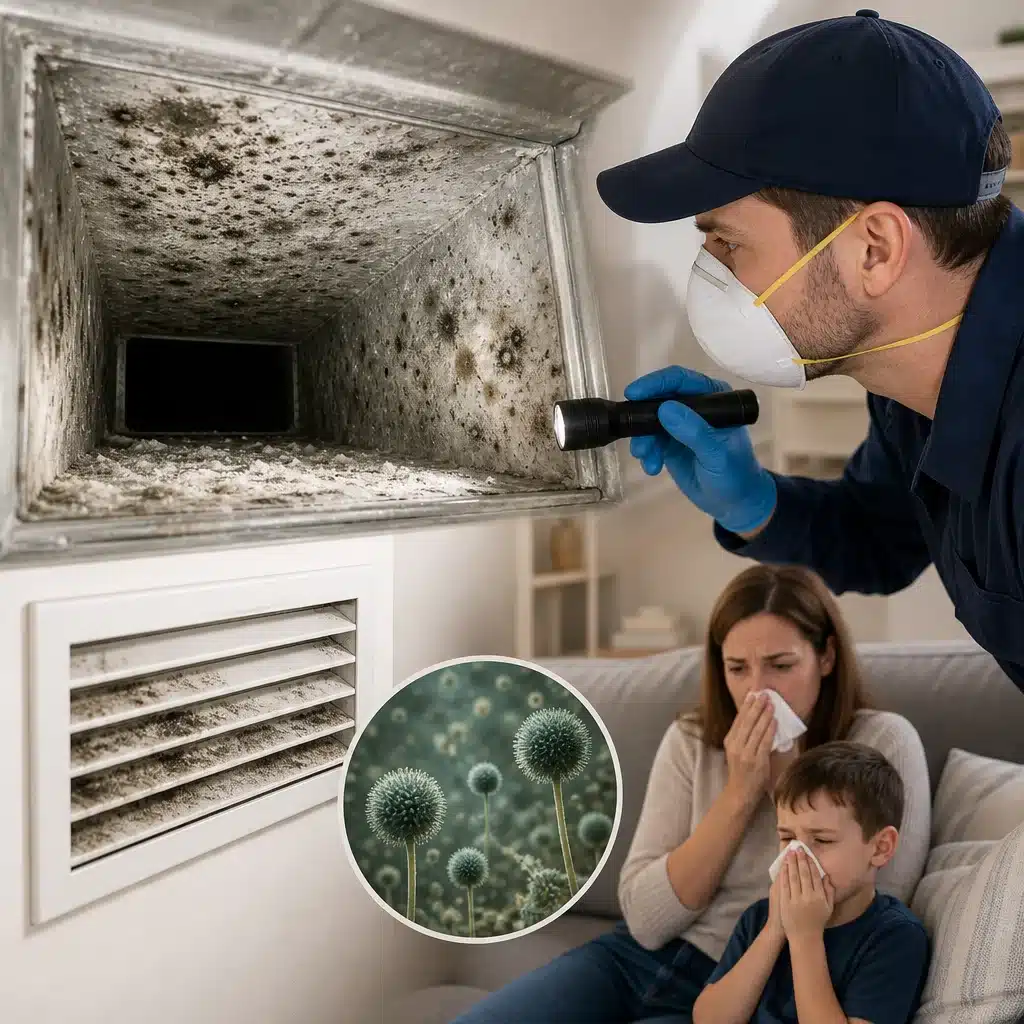
DIY mold removal in air ducts creates more problems than it solves. Here’s why our professional approach outperforms home remedies:
The DIY trap:
- Over-the-counter duct sealants and sprays mask odors temporarily but don’t eliminate spores
- Disturbing mold colonies without containment spreads spores throughout your home
- Without moisture control, mold returns within weeks
- Improper cleaning can damage ductwork insulation or create new air leaks
We’ve seen homeowners spend hundreds on spray treatments only to call us weeks later when the problem worsened. The core issue: mold requires simultaneous elimination of the colony, spores, and the moisture source. Miss any component, and regrowth is guaranteed.
Our approach differs fundamentally. We combine mechanical removal, HEPA-filtered containment, advanced sanitization, and moisture remediation to eliminate mold completely. Our technicians are trained to identify the moisture source (condensation, leaks, poor insulation) and address it permanently.
For a detailed comparison of professional versus DIY strategies, our guide to professional HVAC cleaning versus DIY maintenance breaks down why professional equipment and expertise matter.
Bottom line: Professional mold remediation costs more upfront but prevents recurring problems and protects your family’s health long-term.
Our Comprehensive Mold Inspection and Assessment Process
We start every mold remediation project with a thorough inspection that identifies both visible and hidden mold, plus the underlying moisture source driving growth.
Our inspection includes:
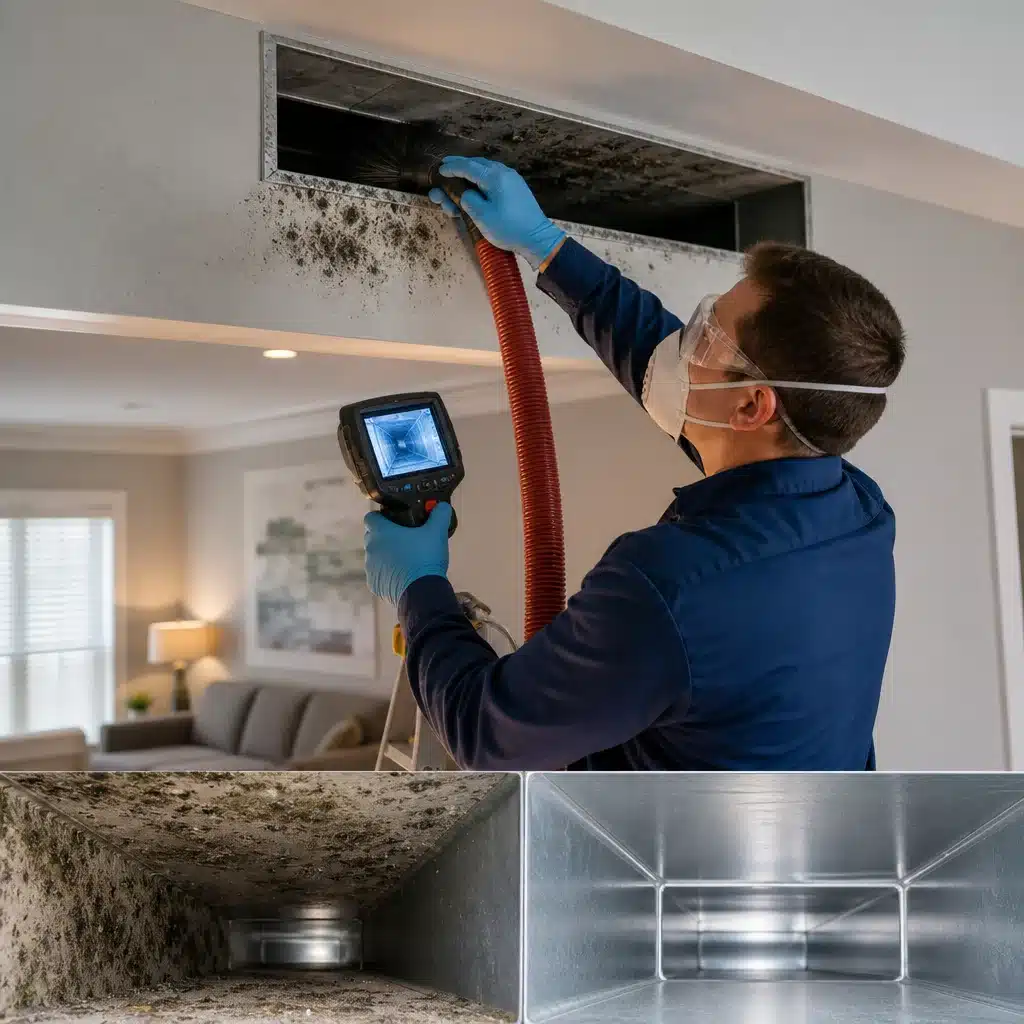
- Visual ductwork assessment – We inspect accessible sections of your ductwork, air handler, and vents using specialized lighting and mirrors to spot mold growth and moisture problems
- Moisture mapping – We use humidity meters and thermal imaging to identify condensation zones and air leaks where moisture accumulates
- Air quality sampling – Optional laboratory testing confirms mold species and spore levels inside your ducts versus ambient air
- System documentation – We photograph affected areas and create a detailed report explaining the scope, severity, and recommended remediation steps
This diagnostic approach prevents guesswork. We don’t treat every mold discovery the same way. A small isolated colony requires different treatment than extensive mold covering multiple duct sections.
After inspection, we provide a transparent estimate covering the complete remediation process, timeline, and post-treatment prevention measures. We never recommend unnecessary work, and we explain exactly why each step is essential.
Advanced Cleaning and Sanitization Techniques We Use
Once we’ve assessed the mold extent, we deploy professional-grade equipment and proven protocols that eliminate mold colonies and prevent regrowth.
Our mold remediation process:
Containment and protection – We seal off the HVAC system and affected areas to prevent spore dispersal during cleaning. HEPA filtration captures airborne spores, protecting your family and our technicians.
Mechanical removal – Using rotating brushes and pressure systems designed for ductwork, we dislodge mold colonies from interior duct surfaces. This physical removal is far more effective than chemical sprays alone.
Hospital-grade sanitization – We apply EPA-approved antimicrobial treatments specifically formulated for HVAC systems. Unlike consumer products, professional-grade sanitizers eliminate spores and prevent regrowth for months.
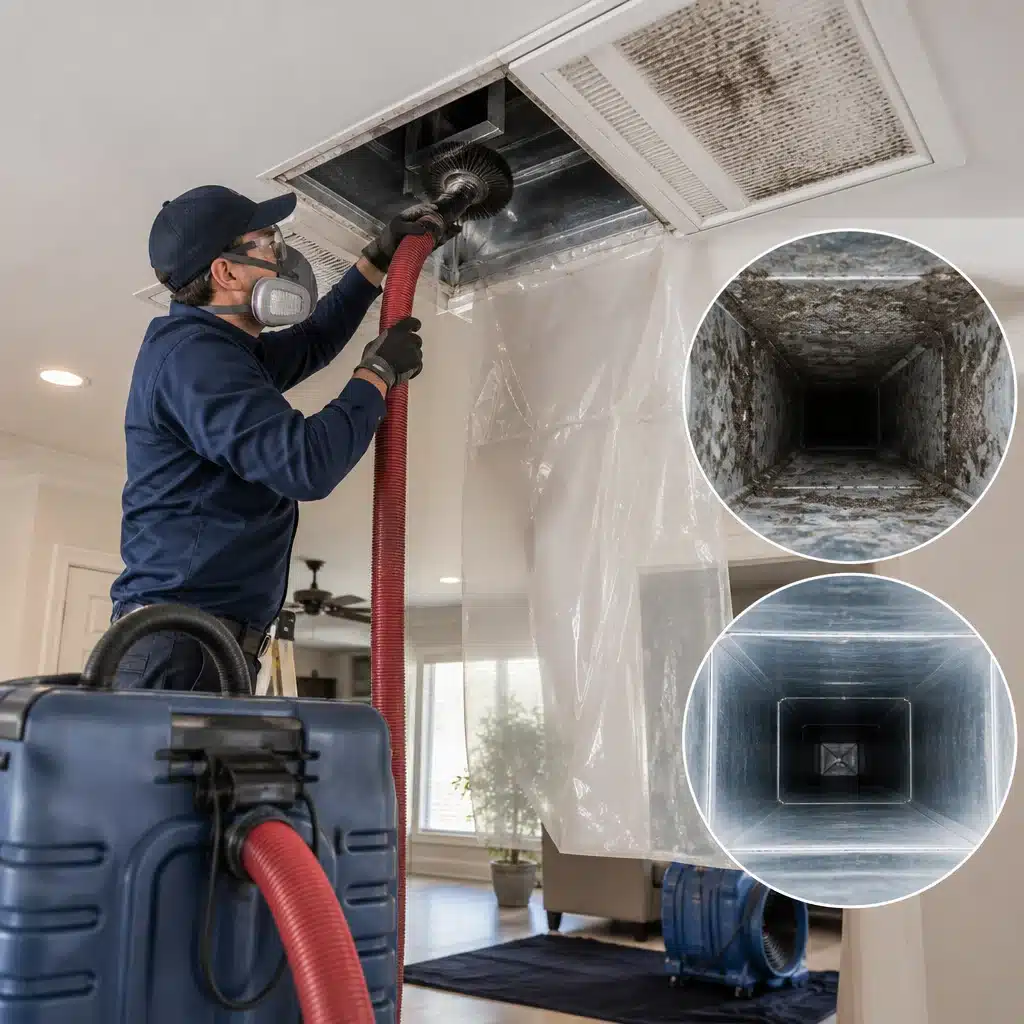
Moisture elimination – We address the root cause by sealing air leaks, improving insulation, and installing or repairing duct condensation drains. This step prevents mold from returning when humidity rises again.
System restoration – After treatment, we verify airflow, inspect seals, and confirm your HVAC system operates optimally before returning it to normal service.
Our mold cleaning services in Austin utilize equipment and protocols that far exceed standard air duct cleaning. This specialized approach delivers results that last.
Preventing Future Mold Growth in Your HVAC System
Remediation solves the immediate problem, but prevention ensures mold doesn’t return. These practices work:
Humidity control – Keep indoor humidity between 30-50% during Austin’s humid months. Use exhaust fans in bathrooms and kitchens, and consider a whole-home dehumidifier if you live in a particularly humid area.
Regular ductwork inspection – Schedule annual HVAC inspections to catch moisture issues before they trigger mold growth. Early detection of condensation or air leaks prevents costly remediation later.
Maintain your HVAC system – Change air filters every 1-3 months (more frequently if you have pets or allergies). Clean filters reduce dust accumulation inside ducts, which mold feeds on.
Insulation upgrades – Properly insulated ductwork prevents temperature drops that cause condensation. If your ducts lack adequate insulation or wrapping, upgrading them during remediation prevents future moisture problems.
Drainage maintenance – Ensure your air handler’s condensate drain line is clear and drains properly. A clogged drain creates standing water inside your system, perfect for mold colonization.
HVAC system sizing – Oversized or undersized HVAC systems create humidity imbalances that encourage mold. Our technicians can evaluate your system’s capacity relative to your home’s needs.
These preventive steps cost far less than repeat remediation and protect your indoor air quality long-term.
Why Go Air Ducts Delivers Superior Mold Remediation Results
Our expertise in mold remediation stems from real experience treating hundreds of mold-affected systems across Austin and San Antonio. We don’t rely on generic protocols. We customize our approach based on your specific ductwork configuration, moisture sources, and home environment.
What sets our service apart:
Certified technicians – Our team holds HVAC and air quality certifications, ensuring we understand not just mold removal but how mold affects system performance and indoor air quality.
Advanced equipment – We invest in professional-grade tools, HEPA filtration systems, and EPA-approved sanitizers that deliver results far beyond what DIY or budget services provide.
Transparent process – We explain what we find during inspection, why each remediation step matters, and how we’ll prevent recurrence. No surprises, no upsells.
Local expertise – Austin’s climate, humidity patterns, and typical home construction mean we understand mold risks specific to our community. We tailor solutions to regional challenges.
Free estimates – We provide detailed, obligation-free inspections so you understand the scope and cost before committing.
Same-day availability – Mold problems worsen rapidly. We offer same-day service appointments so you don’t wait while health risks compound.
Choosing Professional Service Over Band-Aid Solutions
Budget-conscious homeowners sometimes hope mold will disappear on its own or respond to DIY treatments. This approach consistently fails in our experience. Mold in ductwork is a persistent problem requiring professional intervention.
When you choose our mold remediation service, you’re choosing permanent results over temporary fixes. We eliminate the mold colony, address the moisture source, and implement preventive measures that protect your home for years.
The cost of professional remediation is an investment in your family’s health and your home’s value. Mold-free air ducts mean better respiratory health, improved HVAC efficiency, and lower energy bills. These benefits compound over time, making professional treatment the smartest financial choice.
If you’ve noticed mold signs or suspect moisture problems in your ductwork, contact us today for a free inspection. We’ll identify the exact issue, explain your options, and provide a clear path forward. Our local team serves Austin and San Antonio with same-day scheduling and transparent pricing.
Your home’s air quality matters. Trust the local experts who’ve eliminated mold from thousands of Texas homes. Call Go Air Ducts now or request your free estimate online.
For further reading: Ductwork inspection guide.
If you’re dealing with dust, poor airflow, mold in your ducts, or a clogged dryer vent — don’t wait. These issues can affect your health and safety. Go Air Ducts Group are the local experts in air duct cleaning, mold removal, dryer vent cleaning, and attic insulation. Call now for a free inspection and same-day service in Austin and San Antonio.
Frequently Asked Questions (FAQ)
How do we detect mold in air ducts if I can’t see it?
We use specialized inspection equipment including cameras and moisture detection tools to examine your ductwork thoroughly, even in areas that aren’t visible to the naked eye. During our assessment, we also evaluate humidity levels, check for musty odors, and look for condensation patterns that indicate mold growth. Our certified technicians know exactly where mold typically develops in HVAC systems, so we target those high-risk areas during inspection.
What makes professional mold remediation better than cleaning the ducts myself?
We combine industrial-strength sanitization equipment with proven protocols that eliminate mold spores at their source, not just on surfaces. DIY attempts typically miss contaminated sections deep within your ductwork and can actually spread spores throughout your home if not done correctly. Our team also identifies what caused the mold in the first place, whether that’s excess moisture or poor ventilation, and we address those root causes to prevent recurrence.
How long does it take to see improvements in air quality after mold remediation?
Most of our customers notice better air quality within days of our service, particularly if they’ve been experiencing allergy symptoms or respiratory irritation. We recommend running your HVAC system continuously for the first 24-48 hours after treatment to circulate clean air throughout your home. If you have lingering concerns, we can schedule a follow-up inspection to verify that mold levels have returned to safe ranges.