
🕑 11 min read
Is blow-in cellulose insulation good for San Antonio?
Blow-in cellulose is an eco-friendly, high-performance choice made largely from recycled material, and it fills gaps well to block San Antonio's heat. It lowers cooling costs and improves comfort. Go Air Ducts installs blow-in cellulose insulation for San Antonio homes seeking sustainable, effective energy savings.
Table of Contents
- Why San Antonio Homeowners Are Choosing Eco-Friendly Insulation
- The Problem: Rising Energy Costs and Inefficient Insulation
- How Blow-In Cellulose Insulation Works
- Energy Savings You’ll Actually See
- Environmental Benefits for Your Home and Community
- Why Cellulose Outperforms Traditional Insulation Options
- Our Professional Installation Process
- Health and Air Quality Advantages
- Cost-Effectiveness and Long-Term Investment Value
- Protecting Your Home: Mold Resistance and Durability
- What to Expect When We Install Your Insulation
- Start Your San Antonio Insulation Upgrade Today
- Frequently Asked Questions (FAQ)
Why San Antonio Homeowners Are Choosing Eco-Friendly Insulation
San Antonio homeowners are increasingly investing in blow-in cellulose insulation, and for good reason. Our region’s hot, humid climate puts significant strain on cooling systems, driving energy costs higher each summer. Homeowners who care about both their utility bills and environmental impact are discovering that cellulose insulation delivers measurable results without compromising their values.
We’ve installed this material across hundreds of San Antonio homes, and the feedback is consistent: people notice lower cooling costs, improved comfort, and peace of mind knowing they chose a sustainable option. Cellulose is made from recycled paper and cardboard, making it one of the most environmentally responsible insulation choices available. It’s not just a marketing angle; it performs exceptionally well in our climate while reducing your carbon footprint.
What to do next: If you’re considering an insulation upgrade, compare your current attic temperature to outdoor temperatures during peak summer days. A significant difference often indicates insufficient or degraded insulation.
The Problem: Rising Energy Costs and Inefficient Insulation
San Antonio’s summer cooling demands are relentless, and traditional insulation often can’t keep up. Many homes built before 2000 have fiberglass batts or blown-in insulation that has settled unevenly over decades, leaving gaps and thin spots. When insulation compresses or settles, it loses R-value and forces your air conditioning system to work harder than necessary.
We regularly evaluate attics where homeowners are paying 20-30% more in cooling costs than necessary, simply because insulation is no longer performing adequately. Humidity and occasional moisture in attics can also degrade traditional materials, creating conditions where fiberglass becomes matted and less effective. By the time homeowners notice rising bills, significant efficiency has already been lost.
The standard response has been to add more of the same material, but that approach doesn’t address the fundamental problem: many older insulation types don’t fill gaps effectively and don’t resist settling as well as modern cellulose does.
How Blow-In Cellulose Insulation Works
Blow-in cellulose uses a specialized machine to spray finely shredded recycled paper directly into attic cavities, wall spaces, and other hard-to-reach areas. The material expands slightly as it’s applied, filling gaps, sealing around joists, and conforming perfectly to your home’s unique geometry. Unlike batts that require manual fitting, cellulose achieves near-complete coverage with minimal voids.
The installation process is straightforward. We set up equipment at ground level, run a hose to your attic, and spray the material to the target R-value for your region (typically R-38 to R-49 in San Antonio). The material is treated with fire retardant and borates to resist pests and mold, adding protective layers beyond basic insulation. Once applied, it settles into a dense, stable form that resists future compression and settling.
The density of properly installed cellulose is key to its longevity. Unlike fiberglass that can settle by 20% or more over time, cellulose maintains its R-value and coverage consistency for decades when installed correctly.
Energy Savings You’ll Actually See
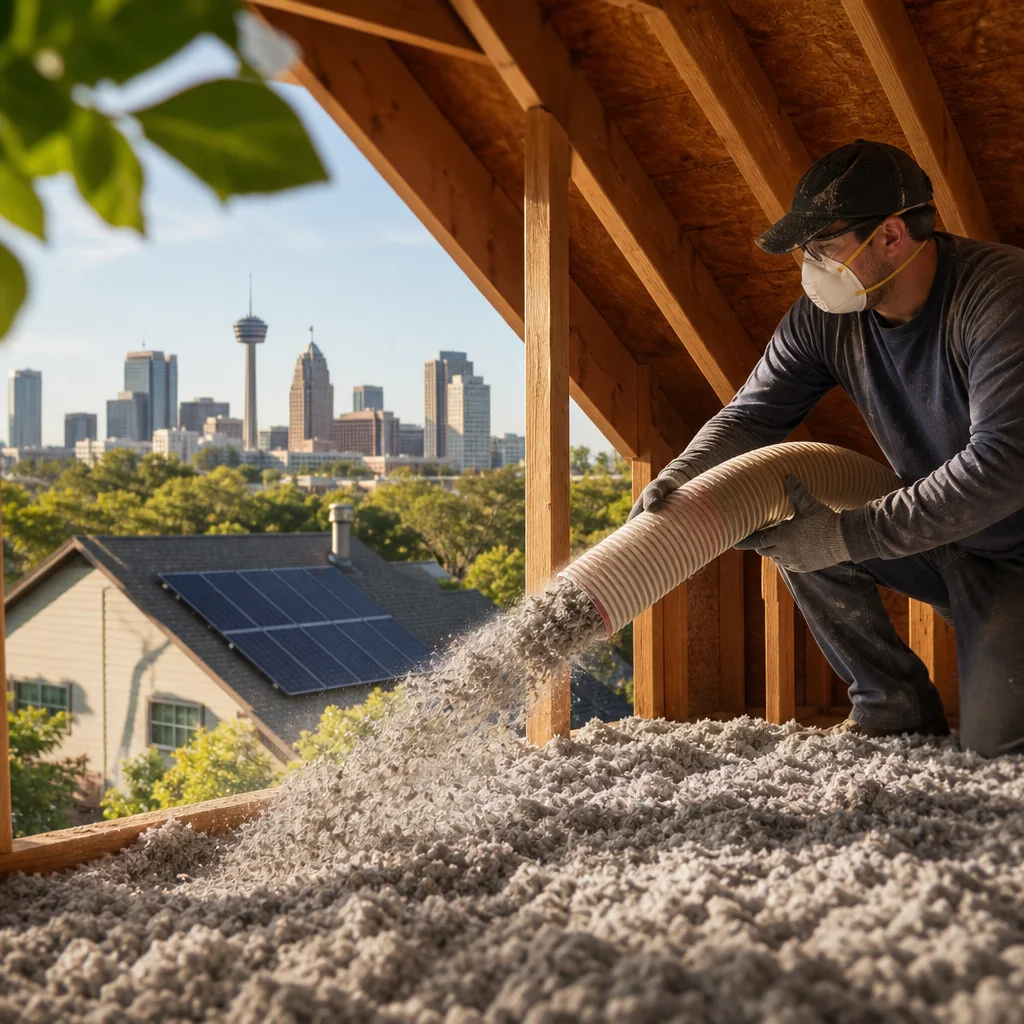
Real energy savings from cellulose insulation installation typically range from 15-25% on cooling costs during San Antonio’s intense summer months. A home with inadequate insulation cooling a 2,000 square foot space might see monthly summer bills drop by $25-50 once cellulose is properly installed.
These numbers aren’t theoretical. We’ve tracked utility bills for homeowners before and after installation, and the pattern is clear: better insulation means lower thermostat stress, shorter cooling cycles, and measurably lower energy consumption. A home that previously cycled the AC for 6-7 hours daily might see that drop to 4-5 hours after insulation upgrade.
The payback period varies based on your current energy costs and baseline insulation condition, but most San Antonio homeowners recover their investment within 8-12 years through energy savings alone. Factor in federal tax credits for energy-efficient home improvements, and the financial case becomes even stronger.
Environmental Benefits for Your Home and Community
Cellulose insulation’s environmental story starts with recycled materials. Each installation uses paper that would otherwise end up in landfills, diverting tons of waste while reducing demand for virgin fiber production. For San Antonio homeowners concerned about sustainability, this represents a tangible contribution to waste reduction.
Reduced energy consumption also means a smaller carbon footprint. When your air conditioning runs less, your home consumes less electricity, directly lowering greenhouse gas emissions from power generation. Over the life of the installation, a properly insulated home can prevent several tons of carbon emissions compared to continuing with inefficient insulation.
We’re seeing a growing community of San Antonio homeowners who view insulation upgrades as part of their broader environmental commitment. It’s a concrete action with immediate home benefits and longer-term planetary impact.
Why Cellulose Outperforms Traditional Insulation Options
Fiberglass batts and even standard blown-in fiberglass have significant limitations in San Antonio’s climate. Batts require precise fitting and create seams where air can bypass insulation entirely. Fiberglass also settles unevenly, leaving some areas over-insulated while others become dangerously thin. Once settled, fiberglass is difficult to re-fluff or restore to original R-value.
Rigid foam boards offer high R-value but are expensive, difficult to install in existing homes, and create air gaps that reduce overall effectiveness. Spray foam can be effective but comes with higher cost and potential off-gassing concerns.
Cellulose splits the difference. It achieves R-value comparable to spray foam at a fraction of the cost, fills gaps and irregular spaces that batts miss, resists settling far better than fiberglass, and uses recycled materials. When installed by professionals who understand proper density and coverage, cellulose consistently outperforms alternatives in cost-effectiveness and real-world performance.
The boron treatment used in quality cellulose also provides inherent pest and mold resistance, adding durability that untreated alternatives cannot match.
Our Professional Installation Process
Our installation begins with a detailed attic assessment. We measure existing insulation, identify gaps, check for moisture or damage, and determine the target R-value needed for your home. This foundation prevents guesswork and ensures we address your specific situation rather than applying a generic solution.
Next, we prepare the space by sealing air leaks around penetrations, ductwork, and structural elements. Insulation without air sealing is only half effective, so this step is essential. We then position our equipment, mark target depths, and systematically apply cellulose until we reach the specified R-value across your entire attic.
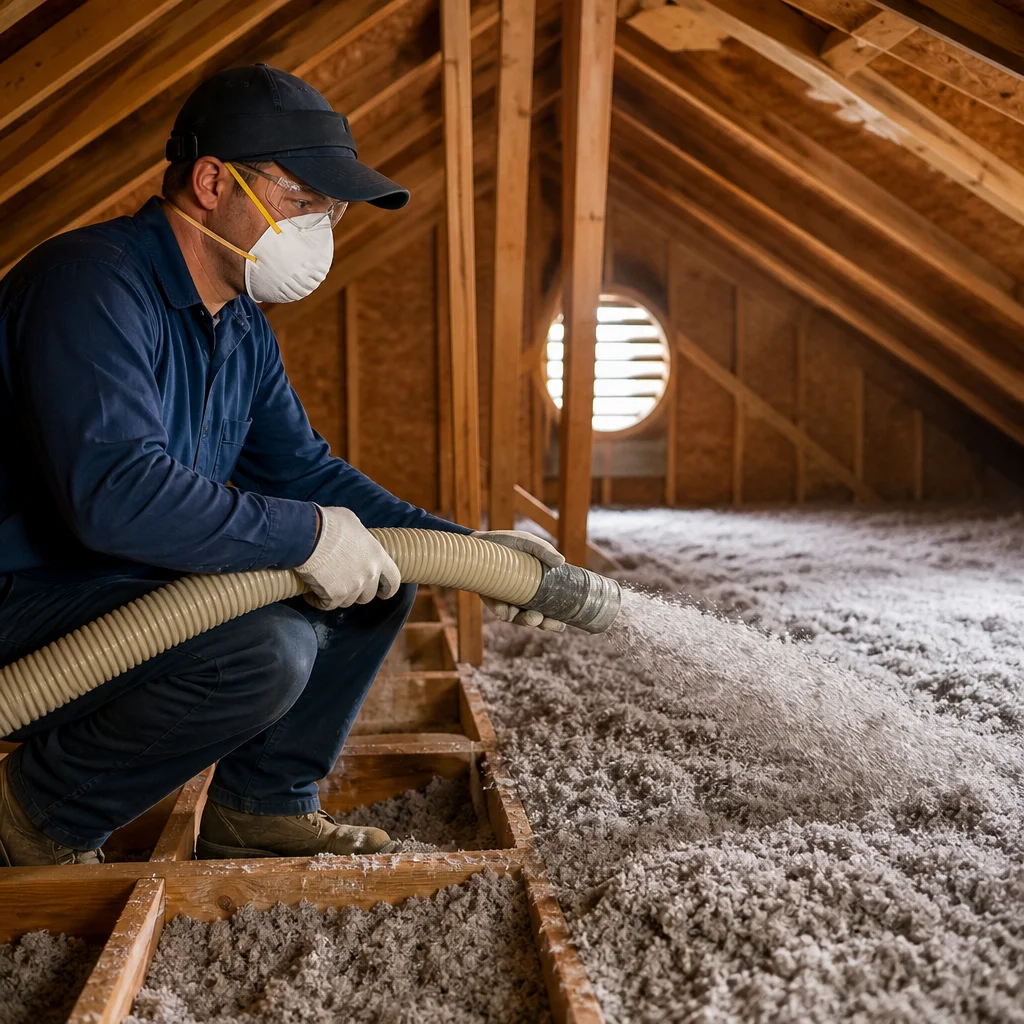
Throughout installation, we protect HVAC equipment, maintain electrical access, and ensure no material blocks vents or creates fire hazards. Once complete, the attic is left clean and organized. We document coverage depth and provide before-and-after photos so you understand exactly what was completed.
Health and Air Quality Advantages
While insulation’s primary role is thermal management, it directly impacts indoor air quality when properly installed. Inadequate insulation forces your HVAC system to work harder, pushing air through ducts more forcefully and creating conditions where contaminants concentrate. Better insulation means more stable, moderate airflow and less stress on your cooling system.
Cellulose’s boron treatment also resists mold growth within the insulation itself, which is particularly important in San Antonio’s humid climate. Unlike fiberglass, which can support mold when exposed to moisture, treated cellulose actively inhibits fungal growth. This protection extends the lifespan of your insulation and maintains air quality in the spaces it surrounds.
Many homeowners discover that after combining air duct cleaning with insulation upgrade, their allergy and asthma symptoms improve noticeably. The combination addresses both air circulation efficiency and thermal stability, reducing the conditions where dust, mold spores, and allergens concentrate. If you’re considering upgrading your insulation with air quality in mind, these two upgrades work powerfully together.
Cost-Effectiveness and Long-Term Investment Value
Blow-in cellulose typically costs $1.50-$2.50 per square foot installed, depending on coverage depth and your home’s attic accessibility. For a 1,500 square foot attic, budget $2,250-$3,750 for professional installation. While this is a meaningful investment, the energy savings and increased home value justify the expense.
Federal tax credits are available for insulation improvements on existing homes, potentially reducing your net cost by 30% of materials. Texas also offers various rebates for energy-efficient home upgrades. We can discuss current incentives during your free estimate.
Beyond energy savings, proper insulation increases home value. Prospective buyers recognize that excellent insulation means lower utility costs and better comfort, making insulated homes more attractive in a competitive market. San Antonio’s real estate market rewards energy-efficient homes, often recovering 50-70% of insulation investment through resale value.
Protecting Your Home: Mold Resistance and Durability
San Antonio’s humidity creates real mold risk, particularly in attics where temperature and moisture fluctuate. Standard insulation materials offer little defense against mold once moisture intrudes. Treated cellulose, by contrast, incorporates borates that actively inhibit mold and mildew growth, providing protective layers that last the life of the material.
Cellulose’s stability also protects your home’s structure. Because it settles minimally and maintains even coverage, it continues protecting vulnerable spaces like roof penetrations and eaves, reducing the risk of moisture problems that lead to mold and wood rot. This durability extends far beyond the insulation itself, protecting rafters, joists, and the overall integrity of your attic.
For homeowners concerned about preventing mold in attic insulation, cellulose is a proactive solution that works continuously without ongoing treatment or maintenance.
What to Expect When We Install Your Insulation
When you schedule an installation with us, expect a morning or afternoon project depending on attic size. We arrive with our truck-mounted equipment and set everything up outside your home. The actual application typically takes 2-4 hours, though we’ll confirm timing during your estimate.
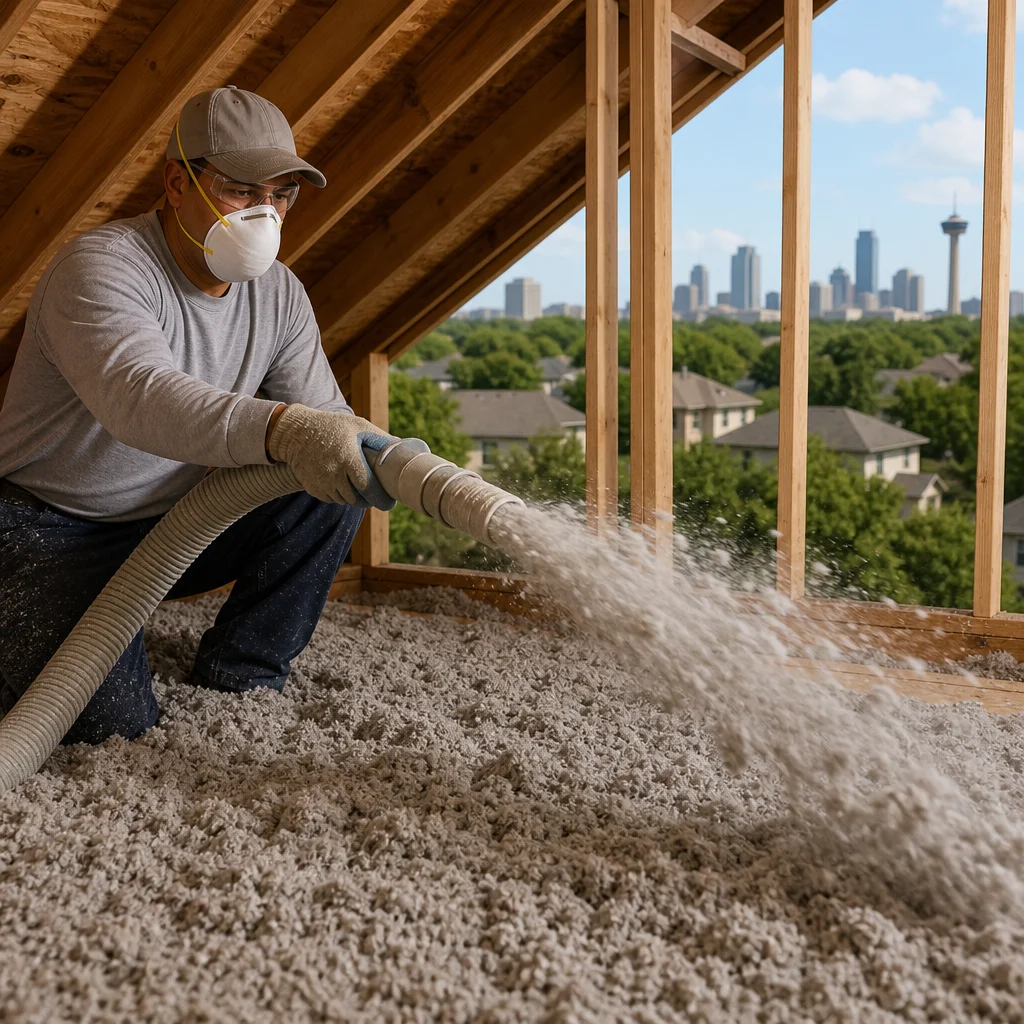
During installation, you’ll notice activity in your attic and hear the equipment running, but the process is minimally disruptive. We protect your belongings, maintain clean work practices, and keep our crew focused and efficient. Most homeowners can remain in their home during the work.
After installation, your attic will be noticeably different. You’ll see uniform coverage where gaps previously existed, and you’ll feel the difference in comfort and temperature stability within days. Your air conditioning will run more efficiently, and you may notice quieter operation as your system no longer strains to compensate for inadequate insulation.
We schedule a final walkthrough to explain the completed work, discuss maintenance (minimal for cellulose), and answer any questions about your new insulation system.
Start Your San Antonio Insulation Upgrade Today
If rising energy bills or uneven home temperatures are frustrating you, inadequate insulation is likely the culprit. Blow-in cellulose offers a proven, cost-effective solution that delivers measurable savings and long-term protection for your San Antonio home.
We provide free, no-obligation estimates for insulation installation in San Antonio and surrounding areas. Our certified technicians will assess your current situation, calculate potential savings, and explain exactly what we recommend and why. We also discuss available tax credits and rebates that can reduce your investment.
Ready to take the next step? Contact us today for your free insulation evaluation. Call us for same-day scheduling or request an estimate online. Let’s build a more comfortable, efficient home while protecting your investment for decades to come.
For further reading: Attic insulation mold prevention benefits, Attic insulation rebates 2026.
If you’re dealing with dust, poor airflow, mold in your ducts, or a clogged dryer vent — don’t wait. These issues can affect your health and safety. Go Air Ducts Group are the local experts in air duct cleaning, mold removal, dryer vent cleaning, and attic insulation. Call now for a free inspection and same-day service in Austin and San Antonio.
Frequently Asked Questions (FAQ)
How much can we help you save on energy costs with blow-in cellulose insulation?
Most of our San Antonio customers see energy savings between 15-30% on their annual heating and cooling bills, depending on their current insulation levels and home size. We provide a free energy assessment before installation so you’ll know exactly what savings to expect for your specific property. The payback period typically ranges from 3-7 years, after which you’re essentially getting free energy efficiency.
What makes our cellulose insulation installation different from other companies in San Antonio?
We use only premium cellulose with fire-retardant treatment and install it with precision equipment to ensure consistent R-values throughout your attic. Our certified technicians seal air leaks before installation, which many competitors skip, meaning you get maximum performance from day one. We also stand behind our work with a satisfaction guarantee because we know the quality of our installation process.
Is blow-in cellulose insulation safe for my family’s health and indoor air quality?
Our cellulose is treated with non-toxic fire retardants and contains no formaldehyde or harmful chemicals that off-gas into your home. Since we also handle air duct cleaning and dryer vent services, we ensure your entire HVAC system works optimally alongside the insulation upgrade, which actually improves your home’s air quality. We’ve helped many Austin and San Antonio families reduce allergens and mold issues by creating a properly sealed, well-ventilated thermal envelope.