
Table of Contents
- Why Dryer Vent Mold is a Serious Problem for Austin Homeowners
- DIY Dryer Vent Cleaning: What You Need to Know
- Why DIY Approaches Fall Short with Mold Growth
- Our Professional Mold Detection and Removal Process
- Equipment and Expertise That Make the Difference
- Health and Safety Advantages of Professional Service
- Long-Term Cost Savings with Our Solution
- Why Austin Homeowners Choose Go Air Ducts
- Your Next Step: Schedule Your Free Inspection
- Frequently Asked Questions (FAQ)
Why Dryer Vent Mold is a Serious Problem for Austin Homeowners
Austin’s humidity and warm climate create ideal conditions for mold growth, especially in spaces like dryer vents where moisture accumulates naturally. We’ve inspected hundreds of homes across Austin and San Antonio, and dryer vent mold is one of the most overlooked indoor air quality threats homeowners face. The problem isn’t just about damp lint—mold spores can spread throughout your home’s HVAC system, triggering allergies and respiratory issues for your family.
Many Austin homeowners assume dryer vent cleaning is a straightforward DIY task. The reality is more complex when mold enters the picture. This guide breaks down what you need to know about dryer vent mold cleaning, why DIY approaches often fail, and how our professional approach protects both your home and your health.
Dryer vents are moisture factories. Every load of laundry releases warm, humid air through your vent line. In Austin’s hot, humid climate, that moisture doesn’t always escape completely. It condenses inside the vent, creating a breeding ground for mold and mildew.
Here’s what we typically find when we inspect Austin homes:
- Lint buildup traps moisture against vent walls
- Damaged or poorly sealed vent ducts allow exterior humidity to enter
- Insufficient outdoor airflow prevents proper moisture escape
- Flexible vinyl ducting (often installed incorrectly) collects condensation more easily than metal alternatives
The danger goes beyond the dryer itself. When mold grows in your dryer vent, spores travel back into your home through the ductwork. If your dryer vent connects near your HVAC system, mold can infiltrate your air ducts and spread throughout multiple rooms. We’ve found cases where homeowners dealt with persistent musty smells in bedrooms and living areas because the real problem was mold colonizing their dryer vent system.
Austin residents dealing with allergies, asthma, or unexplained respiratory symptoms often don’t realize their dryer vent is contributing to poor indoor air quality. A professional inspection typically reveals the source, especially when combined with our ductwork inspection guide that identifies moisture problems throughout your entire HVAC system.
What to do next: If you notice a musty smell near your dryer or laundry room, request a free inspection to identify whether mold is present in your vent system.
DIY Dryer Vent Cleaning: What You Need to Know
DIY dryer vent cleaning can work for basic lint removal on a straightforward vent run. Many homeowners successfully maintain their dryer vents with simple tools and periodic attention. The standard approach involves:
- Unplugging the dryer and disconnecting the vent hose
- Using a dryer vent brush kit to push lint out toward the exterior
- Vacuuming accessible lint from the vent opening
- Reassembling the connection
This works fine if your vent is short, straight, and lint-only. But most Austin homes have longer runs with bends and angles that collect material beyond a standard brush’s reach. Flexible vinyl ducting creates pockets where moisture settles, and condensation mixed with lint forms a stubborn paste that DIY brushes don’t remove.
The equipment matters too. Consumer-grade vent brushes are shorter and less rigid than commercial tools. They often don’t extend far enough to reach the full vent run, especially on two-story homes where the vent travels through walls and attic spaces. Many homeowners end up pushing lint deeper into the system rather than removing it.
For basic maintenance on an uncomplicated vent, DIY cleaning every 6-12 months is reasonable. But Austin’s moisture levels and longer vent runs mean most homes need professional attention annually. Learn more about signs your dryer vent needs immediate cleaning to gauge whether your situation calls for professional help.
Actionable takeaway: If your vent is a simple, short run visible in your laundry room, you can attempt basic cleaning yourself. If your dryer is more than 8 feet from an exterior wall, or your vent runs through walls or the attic, professional cleaning becomes essential.
Why DIY Approaches Fall Short with Mold Growth
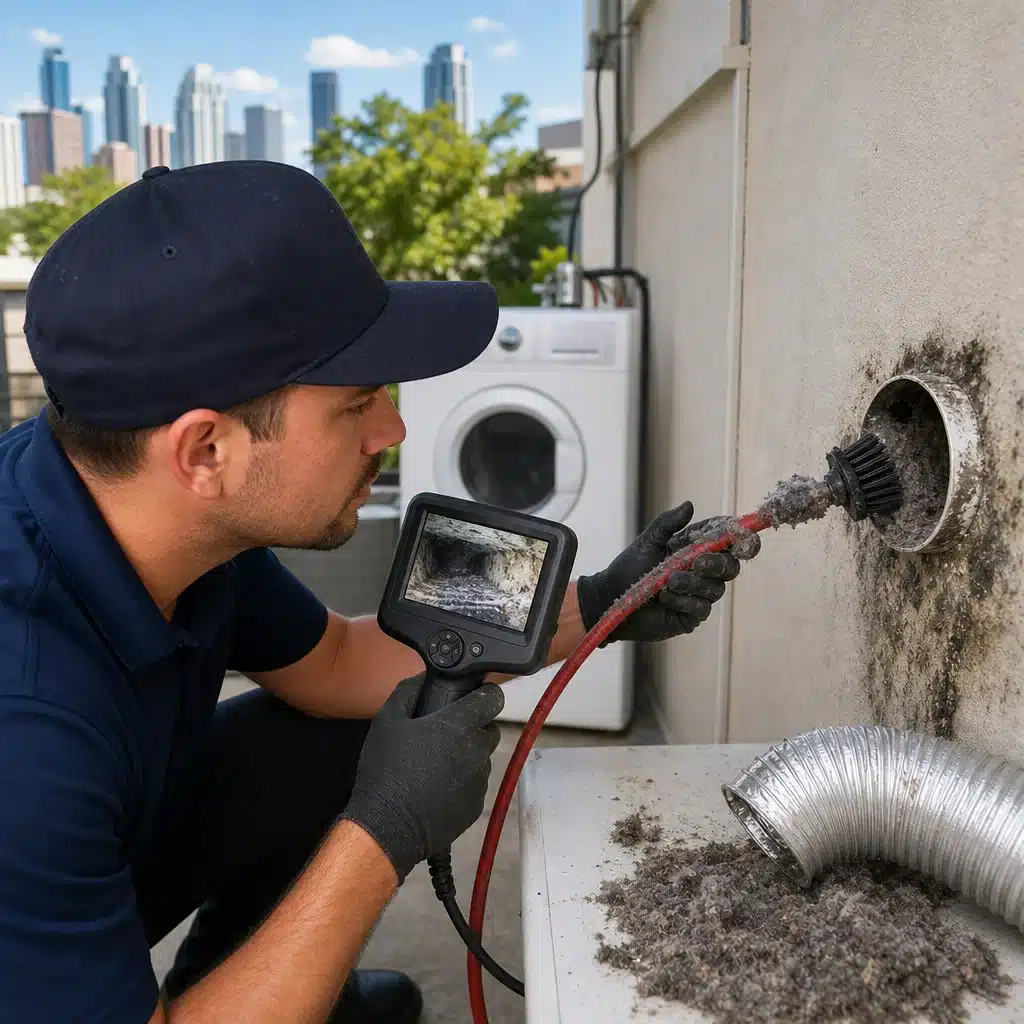
Mold in dryer vents represents a different challenge than lint accumulation. Lint is visible and obvious. Mold is microscopic, persistent, and grows on surfaces that aren’t accessible to a standard brush.
When moisture and lint combine, they create conditions mold thrives in. DIY brushes remove loose lint but leave residue on vent walls. That residue holds moisture, feeds mold growth, and the mold returns within weeks or months. We’ve had customers tell us they cleaned their vents themselves, only to experience musty odors again shortly afterward. The real culprit was mold they didn’t see or address.
Mold also requires specific removal techniques. Brushing alone doesn’t kill spores or address the underlying moisture problem. If your vent has condensation issues, simply removing lint won’t solve the problem—water will continue pooling and mold will regrow. Some DIY cleaners use bleach or other cleaners inside vents, which can damage flexible ducting materials and create residue that attracts more mold over time.
The biggest risk is missing mold colonization deeper in your vent system. If mold has spread into your main ductwork or attic spaces near your vent, a DIY approach won’t reach it. We use specialized cameras and detection equipment to identify mold growth in areas homeowners can’t see. Once we locate it, our removal process addresses both the visible mold and the moisture conditions causing it.
What to do next: If you’ve noticed musty smells after DIY cleaning, or if your dryer vent seems damp to the touch, don’t attempt further DIY treatment. Schedule a professional inspection to identify whether mold is present in areas beyond your reach.
Our Professional Mold Detection and Removal Process
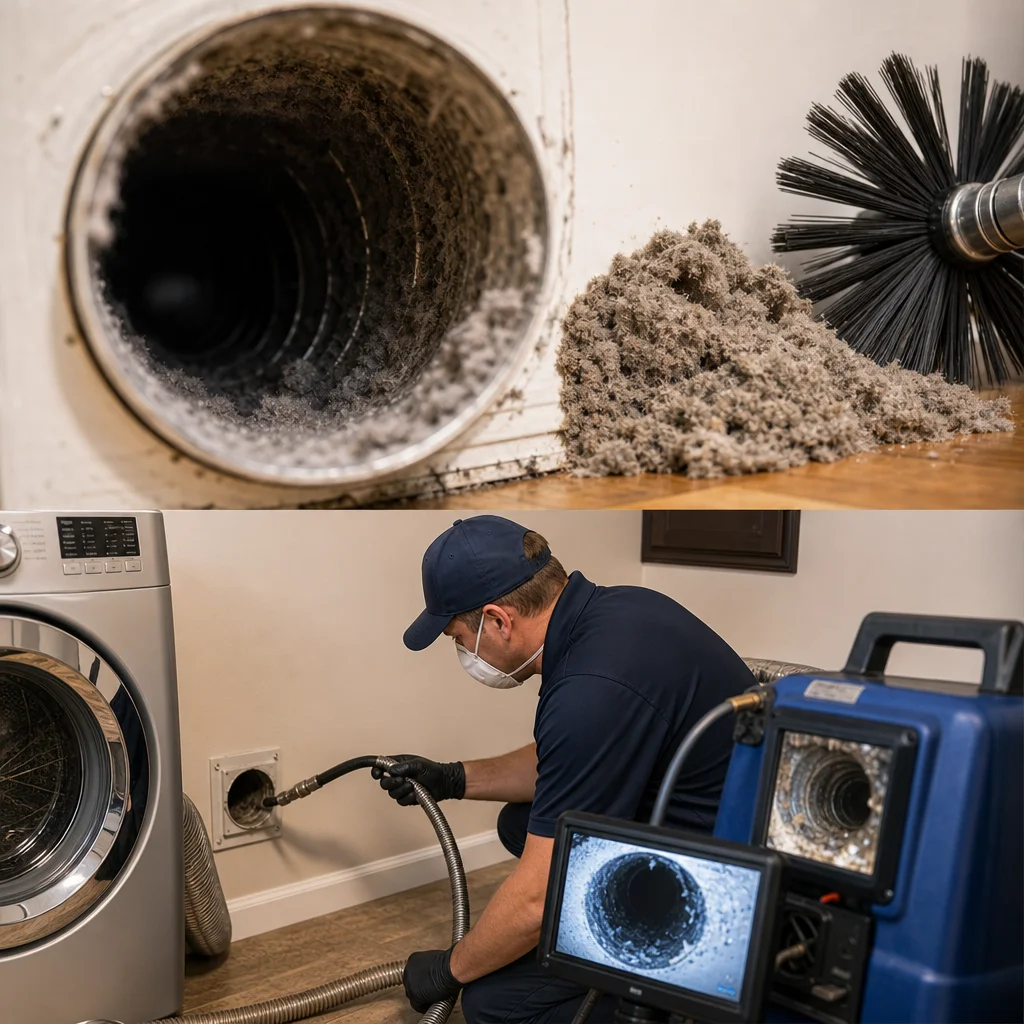
Our approach to dryer vent mold combines detection, removal, and prevention. We start every job with a thorough inspection using video camera equipment that reveals mold growth, moisture accumulation, and structural issues DIY methods miss.
Here’s how we handle mold removal:
Detection: Our technicians use borescope cameras to inspect the entire vent run, from the dryer connection to the exterior vent hood. We photograph mold growth and moisture evidence, so you can see exactly what we found and understand the problem.
Removal: We use commercial-grade equipment that safely removes mold without damaging your ductwork. Our process includes:
- High-powered vacuum systems that extract spores and mold fragments
- Specialized cleaning agents safe for dryer vent materials
- Moisture extraction to eliminate conditions supporting regrowth
- Vent line replacement if ducting is damaged or deteriorated
Prevention: We identify and repair the underlying cause. Is your vent run too long? Are you using flexible vinyl ducting that traps condensation? Is your vent hood damaged, allowing exterior humidity to enter? We address these issues so mold doesn’t return.
For homes where mold may have spread to the main HVAC system, we provide recommendations for air duct cleaning and mold treatment to protect your entire home’s air quality.
Our technicians are certified HVAC professionals with specific training in mold identification and safe removal. We don’t just clean—we solve the problem at its source.
Equipment and Expertise That Make the Difference
Professional dryer vent mold removal relies on tools and knowledge that simply aren’t available to homeowners. The difference between DIY and professional results comes down to equipment capability and understanding moisture dynamics in HVAC systems.
Our arsenal includes:
- Commercial rotary cleaning equipment that scrubs vent walls while vacuuming debris simultaneously
- Air flow meters that measure vent performance before and after cleaning
- Thermal imaging cameras that detect moisture and cold spots where condensation forms
- HEPA-filtered vacuum systems that capture mold spores without releasing them into your home
- Duct sealing materials to eliminate air leaks that allow exterior moisture to enter
Beyond equipment, we understand Austin’s specific climate challenges. We know that dryer vents connecting near HVAC return air intakes create cross-contamination risks. We recognize that attic-routed vents in our Texas heat require different approaches than basement vents. Our experience tells us which vent materials fail under our humidity levels and when upgrading to rigid metal ducting prevents future mold problems.
Our technicians assess your entire system, not just the dryer vent. We check whether your HVAC system is properly sealed, whether your insulation is supporting temperature regulation (which affects condensation), and whether your overall ventilation strategy is sound. That holistic view prevents mold from returning.

Actionable insight: When you call for a professional inspection, ask about your vent’s current airflow performance and whether upgrading your ducting material would reduce future moisture problems. Many Austin homeowners benefit from this upgrade investment.
Health and Safety Advantages of Professional Service
Mold exposure carries real health risks, particularly for children, seniors, and anyone with respiratory sensitivities. Austin families dealing with allergies or asthma often see improvement once we remove mold from their dryer vents and HVAC systems. The connection isn’t coincidental—mold spores are a documented allergen trigger.
Beyond health, there’s a safety dimension to dryer vent mold that many homeowners overlook. Mold-laden lint is more combustible than plain lint. The longer lint accumulates with mold growth, the higher your dryer fire risk. We’ve documented cases where fire inspections flagged dryer vents specifically because mold and lint buildup created a fire hazard.
Professional mold removal also ensures spores are handled safely. When mold is disturbed during cleaning, spores become airborne. DIY cleaning without proper containment spreads mold spores throughout your home rather than removing them. We use HEPA filtration and controlled techniques to capture spores during removal, protecting your family’s respiratory health during the cleaning process.
We’re also trained to identify when mold indicates deeper moisture problems. Sometimes dryer vent mold is a symptom of inadequate home ventilation, poor attic conditions, or HVAC issues that need professional attention. We guide you toward solutions that improve your overall indoor environment.
Documentation matters too. After our service, you receive a detailed report with before-and-after photos, an explanation of what we found, and recommendations for ongoing maintenance. That documentation is valuable for your home’s health record and can be relevant if you ever sell your property.
Key advantage: Professional mold removal protects your family during the cleaning process itself, not just afterward.
Long-Term Cost Savings with Our Solution
The upfront cost of professional dryer vent cleaning and mold removal is higher than a DIY brush kit. When you factor in long-term costs and risks, our service becomes the economical choice.
Here’s the math Austin homeowners often miss:
DIY repeated attempts: $50-100 per DIY effort x 2-3 times yearly = $100-300 annually, plus your time. If mold returns and you develop respiratory issues requiring medical care, costs escalate quickly. Emergency dryer fires, though uncommon, result in thousands in property damage.
Professional service: $300-500 per comprehensive professional cleaning, done once yearly or every 18 months depending on your system. That includes mold removal, moisture prevention, and system optimization. Between professional cleanings, your dryer operates more efficiently, reducing your energy bills by 10-15% annually on your laundry routine.
Austin homeowners often see their dryer run times drop after professional vent cleaning. Your dryer works harder when vents are clogged, consuming more electricity and generating excess heat that can damage the appliance. We’ve had customers report their dryer lasting 5+ extra years after switching to annual professional maintenance versus sporadic DIY efforts.
If mold spreads to your main HVAC system, remediation costs jump significantly. Comprehensive air duct cleaning for mold often runs $1,000-2,500 depending on system size. That’s why addressing dryer vent mold early prevents costly downstream problems.
Professional maintenance also protects your home’s value. Austin homebuyers increasingly ask about indoor air quality. A documented history of professional dryer vent and ductwork maintenance demonstrates you’ve maintained your home responsibly.
Bottom line: A single professional service prevents expensive repairs and health costs that dwarf the annual maintenance investment.
Why Austin Homeowners Choose Go Air Ducts
We’ve earned trust across Austin and San Antonio because we prioritize results over shortcuts. Our team combines certified HVAC expertise with specific training in mold detection and moisture control. We’re not general handymen—we’re specialists in the systems that affect your home’s air quality and energy efficiency.
Austin homeowners choose us for several reasons:
Local expertise: We understand Texas climate challenges and how they affect dryer vents and ductwork. Our recommendations reflect real-world experience with what works and what fails in our region.
Transparent service: We show you what we find. Our inspection equipment means you see mold and moisture issues, not just hear descriptions. You understand exactly why we’re recommending a particular solution.
Comprehensive approach: We don’t just clean your dryer vent in isolation. We assess your entire HVAC system and ventilation strategy. If your dryer vent mold indicates broader moisture problems, we identify and address them.
Fast response: We offer same-day and next-day service. We understand that homeowners want quick solutions, especially when health concerns are involved.
No surprise charges: Our free estimates are accurate. You know the cost before we start work, with no hidden fees or upselling.
Many of our Austin customers return annually for dryer vent cleaning and maintenance, because they’ve experienced the difference professional service makes. We’ve helped families resolve persistent allergies, reduced energy bills, and prevented potential fire hazards. That’s why they trust us, and why we’re one of the most recommended HVAC service providers in Austin.
Your Next Step: Schedule Your Free Inspection
If your dryer vent has been neglected, or if you’ve noticed musty smells, extended drying times, or moisture around your laundry area, a professional inspection will give you clear answers. We’ll identify whether mold is present, assess the health and safety risks, and explain your options.
Our free inspection includes:
- Video camera inspection of your entire dryer vent run
- Assessment of moisture conditions and airflow performance
- Mold identification if present
- Recommendation for immediate action or ongoing maintenance
- No obligation to proceed with any service
Contact us today for your free estimate. We serve Austin, San Antonio, Dallas, and Houston with fast scheduling and professional service. Call our team or request an appointment online—our certified technicians are ready to help you protect your home’s air quality and safety.
Your family’s health and home are worth the investment in professional care. Let’s get your dryer vent properly cleaned and keep mold out of your home for good.
If you’re dealing with dust, poor airflow, mold in your ducts, or a clogged dryer vent — don’t wait. These issues can affect your health and safety. Go Air Ducts Group are the local experts in air duct cleaning, mold removal, dryer vent cleaning, and attic insulation. Call now for a free inspection and same-day service in Austin and San Antonio.
Frequently Asked Questions (FAQ)
How quickly can mold in dryer vents become a health hazard in Austin’s climate?
Austin’s humidity creates ideal conditions for mold to spread rapidly in dryer vents. We’ve found that mold can establish itself within weeks of moisture accumulation, especially during our hot, humid summers. Once present, mold releases spores into your home’s air every time you run your dryer, which can trigger allergies and respiratory issues for your family. This is why we recommend having your dryer vent inspected annually to catch problems before they become serious.
What’s the main difference between what we do versus DIY cleaning methods?
When you attempt DIY cleaning, you’re typically removing surface lint, but mold grows deep inside ductwork and venting systems where standard tools can’t reach. We use professional-grade equipment and thermal imaging to locate hidden mold colonies, then apply targeted removal techniques that eliminate the source rather than just the symptoms. Our certified technicians also identify what caused the mold to grow in the first place, so we can help you prevent it from returning.
Will professional mold removal save us money compared to handling it ourselves?
Absolutely. A mold problem that seems minor can quickly spread to your insulation, attic, and ductwork if not properly treated, leading to costly structural repairs and potential HVAC system failures. Our service costs far less than replacing contaminated insulation or an entire HVAC system, and we provide a solution that lasts rather than a temporary fix that requires repeated attention.