🕑 5 min read
Do new construction homes need air duct cleaning?
Not automatically. New homes often have clean ducts, but construction dust can enter if duct openings were uncovered or the HVAC ran during building. Consider an inspection if the system ran during construction or dust blows from the registers, and clean before move-in if needed.
Table of Contents
- How Construction Debris Gets Into New Ductwork
- Does a New Home Need Duct Cleaning?
- Questions to Ask Your Builder
- How to Check for Debris Yourself
- When to Schedule Cleaning
- What a Professional Cleaning Covers
- Other Things Worth Checking in a New Home
- Frequently Asked Questions
- Start Clean in Your New Home
A brand-new home feels like it should come with clean everything, including the air ducts. In many cases the ductwork is in good shape, but construction is a messy process, and the HVAC system sometimes sits in the middle of it. Drywall dust, sawdust, insulation fibers, and debris can end up inside ducts before anyone moves in.
That does not mean every new home needs duct cleaning. This guide explains how construction debris gets into ducts, how to tell if it did, and what to ask your builder.
How Construction Debris Gets Into New Ductwork
Ducts are often installed early in the building process, well before drywall, trim, flooring, and painting are finished. While the rest of the house is being built, dust and debris can enter the system in several ways:
- Open duct ends and registers. If openings are not covered, drywall dust, sawdust, and scraps can fall in.
- Running the HVAC during construction. Crews sometimes use the heating or cooling to keep the building comfortable, which pulls dust through the return openings.
- Sanding and cutting. Drywall finishing and woodworking create fine dust that spreads through the house.
- Insulation work. Loose fibers and scraps can end up near duct connections.
Does a New Home Need Duct Cleaning?
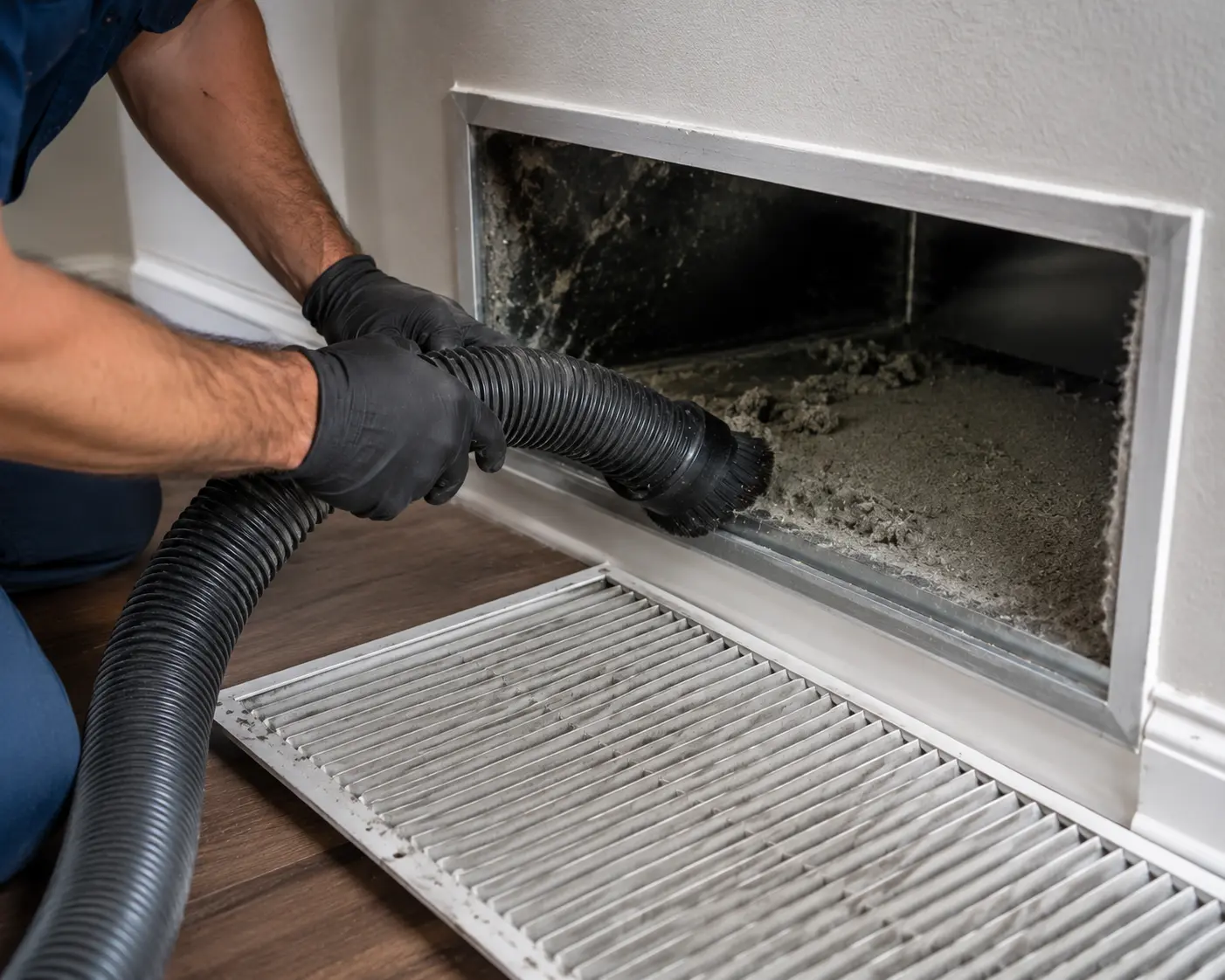
Not automatically. The EPA says duct cleaning is generally something to do on an as-needed basis, and it lists conditions that justify it, including ducts clogged with excessive dust and debris and dust or particles being released into the home from the supply registers. Those conditions can apply to a new house if construction dust got into the system.
Consider an inspection if:
- The HVAC system ran during construction without covered return openings.
- Duct openings were left uncovered for long stretches.
- You see dust, drywall residue, or debris inside vents with a flashlight.
- Dust blows from the registers when the system starts.
- You notice heavy dust shortly after move-in, with no obvious source.
If the ducts were capped, the registers were covered, and the system stayed off, cleaning may not be needed.
Questions to Ask Your Builder
Before closing or during your final walkthrough, ask:
- Were the duct openings and registers covered during construction?
- Was the HVAC system operated while the house was being built?
- Was the filter changed after construction was complete?
- Were the ducts tested for leakage, and can I see the results?
- What does the warranty cover for the HVAC system and ductwork?
It is easier to resolve a problem before move-in than after.
How to Check for Debris Yourself
A quick look can tell you a lot:
- Turn the system off and remove a supply register or a return grille.
- Use a flashlight to look into the opening.
- Look for drywall dust, wood scraps, paper, or insulation fibers.
- Run the system and watch for dust blowing from the registers.
- Check the filter. A heavily loaded filter after a short time suggests a lot of dust in the air.
Do not reach deep into ducts or work in the attic if you are not comfortable doing so. A professional inspection can use a camera to check the parts you cannot see.
When to Schedule Cleaning
If cleaning is needed, the best time is after construction is complete and before you move furniture in. With the house empty, technicians have easier access, and you avoid disturbing dust around your belongings. It also helps to wait until all dusty work, painting, and flooring are finished.
What a Professional Cleaning Covers
A thorough service should include:
- Negative-pressure collection that captures debris instead of releasing it into the home
- Cleaning of ducts, registers, grilles, and return openings
- Attention to the blower area, where debris can settle
- A new filter
- Photos or video that show what was found and removed
Our register and grille cleaning and return vent cleaning services can also help. The EPA cautions that a poor cleaning can release more dust than it removes, so ask how the provider contains debris.
Other Things Worth Checking in a New Home
Cleanliness is only one part of ductwork quality. New systems can also have problems with:
- Leaks at joints and boots, which waste conditioned air
- Crushed or kinked flex duct
- Disconnected sections
- Poorly sealed return ducts that draw in attic or crawlspace air
ENERGY STAR notes that in a typical house, about 20 to 30 percent of the air moving through the duct system is lost to leaks, holes, and poorly connected ducts, so checking for leaks is worthwhile in new homes as well as older ones.
Frequently Asked Questions
Are new construction ducts always dirty?
No. Many are clean, especially when openings were covered and the system was not used during construction. An inspection can tell you for certain.
Is construction dust harmful?
Fine dust can irritate the eyes, nose, and throat. If anyone in the home has respiratory concerns, talk to a doctor and consider an inspection.
Should I clean ducts before or after moving in?
Before is easier and cleaner, since the house is empty and work will not disturb your belongings.
Can my builder do this?
Ask. Some builders will address it before closing, particularly if you document a problem during the walkthrough.
Start Clean in Your New Home
Go Air Ducts can inspect your new home’s system and tell you whether cleaning or repairs make sense. Learn more about air duct cleaning, air duct inspection, and duct leak testing. If you are dealing with a remodel instead, see our guide on air duct cleaning after home renovation. Contact us to schedule service in Austin, San Antonio, and nearby Texas communities.