
🕑 11 min read
Table of Contents
- Why Your Austin Home's Attic Insulation Matters More Than You Think
- The Real Cost of Poor Attic Insulation in Central Texas Climate
- How Energy Loss Through Your Attic Affects Your HVAC System
- What Makes Energy Efficient Insulation Different
- Our Process for Assessing Your Attic's Current Performance
- Choosing the Right Insulation Material for Austin Homes
- How Our Professional Installation Maximizes Your Savings
- Energy Savings You Can Expect After Attic Insulation Upgrade
- Why Attic Insulation Works Best With Air Duct Cleaning
- Schedule Your Free Attic Insulation Estimate Today
- Frequently Asked Questions (FAQ)





Why Your Austin Home’s Attic Insulation Matters More Than You Think
Your attic is like the roof of your home’s temperature control system. Most Austin homeowners don’t realize that a poorly insulated attic can waste 25-30% of your heating and cooling energy before it even reaches your living spaces. In our Central Texas climate, where summer heat regularly tops 95 degrees and air conditioning runs nearly nine months a year, proper attic insulation isn’t a luxury feature—it’s a necessity.
We’ve inspected hundreds of Austin homes and consistently find the same issue: inadequate or deteriorating insulation that’s letting conditioned air escape into unconditioned spaces. This forces your HVAC system to work harder, drives up your monthly utility bills, and shortens the lifespan of expensive equipment. The good news is that upgrading your attic insulation is one of the fastest ways to reclaim both comfort and savings.
When insulation performs well, your home stays cooler in summer and maintains stable temperatures year-round. This translates to lower thermostat settings, reduced strain on your air conditioning unit, and noticeably lower energy bills within the first month of use.
The Real Cost of Poor Attic Insulation in Central Texas Climate
Austin’s climate presents unique challenges for home insulation. Our summers are intense and prolonged, which means your air conditioner battles intense solar heat gain through an under-insulated attic. Poor insulation allows that heat to radiate down into your home, forcing your system to run continuously just to maintain a comfortable temperature.
We typically see three main problems in homes with inadequate attic insulation:
- Heat infiltration: Uninsulated or thinly insulated attics can reach 130-150 degrees on a hot Austin day, allowing that heat to transfer into your living spaces below
- Moisture and mold growth: Insufficient ventilation combined with poor insulation creates the perfect environment for mold, especially in areas prone to humidity
- Air leaks compounding losses: Small gaps and cracks in an under-insulated attic multiply energy waste, allowing air-conditioned air to escape into the attic space
The financial impact adds up quickly. A typical Austin homeowner with poor attic insulation can expect to pay an extra $200-400 per month during peak cooling season compared to a properly insulated home of similar size. Over a year, that’s $2,400-4,800 in unnecessary energy costs.
How Energy Loss Through Your Attic Affects Your HVAC System
Your HVAC system’s job is to maintain your home’s temperature, but when your attic insulation fails, the system works against a losing battle. Here’s what happens: your air conditioner cools air to 72 degrees, sends it through your ductwork, and it enters your living space. Meanwhile, through that poorly insulated attic, heat constantly infiltrates back into the space your system just cooled. Your thermostat senses the temperature rising and signals the air conditioner to run again.
This cycle repeats dozens of times per day, causing your HVAC unit to cycle more frequently than it was designed to handle. The result is accelerated wear and tear, higher repair costs, and a system that wears out years earlier than expected. We often find that homeowners who upgrade their attic insulation also extend the lifespan of their HVAC systems by 5-10 years.
When you combine energy-efficient attic insulation with a well-maintained HVAC system, they work together efficiently. Your system runs fewer cycles, uses less energy, and operates in its optimal performance zone. This partnership is why we always recommend assessing both your insulation and your HVAC performance together.
What Makes Energy Efficient Insulation Different
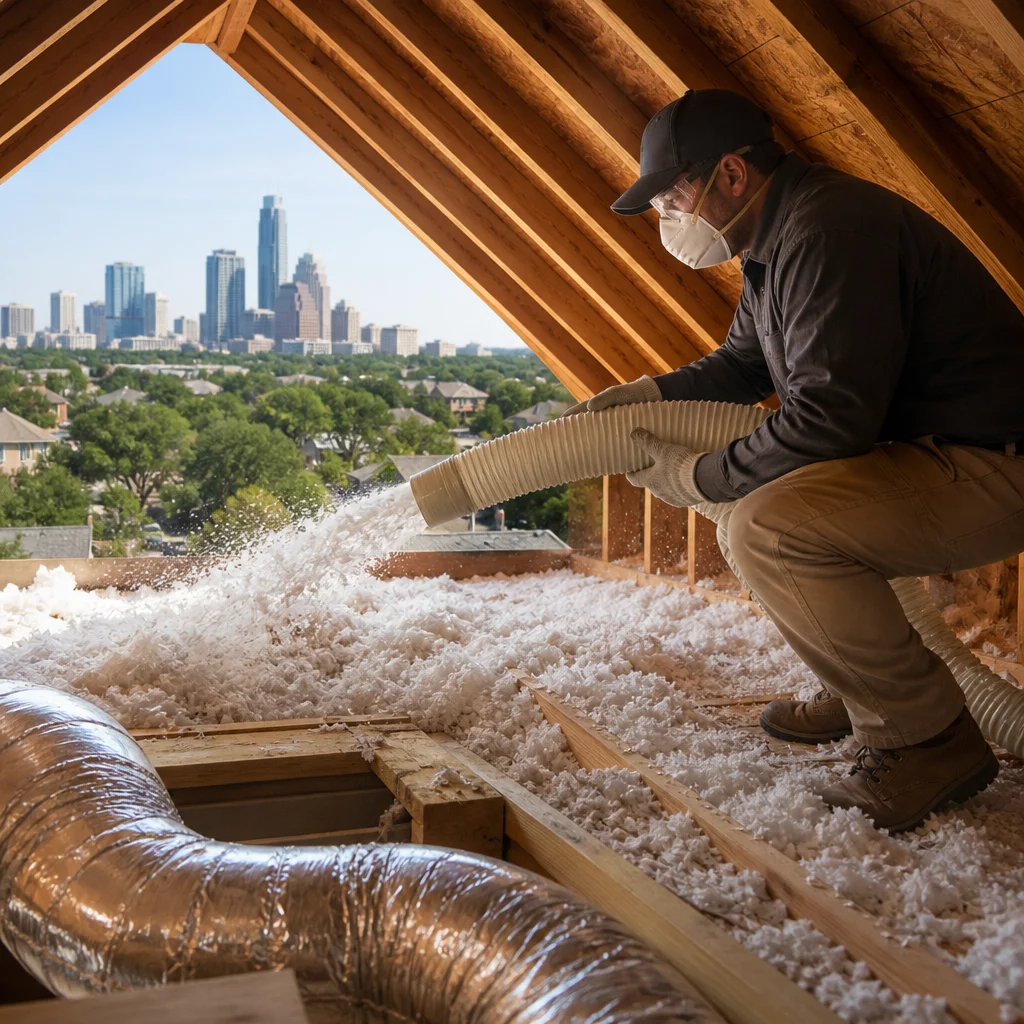
Energy efficient insulation differs from standard insulation in several key ways. Modern energy efficient materials have higher R-values (thermal resistance) per inch of thickness, meaning they provide better insulation in a smaller space. They also feature improved air-sealing properties that prevent convective heat transfer through gaps and cracks.
The main types of energy efficient insulation used in Austin homes include:
- Blown-in cellulose or fiberglass: Fills irregular spaces completely, conforming to every corner of your attic and reducing air leaks
- Spray foam insulation: Expands to fill gaps and provides air sealing as well as thermal insulation
- Rigid foam boards: Best for new construction or when structural modifications are planned
- Fiberglass batts with vapor barriers: Traditional but still effective when properly installed with no gaps
We typically recommend blow-in insulation in Austin for most existing homes because it adapts to your attic’s unique shape, fills around existing obstructions, and provides superior air sealing compared to older batt insulation. The key difference is coverage: while batts can leave gaps around trusses and wiring, blown-in material creates a continuous thermal blanket across your entire attic floor.
Energy efficient insulation also resists settling and compression over time, maintaining its R-value performance for 20-30 years or longer.
Our Process for Assessing Your Attic’s Current Performance
Before we recommend any insulation upgrade, we perform a detailed attic assessment that looks beyond just measuring existing insulation depth. Our process includes:
Visual inspection: We examine the type, depth, and condition of your current insulation. We look for areas where insulation has shifted, settled, or been damaged by moisture or pests. We also check for proper ventilation, which is critical in Central Texas.
Thermal imaging and airflow testing: We use thermal cameras to identify where heat is escaping and where air leaks exist. This shows us the real-world performance of your attic, not just what the R-value rating suggests.
Moisture and mold assessment: We check for signs of moisture accumulation, mold growth, or condensation that could indicate ventilation or vapor barrier problems.
Ductwork and HVAC inspection: Since your insulation and HVAC system work together, we evaluate your ductwork for leaks or poor installation that might be wasting energy.
After the inspection, we provide you with a detailed report and a customized recommendation based on your home’s specific needs, climate zone, and budget. Most assessments take 45 minutes to an hour and include a free, no-obligation estimate for the work.
Choosing the Right Insulation Material for Austin Homes
Selecting the right insulation material for Austin depends on several factors unique to your home and situation. Our recommendation process considers your attic’s current state, your budget, and your long-term comfort goals.
For most Austin homes, we recommend blown-in insulation for energy efficiency at an R-38 to R-49 value, which is appropriate for our climate zone. This level of insulation provides the optimal balance between energy savings and installation cost.
If your attic has existing batt insulation that’s still in good condition, we can add blown-in material over the top, increasing your total R-value without removing the old material. If there’s existing damage, mold, or significant settling, we recommend a complete removal and replacement with fresh, high-performance insulation.
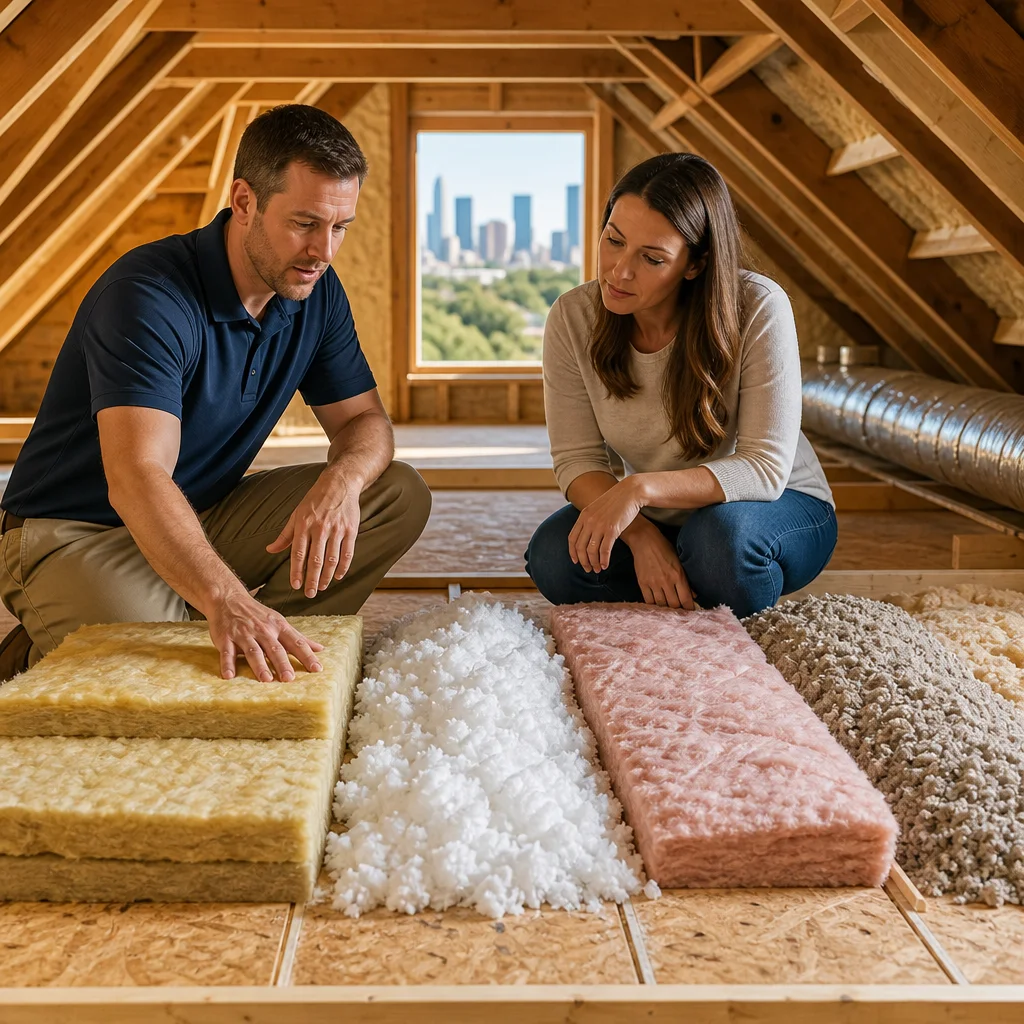
For homes where air sealing is a major concern, spray foam insulation offers superior performance but at a higher cost. It’s ideal if you’re also addressing significant air leaks or structural issues during your renovation.
The key is matching the material to your home’s needs. We avoid one-size-fits-all recommendations and instead tailor our approach to your specific situation.
How Our Professional Installation Maximizes Your Savings
Professional installation makes an enormous difference in real-world energy performance. Improper installation creates gaps, compression, and air leaks that dramatically reduce insulation effectiveness. We’ve seen DIY insulation projects that delivered only 60-70% of their rated R-value performance because of poor technique.
Our certified technicians follow these best practices:
- Proper ventilation: We ensure your attic has adequate soffit and ridge ventilation to prevent moisture buildup and maintain air circulation
- Complete air sealing: We seal gaps around penetrations, electrical boxes, and structural elements before installing new insulation
- Correct depth and density: We install material to the recommended depth and density for Austin’s climate zone, not just minimal coverage
- Protective equipment: We use proper containment and safety measures to protect your home’s integrity during installation
Professional installation also means we handle the messy, physically demanding work so you don’t have to crawl into a hot attic. We manage debris removal, ensure proper PPE use, and complete the job safely and efficiently.
Our crews can typically complete most attic insulation projects in a single day, with minimal disruption to your home. We protect your belongings, use drop cloths, and clean up completely before we leave.
Energy Savings You Can Expect After Attic Insulation Upgrade
Energy savings from attic insulation upgrades are measurable and often exceed homeowner expectations. Based on our experience with hundreds of Austin homes, here’s what you can realistically expect:
Immediate comfort improvements: Most homeowners notice a difference within days. Your home cools more evenly, hot spots disappear, and temperature swings between day and night become less dramatic.
Monthly energy bill reduction: The average Austin homeowner saves 15-25% on cooling costs during peak season (June through September) after upgrading attic insulation. For a typical $250 summer utility bill, that’s $40-60 in monthly savings.
Annual savings: Over a full year, accounting for mild winters, most homeowners save $500-1,200 on energy costs.
Return on investment: A typical attic insulation upgrade costs $2,000-4,500 depending on attic size and material choice. With annual savings of $500-1,200, most upgrades pay for themselves within 3-5 years. After that, it’s pure savings.
These figures assume your HVAC system is well-maintained and your home doesn’t have other major air leaks in walls or around windows. If you combine insulation with air duct sealing or other efficiency upgrades, savings can be even higher.
Why Attic Insulation Works Best With Air Duct Cleaning
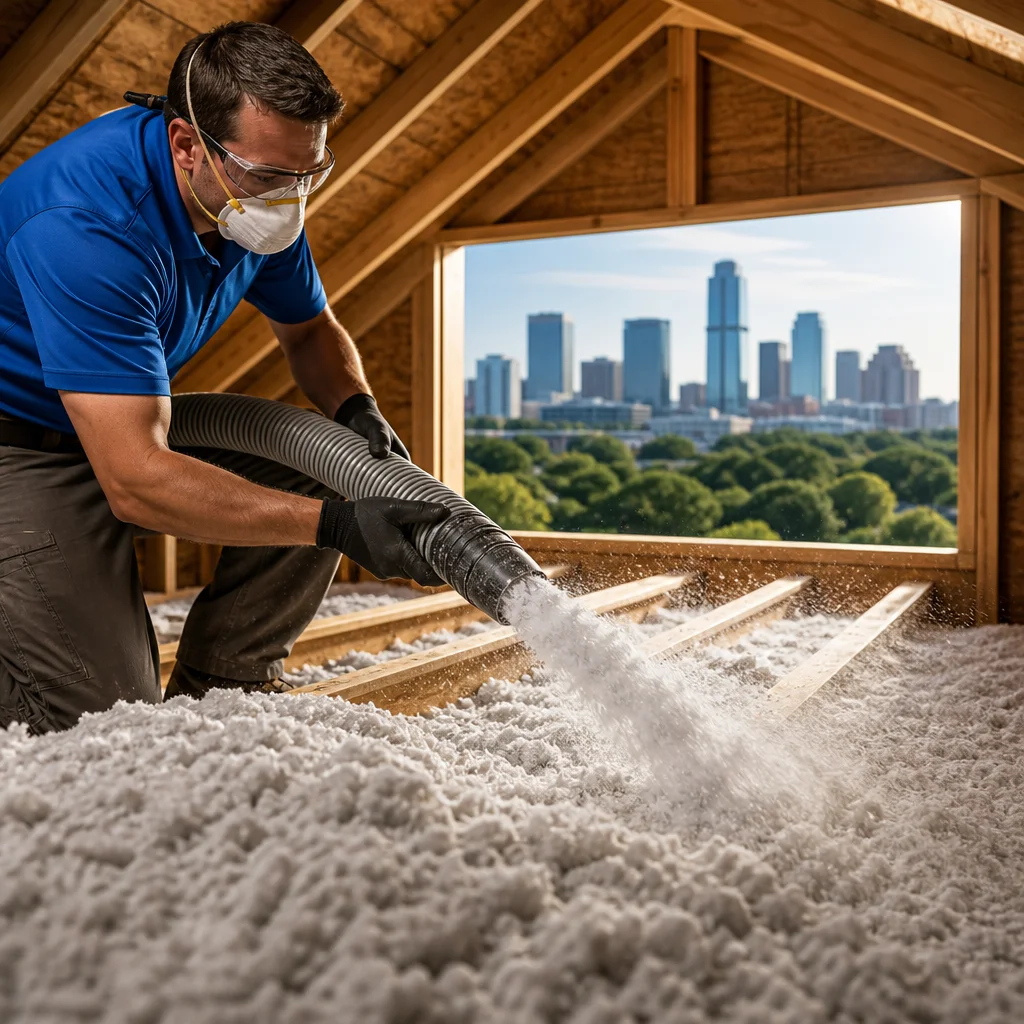
Here’s something many Austin homeowners overlook: even perfect attic insulation won’t deliver maximum efficiency if your air ducts are leaking, clogged, or contaminated. Your ductwork is the delivery system for your air conditioning, and if it’s not working properly, your insulation upgrade can only do so much.
Over time, dust, debris, and sometimes mold accumulate inside your air ducts. This buildup reduces airflow, forces your HVAC system to work harder, and wastes the conditioned air you’re paying to create. Duct leaks are equally problematic—they allow cooled air to escape into unconditioned spaces like your attic, walls, or basement before reaching your living areas.
We recommend combining your attic insulation upgrade with professional air duct cleaning. This one-two approach ensures:
- Maximum airflow efficiency through clean, unrestricted ducts
- Better air quality by removing accumulated dust and allergens
- Improved HVAC performance since your system doesn’t have to overcome duct resistance
- Significantly higher energy savings when both systems are optimized
Many of our clients find that professional Austin HVAC and insulation upgrades deliver 30-40% better results than insulation alone. The combination addresses both sides of the efficiency equation: reducing energy loss and ensuring efficient delivery of conditioned air.
Schedule Your Free Attic Insulation Estimate Today
If you’re ready to stop wasting money on energy bills and reclaim comfort in your Austin or San Antonio home, we’re here to help. Our free attic assessment takes about an hour and includes a detailed evaluation of your current insulation, a thermal analysis of your attic’s performance, and a no-obligation estimate for your upgrade.
We serve Austin, San Antonio, Dallas, and Houston with certified HVAC technicians and professional insulators who understand Central Texas homes and climate challenges. We offer flexible scheduling, same-day estimates in many cases, and transparent pricing with no hidden fees.
Contact us today to schedule your free estimate. Our team will answer your questions, explain your options, and help you understand exactly what energy savings you can expect from your specific home. Let’s get your attic working as efficiently as your investment deserves.
If you’re dealing with dust, poor airflow, mold in your ducts, or a clogged dryer vent — don’t wait. These issues can affect your health and safety. Go Air Ducts Group are the local experts in air duct cleaning, mold removal, dryer vent cleaning, and attic insulation. Call now for a free inspection and same-day service in Austin and San Antonio.
Frequently Asked Questions (FAQ)
How much can we help you save on energy costs with attic insulation in Austin?
The savings depend on your current insulation level and how much air leakage exists in your attic. Most homeowners we work with see 15-20% reductions in their cooling costs during hot Texas summers, which typically means $30-60 monthly savings. We’ll assess your specific situation during our free estimate to give you a realistic projection based on your home’s square footage and current R-value.
Why does our team recommend pairing attic insulation with air duct cleaning?
Your HVAC system works harder when your attic insulation is poor, forcing cooled or heated air through leaky ducts that lose efficiency before reaching your home. We’ve found that upgrading both services together prevents you from wasting the energy savings you gain from new insulation, since no improvement matters if your conditioned air is escaping through gaps in your ductwork. Together, these upgrades create a complete barrier against energy loss.
What’s our timeline for installing attic insulation in Austin homes?
We typically complete most residential attic insulation projects in 1-2 days, depending on your home’s size and attic accessibility. Our certified technicians work efficiently while maintaining our quality standards, and we’ll clear the space and handle all debris removal before we leave. We’ll give you a specific timeframe during your free estimate so you can plan accordingly.