
🕑 10 min read
Do energy-efficient HVAC systems really lower bills in San Antonio?
Yes. High-efficiency HVAC systems use less energy to deliver the same or better comfort, cutting monthly bills, especially in San Antonio's long cooling season. Go Air Ducts helps homeowners choose and support energy-efficient HVAC systems that lower bills and improve comfort throughout the year.
Table of Contents
- Why San Antonio Homeowners Are Paying Too Much for HVAC
- How Energy-Efficient HVAC Systems Reduce Your Monthly Bills
- Understanding SEER Ratings and What They Mean for Your Home
- Air Duct Cleaning's Critical Role in System Efficiency
- Professional HVAC Maintenance Keeps Your System Running Optimally
- Our Certified Technicians Deliver Energy Savings You Can Measure
- Insulation Upgrades That Work With Your HVAC System
- Getting Your Free Energy Efficiency Assessment Today
- Frequently Asked Questions (FAQ)
Why San Antonio Homeowners Are Paying Too Much for HVAC
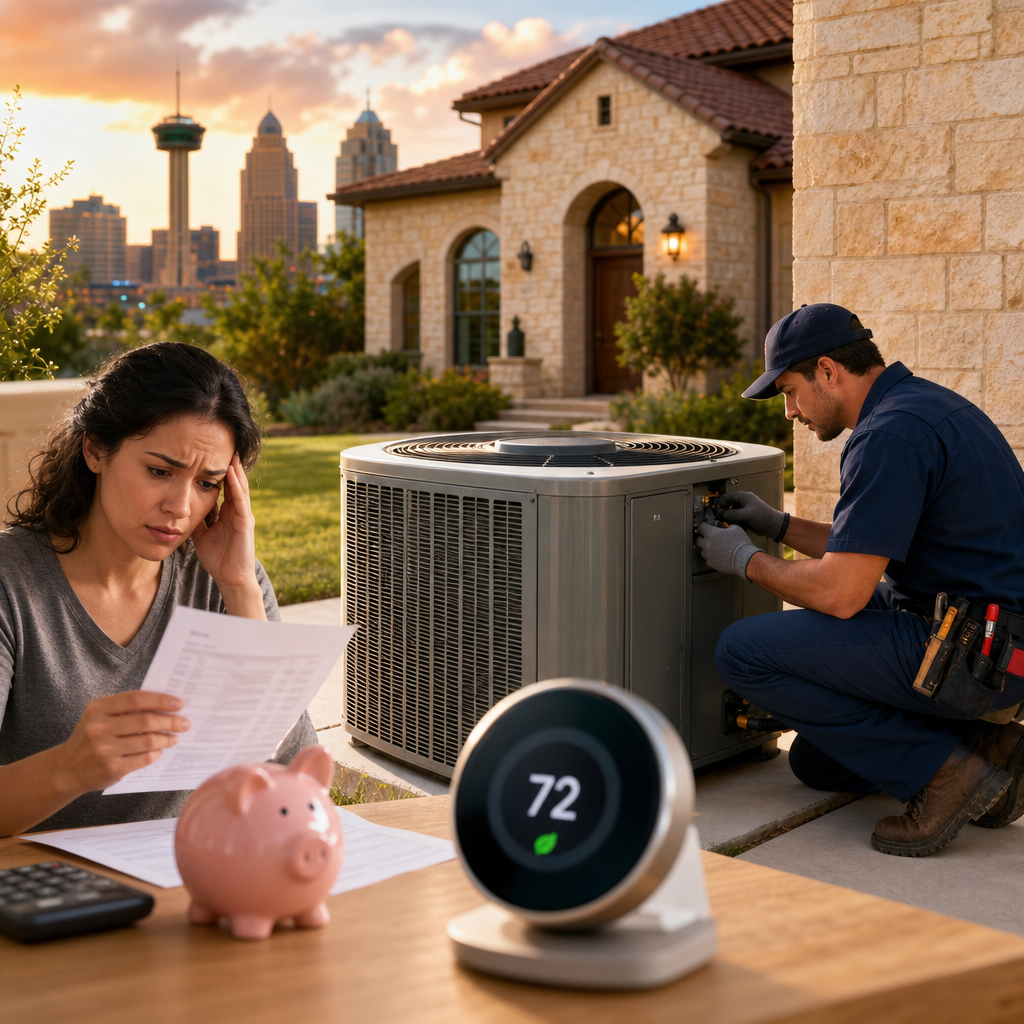
San Antonio summers are brutal, and we’ve all watched that electric bill climb higher each season. The truth is, many homeowners are running inefficient HVAC systems without realizing it. Whether your equipment is aging, your ducts are leaking, or your system isn’t properly maintained, you’re likely losing money every single month. The good news: upgrading to an energy-efficient HVAC system and optimizing how it runs can cut your cooling costs significantly while improving comfort throughout your home.
We work with San Antonio homeowners daily who are surprised to learn just how much energy waste happens behind the scenes. Let’s walk through what causes these inflated bills, how modern efficient systems work differently, and what practical steps deliver real savings.
Your HVAC system is one of the largest energy consumers in your home, often accounting for 40-50% of your total utility bill. In San Antonio’s climate, that responsibility falls heavily on air conditioning during our long, hot summers.
Several factors drive unnecessary costs:
- Aging equipment loses efficiency over time. A system older than 10-12 years operates at 60-70% of its original efficiency, consuming far more electricity for the same cooling output.
- Leaky and dirty air ducts force your system to work harder. If ducts are disconnected, have gaps, or are clogged with dust and debris, conditioned air escapes before reaching your rooms, so your system cycles longer to compensate.
- Poor insulation in attics and walls allows cool air to escape, making your AC run constantly to maintain temperature.
- Clogged filters and neglected maintenance restrict airflow and force the compressor to strain, consuming extra energy.
- Undersized or oversized units cycle inefficiently. A system that’s too large short-cycles; one that’s too small runs continuously.
The typical San Antonio homeowner we meet hasn’t had their ducts inspected in years. Over time, dust accumulates inside ductwork, reducing airflow by 15-25%, which translates directly to higher energy use and uneven cooling.
What to do next: Schedule a free energy efficiency assessment to identify where your home is losing cooling capacity and money.
How Energy-Efficient HVAC Systems Reduce Your Monthly Bills
Modern high-efficiency air conditioning systems use variable-speed compressors, improved refrigerant cycles, and smarter electronics to deliver cooling using less electricity. Instead of an older unit that runs at full capacity until the target temperature is hit, then shuts off completely, efficient systems modulate their output. They adjust continuously to maintain comfort while minimizing runtime.
Here’s what that looks like in practice: An efficient system might run at 40% capacity for longer periods rather than blasting at 100% for short bursts. This steady operation reduces temperature swings, cuts energy waste during startup/shutdown cycles, and feels more comfortable because your home stays at a consistent temperature.
Energy-efficient models often include:
- Variable-capacity compressors that adjust output based on actual demand
- Smart thermostats that learn your schedule and adjust cooling preemptively
- Enhanced coil designs that transfer heat more effectively
- Advanced refrigerant formulations that improve efficiency without harming the environment
Real homeowners in San Antonio typically see 20-30% reductions in cooling costs when upgrading from a 10+ year-old system to a modern efficient unit. That often means saving $1,500-3,000 annually on energy bills alone, depending on home size and current system condition.
The payback period is usually 5-7 years, after which you’re essentially running your AC on savings. Many homeowners then invest those annual savings into further upgrades like insulation or duct sealing for compounding efficiency gains.
Understanding SEER Ratings and What They Mean for Your Home
SEER stands for Seasonal Energy Efficiency Ratio. It’s the standardized measurement showing how much cooling a system delivers per unit of electricity consumed over an entire cooling season.
Higher SEER = more efficient. A unit with SEER 16 uses about 30% less energy than a SEER 10 system (the approximate efficiency of units installed 15+ years ago). Current minimum standards are SEER 13-14, but premium systems reach SEER 18-21.
For San Antonio homeowners, here’s what SEER ranges mean:
- SEER 13-14: Entry-level efficient systems; modest savings vs. older units
- SEER 15-17: Mid-tier efficiency; balanced cost and energy savings (most popular choice)
- SEER 18+: Premium systems; maximum efficiency and comfort but higher upfront cost
You’ll also see HSPF ratings on systems with heating capability (though less critical in San Antonio). HSPF measures heating efficiency the same way SEER measures cooling.
One important note: SEER ratings assume proper installation and maintenance. A SEER 18 system installed with leaky ducts performs nothing like its rating suggests. The system itself is efficient, but if the ductwork isn’t sealed and clean, much of that efficiency is wasted.
Next step: When comparing systems, ask your installer about both the SEER rating and their plan to optimize your entire system, not just replace the unit.
Air Duct Cleaning’s Critical Role in System Efficiency
Here’s something many homeowners overlook: You can install the most efficient HVAC unit available, but if your ducts are clogged or leaking, you won’t see the promised energy savings.
Think of it this way. Your ductwork is the delivery system. If the pipes have holes or the pathways are obstructed, the best compressor in the world won’t help. We’ve seen homes where duct leaks waste energy by 25-30%, completely negating any efficiency gains from a new system.
Dirty ducts accumulate dust, fibers, mold spores, and sometimes debris from construction or pest activity. This buildup:
- Reduces airflow, forcing the system to run longer
- Creates uneven cooling (some rooms stay hot while others over-cool)
- Circulates dust and allergens throughout your home
- Strains the compressor and shortens equipment lifespan
Duct sealing and cleaning are some of the highest-ROI improvements you can make. We typically see 15-25% energy savings from this work alone, especially in homes with uninsulated or poorly maintained ductwork.
The process involves:
- Inspecting ducts with camera equipment to identify leaks, disconnections, and debris
- Sealing gaps and joints with mastic sealant or metallic tape
- Thoroughly cleaning interior duct surfaces with specialized equipment
- Adding insulation where needed to prevent temperature loss
We combine duct work with system maintenance to ensure your efficient HVAC unit performs as designed.
Professional HVAC Maintenance Keeps Your System Running Optimally
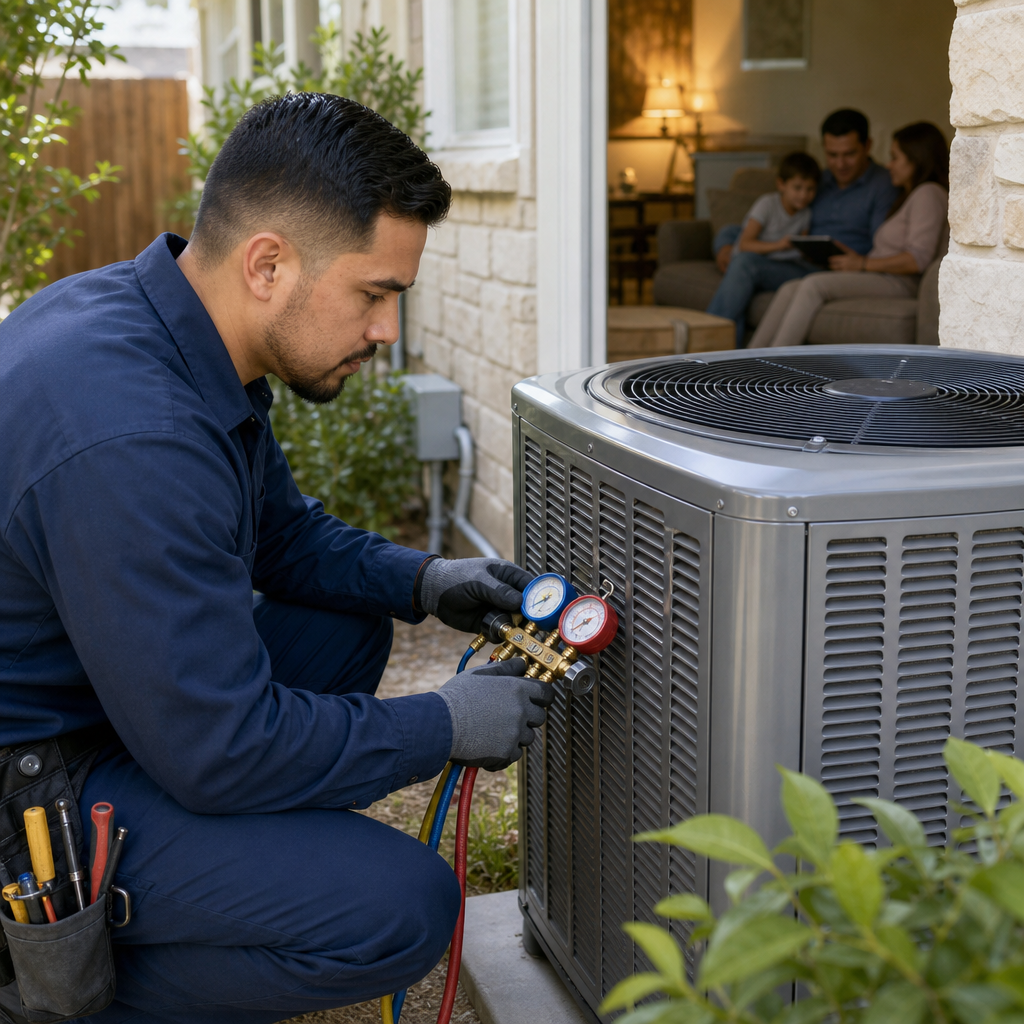
An efficient system maintained poorly degrades quickly. We recommend semi-annual maintenance: a spring tune-up before cooling season and a fall checkup before any heating needs.
During maintenance, our certified technicians:
- Clean and replace filters (dirty filters reduce efficiency by 15%)
- Check refrigerant levels and top off if needed (low refrigerant forces harder work for less cooling)
- Inspect electrical connections and tighten loose components
- Clean evaporator and condenser coils (grime insulates coils and reduces heat transfer)
- Test thermostat accuracy and calibration
- Lubricate motors and pulleys to reduce friction
Most homeowners think maintenance is optional. In reality, it’s where energy efficiency lives or dies. A well-maintained efficient system operates at 95%+ of rated efficiency. A neglected one drops to 60-70% even if it’s relatively new.
San Antonio’s heat and dust make regular maintenance essential. Dust and pollen accumulate faster here than in mild climates, and our intense cooling demand stresses systems harder.
Actionable step: Set up annual maintenance with us before April to ensure your system is clean and ready for summer at full efficiency.
Our Certified Technicians Deliver Energy Savings You Can Measure
We don’t just install new equipment and leave. Our approach combines system selection, duct optimization, and ongoing maintenance because we know that’s how real energy savings happen.
Our certified technicians are trained in:
- HVAC system design and sizing
- Duct diagnostics and sealing techniques
- Energy code compliance for Texas
- Smart thermostat programming and integration
- Insulation assessment and installation
We provide detailed energy assessments that show exactly where your home loses efficiency, what each improvement will cost, and what savings you can expect. Most homeowners appreciate seeing the math before committing.
Many clients pair a new efficient system with duct sealing and cleaning and insulation upgrades for maximum impact. The total project usually costs $4,000-8,000 but generates $1,500-3,000 in annual energy savings, qualifying for rebates and tax credits that reduce net cost further.
We serve Dallas, Houston, Austin, and San Antonio, so we understand local climate challenges and utility rates specific to each area. That expertise ensures recommendations are right-sized for your actual home and usage.
Insulation Upgrades That Work With Your HVAC System
Insulation and HVAC efficiency are inseparable. Without adequate insulation, your air conditioning system works to cool a home that constantly loses that cooled air to hot attics and walls.
Proper insulation in attics, crawl spaces, and exterior walls is often the second-biggest energy improvement after fixing ductwork. San Antonio homes need R-38 minimum in attics, but many older homes have R-15 or less.

Benefits of upgrading insulation alongside HVAC efficiency work:
- Reduces cooling demand, allowing a smaller, less expensive AC unit
- Extends equipment lifespan by reducing runtime strain
- Improves comfort by eliminating hot spots and cold drafts
- Compounds savings from your efficient HVAC system
We often recommend duct insulation types that match overall insulation strategy. Insulated ducts running through hot attics prevent temperature loss; uninsulated ducts waste much of the cooling they carry.
The combination of sealed, insulated ducts plus proper attic insulation can mean your new efficient system runs 30-40% less than it would in a poorly insulated home, amplifying your energy savings dramatically.
Getting Your Free Energy Efficiency Assessment Today
The first step is understanding exactly where your home stands. We offer free energy efficiency assessments to San Antonio homeowners. During the visit, our technician will:
- Inspect your current HVAC system and ductwork
- Check insulation levels in accessible areas
- Identify air leaks and efficiency losses
- Assess your thermostat and controls
- Provide a written report with specific upgrade recommendations and projected savings
There’s no obligation to proceed, but most homeowners find the assessment clarifies priorities and costs them wish they’d done earlier.
To schedule your free assessment, visit https://goairducts.com/ or call us for same-day availability. We serve San Antonio, Austin, Dallas, and Houston, and we’re ready to help you lower your bills and improve comfort.
If you’re dealing with dust, poor airflow, mold in your ducts, or a clogged dryer vent — don’t wait. These issues can affect your health and safety. Go Air Ducts Group are the local experts in air duct cleaning, mold removal, dryer vent cleaning, and attic insulation. Call now for a free inspection and same-day service in Austin and San Antonio.
Frequently Asked Questions (FAQ)
How much can we help you save on your HVAC energy bills in San Antonio?
We typically see our customers save 15-30% on their monthly energy costs through a combination of air duct cleaning, system maintenance, and efficiency upgrades. The exact savings depend on your current system’s condition, your home’s insulation, and how well your ductwork is sealed. That’s why we offer free energy efficiency assessments so we can show you your specific savings potential before you commit to any work.
What’s the difference between SEER ratings, and why should you care about yours?
SEER (Seasonal Energy Efficiency Ratio) measures how efficiently your air conditioning system converts electricity into cooling throughout the year. Higher SEER ratings mean lower energy consumption and lower bills. We help our customers understand whether upgrading to a higher SEER system makes financial sense for their home, factoring in installation costs and long-term savings.
Why does air duct cleaning actually impact your energy bills?
When our team cleans your air ducts, we remove dust, debris, and blockages that force your HVAC system to work harder to push air through your home. A cleaner system moves air more efficiently, runs shorter cycles, and uses less energy to maintain your desired temperature. We’ve found that dirty ducts are one of the most overlooked reasons San Antonio homeowners overpay for heating and cooling.