
🕑 10 min read
Table of Contents
- Why Moldy Air Ducts Are a Silent Threat to Your Home
- How Mold Grows Inside Your Ductwork
- Health Risks of Moldy Ducts Your Family Faces
- Signs Your San Antonio Home Has Contaminated Ducts
- Our Professional Mold Assessment Process
- Advanced Air Duct Cleaning and Remediation
- Why Professional Cleaning Beats DIY Solutions
- Getting Your Free Expert Estimate Today
- What Makes Our San Antonio Service Different
- Frequently Asked Questions (FAQ)





Why Moldy Air Ducts Are a Silent Threat to Your Home
Mold thriving inside your air ducts isn’t something you can see from your thermostat. It’s circulating through your home with every cycle your HVAC system runs, reaching your bedroom, kitchen, and living spaces multiple times each day. Unlike a visible mold patch on a bathroom tile, ductwork mold operates invisibly, which is precisely why so many San Antonio homeowners don’t catch it until someone in their family starts showing symptoms.
We’ve inspected thousands of Texas homes, and what we consistently find is this: mold in air ducts impacts indoor air quality more aggressively than most people realize. The spores and mycotoxins released by growing mold colonies don’t just float through your ducts. They settle on surfaces, get stirred up again when your system runs, and accumulate in concentrated doses throughout your home. For families with allergies, asthma, or weakened immune systems, this becomes a genuine health issue that worsens over time if left untreated.
The real danger isn’t that your ducts have a little dust. It’s that untreated mold in ductwork can trigger respiratory problems, worsen existing conditions, and compromise the overall safety of your home’s breathing. Early detection and professional remediation are the only reliable ways to protect your family.
How Mold Grows Inside Your Ductwork
Mold needs three things to thrive: moisture, organic material, and time. Your ductwork provides at least two of those almost automatically. San Antonio’s climate cycles through hot, humid seasons where AC systems work hard to cool homes. Every time your air conditioning runs, condensation forms inside your ducts. That moisture, combined with dust, skin cells, pet dander, and pollen that accumulate in your ductwork, creates an ideal breeding ground for mold.
Here’s what happens inside your system: during humid months, temperature fluctuations cause condensation to pool in low spots or bends within your ducts. If your system has any air leaks, dust accumulation, or poor insulation, moisture stays trapped longer. Mold spores, which are everywhere in the air, land on that damp surface and begin to colonize. Within days, you have active growth. Within weeks, you have a spreading problem.
Common mold locations in ductwork include supply ducts near your air handler, return air vents where dust concentrates, and transition sections where temperature changes create condensation. Older homes or properties with aging ductwork insulation are particularly vulnerable. Even high-efficiency systems aren’t immune if humidity levels spike unexpectedly.
Health Risks of Moldy Ducts Your Family Faces
The health impact of moldy air ducts extends beyond allergies. While allergic reactions (sneezing, congestion, itchy eyes) are common, the real concerns go deeper. Mold spores and mycotoxins circulating through your home can trigger asthma attacks, especially in children and adults with pre-existing respiratory conditions. People with weakened immune systems face increased risk of respiratory infections or fungal complications.
Common symptoms families report include persistent coughing that doesn’t improve with over-the-counter treatments, unexplained fatigue, headaches that seem to come and go with HVAC cycles, and sinus infections that recur frequently. Some homeowners notice their symptoms improve when they’re away from home for extended periods, then return quickly after being back inside. That pattern is often a red flag for indoor air contamination.
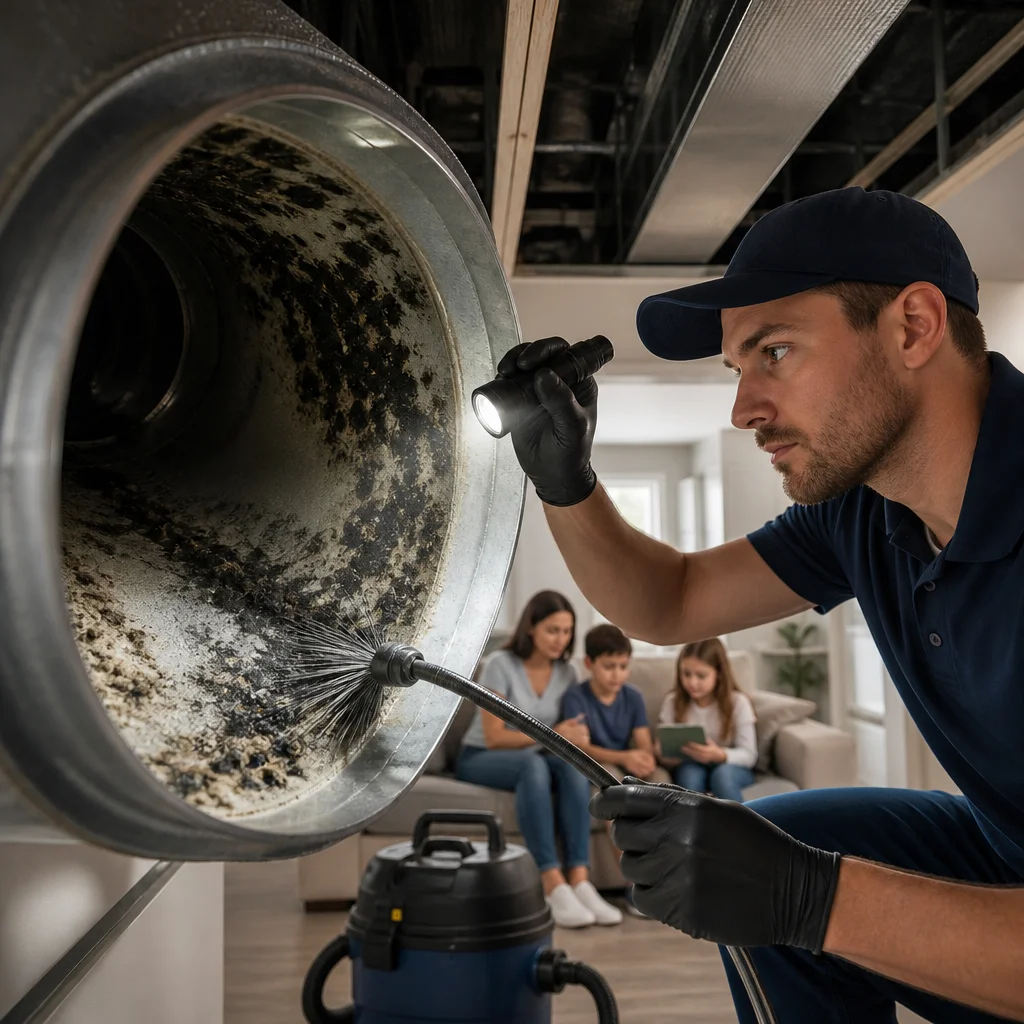
Beyond respiratory effects, prolonged exposure to certain mold species can cause more serious reactions: chronic sinusitis, bronchitis, or in rare cases, more severe fungal infections. Children, elderly family members, and anyone with compromised immunity are at higher risk. The key point is this: you don’t have to experience symptoms to be at risk. Some mold exposure can cause long-term damage without obvious immediate warning signs.
This is why addressing mold in ductwork quickly matters. The longer spores circulate through your home, the higher the cumulative exposure for your family.
Signs Your San Antonio Home Has Contaminated Ducts
Watch for warning signs that often appear long before you suspect mold. A musty odor coming from your air vents when your system runs is one of the most common indicators. This smell intensifies during humid months or after rain. If you notice it, don’t assume it’s normal duct dust. It’s worth investigating.
Visual clues include dark spots or discoloration visible at vent registers or grilles, especially if they appear slimy or fuzzy. You might also notice water stains or discoloration around supply registers or in your attic near ductwork connections. Some families detect a spike in dust accumulation on furniture and surfaces despite regular cleaning. That excess dust often indicates mold spore release from contaminated ducts.
Additional warning signs include:
- Unexplained increase in allergy or asthma symptoms for multiple family members at the same time
- Humid air inside your home even when your AC is running normally
- Visible condensation forming on cold supply ducts or metal connections
- Soft or deteriorating duct insulation that feels damp to the touch (if accessible in your attic)
- A sour or unpleasant smell that seems to intensify when your system first cycles on
If you’re experiencing any combination of these signs, our signs of mold in ductwork guide provides additional details. However, the only reliable way to confirm mold contamination is a professional inspection.
Our Professional Mold Assessment Process
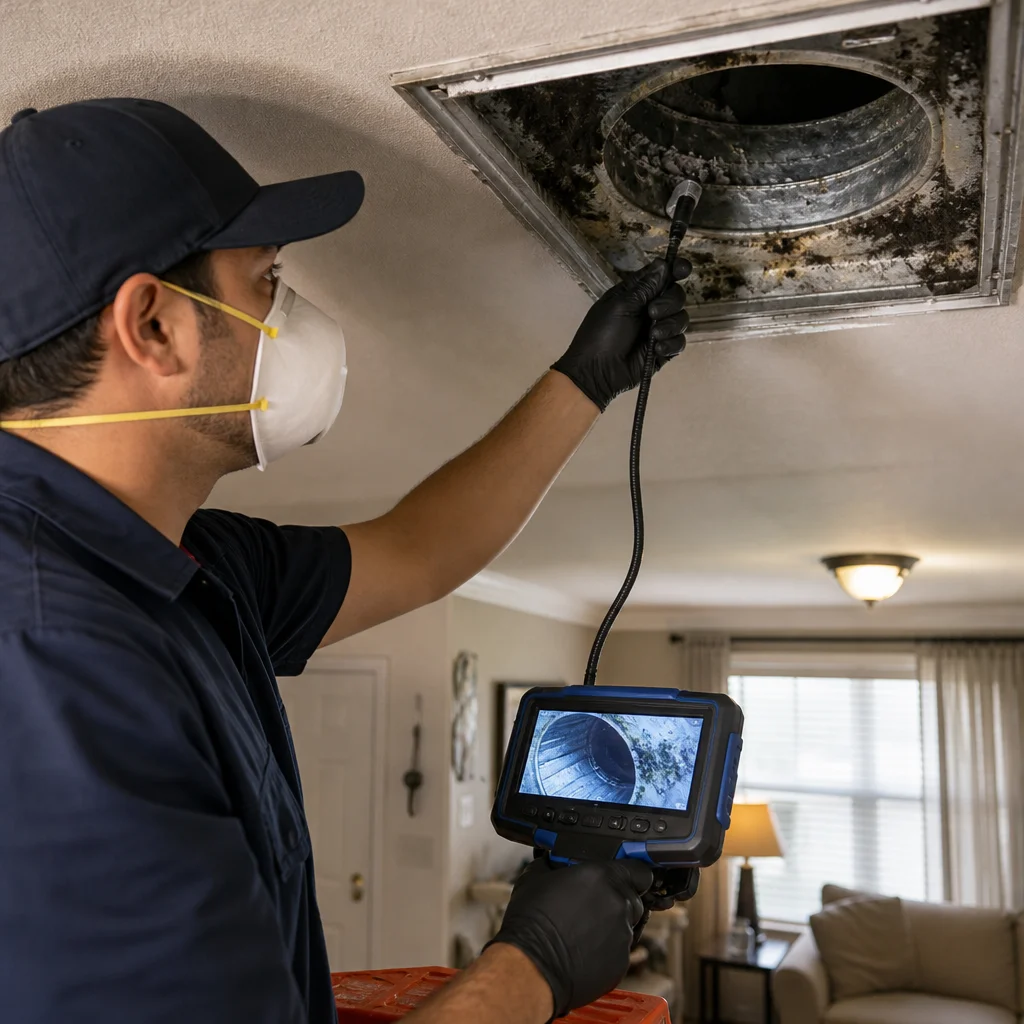
When you request a free estimate with us, you’re not getting a quick walk-around. We conduct a thorough assessment that tells you exactly what’s happening inside your ductwork. Our certified technicians use specialized equipment to inspect ducts from the inside out, including video scope cameras that allow us to see areas you can’t access.
Here’s our process: First, we perform a visual inspection of all accessible ductwork, vents, and your air handler unit. We look for visible mold growth, moisture, condensation, or discoloration. Second, we assess your home’s humidity levels and check for moisture sources that might be contributing to the problem. We also examine insulation condition and duct sealing to understand whether moisture is being trapped.
Third, if mold growth is confirmed or strongly suspected, we can collect samples for laboratory testing. This identifies the specific mold species present, which helps us determine the appropriate remediation approach and whether your home requires additional moisture control measures. Finally, we provide a detailed report with photographs, findings, and a clear recommendation for cleanup and prevention.
This comprehensive assessment gives you confidence in your decision. You’ll know exactly what needs to be addressed, why it needs to be addressed, and what the remediation plan will accomplish. No guessing, no surprises during the work.
Advanced Air Duct Cleaning and Remediation
Professional mold remediation in ductwork goes far beyond vacuuming out dust. We use industry-standard equipment including high-powered vacuum systems with HEPA filtration, rotary brushes that dislodge mold colonies from duct surfaces, and antimicrobial treatments that neutralize remaining spores and prevent regrowth.
Our air duct mold remediation process begins with source removal: physically cleaning out contaminated areas using equipment designed to capture mold spores and prevent them from spreading through your home during the process. We seal the system, isolate work areas, and use negative pressure containment when necessary to protect your family during service.
After mechanical cleaning, we apply EPA-approved antimicrobial treatments designed to kill remaining spores and create an environment where mold cannot easily regrow. For heavily contaminated systems, we may recommend duct replacement in severely affected sections, particularly if the duct material itself is deteriorating.
The final step is prevention. We address the underlying causes: improving airflow through your return vents, sealing air leaks in ductwork, replacing degraded insulation, and in some cases, recommending humidity control solutions like dehumidifiers or ventilation upgrades. A thorough remediation doesn’t just clean what’s there. It stops the problem from recurring.
Why Professional Cleaning Beats DIY Solutions
You might find consumer-level duct cleaning products online or hardware store antimicrobial sprays. These won’t work for contaminated ductwork, and here’s why: mold growing inside your ducts is embedded in insulation, settled into low points, and protected by dust accumulation. A spray you apply from a register won’t reach those colonies. Store-bought vacuums lack the suction power and HEPA filtration needed to capture mold spores safely. Using weak equipment actually risks spreading spores throughout your home as your system circulates air.
More importantly, without proper assessment, you won’t know how extensive the mold is or whether the underlying moisture problem is resolved. Many homeowners who attempted DIY cleanup ended up calling us weeks later because symptoms returned. The mold came back because the moisture source was never addressed.
Our equipment and training exist for a reason. We have industrial-grade vacuum systems that capture microscopic spores without releasing them back into your air. We have the expertise to identify where mold is hiding and the proper techniques to remove it safely. We understand ductwork construction and can spot issues like poor insulation or air leaks that enable mold growth in the first place.
Most importantly, when we finish the job, we can stand behind it. Our work comes with confidence because we’ve addressed both the contamination and the conditions that allowed it to develop.
Getting Your Free Expert Estimate Today
We offer free estimates for all San Antonio homeowners concerned about mold in their ductwork. This isn’t a sales pitch disguised as an inspection. You’ll receive honest findings and clear pricing with no obligation to proceed.
To schedule your free assessment, call us or visit our website to request an appointment. We serve San Antonio and the surrounding area with same-day and next-day availability. During your estimate, our technician will answer all your questions about costs, timeline, and what to expect during remediation.

Our San Antonio moldy duct estimate page provides details on typical costs and what factors affect pricing. Every home is different, so your actual cost depends on the extent of contamination, your ductwork configuration, and whether additional moisture control measures are recommended.
What Makes Our San Antonio Service Different
We’re not a franchise sending technicians from out of state. Our team has been serving San Antonio and surrounding Texas communities for years. We understand our local climate, the types of homes we work in, and the specific mold and moisture challenges that come with this region.
Every technician on our team holds current HVAC certifications and ongoing training in mold remediation and indoor air quality. We use equipment and methods that meet or exceed industry standards. We don’t cut corners on containment, ductwork sealing, or follow-up verification.
More than anything, we treat your home like we’d treat our own. Mold in ductwork is a real problem that affects your family’s health and your home’s value. We’re committed to fixing it thoroughly and preventing it from returning.
Ready to breathe easier? Contact us today for your free inspection and estimate. Let’s get your ducts clean and your indoor air quality back to where it should be.
If you’re dealing with dust, poor airflow, mold in your ducts, or a clogged dryer vent — don’t wait. These issues can affect your health and safety. Go Air Ducts Group are the local experts in air duct cleaning, mold removal, dryer vent cleaning, and attic insulation. Call now for a free inspection and same-day service in Austin and San Antonio.
Frequently Asked Questions (FAQ)
How do we identify mold in air ducts?
We use advanced inspection equipment to examine your ductwork from the inside and identify mold growth before it spreads throughout your home. During our assessment, we look for visible mold colonies, moisture buildup, and musty odors that indicate contamination. We’ll provide you with a detailed report showing exactly where the mold is located and recommend the best remediation approach for your specific situation.
What’s the difference between our professional cleaning and DIY methods?
We have the specialized equipment and certification to safely remove mold from deep within your ductwork where standard vacuums and sprays can’t reach. Our technicians use HEPA-filtered systems and proven remediation techniques that eliminate the mold colony at its source rather than just treating the symptoms. DIY solutions typically only address surface mold and can actually spread spores throughout your home if not done correctly.
How quickly can we schedule a free estimate in San Antonio?
We offer same-week appointments for our free assessments across San Antonio because we understand that mold concerns need prompt attention. Simply call us or request an estimate online, and our team will confirm your preferred date and time. We’ll arrive fully equipped to inspect your system and provide recommendations before you make any decisions.