
🕑 11 min read
Does commercial duct cleaning improve HVAC efficiency?
Yes. Removing built-up debris from commercial ductwork restores airflow, reduces strain on equipment, and extends system life while lowering energy use. Go Air Ducts provides commercial duct cleaning that measurably improves HVAC performance and efficiency for Texas businesses, protecting both air quality and operating costs.
Table of Contents
- Why Commercial Properties Struggle With Duct Buildup and Performance Decline
- The True Cost of Neglected Commercial Ductwork on Your Bottom Line
- How Accumulated Dust and Debris Reduces Airflow and System Lifespan
- Our Professional Commercial Duct Cleaning Process and Results
- Energy Efficiency Gains You'll See After Professional Duct Cleaning
- How Regular Cleaning Prevents Costly HVAC Repairs and Replacements
- Commercial Properties We've Helped Restore Peak Performance
- Timeline and Frequency for Optimal Commercial Duct Maintenance
- Schedule Your Free Commercial Duct Cleaning Estimate Today
- Frequently Asked Questions (FAQ)
Why Commercial Properties Struggle With Duct Buildup and Performance Decline
Commercial buildings have unique HVAC demands. Your system runs longer hours, handles higher occupancy loads, and operates under constant stress compared to residential setups. Yet many facility managers overlook one critical maintenance task that directly impacts energy costs, tenant comfort, and equipment lifespan: professional duct cleaning.
We’ve spent years maintaining and cleaning HVAC systems across Dallas, Houston, Austin, and San Antonio. What we’ve learned is that commercial duct cleaning isn’t optional maintenance. It’s a strategic investment that keeps your HVAC system performing at peak efficiency while protecting your bottom line.
Commercial buildings accumulate duct contamination faster than residential properties. Higher foot traffic, continuous operation, and increased outdoor air intake all contribute to faster dust and particle accumulation.
Here’s what we see on job sites regularly: office buildings with supply and return ducts clogged with months of dust and debris. Retail spaces where HVAC systems work harder just to maintain consistent temperatures. Medical facilities where indoor air quality standards demand clean ducts. Warehouses where industrial dust infiltrates the ductwork despite filters.
The culprits behind buildup include:
- Oversized or improperly maintained air filters that allow bypass
- Continuous outdoor air intake in warm Texas climates
- Construction dust from renovations or tenant improvements
- Lack of regular preventive maintenance schedules
- Ductwork corrosion that sheds particles into the airflow
When ducts accumulate debris, your HVAC system compensates by working harder. The blower motor runs longer cycles. The compressor cycles more frequently. Every component strains to deliver the same airflow through increasingly restrictive pathways. Performance declines noticeably within 12 to 18 months of neglected maintenance.
What to do next: Schedule a professional duct inspection to identify buildup levels before they impact your operations. Most commercial facilities benefit from inspection every 12 months.
The True Cost of Neglected Commercial Ductwork on Your Bottom Line
Dirty ducts don’t just reduce comfort. They drain your budget in multiple ways that many facility managers don’t immediately connect to duct condition.
Energy costs rise first and most noticeably. A typical commercial building with contaminated ducts sees energy consumption increase 15 to 25 percent. For a mid-sized office building running a 5-ton HVAC system year-round in Texas, that translates to $3,000 to $6,000 in additional annual energy expenses.
Maintenance and repair costs accelerate significantly. Dirty ducts force your HVAC equipment to operate at higher pressures and temperatures. Compressors fail sooner. Blower motors burn out prematurely. Coil efficiency drops, requiring more frequent service calls and component replacement. We’ve seen commercial HVAC systems that should last 15 years fail around year 10 due to sustained strain from duct contamination.
Tenant turnover and productivity impacts are often overlooked. Poor air quality and inconsistent temperature control frustrate occupants. Office buildings experience higher lease cancellation rates. Retail tenants request rent reductions. Employee productivity studies show noticeable declines in environments with poor airflow and indoor air quality.
Liability exposure increases when you neglect system maintenance. If mold or contamination develops in your ducts and causes health complaints, you face potential legal claims. Building codes and lease agreements increasingly specify HVAC maintenance standards.
Consider this scenario: A 30,000 square foot commercial building with dirty ducts spends an extra $4,500 annually on energy, encounters $2,000 in unexpected repairs, and loses one tenant (representing $15,000 in annual lease revenue). Total cost: $21,500 in one year from a problem that professional duct cleaning could have prevented.
How Accumulated Dust and Debris Reduces Airflow and System Lifespan
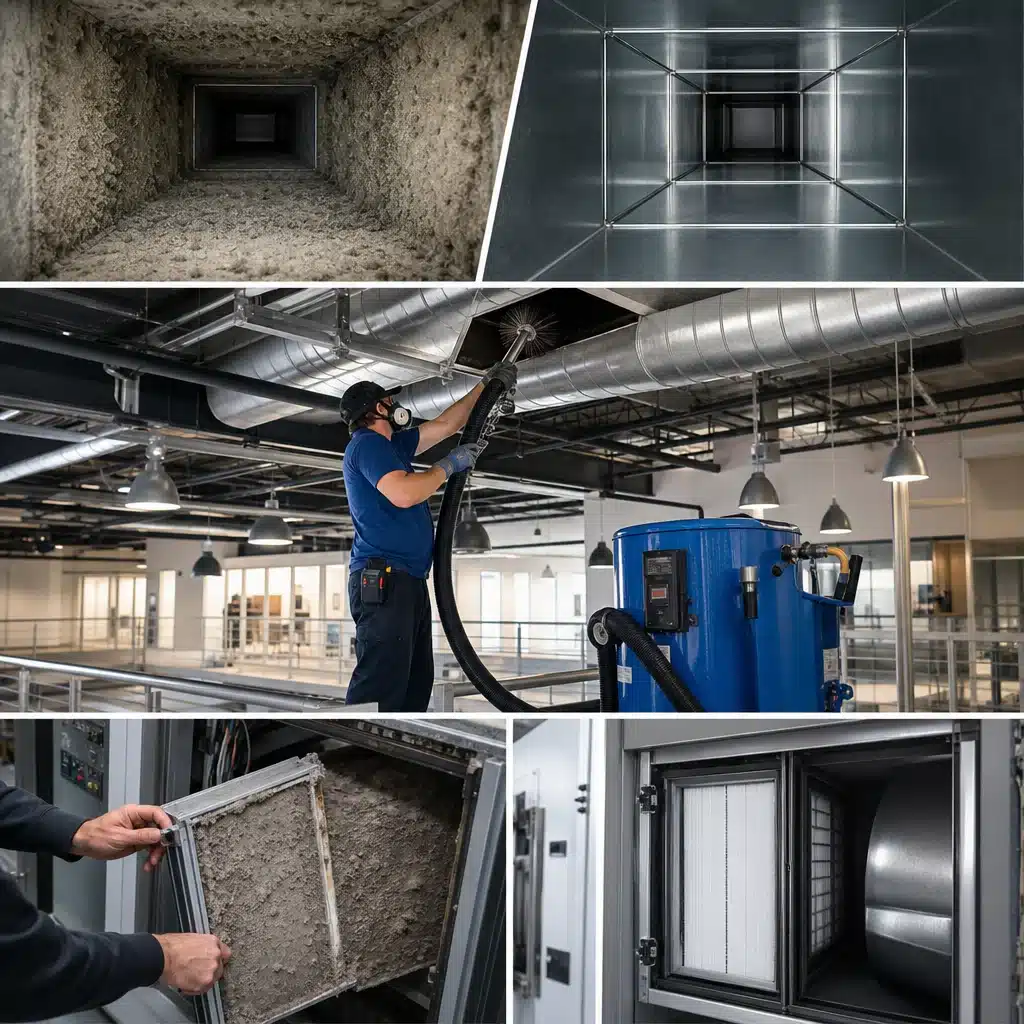
The mechanics are straightforward but consequences are significant. Dust and debris accumulation creates resistance in the ductwork, similar to a clogged air filter restricting airflow.
When dust and debris buildup restricts airflow:
- Supply air velocity decreases, meaning less conditioned air reaches occupied spaces
- Return air cannot flow freely back to the unit, causing pressure imbalances
- The blower motor must work harder to move the same volume of air
- System runtime extends to achieve target temperatures
- Evaporator and condenser coils become dirty faster since airflow is compromised
This extended runtime accelerates equipment wear. Compressors operate longer per cycle, generating more heat and stress. Bearings in motors wear faster under continuous higher-load operation. Capacitors degrade more quickly with extended electrical demand. A system designed for 8 hours of daily operation running 10 to 12 hours daily loses 2 to 4 years from its typical lifespan.
We’ve measured airflow reduction of 20 to 40 percent in heavily contaminated commercial ducts. That means your 5-ton system is delivering like a 3-ton to 4-ton system while drawing full power consumption. You’re paying for performance you’re not receiving.
The compounding effect matters too. Dirty ducts allow more dust to bypass filters and contaminate coils. Dirty coils impact efficiency further, creating a downward spiral where each component becomes progressively dirtier and works harder.
Our Professional Commercial Duct Cleaning Process and Results
We don’t approach commercial duct cleaning like residential jobs. Commercial systems are larger, more complex, and require specialized equipment and methodology.
Our process begins with a complete ductwork assessment. We use video inspection to identify contamination levels, verify duct integrity, and spot potential problem areas. This inspection informs our cleaning strategy and helps us communicate findings clearly to facility managers.
Next comes source removal using truck-mounted high-pressure systems. We connect our equipment to the ductwork at strategic points and use rotating brushes and compressed air to dislodge accumulated debris. For heavily contaminated systems, we may use multiple passes through different duct segments.
We pay particular attention to problem zones: duct bends where debris settles, transitions where velocity changes, and areas near intake vents where outdoor dust accumulates. Many commercial buildings have undersized return air paths that create dead zones where debris pools.
Our crews then perform final verification using video inspection of key duct sections to confirm cleaning effectiveness. We document before and after conditions and provide written reports detailing the work performed.
Results clients notice immediately include improved airflow throughout the building, faster temperature response, and noticeably cleaner supply air (less dust visible on vents and diffusers). Within weeks, energy bills reflect decreased consumption as your HVAC system returns to designed efficiency.
Energy Efficiency Gains You’ll See After Professional Duct Cleaning
Energy savings are quantifiable and begin appearing on your next utility bill.
Energy bill savings typically range from 10 to 20 percent for commercial buildings that had moderate to heavy duct contamination. This results from:
- Reduced system runtime as airflow improves and equipment works more efficiently
- Lower compressor cycling frequency when pressure drops return to normal
- Improved heat transfer across coils now receiving unrestricted airflow
- Decreased fan energy consumption as motors work under normal rather than excessive load
A 30,000 square foot office building spending $8,000 annually on HVAC energy typically sees $800 to $1,600 in annual savings after professional duct cleaning. That represents an ROI on professional cleaning within the first year for most commercial properties.
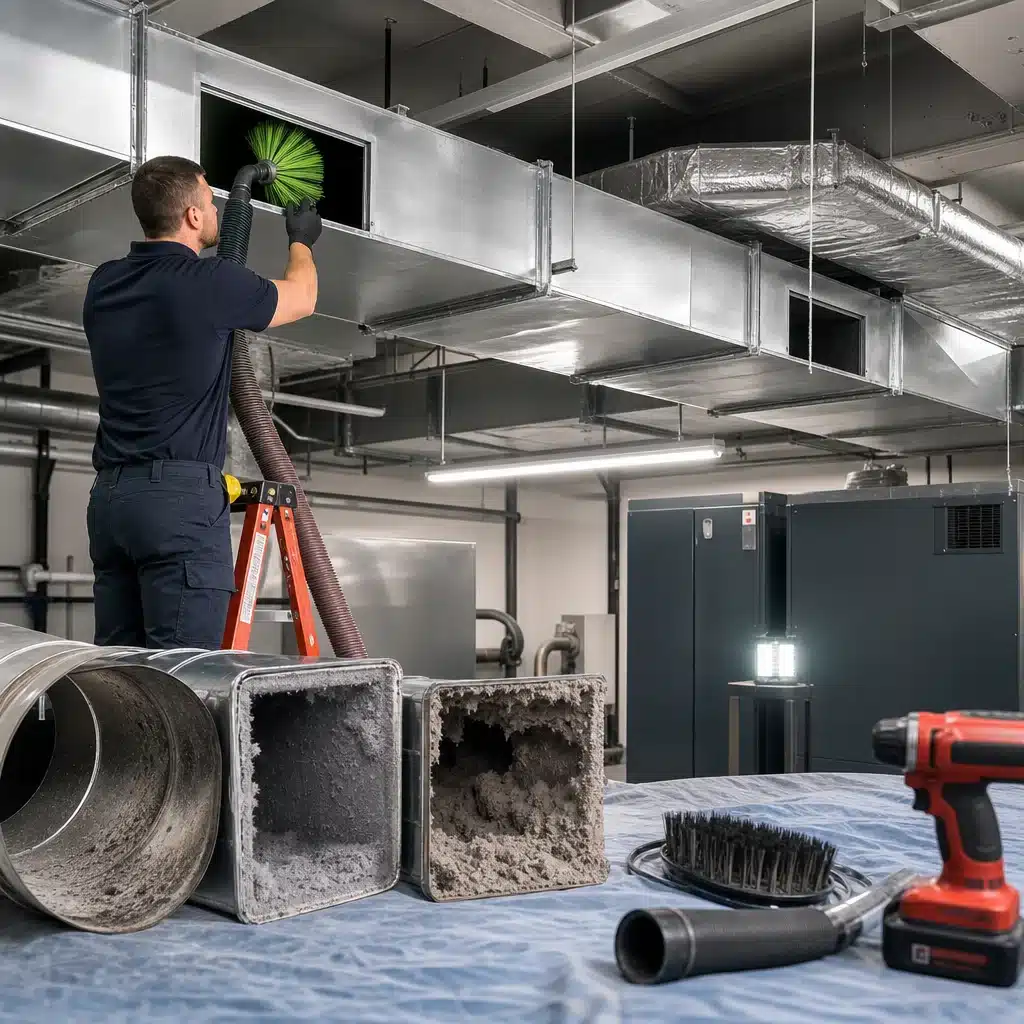
These gains persist because dirty air ducts affect efficiency progressively. Once cleaned, your system operates at designed performance until contamination rebuilds. Regular maintenance intervals extend the duration of peak efficiency.
Seasonal variations matter too. Texas summer months place maximum strain on air conditioning systems. A clean duct system handles peak demand far more effectively than contaminated ductwork. Your facility stays comfortable during heat waves without excessive energy consumption.
How Regular Cleaning Prevents Costly HVAC Repairs and Replacements
Preventive duct cleaning is significantly more cost-effective than repair-focused maintenance.
Consider equipment replacement costs for commercial HVAC systems. A 5-ton commercial unit replacement runs $8,000 to $12,000 plus installation. Component replacements add up quickly: compressors ($2,500 to $4,000), blower motors ($1,200 to $2,000), expansion valves ($600 to $1,200).
Professional duct cleaning costs $600 to $1,500 for most commercial buildings depending on system size and contamination levels. This single service can prevent $5,000 to $10,000 in component failures by reducing system strain.
The timeline effect is critical. A neglected commercial HVAC system experiences progressive failure patterns. First, energy consumption creeps upward. Then cooling or heating response times slow. Component failures follow: capacitor burnout, compressor noise and reduced capacity, blower motor overheating. Each failure triggers expensive emergency service calls.
Conversely, a maintained system with regular duct cleaning operates reliably for its full design life. Service calls become routine maintenance rather than emergency repairs. You budget for expected costs rather than absorbing surprise failures.
We’ve seen commercial facilities extend HVAC system lifespan by 3 to 5 years through consistent duct cleaning and filter maintenance. For a building with a 15-year equipment replacement cycle, that’s 20 to 33 percent additional value from preventive care.
Additionally, regular cleaning prevents contamination from spreading to other building systems. Dirty ductwork can contaminate areas of your building, impact tenant health, and create liability. Clean ducts mean consistent air quality throughout your facility.
Commercial Properties We’ve Helped Restore Peak Performance
Our experience across Texas commercial properties demonstrates consistent results.
We recently completed duct cleaning for a 45,000 square foot retail shopping center in Austin that had never received professional duct service in seven years of operation. The property manager reported tenant complaints about temperature inconsistencies and dust accumulation. After cleaning, tenant satisfaction improved noticeably, and energy costs dropped 18 percent within the first month.
A San Antonio medical office building with strict indoor air quality requirements had its ductwork cleaned as part of compliance with updated healthcare facility standards. Our detailed inspection and cleaning verified that the system now met stringent air quality requirements, providing documented assurance for both the building owner and healthcare tenants.
A Dallas corporate office tower with a large central HVAC plant system underwent comprehensive duct cleaning across 12 floors. The property management team documented that office lease renewal rates improved in the following year, with tenants specifically citing improved environmental comfort as a deciding factor.
A Houston warehouse facility operating in a dusty industrial area struggled with rapid air filter clogging and poor air quality. Professional duct cleaning reduced filter replacement frequency by 60 percent and resolved dust complaints from warehouse staff.
Each project reinforced a consistent finding: commercial buildings that maintain clean ductwork through regular professional service experience lower operational costs, fewer equipment failures, better tenant satisfaction, and extended equipment lifespan.
Timeline and Frequency for Optimal Commercial Duct Maintenance
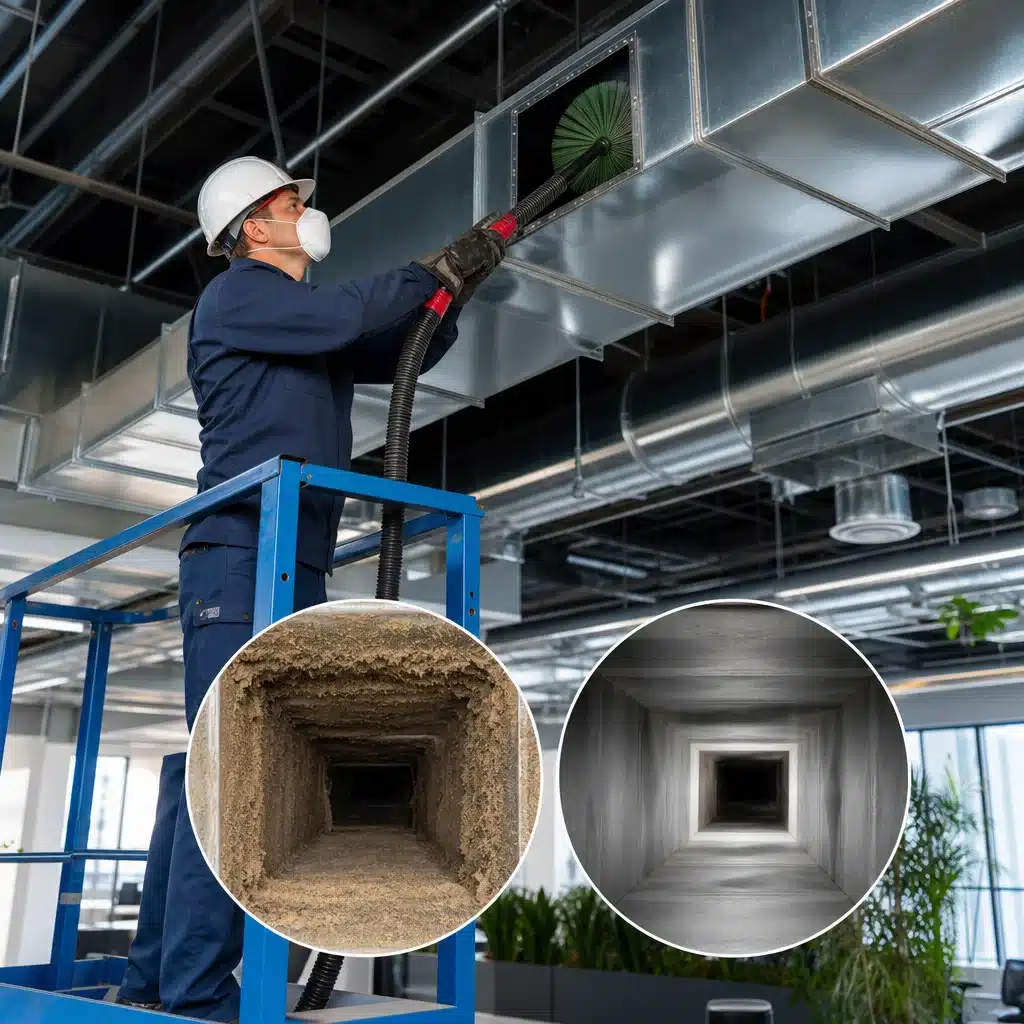
Commercial buildings should follow a structured maintenance schedule rather than responding only to problems.
Most commercial facilities benefit from professional duct cleaning every 18 to 24 months. This interval prevents heavy contamination while allowing normal dust accumulation between services. High-dust environments (industrial areas, construction zones, heavy traffic facilities) may warrant annual cleaning.
The timeline depends on several factors:
- Building age and duct condition: Older systems with existing corrosion or poor sealing require more frequent service
- Outdoor air intake design: Buildings pulling significant outdoor air accumulate debris faster
- Filter maintenance: Facilities with excellent filter replacement schedules may extend cleaning intervals slightly
- Occupant density: High-traffic commercial buildings accumulate debris faster than lightly occupied facilities
- Local environment: Texas dust and pollen loads affect accumulation rates regionally
Spring and fall represent ideal timing for most commercial buildings. Scheduling duct cleaning before peak cooling season (summer) and heating season (winter) ensures systems perform optimally during high-demand periods. Spring cleaning removes winter dust and pollen; fall cleaning prepares systems for winter operation.
Document your maintenance schedule in your facilities management system and set reminders 60 days before planned service. This allows adequate scheduling and ensures you don’t miss planned intervals.
Schedule Your Free Commercial Duct Cleaning Estimate Today
Your commercial HVAC system is one of your building’s largest operational expenses. Maintaining it properly through professional duct cleaning protects that investment while improving tenant satisfaction and reducing energy costs.
We provide free estimates for commercial duct cleaning across Austin, San Antonio, Dallas, and Houston. Our assessment includes video inspection of your ductwork, measurement of current airflow performance, and a detailed recommendation for your specific facility.
Contact us today to schedule your free commercial duct cleaning estimate. We’ll identify current duct condition, project energy savings based on your system, and provide a transparent quote with no surprises. Our goal is helping you maintain peak HVAC performance while protecting your facility’s long-term operational costs.
Reach out to our team at https://goairducts.com/ or call for same-day scheduling. Let’s get your commercial HVAC system running at the efficiency and performance it should deliver.
If you’re dealing with dust, poor airflow, mold in your ducts, or a clogged dryer vent — don’t wait. These issues can affect your health and safety. Go Air Ducts Group are the local experts in air duct cleaning, mold removal, dryer vent cleaning, and attic insulation. Call now for a free inspection and same-day service in Austin and San Antonio.
Frequently Asked Questions (FAQ)
How often should we schedule commercial duct cleaning?
We recommend our commercial clients have their ducts professionally cleaned every 1-2 years, depending on your building’s usage and environment. High-traffic facilities, properties with construction nearby, or those with frequent HVAC system issues may benefit from annual cleaning to maintain peak performance. We’ll assess your specific situation during your free estimate and provide a customized maintenance schedule.
What kind of efficiency improvements can we expect after professional duct cleaning?
Our clients typically see energy cost reductions of 15-25% after we clean their commercial ductwork, since your HVAC system no longer has to work through accumulated dust and debris. Improved airflow also means better temperature consistency throughout your facility and reduced strain on your equipment. We document these improvements for you so you can track the return on your investment.
Why is commercial duct cleaning different from residential cleaning?
Commercial systems handle much larger volumes of air and typically accumulate buildup faster due to higher occupancy and activity levels. We use industrial-grade equipment and specialized techniques to clean extensive ductwork efficiently without disrupting your business operations. Our process is designed specifically for the scale and complexity of commercial HVAC systems, which is why we recommend our specialized commercial cleaning service over standard residential approaches.