
🕑 10 min read
How long does blow-in insulation last in Texas?
Quality blow-in insulation lasts 20 to 30 years or more, though settling and attic conditions can reduce performance over time. Periodic top-ups restore full R-value. Go Air Ducts installs and refreshes blow-in insulation in Texas homes so you keep maximum energy savings and comfort for decades.
Table of Contents
- Why Your Texas Home's Insulation Matters More Than You Think
- Common Signs Your Blow-In Insulation Is Failing
- How Long Blow-In Insulation Actually Lasts in Our Texas Climate
- Factors That Shorten Insulation Lifespan in Austin and San Antonio
- How We Assess and Upgrade Your Home's Insulation Performance
- Energy Savings and ROI From Professional Insulation Installation
- Our Process for Installing Long-Lasting Blow-In Insulation
- Maintenance Tips to Maximize Your Insulation Investment
- When to Replace vs. Add More Insulation
- Why Choose Go Air Ducts for Your Insulation Upgrade
- Frequently Asked Questions (FAQ)
Why Your Texas Home’s Insulation Matters More Than You Think
Your home’s insulation isn’t just about staying warm in winter. Here in Texas, it’s your first line of defense against brutal summers, humidity that creeps into walls, and energy bills that climb into the hundreds every month. When insulation fails, your HVAC system works overtime, your indoor air quality suffers, and mold finds the perfect breeding ground in attic spaces.
We’ve inspected thousands of Austin and San Antonio homes, and the pattern is clear: homeowners who invest in quality insulation see immediate relief in comfort and long-term protection against costly repairs. Blow-in insulation, when installed properly, creates an even thermal barrier that keeps conditioned air where it belongs and prevents hot, humid outside air from infiltrating your attic.
The real question isn’t whether you need good insulation. It’s understanding how long what you have will actually last and when replacement becomes necessary. That’s what we’ll cover here.
Common Signs Your Blow-In Insulation Is Failing
Before you even think about lifespan, watch for these red flags that your insulation is already breaking down:
Inconsistent indoor temperatures – You find yourself adjusting the thermostat constantly, or upstairs rooms stay hot while downstairs feels cold. This points to insulation settling or gaps that allow air to bypass your HVAC system.
Visibly sagging attic insulation – Moisture and gravity work together to compress blow-in insulation over time. When you look into your attic, you shouldn’t see bare rafters or thin spots.
Musty odors or visible mold – Texas humidity is relentless. When insulation becomes damp or moisture builds up in the attic space, mold follows quickly. This is both an air quality and structural concern.
High heating and cooling bills without explanation – If your energy costs jump 20-30% without a change in usage, failing insulation is often the culprit.
Pest damage or gaps – Rodents and insects love attic spaces, especially where insulation has settled. Look for droppings, chewed insulation, or visible tunnels.
If you’re seeing any of these, a professional assessment will give you a clear picture of what’s happening above your ceiling.
How Long Blow-In Insulation Actually Lasts in Our Texas Climate
Blow-in insulation typically lasts 20 to 30 years under ideal conditions. In Texas, however, conditions are rarely ideal. Our extreme heat, sudden temperature swings, and high humidity accelerate wear.
In our experience serving Dallas, Houston, Austin, and San Antonio, we consistently find that homes installed with quality blow-in insulation between 1995 and 2005 now show significant settling and performance loss. Homes from 2010 onward generally perform well, assuming they were properly installed.
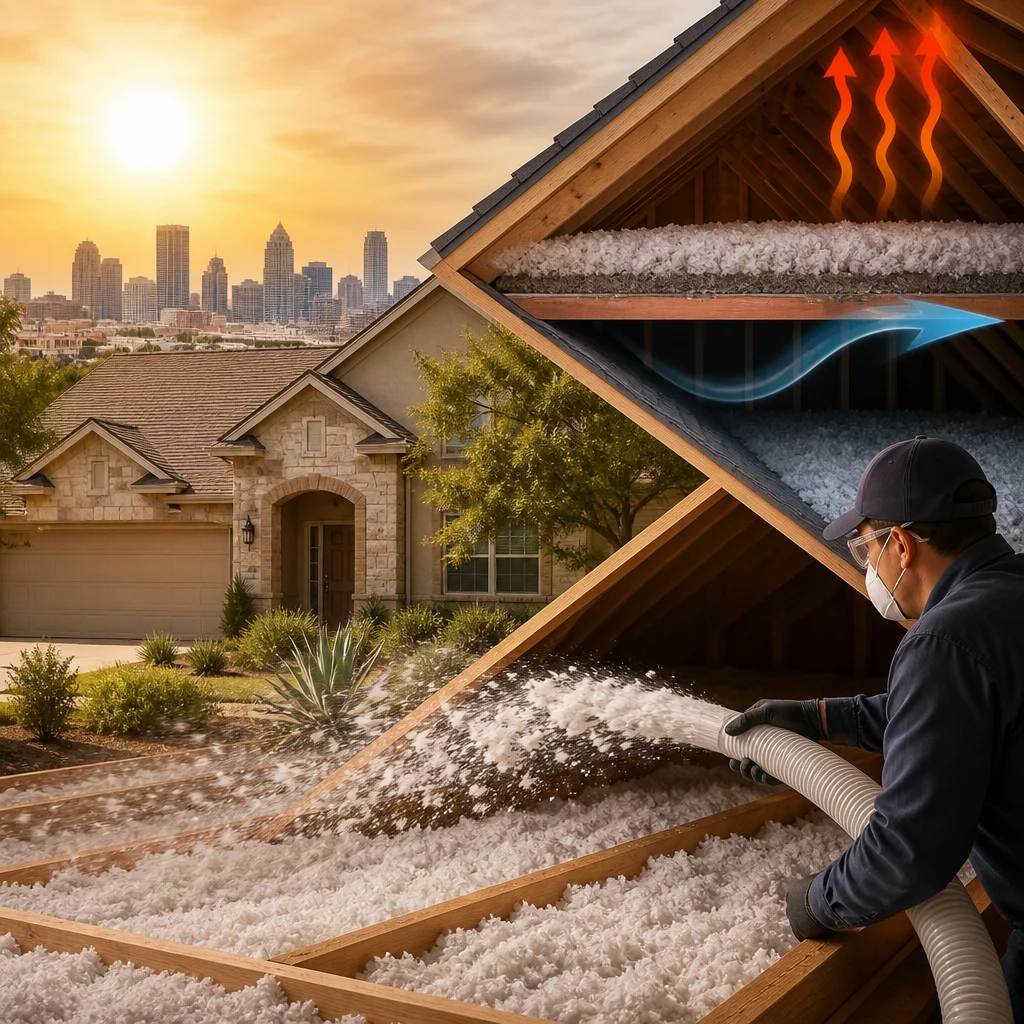
The timeline depends heavily on several factors we’ll break down next, but understand this: 15 years is often the point where homeowners start noticing efficiency drops. By year 20, replacement or supplemental installation becomes economically smart.
Factors That Shorten Insulation Lifespan in Austin and San Antonio
Several Texas-specific conditions wear insulation faster than the textbook 20-30 years would suggest.
Summer heat and roof temperature swings – Your attic can exceed 140 degrees on a hot July afternoon. This thermal stress breaks down the binding in fiberglass and cellulose blow-in insulation, causing it to compact and lose R-value faster than in more moderate climates.
Humidity and moisture infiltration – When your attic isn’t properly ventilated or air conditioning ducts leak in the attic space, moisture accumulates. Damp insulation loses effectiveness and becomes a mold vector. We’ve pulled out insulation that was still wet months after roof leaks were patched.
Poor attic ventilation – Many older Austin and San Antonio homes lack adequate soffit-to-ridge ventilation. Stagnant, hot attic air accelerates degradation and creates conditions where moisture gets trapped.
Inadequate initial installation depth – If insulation was installed to R-19 when R-38 or R-49 was needed (common in older homes), it doesn’t last as well because it’s working harder from day one.
Settling and compression – Blow-in insulation naturally settles over time. Poor installation technique or settling of 15-20% over the first decade can drop your R-value by 10-15%.
Air and duct leaks – Leaking HVAC ducts in the attic introduce conditioned air into insulation spaces, adding moisture and reducing the insulation’s effectiveness.
How We Assess and Upgrade Your Home’s Insulation Performance
Our process starts with a thorough attic inspection. We measure existing insulation depth with calibrated tools, check for moisture and mold, evaluate ventilation, and identify air leaks or duct leaks that compound the problem.
We also use thermal imaging to spot cold spots in winter or hot spots in summer that indicate insulation failures or gaps. This gives us hard data about where your home is losing conditioning.
From there, we create a customized plan. Sometimes the solution is adding blow-in insulation over existing material. Other times, we recommend removal and fresh installation to correct settling or contamination issues. We also assess your ductwork and ventilation, because insulation alone won’t solve the problem if your HVAC system isn’t performing as it should.
Our certified technicians explain every finding and option. You’ll understand not just what’s wrong, but why, and what the cost-benefit tradeoff looks like for each approach.
Energy Savings and ROI From Professional Insulation Installation
This is the number that matters to your wallet. Homes with proper attic insulation see 10-20% reductions in annual heating and cooling costs. For the average San Antonio homeowner paying $180-220 per month in summer, that’s $20-40 monthly savings just from June through September, often more.
We’ve worked with hundreds of homeowners who track their energy bills before and after insulation upgrades. Most see their investment paid back in 5-8 years, then enjoy pure savings for the remaining life of the insulation.

There’s also the hidden ROI: consistent indoor temperatures mean your HVAC system runs fewer hours, experiences less wear, and lives longer. We frequently see HVAC systems last an extra 3-5 years when paired with quality attic insulation.
We’ll help you explore available attic insulation rebates from Texas utilities and energy efficiency programs, which can offset 20-30% of your project cost.
Our Process for Installing Long-Lasting Blow-In Insulation
Before we blow in a single pound of insulation, we prepare the space properly. This separates professional work from quick fixes.
Step one: Attic prep and air sealing – We seal air leaks around penetrations, ducts, and junction boxes. Unsealed gaps let conditioned air escape and defeat the purpose of new insulation.
Step two: Addressing moisture and ventilation – If we find moisture issues, we address the source: duct leaks, inadequate ventilation, or roof leaks. We ensure your attic can breathe properly before installing new material.
Step three: Precise depth and coverage – We install to the depth needed for your climate zone (typically R-38 to R-49 in Texas), using calibrated equipment to ensure even coverage. We bag and protect ductwork so insulation doesn’t block airflow.
Step four: Final inspection and documentation – We photograph the work, provide depth measurements, and give you documentation of what was installed. This matters for future resale and warranty claims.
The entire process typically takes 1-2 days depending on attic size. Your home is protected from dust and debris throughout.
Maintenance Tips to Maximize Your Insulation Investment
Once you’ve invested in blow-in insulation installation, simple maintenance extends its life significantly.
Check your attic annually – A quick visual inspection each year in late fall catches new leaks, settling, or pest damage before they become expensive problems. Look for light coming through rafters (air leaks) and any visible moisture.
Keep gutters clean – Clogged gutters cause water to back up into soffits and attic spaces. Clean gutters every spring and fall, especially before our heavy rain seasons.
Inspect and seal ductwork – Leaking ducts introduce moisture and conditioned air into insulation spaces. Have us inspect your ductwork every 3-5 years as part of your regular HVAC maintenance.
Maintain attic ventilation – Clear any debris from soffit vents and ensure ridge vents aren’t blocked. Proper airflow keeps moisture levels down and extends insulation life.
Address roof leaks immediately – Don’t wait. Even small leaks cause rapid insulation degradation and mold growth. Get a professional inspection as soon as you suspect water intrusion.
When to Replace vs. Add More Insulation
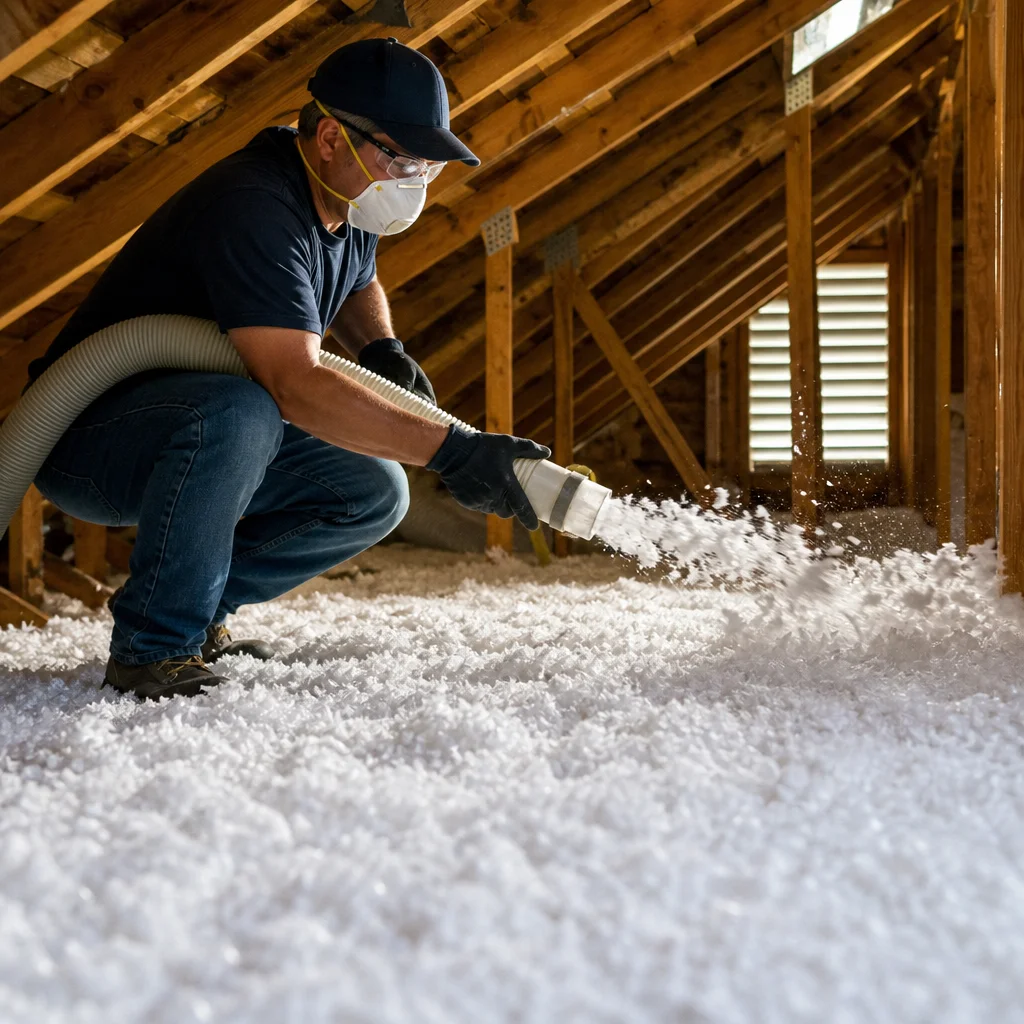
This decision depends on what you find during inspection. If your attic has 6-8 inches of old, settled insulation, adding new insulation over top is usually the right move. It’s faster, less disruptive, and often cheaper than full removal.
However, if the existing insulation is contaminated with mold, heavily soaked, or shows signs of pest damage, removal and fresh installation is necessary. You can’t build on a compromised foundation.
If you need R-19 but only have R-15, adding R-10 over top gets you close to code. If you need R-49 and only have R-15, you’ll need significant depth, and removal followed by fresh installation may make more sense.
Our free estimate process includes this analysis. We won’t recommend unnecessary work, but we will recommend the most cost-effective solution for your specific situation.
Why Choose Go Air Ducts for Your Insulation Upgrade
We’re not just insulation contractors. We understand how insulation, ductwork, air sealing, and ventilation work together as a system. Many contractors install insulation in isolation and miss the bigger picture. We assess your entire attic environment.
We’re certified HVAC technicians with over a decade of hands-on experience in Austin and San Antonio homes. We’ve seen what works long-term and what fails. We use quality materials, proper installation techniques, and stand behind our work with transparent documentation and warranties.
We also listen. We explain findings in plain language, never pressure you into upgrades you don’t need, and present your options honestly so you make the best decision for your home.
Ready to understand how your home’s insulation is performing? Contact us for a free professional assessment. Our team serves Austin, San Antonio, Dallas, and Houston with same-day scheduling available. Call or visit our insulation service Austin page to book your inspection today. We’ll give you clear answers and a detailed plan to maximize your comfort and energy efficiency for years to come.
If you’re dealing with dust, poor airflow, mold in your ducts, or a clogged dryer vent — don’t wait. These issues can affect your health and safety. Go Air Ducts Group are the local experts in air duct cleaning, mold removal, dryer vent cleaning, and attic insulation. Call now for a free inspection and same-day service in Austin and San Antonio.
Frequently Asked Questions (FAQ)
How long can we expect blow-in insulation to last in Texas homes?
We typically see blow-in insulation perform well for 15 to 20 years in our Texas climate, though this can vary based on factors like humidity, attic ventilation, and whether your home experiences moisture issues. In areas like Austin and San Antonio where we operate, the heat and occasional moisture create conditions that can accelerate settling and degradation if your insulation wasn’t installed correctly or isn’t properly maintained. We recommend having us inspect your insulation every 5 to 7 years to catch any settling or damage before it affects your energy efficiency.
What warning signs tell us your blown insulation needs replacement?
If you notice higher energy bills, inconsistent temperatures between rooms, visible mold or pest damage in your attic, or significant settling of the insulation material, those are clear indicators we need to evaluate your system. We’ve also found that many homeowners don’t realize their insulation has compressed over time, which reduces its R-value considerably and forces your HVAC system to work harder. When we perform our free estimates, we can show you exactly what condition your current insulation is in and whether adding or replacing it will solve your problem.
How much does blow-in insulation replacement cost in Texas?
The cost depends on your attic size, current insulation condition, and the R-value you need for our Texas climate, so we always provide a free, no-obligation estimate tailored to your specific home. Generally, most homeowners see the investment pay for itself within 3 to 5 years through lower energy bills, and many qualify for rebates or tax credits that we can help you identify. We recommend scheduling our assessment so we can give you an accurate price and timeline for your particular property.