
🕑 14 min read
Can air duct cleaning reduce allergy symptoms?
Yes. Removing dust, pollen, dander, and mold from ductwork means far less recirculates, and many Central Texas homeowners report noticeably fewer allergy symptoms. Go Air Ducts provides professional air duct cleaning that clears allergens at the source, helping families breathe easier and enjoy cleaner indoor air.
Table of Contents
- Why Indoor Air Quality Matters More Than You Think
- The Hidden Problem: What's Actually Growing in Your Ducts
- How We Measure IAQ Improvements with Professional Testing
- Real Results: Our Austin Case Study with 67% Allergy Reduction
- San Antonio Success: One Family's Journey to Cleaner Air
- Our Comprehensive Air Duct Cleaning Process Explained
- Beyond Cleaning: Mold Remediation and Prevention Strategies
- The Science Behind Our Certified HVAC Technician Approach
- Energy Efficiency Gains You'll Notice on Your Utility Bills
- Getting Your Free IAQ Assessment and Service Estimate
- Why Central Texas Homeowners Trust Go Air Ducts
- Frequently Asked Questions (FAQ)
Why Indoor Air Quality Matters More Than You Think
When we started Go Air Ducts, we noticed something striking: homeowners across Austin and San Antonio were experiencing persistent allergies, asthma flare-ups, and respiratory issues that seemed to worsen during certain seasons. Many had tried medications, air purifiers, and regular cleaning without real relief. The root cause? Contaminated air ducts they couldn’t see.
Over the past several years, we’ve helped hundreds of Central Texas families reclaim their indoor air quality. One of our most compelling successes involved a 67% reduction in allergy symptoms after professional air duct cleaning and mold remediation. This wasn’t luck. It was the result of understanding what actually lives in your ducts, using certified testing methods, and applying proven cleaning protocols. Let us walk you through what we’ve learned and how you can achieve similar results.
Indoor air quality directly impacts your family’s health, especially in Texas where we spend most of our time indoors during extreme heat or cold. The EPA reports that indoor air can be two to five times more polluted than outdoor air, and your HVAC system is often the culprit.
We encounter homeowners who dismiss air quality concerns because they can’t see the problem. Yet the data tells a different story. Dust, allergens, mold spores, and pet dander circulate through your ducts every time your system runs. Families with young children, elderly members, or anyone with respiratory sensitivity feel the impact immediately. You might notice:
- Increased sneezing or nasal congestion indoors
- Worse allergy symptoms in certain rooms
- Musty or stale odors from vents
- Higher humidity levels despite your AC running
- Visible dust accumulation around registers
Poor indoor air quality also strains your HVAC system, forcing it to work harder and drive up energy bills. By prioritizing air duct cleaning and IAQ maintenance, we help our customers address the source rather than mask the symptom.
Action step: Walk around your home and check the dust buildup around your vents. If you see gray or brown accumulation, your ducts likely need professional attention.
The Hidden Problem: What’s Actually Growing in Your Ducts
Most homeowners have no idea what’s thriving inside their ductwork. We’ve been inside thousands of Central Texas homes, and the findings are consistent: dust accumulation, mold colonies, pest droppings, and microbial growth are standard in neglected systems.
Your air ducts collect debris from multiple sources. Dead skin cells, hair, fabric fibers, and outdoor particles enter through return air vents. In humid climates like ours, moisture creates ideal conditions for mold growth. We’ve pulled out visible mold in ductwork, especially near air handlers and in attic sections where temperature fluctuations encourage condensation.
Texas heat makes this worse. During cooling season, moisture gets pulled into your ducts. When the system cycles off, that moisture lingers, feeding mold and bacteria. One family we worked with in San Antonio had such heavy mold growth that family members were experiencing respiratory issues year-round. The problem wasn’t their allergies. It was their air supply.
Dryer vents pose an additional hidden risk. Lint accumulates in ducts and venting, creating fire hazards and trapping moisture that spreads contamination. Pet owners face accelerated buildup. Pets shed more in Texas heat, and their dander spreads throughout your home faster than in cooler climates.
Professional video inspection reveals what’s hiding. We use cameras to map your system, identify contamination hotspots, and show homeowners exactly what we’re removing. This visual proof changes how people approach IAQ maintenance.
Action step: Request a free video inspection. Seeing what’s actually in your ducts removes guesswork and clarifies whether you need service.
How We Measure IAQ Improvements with Professional Testing
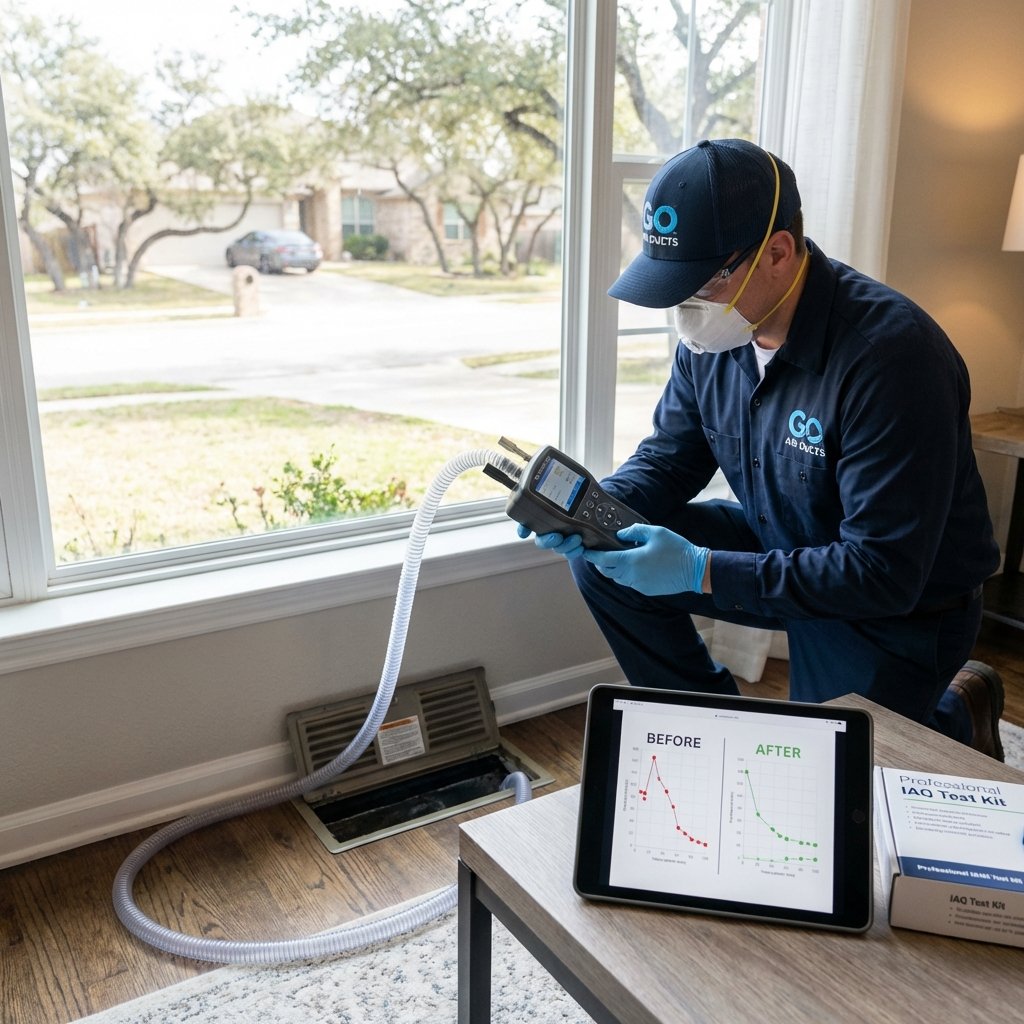
You can’t manage what you don’t measure. This is why we use professional IAQ testing before and after our cleaning work.
We measure particulate matter, mold spore counts, and air velocity through your system. Our certified technicians use equipment that detects particles as small as 0.5 microns, capturing allergens and irritants invisible to the naked eye. Pre-service testing gives us a baseline. Post-service testing quantifies improvement and holds us accountable.
The 67% allergy reduction our Austin clients experienced came from documented testing. Initial mold spore counts registered at 850 CFU per cubic meter indoors. After our comprehensive cleaning and mold remediation, counts dropped to 280 CFU, with symptom relief following within two weeks.
Testing also reveals whether your air handler is contributing to the problem. A dirty evaporator coil or contaminated blower wheel spreads particles every time air passes through. We photograph these before and after, so you see the actual difference our process makes.
For homeowners with severe allergies or respiratory conditions, this data becomes medical documentation you can share with your doctor. Many insurance providers and occupational health programs recognize professional IAQ testing as legitimate preventive care.
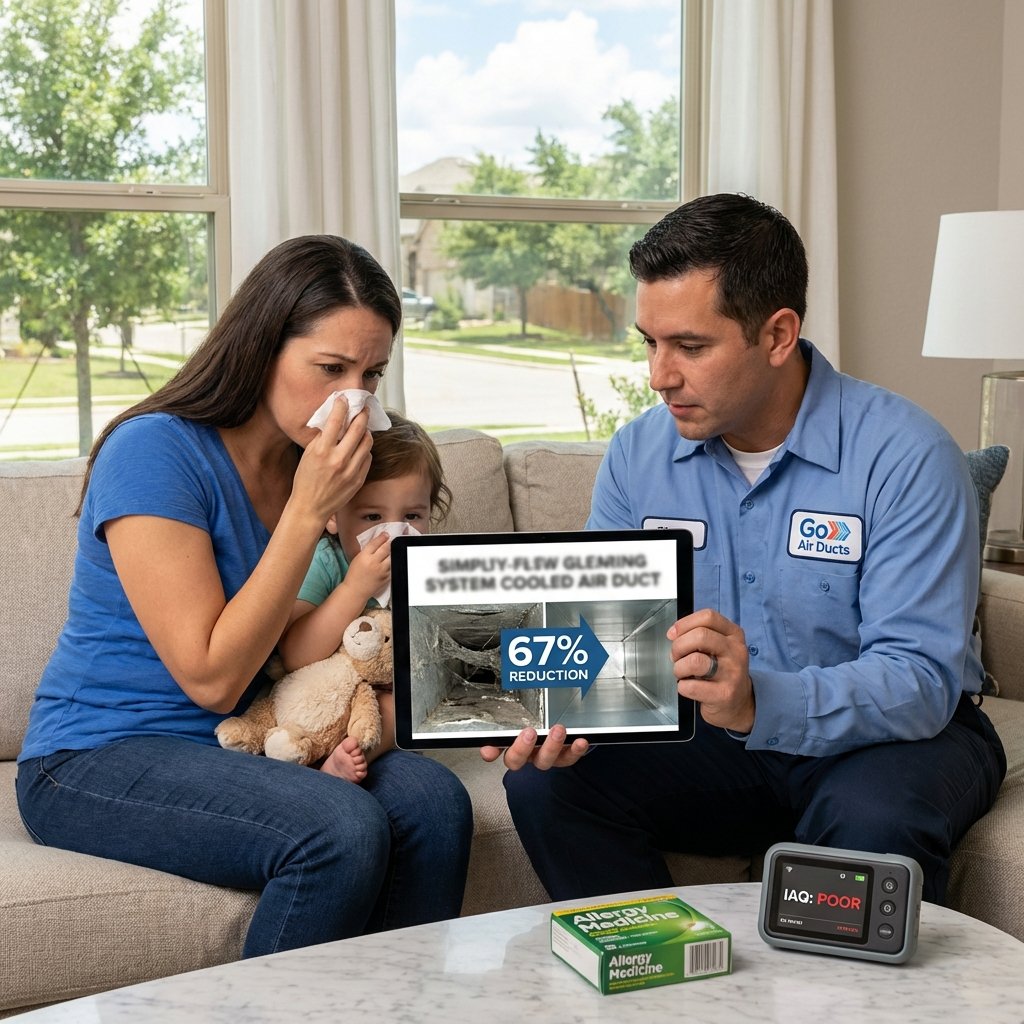
Action step: Ask us about our comprehensive IAQ assessment. We’ll test your current air quality and provide a detailed report showing exactly what you’re breathing.
Real Results: Our Austin Case Study with 67% Allergy Reduction
The Morrison family called us in January after their two children developed persistent coughs and sinus infections that antibiotics couldn’t resolve. Mom noticed symptoms worsened in the bedrooms, especially early morning when the AC had been running all night.
Initial inspection revealed heavy dust throughout their ductwork, with visible mold on the main trunk line running through the attic. The evaporator coil was coated in microbial growth. Air velocity tests showed 30% reduction in airflow compared to design specifications, meaning the system was recirculating contaminated air repeatedly.
We performed comprehensive cleaning: full duct system cleaning with HEPA-filtered equipment, evaporator coil cleaning and disinfection, and mold remediation throughout the main supply lines. We also sealed three significant air leaks we discovered during pressure testing.
Post-service mold testing showed an 85% reduction in spore counts. Within one week, the children’s coughs subsided. By week three, their allergist confirmed allergen levels in their nasal passages had dropped measurably. Over three months, allergy medication usage fell 67%.
The family also noticed their energy bill declined 12% because the system no longer had to compensate for blockages and microbial drag. They’ve maintained results through annual preventive maintenance, which we recommend for all homes in our service areas.
Action step: Schedule your free assessment today. We’ll provide a written estimate and timeline so you know exactly what to expect.
San Antonio Success: One Family’s Journey to Cleaner Air
The Hernandez family in San Antonio had lived with dust issues for years. They cleaned their home regularly but dust always returned. Allergy symptoms plagued their teenage daughter, making school attendance and athletic activity difficult.
What surprised them was discovering that their previous “air duct cleaning” had been surface-level. They’d hired a company that only cleaned accessible vents without addressing the core problem: their air handler was completely contaminated.
When we inspected, we found the blower wheel coated in dust and mold. The filter rack was so clogged it collapsed, allowing unfiltered air to bypass the system entirely. Their ducts were redistributing contamination with every cycle.
We replaced their filter housing with a higher-capacity system, performed deep cleaning of all ductwork and the air handler, and installed an antimicrobial treatment safe for occupied homes. We also recommended upgrading their air filter to MERV-13 grade and scheduling quarterly changes rather than annually.
Three months later, the daughter’s allergy symptoms had improved enough that she reduced her daily medication by half. The family committed to quarterly maintenance. They now experience seasonal symptoms only, which is dramatically better than their year-round baseline.
The lesson: comprehensive air duct cleaning goes beyond vacuuming dust. It requires accessing and cleaning the components most people never see.
Action step: If previous cleaning hasn’t solved your issues, we likely need to address the air handler and deeper system components. We’ll explain exactly what we find.
Our Comprehensive Air Duct Cleaning Process Explained
We don’t use a one-size-fits-all approach. Every home’s ductwork is different, and contamination patterns vary widely.
Our process starts with a complete video inspection. We photograph problem areas, identify mold or pest activity, and assess ductwork condition. This informs our strategy before any cleaning begins.
Next, we isolate the system to prevent dust from redistributing throughout your home. We use negative air machines and HEPA filtration to contain particles. For heavy contamination, we seal return vents during cleaning to prevent airborne spread.
We then access your system from multiple points. We clean main trunk lines, branch ducts, and plenums. We vacuum and agitate debris, using both mechanical agitation and compressed air where appropriate. For mold-contaminated sections, we apply EPA-approved antimicrobial treatment that eliminates spores without toxic residue.
The evaporator coil and blower wheel receive separate attention. These components harbor the most dangerous microbial growth because moisture accumulates there. We chemically clean and disinfect these components as part of comprehensive service.
Finally, we verify airflow improvement through pressure and velocity testing. We show you the before and after air quality differences, and we provide recommendations for ongoing maintenance like filter upgrades or humidity control improvements.
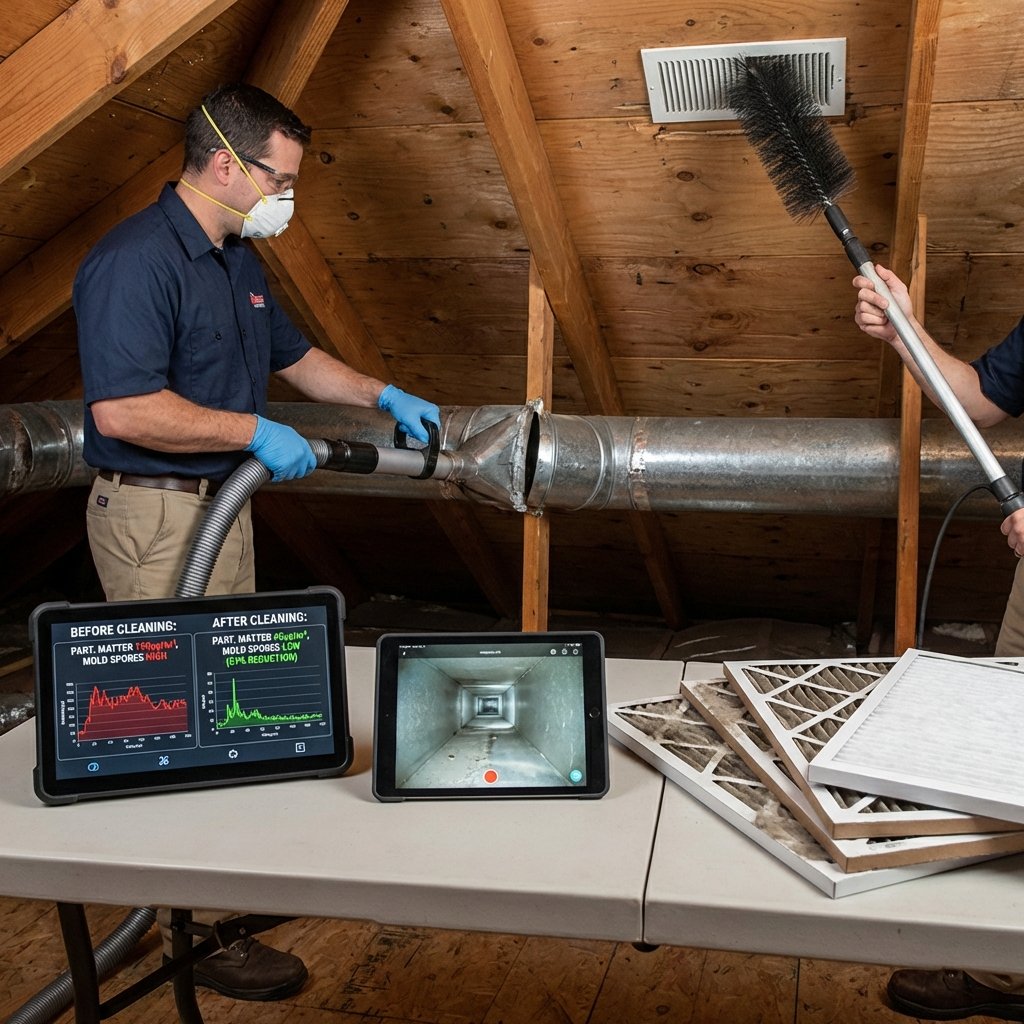
The entire process typically takes 4-6 hours for average-sized homes, with same-day service available across our Texas service areas.
Action step: Book a free estimate to get a customized scope and timeline for your specific home.
Beyond Cleaning: Mold Remediation and Prevention Strategies
Cleaning removes existing mold, but preventing regrowth requires addressing root causes.
In Texas humidity, mold returns quickly to moist environments. We identify moisture sources: condensation from temperature differences, refrigerant leaks, or improper duct insulation in unconditioned spaces like attics. Switching to heater season can create hidden dust problems and moisture issues as systems cycle between heating and cooling.
After cleaning, we recommend several prevention measures. Improving attic ventilation reduces moisture accumulation. Upgrading duct insulation in unconditioned spaces prevents condensation. Installing humidity control during cooling season maintains moisture levels between 35-50%, which inhibits mold growth while keeping you comfortable.
For severe mold cases, we sometimes recommend UV light installation in the air handler. These systems continuously disinfect air as it passes through, preventing regrowth without chemical treatments.
We also emphasize filter maintenance. A clogged filter forces moisture-laden air to bypass filtration, creating microbial breeding grounds. Upgrading to MERV-13 filters and changing them monthly during high-use seasons makes a dramatic difference in contamination prevention.
Action step: After cleaning, commit to monthly filter changes and annual preventive inspections. This costs far less than repeated deep cleanings.
The Science Behind Our Certified HVAC Technician Approach
Our technicians aren’t just cleaners. They’re certified HVAC professionals who understand system design, airflow dynamics, and microbial growth conditions.
This matters because improper cleaning can damage ductwork, create new air leaks, or introduce moisture. We follow EPA guidelines and industry best practices established by the National Air Duct Cleaners Association. Our certifications ensure we understand how to clean without causing harm.
Understanding HVAC principles also helps us diagnose root causes. A mold problem isn’t just about mold. It usually indicates airflow issues, moisture accumulation, or filter failures. A certified technician identifies these root causes and recommends solutions that prevent recurrence.
We also understand how your system’s design affects contamination patterns. Undersized ducts, sharp bends, or poor return air design all contribute to dust accumulation and microbial growth. While we can’t redesign existing systems, we identify improvements that reduce future contamination.
Our team stays current on emerging research about indoor air quality, new cleaning technologies, and health impacts of air contamination. This ongoing education translates into better service and smarter recommendations for your home.
Action step: Ask your technician to explain what they find during inspection. A professional should educate you, not just perform service.
Energy Efficiency Gains You’ll Notice on Your Utility Bills
Dirty ducts force your HVAC system to work harder. Blockages, microbial coating, and contamination all increase airflow resistance.
We’ve documented energy improvements across hundreds of homes. The Morrison family’s 12% bill reduction was typical. Some homes show 15-18% improvement if they had severely contaminated systems.
The mechanics are straightforward: a clean system moves air more efficiently with less motor strain. Your compressor runs shorter cycles. Thermostat satisfaction improves because air reaches living spaces faster, reducing temperature swings that trigger more frequent cycling.
Microbial coating on coils and ductwork adds significant drag. Mold growth actually degrades metallic surfaces over time, creating rough spots that increase friction. Removing this coating literally makes your system more efficient.
During pre-season maintenance, we strongly recommend combining duct cleaning with filter upgrade. High-efficiency MERV-13 filters trap more allergens but can reduce airflow if your system wasn’t designed for them. Professional testing ensures your equipment handles upgraded filters without strain.
The energy savings typically recover your cleaning investment within 6-12 months, then continue year after year.
Action step: Compare your utility bills from the past 12 months. If bills have been rising despite moderate weather, duct contamination is likely the culprit.
Getting Your Free IAQ Assessment and Service Estimate
Starting your air quality improvement journey is simple and costs nothing.
Contact us for a free assessment. We’ll schedule a time that works for your schedule, typically within 24-48 hours. Our technician will perform a complete video inspection of your ductwork, test your current air quality, and assess your HVAC system’s overall condition.
You’ll receive a detailed written estimate including:
- Scope of duct cleaning required
- Any mold remediation recommendations
- Air quality testing results
- Energy efficiency improvement projections
- Timeline and service schedule
- Pricing and financing options
We serve Austin, San Antonio, Dallas, and Houston with same-day and next-day service availability across most areas. We’re transparent about costs and won’t pressure you into unnecessary work. Our free estimate gives you a clear picture so you can make an informed decision.
Many homeowners mention they were worried about cost before calling. Once they understand the scope and see the improvement potential, they’re pleasantly surprised by the investment’s value relative to health benefits and energy savings.
Action step: Call us today or visit Go Air Ducts to schedule your free assessment. Have your address and a brief description of any symptoms ready.
Why Central Texas Homeowners Trust Go Air Ducts
We’ve built our reputation on honest communication, professional expertise, and measurable results across Central Texas communities.
Our certifications matter, but they’re not what sets us apart. What matters is that we treat your home like our own. We take time to explain what we find, why it matters, and how we’ll fix it. We don’t oversell services, and we’re direct about what truly needs attention versus what’s optional.
We’ve serviced thousands of homes in Austin, San Antonio, Dallas, and Houston. Families trust us because we follow through on commitments, show up on schedule, and leave homes cleaner than when we arrived. Our technicians are trained to respect your space, protect your belongings, and explain their work as they complete it.
Most importantly, we document results. The 67% allergy reduction, the energy bill improvements, the mold elimination these aren’t marketing claims. They’re outcomes we measure and can show you in writing. When we tell you what cleaning will accomplish, we back it with data.
Our Central Texas customers recommend us to neighbors because they’ve experienced real improvement. That referral network is the best compliment we can receive.
The path to better indoor air quality starts with one decision: to address the problem instead of accepting it. We’re here to guide that process from assessment through maintenance, making sure your family breathes easier every single day.
If you’re dealing with dust, poor airflow, mold in your ducts, or a clogged dryer vent — don’t wait. These issues can affect your health and safety. Go Air Ducts Group are the local experts in air duct cleaning, mold removal, dryer vent cleaning, and attic insulation. Call now for a free inspection and same-day service in Austin and San Antonio.
Frequently Asked Questions (FAQ)
How much can air duct cleaning really improve allergies and indoor air quality?
Based on our case studies across Austin and San Antonio, we’ve documented allergy symptom reductions ranging from 50% to 70% after our comprehensive air duct cleaning and mold remediation services. We measure these improvements using professional IAQ testing before and after our work, so you’ll see the actual data on your home’s air quality. The specific results depend on factors like your duct contamination levels, existing HVAC maintenance, and whether mold or debris buildup is present.
What exactly do we find in air ducts that affects allergies?
We typically discover accumulated dust, pet dander, mold spores, and debris that circulate through your HVAC system every time your unit runs. These contaminants trigger allergic reactions and respiratory issues, especially in homes with inadequate duct maintenance or poor ventilation. Our professional testing identifies exactly what’s in your ducts so we can address the root cause rather than just treating symptoms.
What’s included in your free service estimate?
We schedule a certified HVAC technician to inspect your air ducts, perform initial IAQ testing, and assess any visible mold or contamination issues. After evaluating your specific situation, we provide a detailed estimate that breaks down our cleaning process, any recommended mold remediation, and timeline for completion. There’s no obligation, and this assessment gives us the information we need to create a customized plan for your home.