
🕑 11 min read
How do I choose an HVAC coil cleaning contractor in Austin?
Look for certified, insured technicians, clear pricing, safe coil-cleaning methods, and good reviews, not just the lowest quote. Go Air Ducts meets these standards in Austin, providing careful, effective coil cleaning that restores your system's performance without risking damage to delicate components.
Table of Contents
- Why HVAC Coil Cleaning Matters for Austin Homeowners
- Signs Your Air Conditioning Coils Need Professional Cleaning
- The Risks of Neglecting Coil Maintenance
- What Sets Professional Coil Cleaning Apart from DIY Attempts
- How We Inspect and Diagnose Coil Problems
- Our Comprehensive Coil Cleaning Process
- Certifications and Experience You Should Verify
- Why Local Expertise Makes a Difference in Austin's Climate
- How Professional Cleaning Improves Energy Efficiency and Performance
- Questions to Ask Before Hiring a Contractor
- Why We Stand Out as Your Austin HVAC Partner
- Getting Your Free Professional Assessment Today
- Frequently Asked Questions (FAQ)
Why HVAC Coil Cleaning Matters for Austin Homeowners
Austin’s heat and humidity create a perfect storm for HVAC coil problems. Your air conditioning system works overtime during our long, hot summers, and the coils are where the actual cooling happens. When these coils accumulate dust, debris, and mold, your system loses efficiency and your energy bills climb. We’ve seen homeowners waste hundreds of dollars annually because their coils were simply too dirty to transfer heat effectively.
The coils in your AC unit are delicate components that sit between your indoor air and the outdoor environment. They collect everything from pollen to pet dander to moisture-loving mold spores. Unlike air filters, coils can’t be swapped out once a month; they require specialized cleaning equipment and trained technicians to restore them safely. Regular professional coil cleaning isn’t a luxury—it’s maintenance that keeps your cooling system working at design capacity.
Your takeaway: Schedule a professional coil inspection at least once every 18-24 months, more frequently if you have pets or live in a dusty area.
Signs Your Air Conditioning Coils Need Professional Cleaning
If your AC is running but your home isn’t getting as cool as it used to, dirty coils are often the culprit. Other warning signs include higher-than-normal electricity bills, visible dust or discoloration on the coil fins (the thin metal plates), warm air coming from your vents, or a musty smell when the system runs. Some homeowners also notice ice buildup on the indoor coil during operation—a sign that airflow is restricted and the coil is too cold to function properly.
Listen for unusual sounds as well. A clogged coil forces your compressor to work harder, which sometimes produces grinding or squealing noises. If your thermostat shows a big temperature difference between your upstairs and downstairs, or if some rooms feel stuffy while others are cold, coil contamination might be reducing overall system capacity.
What to do next: If you spot any of these signs, contact a professional for a diagnosis rather than assuming your system is failing.
The Risks of Neglecting Coil Maintenance
Dirty coils create a cascade of problems that get worse over time. First, your energy consumption rises as the system strains to push air across a clogged surface. Second, the buildup traps moisture, which breeds mold and bacteria—nasty stuff that circulates into your living spaces and affects indoor air quality. People with allergies or respiratory issues often notice symptoms worsen when coils are contaminated.
A neglected coil also shortens your HVAC system’s lifespan. The compressor works harder than it should, thermal stress accumulates, and components fail prematurely. We’ve helped homeowners avoid $3,000-$5,000 compressor replacements simply by maintaining clean coils. Additionally, mold in coils can spread to your air ducts, requiring more extensive and expensive remediation work down the road.
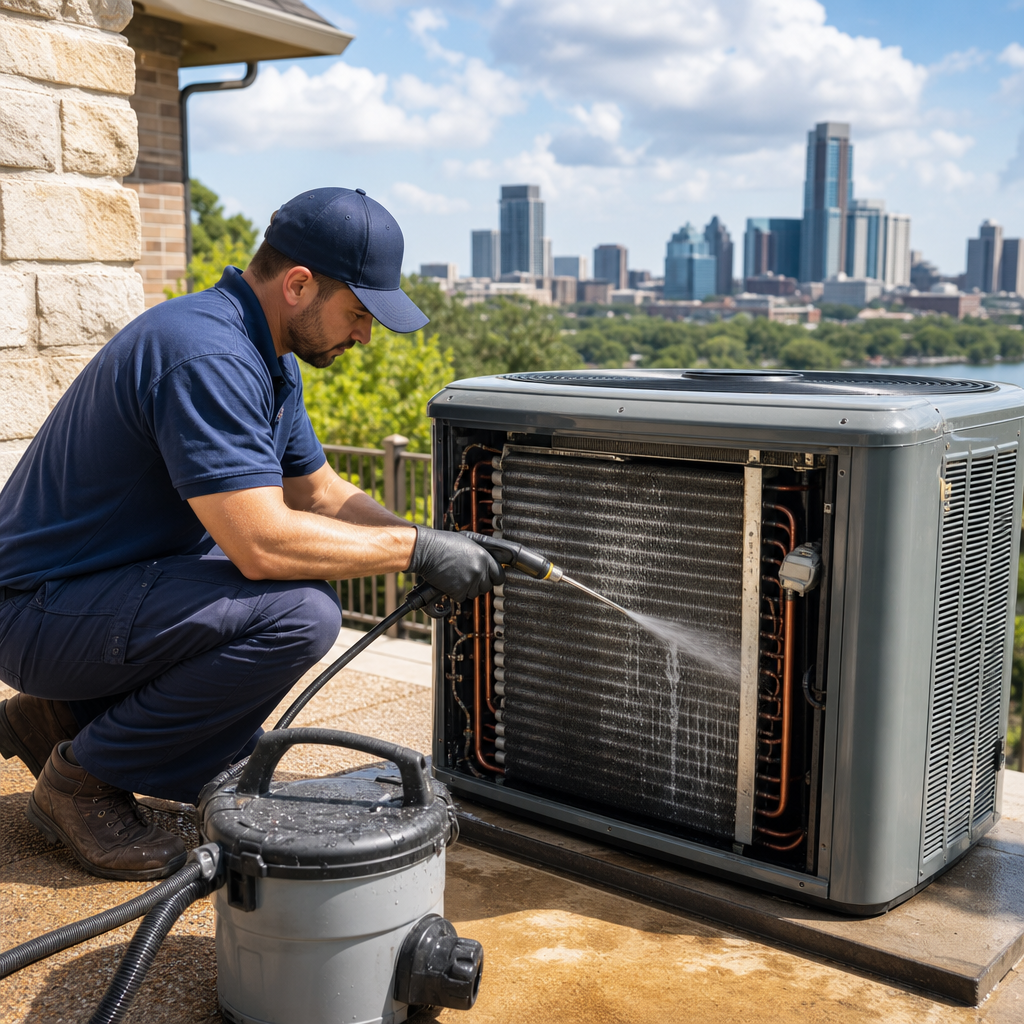
Real impact: One Austin homeowner reduced her electric bill by $45 per month just by having us clean her coils—that’s $540 annually in savings.
What Sets Professional Coil Cleaning Apart from DIY Attempts
You might be tempted to spray your coils with a garden hose or use a generic coil cleaner, but that approach causes problems. Consumer-grade products often leave residue or damage the delicate aluminum fins, and water from a hose can push debris deeper into the coil matrix rather than removing it. Many DIY methods also void manufacturer warranties.
Professional coil cleaning uses specialized equipment—ultrasonic cleaners, foaming chemistries designed for aluminum, and proper drainage to ensure contamination doesn’t run into your system. We follow manufacturer specifications and industry standards that home methods simply can’t match. Our technicians also inspect your coil for structural damage, refrigerant leaks, and other issues that untrained eyes miss. For details on why professional service outperforms DIY methods, see our comparison of professional HVAC coil cleaning versus DIY approaches.
Action item: Get a professional quote; the cost is usually offset by energy savings within a single cooling season.
How We Inspect and Diagnose Coil Problems
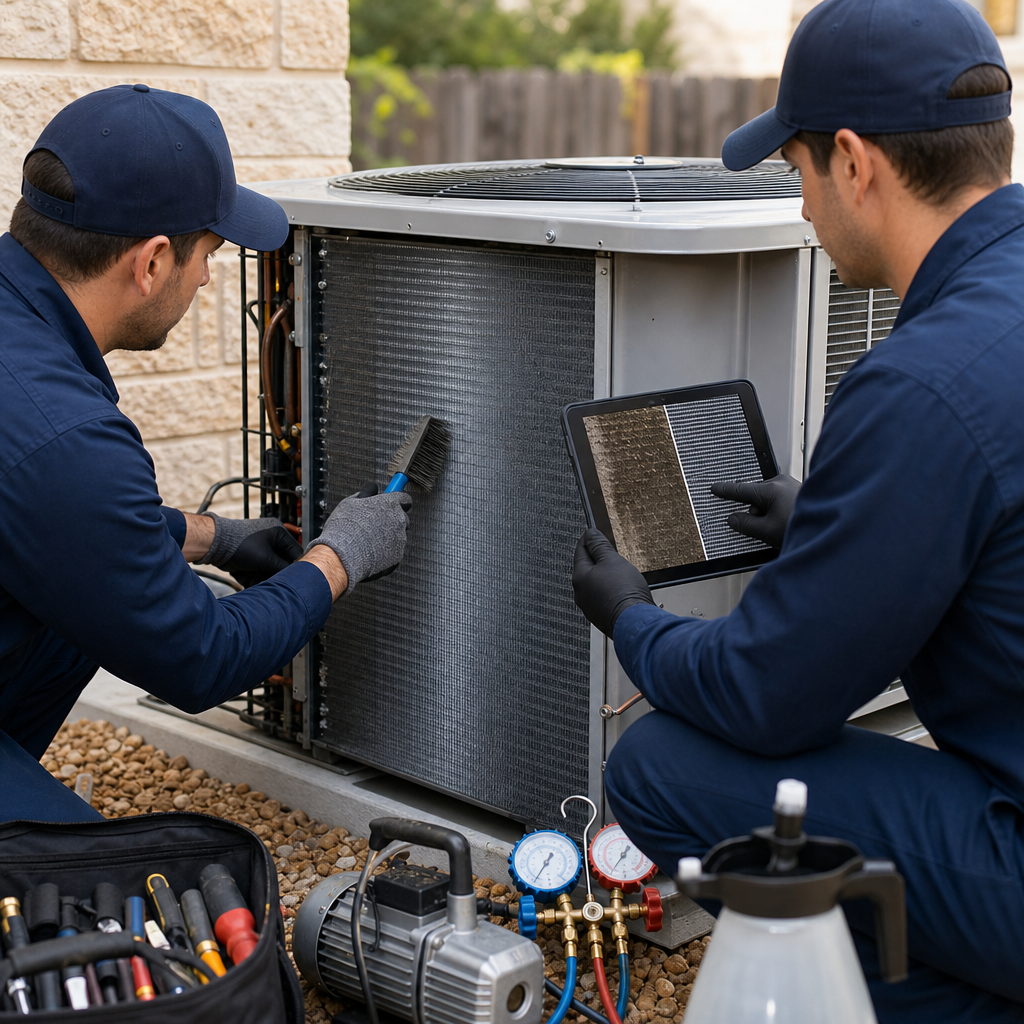
Our inspection process starts before we touch anything. We perform a visual examination of the coil fins for blockage, corrosion, or visible mold. We measure airflow across the coil and compare it to manufacturer specifications. We also check refrigerant pressure and system temperature differentials to understand exactly how efficiently the coil is operating.
If we detect mold or bacteria, we use specialized detection tools to determine the extent of contamination. We inspect the coil for bent fins (which restrict airflow) and micro-leaks (which are costly but worth catching early). We review your maintenance history and ask about indoor air quality concerns, humidity problems, or recent water damage. This comprehensive approach ensures we recommend only the cleaning and repairs your system actually needs, not unnecessary upsells.
Our Comprehensive Coil Cleaning Process
Our standard coil cleaning begins with isolation: we shut down the system and protect surrounding areas from water and cleaning agents. We remove any accessible debris by hand and use a soft brush to gently clear the fin surfaces. Next, we apply our foaming coil cleaner, formulated to dissolve buildup without harming aluminum.
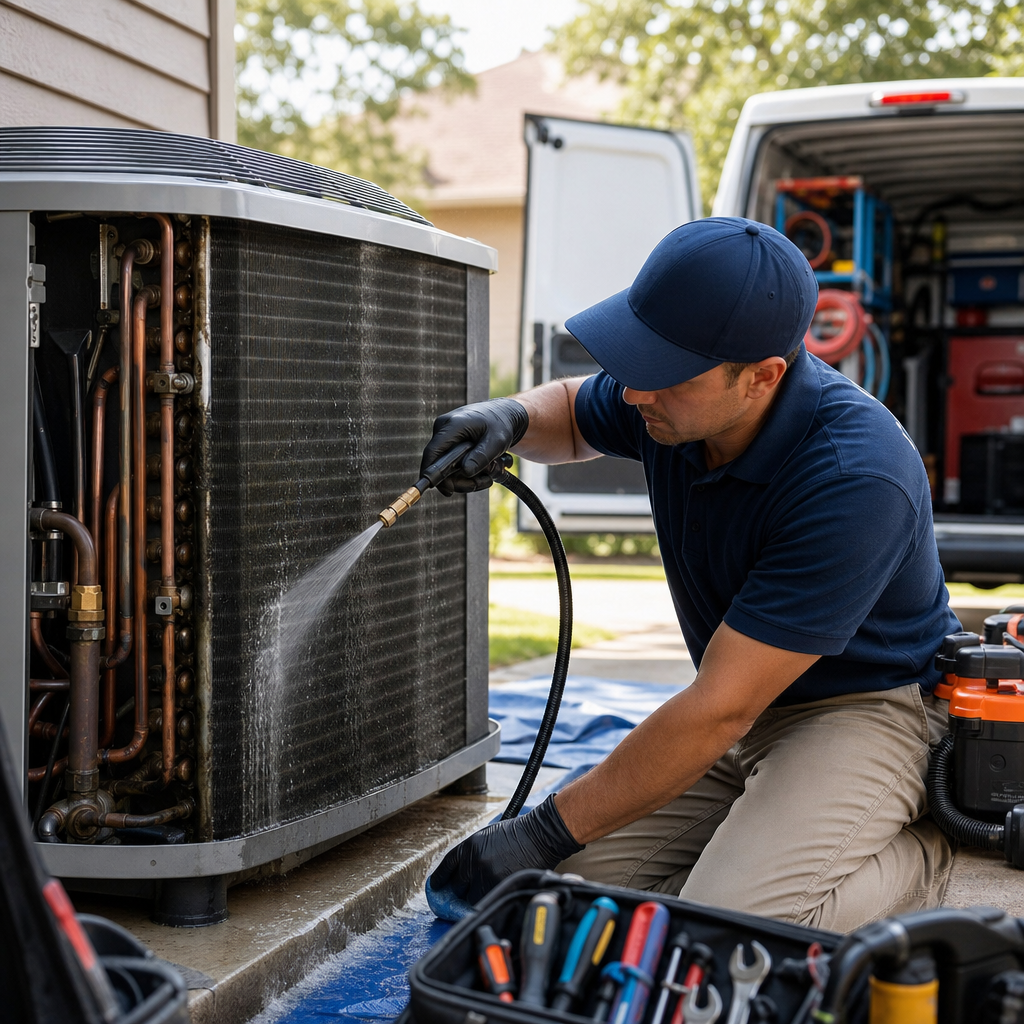
We allow the foam to dwell (sit) for a precise time—too short and it doesn’t work, too long and it can damage the coil. Then we carefully rinse the coil with deionized water and compressed air to remove all cleaning residue. For heavily contaminated coils or those with mold, we may use ultrasonic technology to break down stubborn deposits. Finally, we verify system operation, check pressures and temperatures, and ensure proper drainage.
The entire process typically takes 1-2 hours depending on coil condition. Once we’re done, your system operates at or near design efficiency—cooling your home faster while using less electricity. Learn more about deep HVAC coil cleaning and why professional service matters.
Certifications and Experience You Should Verify
When choosing a contractor, ask for proof of EPA certification (required for anyone handling refrigerants) and HVAC technician licenses. In Texas, technicians should hold an EPA Section 608 certification, which demonstrates competency in handling refrigeration systems safely. Ask how many years the contractor has been in business and how many coil cleanings they perform annually.
Verify that your contractor carries proper liability insurance and workers’ compensation coverage. Check online reviews on Google, the Better Business Bureau, and Yelp—but read carefully. Lots of glowing reviews are great, but so is transparent communication about what the job entails and realistic pricing. Ask for references you can call directly, not just testimonials on the website.
Red flag warning: Be wary of contractors who recommend cleaning every 6 months or who insist on expensive add-ons without explaining why.
Why Local Expertise Makes a Difference in Austin’s Climate
Austin’s climate is unlike anywhere else in Texas. Our high humidity, rapid temperature swings, and limestone-heavy dust create specific HVAC stress patterns. A contractor who understands local conditions knows that coil contamination happens faster here than in drier regions. We also understand how Austin’s water quality (hard water with high mineral content) affects coil longevity and which cleaning agents work best in our area.
Local expertise also means we understand permitting requirements, local HVAC codes, and seasonal timing. We know that July and August are peak cooling months when your system is under maximum stress—so scheduling maintenance in late spring is strategic. We’ve worked on thousands of Austin homes and recognize patterns that help us anticipate problems before they become expensive failures.
How Professional Cleaning Improves Energy Efficiency and Performance
Clean coils allow your AC to achieve full cooling capacity with less runtime. This translates to lower thermostat settings in less time, reduced compressor strain, and measurably lower electricity consumption. Studies show that coil cleaning can improve cooling efficiency by 10-25%, depending on how dirty the coil was initially. For a mid-size Austin home running AC 6-8 months per year, that efficiency gain saves real money.
Beyond energy savings, clean coils improve system reliability. Your equipment doesn’t overheat, parts last longer, and emergency breakdowns during heat waves become less likely. You also gain better humidity control and indoor air quality since mold and bacteria aren’t circulating through your ducts. The return on investment is straightforward: cleaner coils mean lower bills, longer equipment life, and healthier air.
Expected benefit: Most homeowners see a return on coil cleaning investment within 12 months through energy savings alone.
Questions to Ask Before Hiring a Contractor
Start with specifics: “Will you inspect the coil before quoting a price?” A legitimate contractor should diagnose first, then propose a solution. Ask, “What cleaning method will you use, and why?” and “How do you prevent damage to the aluminum fins?” Ask whether they’ll test the system before and after to quantify efficiency improvement.
Clarify guarantees: “What warranty do you offer on your work?” and “If the coil shows signs of damage, what’s your protocol?” Ask about the timeline—”Can you schedule within 48 hours?” and “Will this require a system shutdown, and if so, for how long?” Finally, ask for an itemized quote that separates coil cleaning from any other recommended services like refrigerant top-ups or duct cleaning.
Don’t accept vague answers. Professional contractors explain their process clearly because they have nothing to hide.
Why We Stand Out as Your Austin HVAC Partner
We’ve been serving Austin, San Antonio, Dallas, and Houston with certified HVAC maintenance for years. Our technicians hold EPA and industry certifications, and we back every job with transparent pricing and a satisfaction guarantee. We offer same-day and next-day scheduling because we understand that AC emergencies don’t wait for your convenience.
What sets us apart is our commitment to education. We don’t just clean coils; we explain what we found, why it matters, and how to prevent the problem from recurring. We provide detailed before-and-after reports so you see exactly what we accomplished. Our free estimates mean you can compare our service with competitors risk-free, and our online booking makes scheduling effortless.
Getting Your Free Professional Assessment Today
Your AC system deserves professional care from a team that understands Austin’s specific challenges. The best time to schedule coil cleaning is late spring or early fall—before peak season arrives. We offer free professional assessments with zero obligation, so you’ll know exactly what your system needs.
Contact us today for a same-day or next-day appointment. Our technicians will inspect your coils, measure system efficiency, and provide a detailed estimate with no pressure to proceed. Clean coils mean lower energy bills, better air quality, and peace of mind that your cooling system will perform when Austin’s summer heat peaks. Reach out now—your comfortable, efficient home is one call away.
If you’re dealing with dust, poor airflow, mold in your ducts, or a clogged dryer vent — don’t wait. These issues can affect your health and safety. Go Air Ducts Group are the local experts in air duct cleaning, mold removal, dryer vent cleaning, and attic insulation. Call now for a free inspection and same-day service in Austin and San Antonio.
Frequently Asked Questions (FAQ)
How do we inspect AC coils before cleaning at Go Air Ducts?
We start with a visual inspection using specialized equipment to identify dirt buildup, algae growth, and corrosion on your evaporator and condenser coils. Our certified technicians then use pressure testing and thermal imaging to assess how these deposits are affecting your system’s efficiency and airflow. This diagnostic approach helps us determine the right cleaning method and identify any underlying issues that need attention.
What makes Austin’s climate particularly tough on HVAC coils?
Our experience serving Austin homeowners has shown us that the combination of heat, humidity, and dust creates ideal conditions for rapid coil contamination. The warm temperatures mean your AC runs frequently, which causes moisture to accumulate on cooling coils and attract dirt particles. We’ve found that Austin properties typically need professional coil cleaning every 1-2 years to maintain peak performance, compared to the 2-3 year intervals in drier climates.
How much will professional coil cleaning improve my energy bills?
We typically see our customers achieve 5-15% improvement in cooling efficiency after professional coil cleaning, which translates directly to lower energy costs during the hot Texas summer months. The exact savings depend on how contaminated your coils were before service and how well you maintain your system afterward. We always provide a free estimate so you can understand the condition of your coils and potential energy savings specific to your home.