
🕑 10 min read
How do you get rid of musty smells in commercial ducts?
Commercial duct odors usually signal mold or bacterial growth deep in the system. Eliminating them requires locating the source, removing contamination, and disinfecting the ductwork and coils. Go Air Ducts performs professional commercial duct mold and odor removal so businesses restore fresh, clean air and protect employees and customers from lingering musty smells.
Table of Contents
- Why Commercial Duct Mold Smells Are a Serious Problem
- How Mold Develops Inside Your Commercial Ductwork
- The Health and Safety Risks We Help You Avoid
- Our Professional Commercial Duct Mold Inspection Process
- Advanced Mold Removal and Remediation Techniques We Use
- Preventing Future Mold Growth in Your Commercial System
- Why Our Air Duct Cleaning Solves Mold Odor Problems
- Commercial Properties We've Successfully Treated in Texas
- How Our Certified HVAC Technicians Ensure Complete Elimination
- The Cost-Benefit of Professional Mold Remediation
- Frequently Asked Questions (FAQ)
Why Commercial Duct Mold Smells Are a Serious Problem
Commercial buildings across Texas are breathing in more than just conditioned air. When mold takes root inside ductwork, it spreads that musty, stale odor throughout your entire facility. Employees notice it. Clients notice it. And worse, your HVAC system is working overtime trying to mask a problem that only gets bigger without professional intervention.
At Go Air Ducts, we’ve eliminated commercial duct mold smells from office buildings, retail spaces, and industrial facilities throughout Dallas, Houston, Austin, and San Antonio. This guide walks you through why the problem matters, how it happens, and exactly how we solve it.
A musty odor coming from your vents isn’t just unpleasant. It’s a signal that mold colonies are actively growing in your ductwork, releasing spores and volatile organic compounds (VOCs) that permeate every room.
Unlike residential homes where you might isolate a problem to one area, commercial buildings distribute that contaminated air to dozens of spaces at once. Tenants complain. Productivity drops. And your facility’s reputation takes a hit before you even identify the source.
The smell itself comes from mold metabolism. As mold feeds on organic material trapped in your ducts, it releases gases that humans can detect at extremely low concentrations. If you’re noticing the odor regularly, mold colonization is already significant.
Action step: Schedule a free professional inspection to pinpoint whether the smell originates in your ductwork or elsewhere in your HVAC system.
How Mold Develops Inside Your Commercial Ductwork
Mold needs three things: moisture, organic material, and darkness. Your ductwork provides all three.
Commercial HVAC systems accumulate dust, debris, and skin cells as they circulate air. When humidity levels rise above 50%, condensation forms on duct surfaces. In poorly maintained systems, that combination creates a perfect mold nursery.
Several scenarios trigger rapid mold growth:
- Ductwork damage or poor sealing allows outside moisture and pollutants to enter
- Undersized or malfunctioning condensate drainage backs up, flooding duct interiors
- Seasonal humidity spikes in Texas commercial spaces without proper dehumidification
- Fiberglass duct insulation becomes saturated and harbors mold deep within its material
- Infrequent or incomplete duct cleaning leaves organic buildup that feeds mold colonies
We’ve found active mold blooms in office buildings where cleaning was done once a year instead of the recommended every two to three years. In commercial spaces with heavy foot traffic or HVAC equipment located in humid areas like mechanical rooms near restrooms, the timeline compresses even faster.
The Health and Safety Risks We Help You Avoid
Mold exposure creates genuine occupational health concerns. Employees with allergies or asthma experience flare-ups. Others develop new respiratory sensitivities from prolonged exposure to mold spores.
Some species of commercial mold produce mycotoxins, which are toxic compounds that can trigger more serious health effects with extended exposure. While not every mold is highly dangerous, you cannot safely determine which species is growing in your ducts without professional testing.
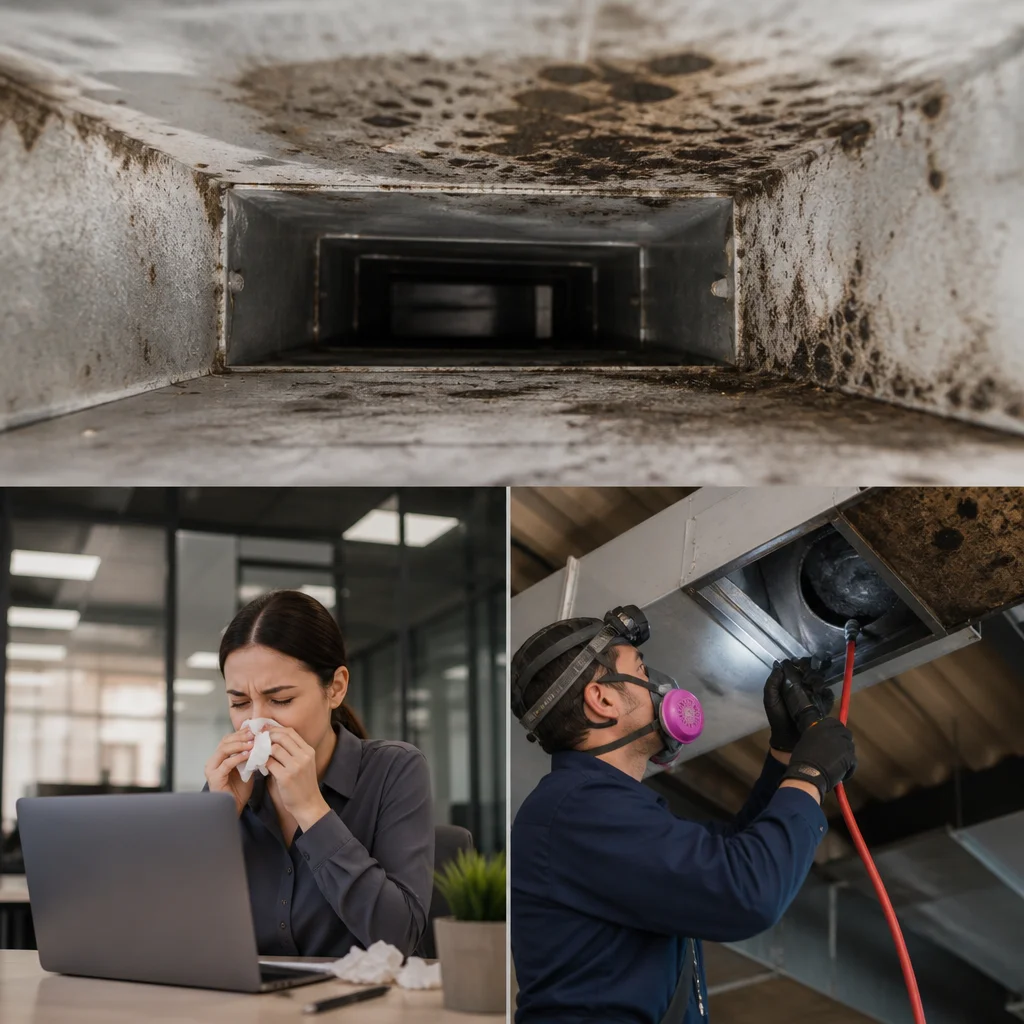
Beyond individual health, contaminated ductwork increases your liability. If employees file health complaints and your facility has known mold issues without documented remediation efforts, you’re exposed to workers’ compensation claims and potential regulatory violations.
Professional air duct mold remediation eliminates the source and reduces legal and health risks simultaneously. We document the entire process, giving you proof of remediation for compliance and insurance purposes.
Our Professional Commercial Duct Mold Inspection Process
We don’t guess. We inspect.
Our certified HVAC technicians begin with a visual assessment of your duct system using industrial borescopes to look inside ducts without disruption. We check for visible mold growth, moisture accumulation, and debris buildup.
Next, we collect air samples and surface samples from suspect areas. These are sent to an independent lab for mold species identification and concentration testing. This step confirms whether you have a mold problem, what type of mold it is, and how aggressive remediation needs to be.
We also evaluate your HVAC system’s humidity control, condensate drainage, and duct sealing. Often, mold returns because the underlying moisture problem was never fixed.
Our report includes:
- Mold species identification and concentration levels
- Photos and video documentation of problem areas
- Detailed remediation plan with timelines and costs
- Prevention recommendations tailored to your building
Many commercial property managers are surprised to learn that humidity control is often a bigger factor than cleaning frequency. Fixing one without the other means mold comes back.
Advanced Mold Removal and Remediation Techniques We Use
Once we’ve identified the scope of the problem, we deploy targeted remediation.
For light to moderate mold growth, we use negative pressure duct cleaning with HEPA filtration. Our equipment creates a sealed environment inside the ductwork, applying suction to pull contaminated air and debris directly into our filtration system rather than releasing spores into your building.
We combine mechanical agitation with antimicrobial treatments designed specifically for HVAC systems. These products kill active mold while preventing regrowth for extended periods. We do not use bleach or harsh chemicals that damage duct materials or leave residue.
For heavy contamination or mold embedded in fiberglass insulation, we perform full duct section replacement. Fiberglass insulation cannot be reliably cleaned once saturated with mold, so removal and replacement with moisture-resistant alternatives is the only permanent solution.
After treatment, we apply a mold-inhibiting sealant to duct interiors. This creates an inhospitable surface for future colonization without trapping moisture.
The entire process includes ductwork resealing and pressure testing to ensure your HVAC system no longer pulls in outside contaminants or allows moisture infiltration.
Preventing Future Mold Growth in Your Commercial System
Professional remediation solves the immediate problem. Prevention stops it from returning.
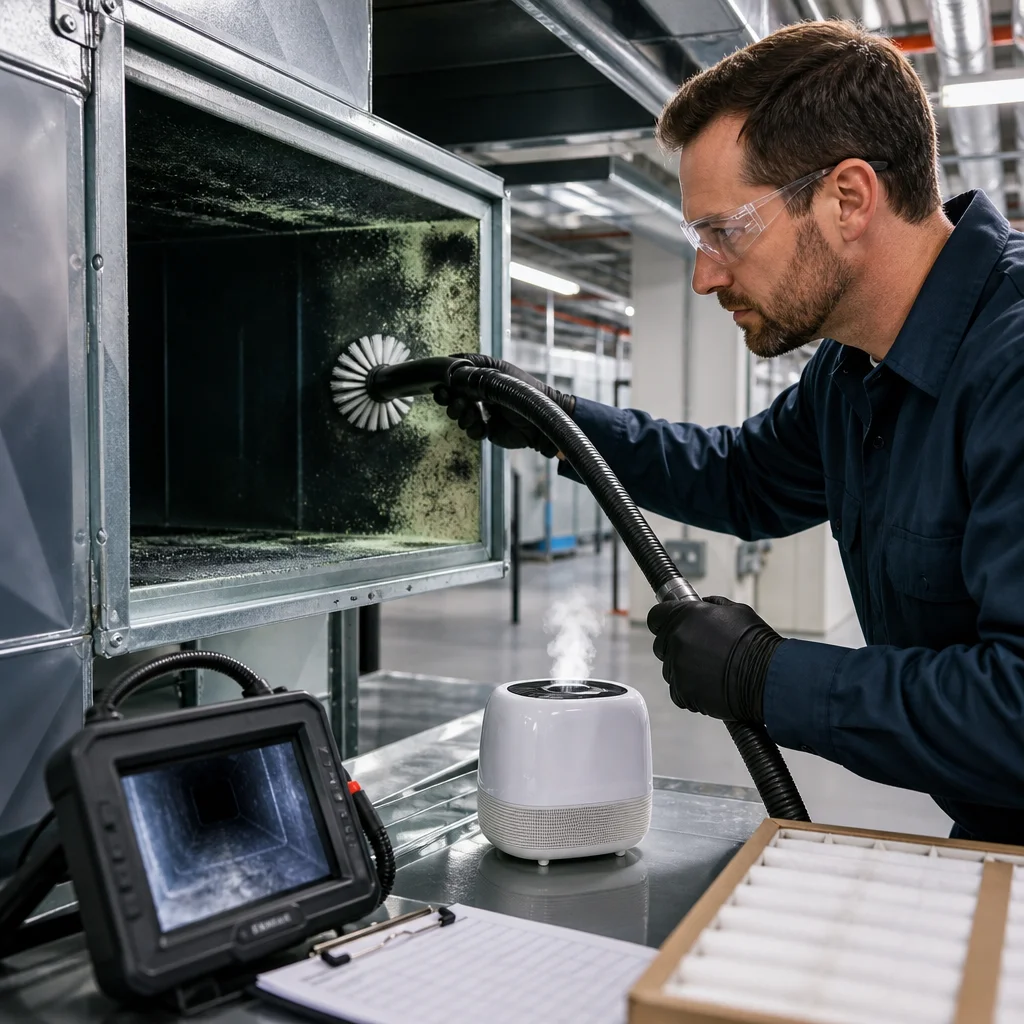
We recommend a three-part maintenance strategy:
Humidity management keeps indoor moisture below 50%. This might mean upgrading your dehumidification capacity or fixing condensate drainage lines. In Texas, this is non-negotiable during humid months.
Regular duct cleaning every 2-3 years removes organic material before it feeds mold colonies. We tailor frequency based on your building’s use and occupancy.
Annual HVAC inspections catch moisture problems, refrigerant leaks, and condensate backup before mold develops.
We work with your building maintenance team to establish a preventive schedule that fits your facility and budget. Many commercial clients find that preventing one major remediation saves far more than routine cleaning costs.
Why Our Air Duct Cleaning Solves Mold Odor Problems
Standard duct cleaning removes dust. Professional mold remediation removes the actual mold.
The difference matters. A company that vacuums your ducts might temporarily reduce the odor by removing loose spores, but it won’t kill the active mold colonies living on duct surfaces. The smell returns within weeks because the colonies are still there, still metabolizing, still producing gases.
Our air duct mold remediation services target the root cause. We kill the colonies, clean contaminated surfaces, treat the ductwork with mold inhibitors, and seal the system against future moisture intrusion.
Odor elimination is permanent because the source is eliminated, not masked.
Commercial Properties We’ve Successfully Treated in Texas
We’ve remediated commercial HVAC systems in office parks where entire floors had to be evacuated due to mold complaints. We’ve treated medical facilities where air quality directly impacts patient outcomes. We’ve worked in retail spaces where musty smells were driving customers away and in warehouses where humidity levels made worker conditions intolerable.
One Austin tech campus called us after employees reported persistent allergic symptoms. Testing revealed heavy mold colonization in the main air handler’s ductwork. The building’s dehumidification system was undersized for the space’s actual moisture load. We performed full remediation, upgraded the humidity control, and implemented a preventive maintenance schedule. Eighteen months later, zero mold-related complaints and documented improvement in air quality metrics.
A San Antonio medical office complex discovered mold during routine maintenance inspections. Rather than partial cleaning, they chose comprehensive remediation. We replaced contaminated fiberglass sections, sealed all leaks, and established quarterly inspections. That facility is now used as a case study for proper commercial HVAC maintenance.
These aren’t one-off situations. Mold in commercial ductwork is common enough that we maintain specialized equipment and expertise specifically for large-scale remediation.
How Our Certified HVAC Technicians Ensure Complete Elimination
Mold remediation requires more than standard HVAC knowledge. Our technicians hold EPA certifications in mold handling, advanced HVAC diagnostics, and antimicrobial treatment application.
We understand the difference between killing surface mold and eliminating deep colonization in fiberglass insulation. We know how to pressure-test ductwork to ensure no air leaks invite moisture back in. We can diagnose humidity problems that other HVAC companies miss because we’re looking at the whole system, not just the furnace or air conditioner.
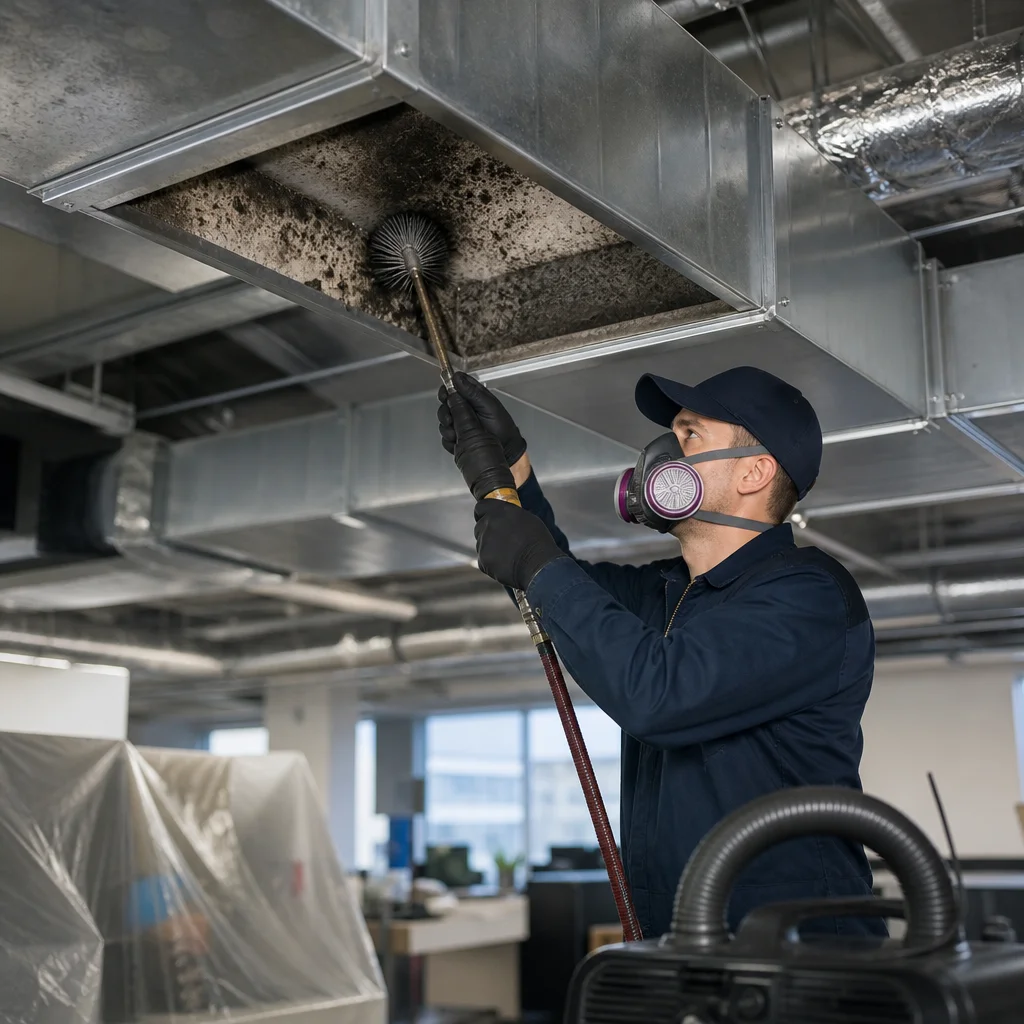
Every job is documented with before-and-after photos, test results, treatment records, and follow-up inspection schedules. This creates a clear compliance trail for your facility’s liability protection and future insurance claims.
We also train your maintenance staff on the warning signs of returning moisture and mold development, so problems are caught early rather than ignored until they become severe again.
The Cost-Benefit of Professional Mold Remediation
Commercial duct mold remediation costs between $2,000 and $15,000+ depending on system size, contamination level, and whether duct replacement is necessary.
Compare that to the costs of ignoring it:
- Lost productivity when employees call out sick or experience allergic reactions
- Liability exposure if occupant health issues are linked to known mold and inadequate response
- Equipment damage when mold-induced humidity destroys HVAC components, requiring expensive repairs or full system replacement
- Tenant turnover in commercial buildings where occupancy complaints about air quality drive lease cancellations
- Regulatory fines if your facility fails air quality audits or occupational safety inspections
Professional remediation is an investment in your facility’s value, your occupants’ health, and your operational stability.
We offer free service estimates for all commercial properties. We assess the scope of your mold problem, inspect your HVAC system’s current condition, and provide a transparent quote with no hidden fees.
Most of our commercial clients discover that comprehensive remediation paired with preventive maintenance actually costs less than repeated partial fixes and emergency service calls.
Next step: Contact us today for a free inspection of your commercial HVAC system. We’ll identify the source of your duct mold smell and provide a clear path to permanent elimination. Call us for same-day service availability in Dallas, Houston, Austin, and San Antonio.
For further reading: Mold remediation indicators.
If you’re dealing with dust, poor airflow, mold in your ducts, or a clogged dryer vent — don’t wait. These issues can affect your health and safety. Go Air Ducts Group are the local experts in air duct cleaning, mold removal, dryer vent cleaning, and attic insulation. Call now for a free inspection and same-day service in Austin and San Antonio.
Frequently Asked Questions (FAQ)
What causes mold to develop in commercial ductwork?
We’ve found that mold thrives in your ducts when moisture builds up from condensation, poor drainage, or humidity control issues. If your HVAC system isn’t maintained regularly or if air isn’t circulating properly through certain sections, stagnant conditions create the perfect environment for mold colonies to grow. Our inspections typically reveal that commercial properties with inadequate maintenance schedules face the highest mold risk.
How quickly can you eliminate mold odors from our commercial system?
Our timeline depends on the mold extent and your ductwork layout, but we typically complete thorough remediation within 1-3 business days. We use advanced sanitizing and cleaning techniques that don’t just mask the smell – we remove the mold source entirely. After we finish, we’ll also recommend preventative measures to keep your system fresh and mold-free going forward.
Will mold return after you clean our ducts?
We design our remediation process to minimize future mold growth, but prevention relies partly on your maintenance efforts too. We’ll recommend specific humidity levels, filter replacement schedules, and seasonal inspections that work best for your commercial space. If you follow our guidance and schedule regular maintenance with us, you’ll avoid the costly mold problems we see in neglected systems.