
🕑 11 min read
How do you eliminate moldy air ducts in Austin?
Eliminating duct mold requires locating the moisture source, removing contamination with containment and HEPA equipment, and disinfecting to stop regrowth. Go Air Ducts removes moldy air ducts in Austin using this professional process, improving your home's air quality and helping prevent mold from coming back.
Table of Contents
- Why Moldy Air Ducts Are a Hidden Health Problem in Austin Homes
- Signs Your Air Ducts Have Mold and Allergen Buildup
- How Mold and Allergens Circulate Through Your HVAC System
- Health Risks of Breathing Contaminated Duct Air
- Our Professional Air Duct Cleaning Process and Mold Removal
- Why DIY Duct Cleaning Won't Eliminate Mold Spores
- The Long-Term Benefits of Clean, Allergen-Free Ducts
- How We Prevent Future Mold Growth in Your System
- Combining Duct Cleaning with Insulation and Dryer Vent Services
- Schedule Your Free Air Quality Assessment Today
- Frequently Asked Questions (FAQ)
Why Moldy Air Ducts Are a Hidden Health Problem in Austin Homes
Austin’s humid subtropical climate creates ideal conditions for mold growth inside HVAC systems. When warm air meets cool ductwork, condensation forms, and that moisture settles in places you can’t see. Over months and years, mold colonies develop in these hidden passages, spreading spores throughout your home every time your system runs.
Most homeowners don’t realize their air ducts are compromised until symptoms appear. By then, mold has already colonized significant sections of the ductwork. The problem is compounded in older Austin homes where ductwork insulation has deteriorated or where ducts were installed without proper sealing. We’ve found that homes with poor attic ventilation or inadequate attic insulation mold prevention are especially vulnerable.
What makes this particularly concerning is that your HVAC system acts as a circulation pump. Every time your air conditioner or heater cycles, it forces contaminated air into every room, every hallway, and every bedroom. A moldy duct problem isn’t localized to one area of your home—it affects your entire living space.
Actionable step: If you’ve lived in your Austin home for more than three years without professional duct inspection, moldy air ducts cleaning should be your priority.
Signs Your Air Ducts Have Mold and Allergen Buildup
Visible signs of mold in ducts are rare because most of your ductwork is hidden above ceilings and inside walls. However, several warning indicators suggest mold and allergen accumulation is underway.
Common symptoms include:
- Musty odors coming from vents when the system runs
- Increased dust settling on furniture and surfaces within hours of cleaning
- Unexplained allergies or asthma flare-ups, especially indoors
- Black or dark streaks visible around vent registers or inside ductwork access points
- Decreased airflow from certain vents despite normal thermostat settings
- A damp smell near the air handler or in the attic
Pay special attention to bedrooms and bathrooms. If mold is present in ducts, these high-humidity zones often show symptoms first. We’ve inspected hundreds of Austin homes where homeowners initially blamed pet dander or seasonal allergies, only to discover that moldy ducts were the actual culprit.
Another diagnostic clue: check your return air vents. If you notice fuzzy growth or slimy buildup around the filter housing, the entire system downstream likely needs professional attention. This visible debris inside accessible areas typically signals widespread contamination.
How Mold and Allergens Circulate Through Your HVAC System
Your HVAC system is a closed-loop circulation network. Air enters through return vents, travels through ductwork into the air handler where the filter sits, passes through the cooling or heating coil, and then distributes back into your home through supply vents.
Mold spores are lightweight and airborne. When present in ducts, they bypass standard filters because:
- Most residential filters are rated MERV 8 or lower, which trap particles larger than 3 microns
- Mold spores range from 2 to 10 microns and slip through easily
- Once inside the air handler, spores are pulled across cooling coils where moisture promotes further growth
- Each cycle of your system re-aerosolizes settled spores, creating a continuous contamination loop
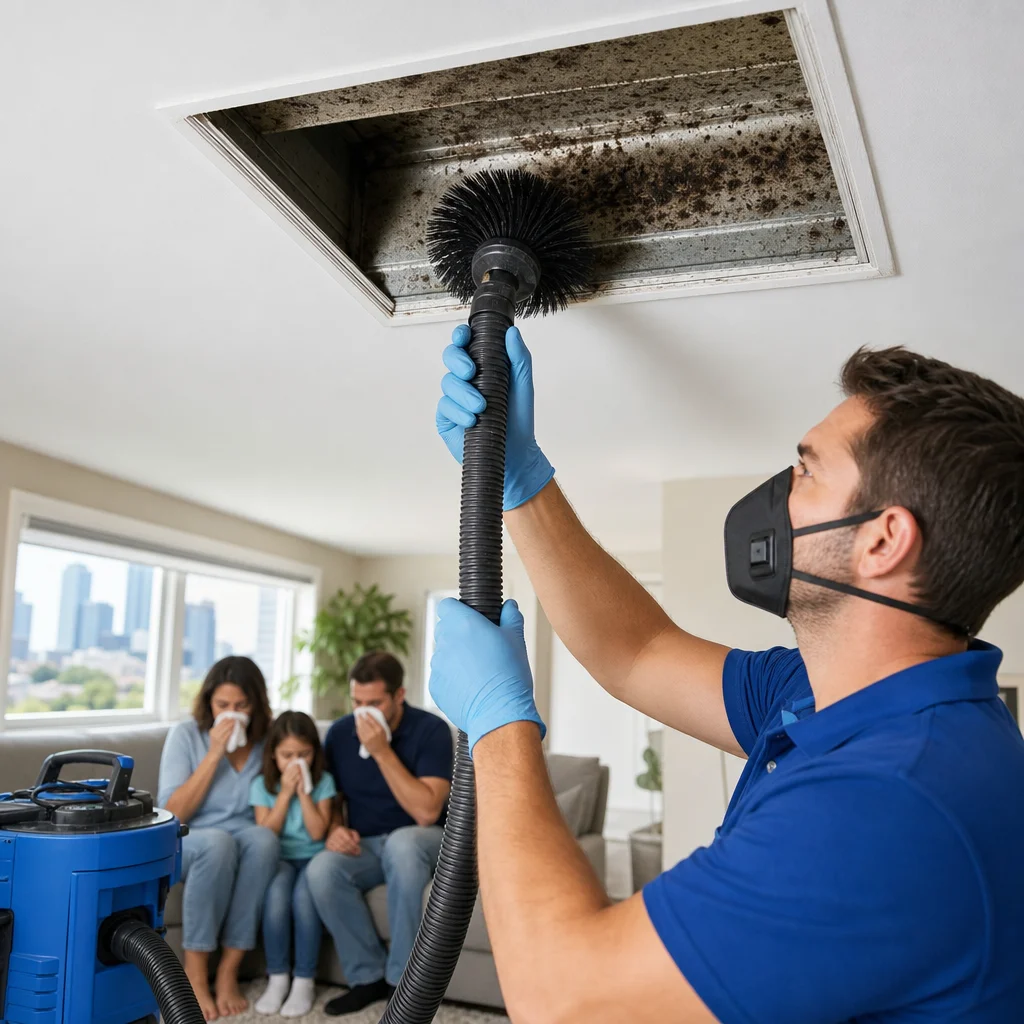
We often find that allergen problems worsen during humid months when your AC runs frequently. The cooling process creates condensation on coils, and if drainage is blocked or slow, water pools inside the air handler unit itself. This is prime real estate for mold colonies.
Additionally, dirty ductwork traps dust, pet hair, pollen, and skin cells. These materials become food sources for mold. Once mold establishes itself, it spreads aggressively, especially in sections where airflow is slower or where duct insulation has absorbed moisture.
Combining duct contamination with hvac coil cleaning is essential because the problem typically exists in both locations simultaneously.
Health Risks of Breathing Contaminated Duct Air
Mold exposure varies by individual sensitivity, but the risks are real and documented. Prolonged inhalation of mold spores can trigger:
- Allergic reactions: sneezing, nasal congestion, itchy eyes, and skin rashes
- Asthma exacerbation: increased wheezing, shortness of breath, and nighttime coughing
- Respiratory infections: increased susceptibility to bronchitis and sinus infections
- Immunocompromised symptoms: fatigue, joint pain, and brain fog in sensitive individuals
Vulnerable populations including children, elderly residents, and people with existing respiratory conditions face higher risk. We’ve spoken with Austin families who moved to their home expecting relief from outdoor allergies, only to find indoor air quality worse than what they left behind.
The concerning part is that mold exposure happens passively. You’re not choosing to inhale contaminated air—it’s forced through your living spaces automatically. Some homeowners endure months of doctor visits, allergy testing, and medication trials before anyone suggests checking the air ducts. Meanwhile, the source continues circulating.
Long-term exposure has been linked to chronic sinus problems, persistent coughs, and worsening asthma control. Taking action to eliminate moldy air ducts isn’t just about comfort—it’s about protecting your family’s long-term respiratory health.
Our Professional Air Duct Cleaning Process and Mold Removal
We approach air duct cleaning systematically, starting with a thorough video inspection to identify contamination extent and location.
Our process includes:
- Full duct system inspection using high-definition camera equipment
- Access point creation where needed to reach contaminated sections
- Negative pressure cleaning using HEPA-filtered equipment that captures debris at the source
- Antimicrobial treatment applied to duct surfaces to prevent regrowth
- Coil and drain pan cleaning to eliminate mold at the air handler
- Final verification inspection to confirm complete remediation
- Duct sealing at access points and any leaks discovered during inspection
The key difference between professional mold in HVAC ducts remediation and standard duct cleaning is the antimicrobial treatment. We don’t just remove visible debris—we address the biological contamination that causes mold to return. Our technicians are certified and trained specifically in mold identification and safe removal practices.
We also test air quality post-service to verify improvements. This gives you objective confirmation that the work addressed the problem.
Why DIY Duct Cleaning Won’t Eliminate Mold Spores
Homeowners often attempt duct cleaning with consumer equipment or dryer vent brush kits purchased online. While well-intentioned, these approaches consistently fall short when mold is involved.
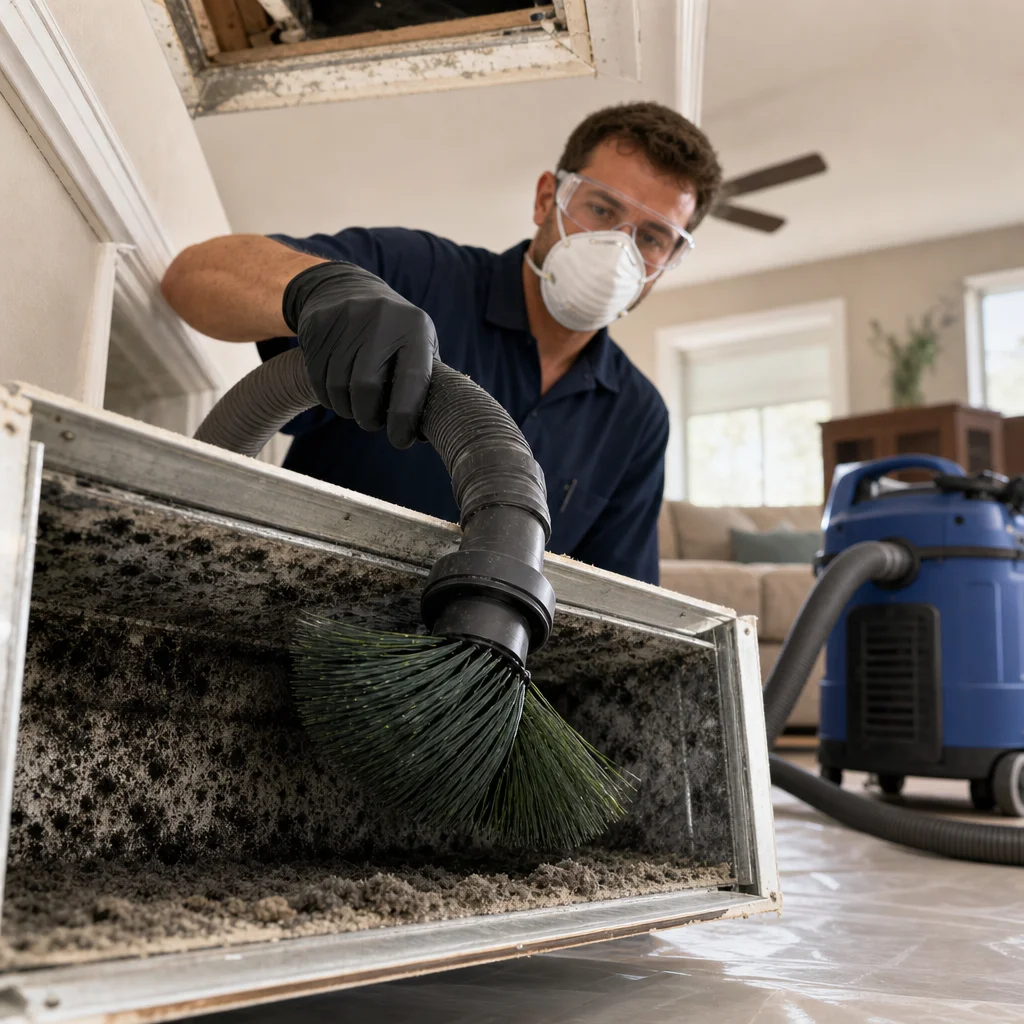
Here’s why:
- Standard shop vacuums and portable duct cleaning equipment lack HEPA filtration, so spores are recirculated back into your home
- Manual brush cleaning doesn’t reach the full duct diameter, leaving contaminated surfaces untouched
- Without antimicrobial treatment, any mold not mechanically removed begins regrowing within weeks
- DIY approaches cannot safely access ducts behind walls or above ceilings where contamination is often worst
- Attempting duct access without proper tools risks damaging ductwork, creating air leaks that reduce HVAC efficiency
We’ve seen homeowners spend several hundred dollars on equipment, spend hours on labor, and achieve no improvement. In some cases, well-meaning efforts actually disturbed mold colonies, increasing spore dispersal throughout the home temporarily.
Professional equipment operates under negative pressure, meaning air flows into collection systems rather than back into living spaces. This containment is critical when mold spores are present. Our technicians are also trained to recognize when mold contamination indicates deeper problems like condensation issues or ductwork deterioration that require additional repairs.
The Long-Term Benefits of Clean, Allergen-Free Ducts
Once your ducts are professionally cleaned and treated, improvements typically appear within days. Many Austin homeowners report noticing fresher indoor air, reduced dust accumulation, and improved sleep quality almost immediately.
The benefits extend well beyond immediate comfort:
- Allergies and asthma symptoms stabilize, often allowing reduced medication dependency
- HVAC efficiency improves because clean ducts allow better airflow and reduce system strain
- Energy bills decrease as your system runs more efficiently without obstructed pathways
- System lifespan extends because the equipment isn’t working against contaminated, restricted ductwork
- Resale value of your home increases with documented HVAC maintenance records
- Indoor air quality remains consistently high, protecting family health long-term
From a financial perspective, investing in professional professional air duct cleaning typically pays for itself through energy savings within 12-18 months. The health improvements are immeasurable.
We recommend scheduling deep cleaning every 3-5 years for Austin homes, more frequently if you have pets, allergies, or humidity control issues.
How We Prevent Future Mold Growth in Your System
Eliminating existing mold solves the immediate problem, but prevention ensures it doesn’t return. After cleaning and treatment, we focus on addressing the root causes that allowed mold to develop initially.
Our prevention approach includes:
- Sealing all ductwork leaks to prevent outside humid air from entering the system
- Ensuring proper HVAC drain line slope and clearing blockages so condensation drains freely
- Recommending humidity levels (ideally 30-50%) and suggesting dehumidification if needed
- Inspecting attic ventilation to confirm proper air circulation above ductwork
- Advising on insulation improvements to prevent condensation on duct exteriors
- Scheduling regular filter changes using MERV 11 or higher filters to reduce dust and allergen load
High humidity is Austin’s primary mold enabler. If your home consistently reads above 55% relative humidity, mold will eventually return even after professional cleaning. We often recommend whole-home dehumidification for customers with chronic humidity issues.
Equally important is keeping your air handler drain pan clear and sloped properly. A backed-up drain pan is like leaving a petri dish inside your HVAC system—mold will colonize it rapidly.
Combining Duct Cleaning with Insulation and Dryer Vent Services
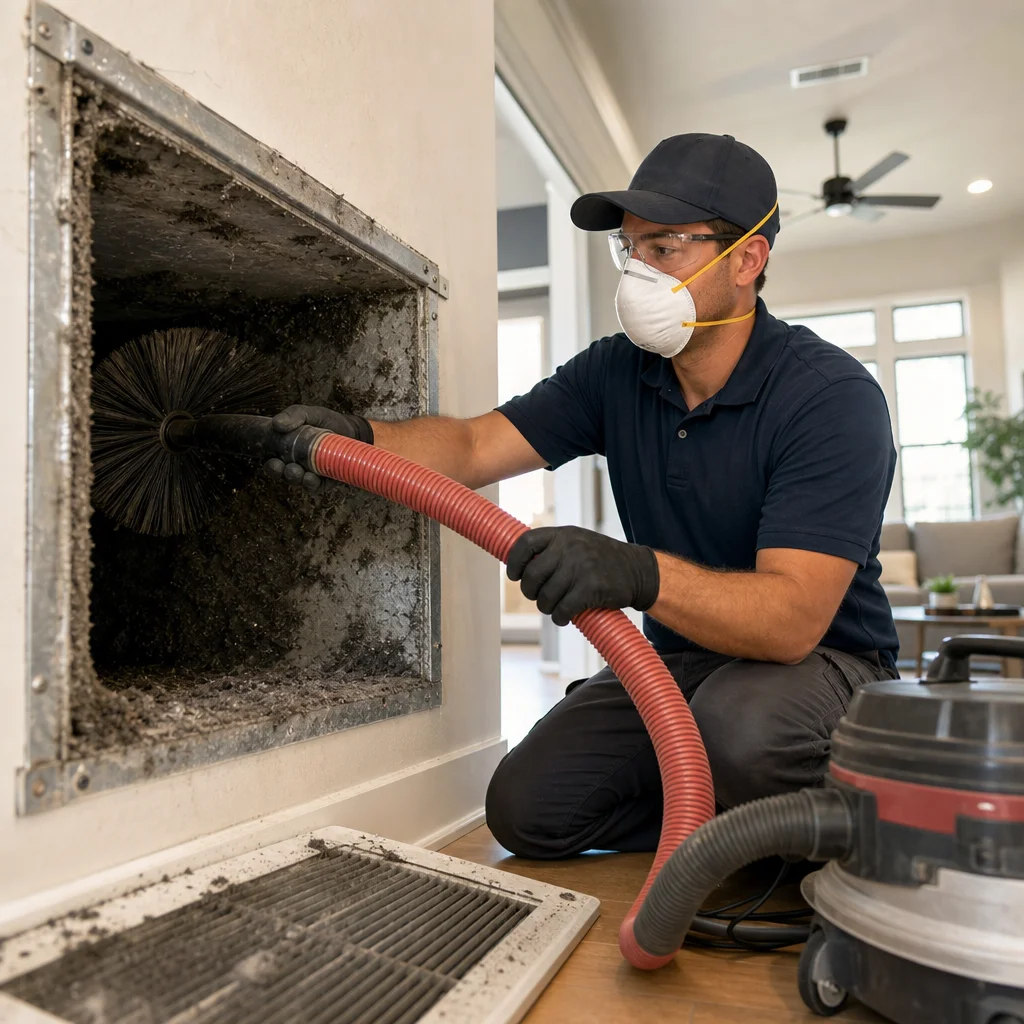
Most Austin homes benefit from bundled HVAC services. Dirty ducts, poor attic insulation, and clogged dryer vent cleaning are often interconnected problems that compound each other.
Here’s how these systems interact:
- Poor attic insulation creates temperature swings that promote condensation inside ducts
- Humid attic air leaks into ductwork through unsealed connections, introducing moisture
- Inadequate insulation forces HVAC systems to work harder, increasing energy costs and condensation risk
- Clogged dryer vents trap interior humidity, raising whole-home moisture levels
- High moisture anywhere in your HVAC system accelerates mold growth
When we perform duct cleaning, we typically recommend an attic inspection to assess insulation condition. Adding proper attic insulation mold prevention often prevents future duct contamination more effectively than cleaning alone.
Additionally, annual dryer vent cleaning reduces household humidity and improves your system’s overall efficiency. We’ve found that addressing all three areas simultaneously delivers the fastest health improvement and lowest long-term maintenance costs.
Schedule Your Free Air Quality Assessment Today
If your Austin or San Antonio home shows any signs of moldy air ducts or poor indoor air quality, we invite you to schedule a free inspection. Our certified technicians will perform a complete ductwork evaluation, assess moisture and humidity levels, and provide you with a detailed remediation plan.
We offer same-day service appointments and transparent pricing with no hidden fees. Our work is backed by industry warranties and your complete satisfaction guarantee.
Contact us today at your earliest convenience to breathe easier in your home.
If you’re dealing with dust, poor airflow, mold in your ducts, or a clogged dryer vent — don’t wait. These issues can affect your health and safety. Go Air Ducts Group are the local experts in air duct cleaning, mold removal, dryer vent cleaning, and attic insulation. Call now for a free inspection and same-day service in Austin and San Antonio.
Frequently Asked Questions (FAQ)
How long does your professional air duct cleaning process typically take?
Our air duct cleaning service usually takes 3 to 5 hours depending on the size of your home and the extent of mold or allergen buildup we find. We’ll give you an accurate timeframe during your free assessment so you can plan accordingly. Our technicians work efficiently while ensuring we reach every section of your ductwork to eliminate mold spores and debris completely.
Can mold in air ducts come back after we clean them?
While our cleaning removes existing mold, we take steps to prevent recurrence by addressing moisture issues and improving airflow in your system. We’ll identify any conditions that allowed mold to develop in the first place, such as inadequate insulation or ventilation problems. Many of our customers combine duct cleaning with our insulation upgrades to create a drier environment where mold is far less likely to return.
What’s the difference between our professional cleaning and renting a DIY duct cleaning machine?
We use industrial-grade equipment and specialized techniques that reach deep into your ductwork where standard consumer machines cannot access, especially in removing mold spores and allergen particles. Our certified technicians know exactly where contamination hides and can treat problem areas that DIY equipment misses. We also inspect your entire HVAC system and can recommend additional services like dryer vent cleaning or chimney inspection to address related air quality issues.