
Table of Contents
- Why Attic Mold Threatens Your Home and Health
- How Moisture Creates Mold in Attic Insulation
- Common Signs Your Attic Insulation Has Mold
- The Real Cost of Ignoring Attic Mold Problems
- Our Professional Attic Inspection and Assessment Process
- How We Install Mold-Resistant Insulation Solutions
- Ventilation and Moisture Control Systems We Recommend
- Protecting Your Investment with Regular Maintenance
- Why Texas Homeowners Choose Go Air Ducts for Attic Solutions
- Frequently Asked Questions (FAQ)
Why Attic Mold Threatens Your Home and Health
Attic mold is one of the most serious threats we see in Texas homes. Unlike visible problems you can address quickly, mold in your insulation spreads silently, compromises your home’s structural integrity, and poses real health risks. The good news: prevention is straightforward when you understand what causes it and take the right steps.
Mold thrives in warm, humid environments. Your attic is the perfect breeding ground, especially in Texas where summer heat and humidity spike dramatically. When mold colonizes your insulation, it doesn’t stay confined to one area; it spreads through the material and can eventually reach other parts of your home.
The health impact is significant. Prolonged exposure to attic mold spores can trigger respiratory issues, allergies, and asthma flare-ups, particularly for children and elderly family members. People with compromised immune systems face even greater risk. Beyond health concerns, mold weakens insulation’s thermal performance, reduces its R-value, and can damage roof decking and framing if left untreated.
We’ve inspected hundreds of Austin and San Antonio attics where homeowners didn’t realize mold had already taken hold. Some cases required complete insulation replacement and structural repairs that cost far more than preventive maintenance would have. The takeaway: catching mold early or preventing it altogether saves money, protects your family, and maintains your home’s value.
How Moisture Creates Mold in Attic Insulation
Moisture reaches your attic through several pathways. Poor ventilation is the primary culprit. When your attic doesn’t have adequate intake vents (soffit vents) and exhaust vents (ridge or gable vents), humid air becomes trapped. This stagnant air cools against roof decking and condenses into liquid water, which saturates your insulation.
Another common source is air leakage from living spaces below. Warm, moist household air escapes through gaps around ceiling fixtures, recessed lights, and ductwork penetrations. Once that air reaches your attic, it cools and condenses on insulation and framing. Texas homes often have multiple AC units running 12+ hours daily in summer, creating significant moisture load.
Roof leaks and ice dams (though less common in South Texas) introduce direct water infiltration. Improperly installed or damaged gutters can also allow water to seep into soffit areas, which then migrate into the attic space. We’ve found that older homes with compromised flashing around chimneys and vents are particularly vulnerable.
The combination of heat, humidity, and organic material in insulation creates ideal conditions for mold germination within 24 to 48 hours of moisture exposure.
Common Signs Your Attic Insulation Has Mold
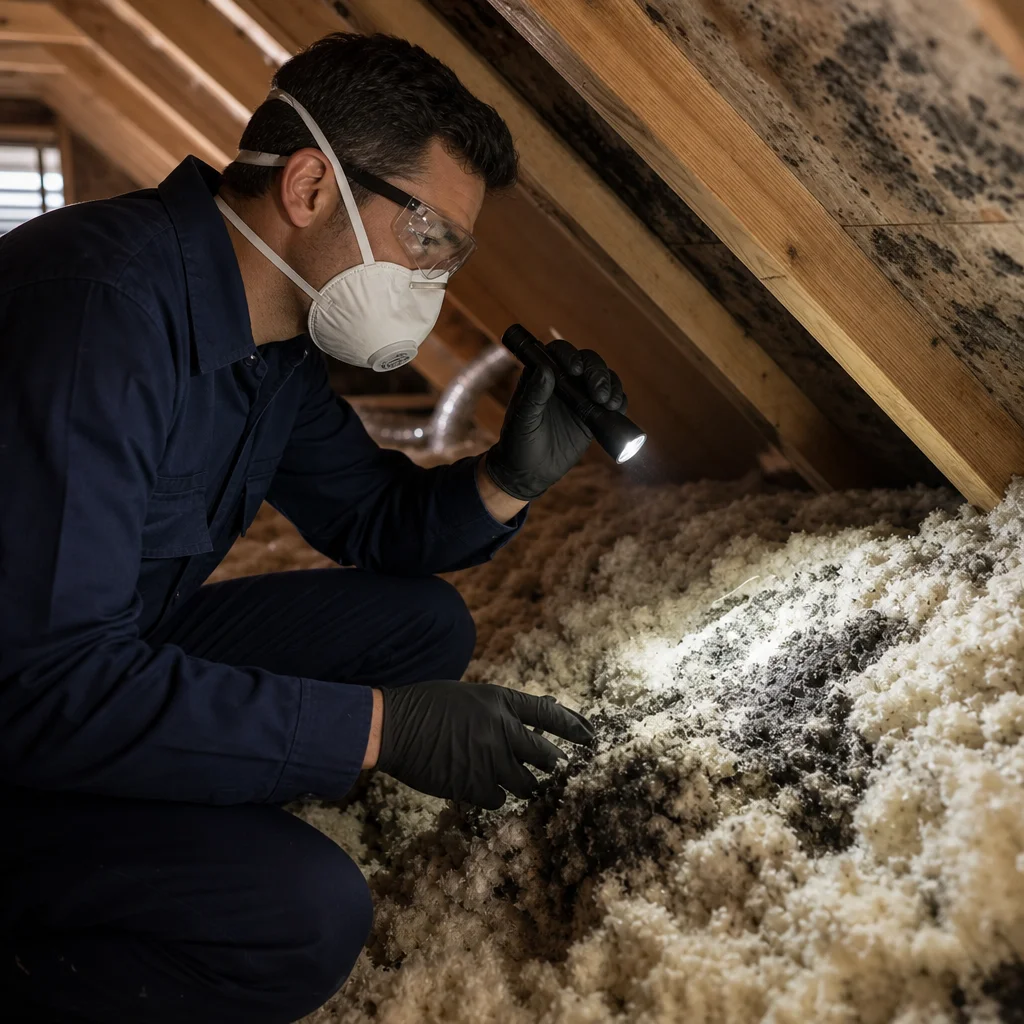
Visual inspection is your first line of defense. Look for dark spots, patches, or discoloration on insulation batts or blown-in insulation. Mold often appears black, green, or gray and may have a fuzzy or slimy texture. Don’t rely on smell alone; not all mold produces an odor you’ll notice.
If you notice a musty scent when you open your attic access, investigate immediately. That smell typically indicates active mold growth or moisture retention. You may also spot water staining on roof decking or framing wood, which signals recent or ongoing moisture intrusion.
Pay attention to energy bill spikes without corresponding usage changes. When mold compromises insulation R-value, your HVAC system works harder to maintain temperature, driving costs up. Some homeowners also report stuffy indoor air or increased allergy symptoms, though these can stem from common air duct problems as well.
The safest approach is scheduling a professional attic inspection if you have any concern. We use moisture meters and thermal imaging to detect hidden moisture and mold before it becomes visible.
The Real Cost of Ignoring Attic Mold Problems
Postponing action creates a cascade of expensive repairs. Mold continues reproducing, expanding its footprint across insulation and eventually onto wood structures. Roof decking weakened by mold and moisture becomes costly to replace, sometimes exceeding $10,000 to $20,000 depending on your home’s size.
If mold reaches structural framing, you’re looking at remediation that involves removal, treatment, and reinforcement. Insurance often won’t cover mold damage if it results from deferred maintenance, leaving you with the full bill. Additionally, homes with documented mold history face difficulty during resale; many buyers demand expensive professional remediation before closing.
Health costs matter too. Ongoing respiratory issues, medical visits, and potential medication expenses add up quickly. Families with someone already dealing with asthma or allergies experience worsening symptoms in moldy attics, reducing quality of life and sometimes requiring temporary relocation during remediation.
We’ve consulted with homeowners facing $30,000+ total costs to repair insulation, framing, roofing, and structural damage that could have been prevented with $2,000 to $5,000 in preventive upgrades. The math is clear: prevention pays.
Our Professional Attic Inspection and Assessment Process
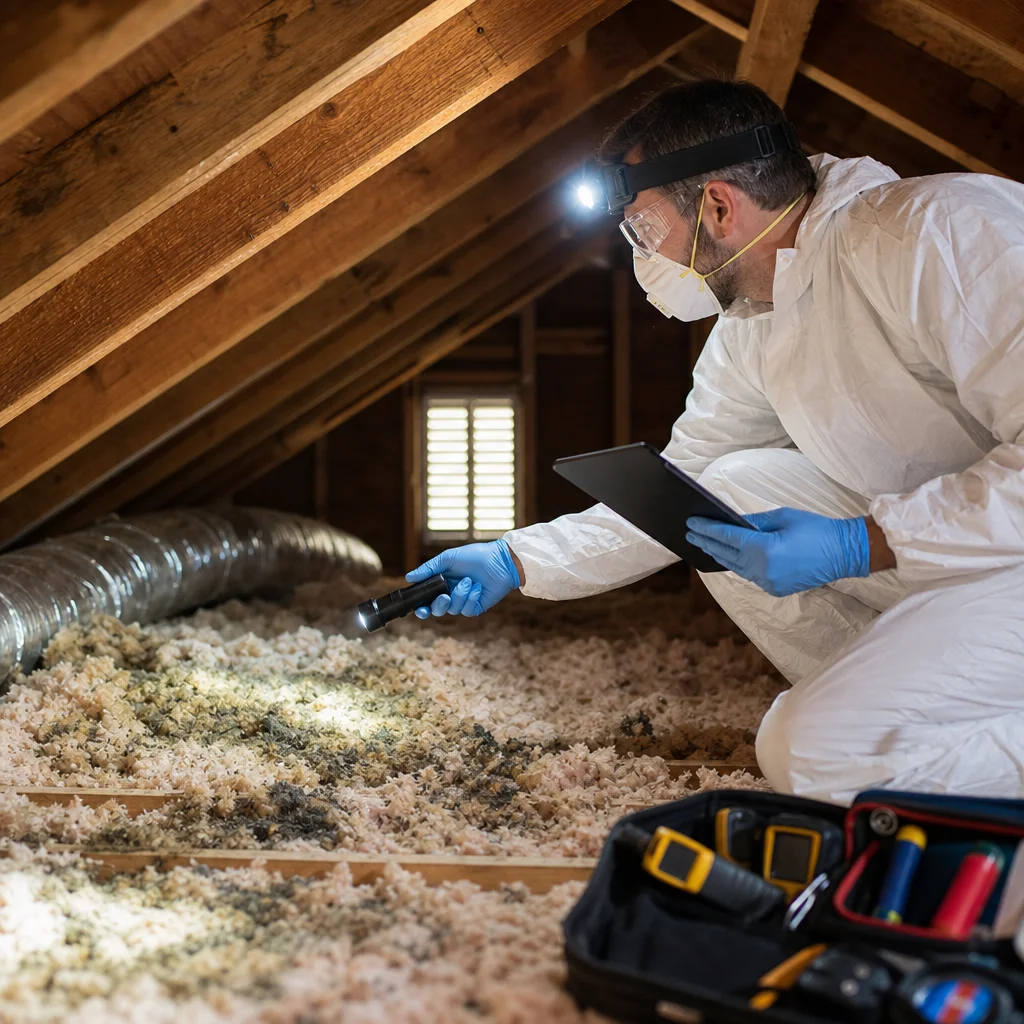
We begin every attic evaluation with a thorough visual inspection using proper safety equipment and lighting. Our certified technicians examine insulation condition, check ventilation intake and exhaust, and look for signs of moisture, leaks, or previous water damage.
We measure humidity levels with calibrated instruments and use thermal imaging to identify cold spots where condensation is likely occurring. This data tells us exactly where moisture problems exist and how severe they are. We also inspect for air leakage points where conditioned air escapes from living spaces, which is often the hidden cause of attic moisture.
After the inspection, we provide a detailed report with photographs, moisture readings, and specific recommendations. You’ll understand exactly what you’re dealing with and why. We’ll explain your options, from ventilation upgrades to insulation replacement to moisture barrier installation, and help you prioritize based on your budget and risk level.
Our free estimates mean you get this expertise at no cost. We want you making decisions based on solid information, not pressure.
How We Install Mold-Resistant Insulation Solutions
When insulation is already compromised, removal and proper disposal is essential. We carefully extract affected material, seal and treat any mold on wood framing, and allow surfaces to dry completely before installing new insulation.
For replacement, we specify mold-resistant products designed for humid climates. Closed-cell spray foam creates an air-tight barrier that prevents warm household air from reaching your attic, eliminating condensation at its source. Blown-in fiberglass with antimicrobial treatment is another option that provides excellent R-value while resisting mold colonization.
We always install a vapor barrier on the warm side of insulation to further protect against moisture migration. This simple addition dramatically extends insulation life and prevents recurring mold problems. We also ensure proper air sealing around penetrations and air handler enclosures.
Exploring attic insulation rebates can offset your upgrade costs significantly. Texas utility companies and state programs often subsidize energy-efficient insulation improvements.
Ventilation and Moisture Control Systems We Recommend
Adequate ventilation is non-negotiable for mold prevention. Your attic needs both intake (soffit) and exhaust (ridge or gable) vents sized according to building code, typically one square foot of vent area for every 150 square feet of attic space.
We recommend continuous ridge vents paired with soffit vents for balanced airflow. This design naturally draws cooler outside air in through the soffits while warm, moist air exhausts through the ridge, maintaining air circulation year-round without mechanical equipment.
In cases where natural ventilation is inadequate due to structural constraints, we install powered attic ventilation fans with humidity sensors. These activate automatically when humidity exceeds safe levels, removing excess moisture before it condenses.
For homes with high moisture generation (multiple bathrooms, laundry rooms, kitchens), we sometimes recommend installing a small dehumidifier in the attic space. Combined with proper exhaust ductwork from bathroom and dryer vents venting directly outside, this approach keeps humidity in check.
Protecting Your Investment with Regular Maintenance
After we complete your installation, ongoing maintenance keeps everything working as designed. We recommend annual attic inspections before summer heat arrives. This check catches any new moisture issues, verifies ventilation is clear of debris, and confirms insulation is performing properly.
Clear your gutters at least twice yearly, especially if you have trees overhead. Blocked gutters allow water to back up into soffits and eventually into your attic. Inspect roof penetrations around vents, chimneys, and skylights annually for gaps or deteriorating sealant.
Make sure bathroom and dryer exhaust ducts terminate outside, not in your attic or soffit space. We’ve found improperly installed dryer vents introducing gallons of water into attics over a heating season. Verify your HVAC system’s return air isn’t pulling from the attic space; improper design sends warm, moist household air directly upstairs.
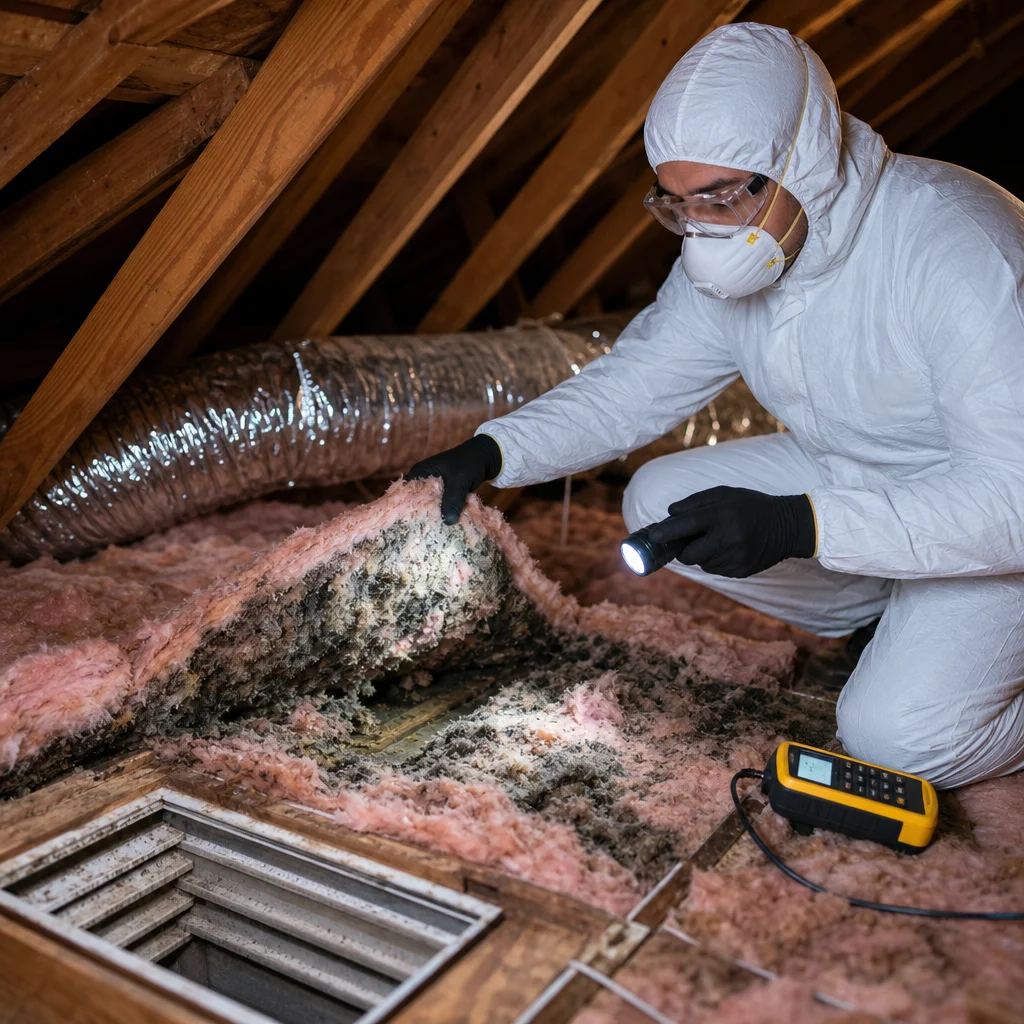
Schedule professional HVAC mold remediation if you notice mold on ducts or equipment, which can accelerate attic moisture problems by cycling contaminated air.
Why Texas Homeowners Choose Go Air Ducts for Attic Solutions
We’ve been serving Austin and San Antonio homeowners for years, building expertise specific to our region’s humidity and climate challenges. Our certified technicians understand Texas attics in ways generic national contractors simply don’t.
We don’t recommend solutions you don’t need. Our inspections are thorough and honest; if your ventilation and insulation are adequate, we’ll tell you so. We only suggest upgrades when the data supports them. This integrity has earned us consistent five-star reviews from homeowners who appreciate straightforward guidance.
We handle everything in-house: inspections, insulation removal and installation, ventilation system upgrades, and follow-up maintenance. You’re not coordinating multiple contractors or wondering if different trades communicated properly. We own the entire project and the results.
Your next step is scheduling a free attic inspection. Call us or request an estimate online; we’ll assess your situation, explain what we find, and give you clear options. Many homeowners discover their attic condition is better than expected, while others learn early enough to prevent serious problems. Either way, you’ll have the knowledge to make the right decision for your home.
If you’re dealing with dust, poor airflow, mold in your ducts, or a clogged dryer vent — don’t wait. These issues can affect your health and safety. Go Air Ducts Group are the local experts in air duct cleaning, mold removal, dryer vent cleaning, and attic insulation. Call now for a free inspection and same-day service in Austin and San Antonio.
Frequently Asked Questions (FAQ)
What signs indicate we need to inspect our attic insulation for mold?
We recommend having us inspect your attic if you notice dark spots or discoloration on insulation, a musty odor in your home, or visible water stains on attic framing. If anyone in your household has worsening allergies or respiratory issues, or if you’ve experienced recent roof leaks or plumbing problems above the attic space, these are also good reasons to call us for a professional assessment right away.
How quickly can mold spread in attic insulation in Texas’s humid climate?
In our Texas climate, mold can begin colonizing insulation within 24 to 48 hours of moisture exposure, especially during our humid summers. We’ve seen cases where homeowners discovered extensive mold damage just weeks after a roof leak they thought was minor, which is why we stress the importance of addressing moisture issues promptly and having us conduct inspections after any water intrusion event.
What’s the cost difference between preventing attic mold versus dealing with it after it develops?
Preventive measures like proper ventilation installation and moisture control systems typically cost a fraction of what mold remediation and insulation replacement runs once damage occurs. We’ve found that homeowners who invest in our inspection, ventilation upgrades, and quality insulation installation save significantly compared to those who wait until extensive mold damage requires complete attic restoration.