
🕑 13 min read
What is a good HVAC diagnostic checklist?
A solid checklist covers filter condition, airflow, coil and duct cleanliness, thermostat function, and unusual noises or odors, flagging when to clean or call for repair. Go Air Ducts uses a professional HVAC diagnostic checklist in Texas homes to catch issues early and keep systems efficient and reliable.
Table of Contents
- Why Your HVAC System Is Underperforming: Common Signs You're Missing
- The Filter Change Question: How to Know If This Solves Your Problem
- Air Duct Cleaning Red Flags: What We Find During Our Professional Inspections
- Understanding HVAC Repair Needs: When DIY Maintenance Isn't Enough
- Our Diagnostic Process: How We Pinpoint Exactly What Your System Needs
- The Cost Difference: Why Addressing Problems Early Saves You Money
- Indoor Air Quality Impact: How Each Solution Affects Your Home
- Your Action Plan: What to Do Next Based on Your Symptoms
- Why Texas Homeowners Trust Go Air Ducts for Accurate Diagnostics
- Frequently Asked Questions (FAQ)
Why Your HVAC System Is Underperforming: Common Signs You’re Missing
Your air conditioning system is running, but something feels off. The airflow seems weak. Your energy bill jumped. There’s dust settling on your furniture faster than usual. The question is: what actually needs fixing?
This is where most homeowners get stuck. Is it time to change the filter? Call for a full duct cleaning? Or do you need an emergency repair? We’ve helped thousands of Texas homeowners answer these exact questions, and we’ve learned that the right diagnostic approach saves you money and protects your indoor air quality.
This checklist walks you through the most common HVAC issues we see in Austin, San Antonio, Dallas, and Houston, and helps you figure out which solution fits your situation.
Weak airflow is the most common complaint we hear, but it rarely points to just one problem. We’ve found that homeowners often miss subtle warning signs that point to the real culprit.
Start by checking these basics:
- Uneven cooling or heating between rooms: One bedroom stays warm while another feels freezing. This often signals blocked ducts or damper issues.
- Dust buildup on vents and surfaces: If you’re wiping down your home more frequently, your system likely isn’t filtering properly or your ducts need cleaning.
- Higher than normal energy bills: A 15-20% jump usually means your system is working harder to maintain temperature, often due to restricted airflow or poor insulation.
- Strange noises from the vents: Rattling, squealing, or grinding sounds suggest mechanical wear or debris lodged in the system.
- Visible dust or debris around ductwork: If you can see dirt around seams or vents, there’s definitely a problem inside.
- Musty or stale odors: This points to mold growth or stagnant air in your ducts, particularly common in Texas humidity.
Pay attention to when these issues started. Did they appear gradually or suddenly? Gradual problems usually stem from buildup or wear. Sudden failures indicate mechanical breakdown.
One more thing: check your thermostat. A miscalibrated thermostat can mimic system failures. Make sure your temperature setting matches what you actually want, and verify the system is in the correct mode (cooling vs. heating).
The Filter Change Question: How to Know If This Solves Your Problem
Changing your air filter is the easiest maintenance task you can do, and it’s often the first step in solving performance issues. But it’s not always the complete answer.
Most filters should be replaced every 30-90 days, depending on whether you have pets, allergies, or high dust exposure. If you haven’t changed yours in over six months, start there immediately. A clogged filter restricts airflow, causes your system to work harder, and reduces efficiency by up to 15%.
However, if you’ve already changed your filter recently and you’re still experiencing problems, the issue lies elsewhere. Here’s how to tell:
A fresh filter solves these specific problems:
- Reduced airflow that improves within a day or two after replacement
- Visible dust accumulation on surfaces that decreases noticeably
- A slight musty smell that clears once fresh air begins circulating properly
A fresh filter will NOT solve:
- Uneven cooling between rooms (duct damper or blockage issue)
- Weak airflow that persists after filter change (duct restriction or system wear)
- Visible dust inside vents or around ductwork (requires duct cleaning)
- Odors that persist despite filter replacement (mold or contamination in ducts)
Our advice: change your filter, run your system for 24 hours, and assess whether you notice genuine improvement. If you don’t, you likely need professional diagnostics. We offer free estimates where we can pinpoint exactly what’s causing the problem.
Air Duct Cleaning Red Flags: What We Find During Our Professional Inspections
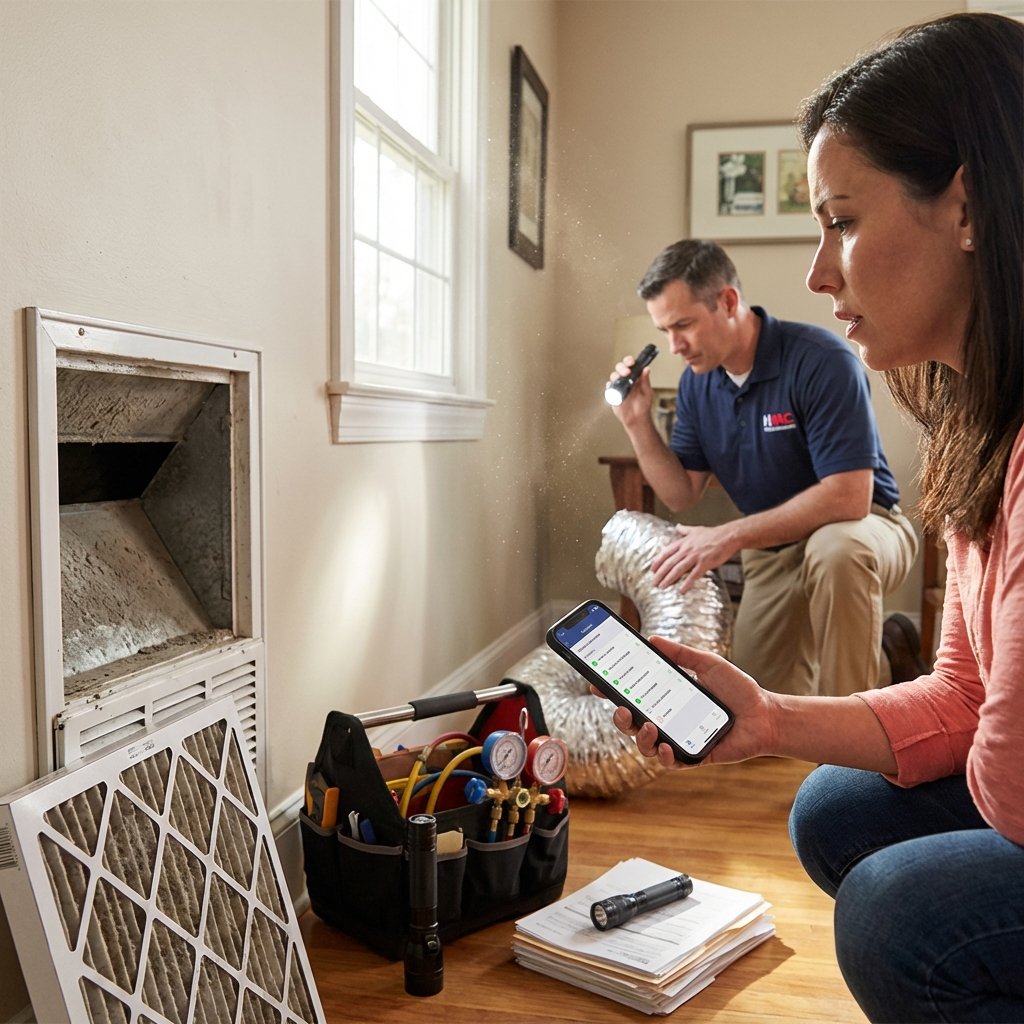
When we inspect ductwork, we often discover problems homeowners had no idea existed. Your ducts are hidden behind walls and above ceilings, which means contamination builds silently.
We regularly find these issues:
- Dust and debris buildup: Over time, dust, pet dander, and skin cells accumulate inside ducts. During long AC seasons in Texas, this buildup accelerates dramatically, restricting airflow and reducing efficiency.
- Mold and mildew growth: Texas humidity creates ideal conditions for mold colonization inside ducts. We see this especially in homes near water sources or with prior moisture damage.
- Pest droppings and debris: Rodents and insects occasionally find their way into ductwork, leaving behind contamination that affects air quality.
- Disconnected or collapsed sections: Vibration and age can cause duct connections to separate or sections to partially collapse, blocking airflow.
- Inadequate duct sealing: Leaky ducts lose 20-30% of conditioned air before it reaches your rooms, wasting energy and money.
- Filter bypass: If your filter doesn’t fit properly in its housing, unfiltered air bypasses the filter entirely, defeating its purpose.
Signs your ducts need professional cleaning:
- Visible dust or debris around vent openings
- Musty or moldy odors from your vents
- Allergies or respiratory issues that worsen indoors
- Recent water damage or flooding in your home
- Visible mold spots on ductwork or vents
- Excessive dust accumulation, especially if you have pets
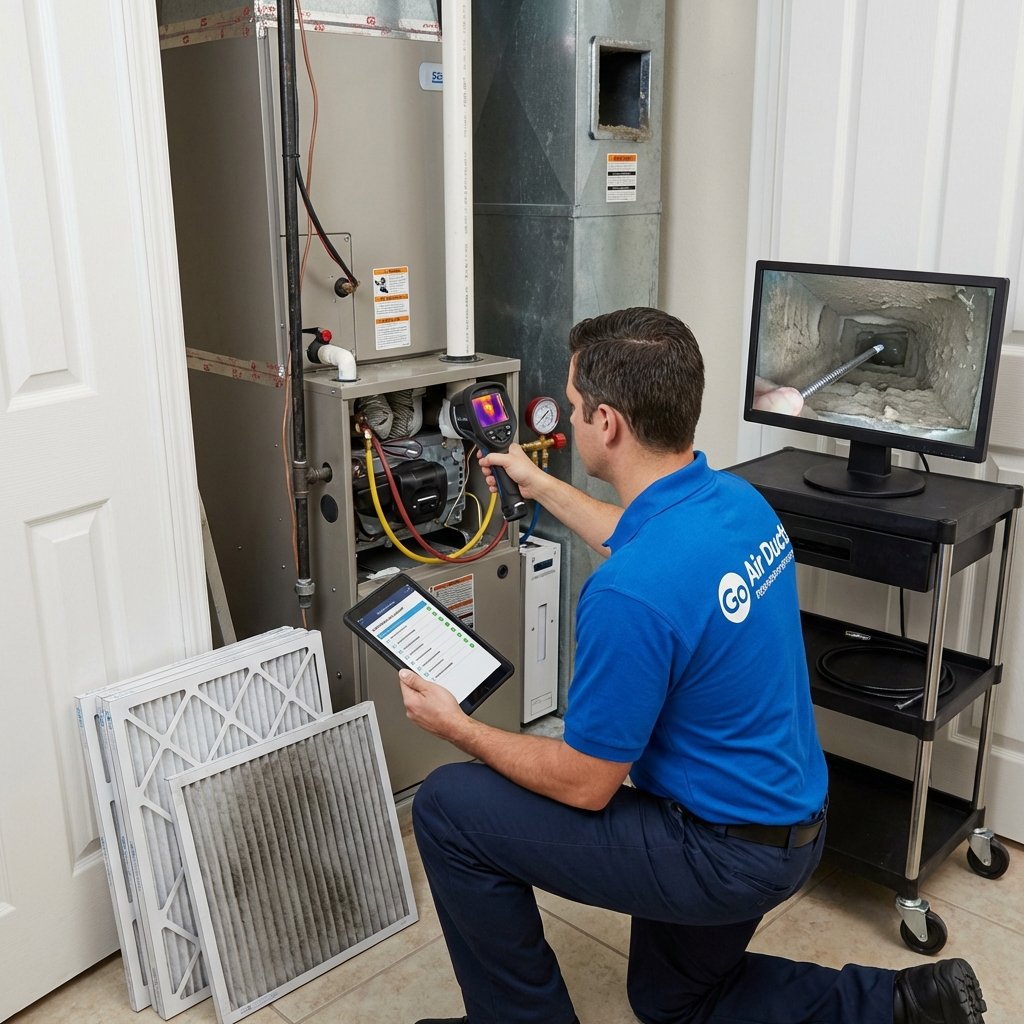
We use video inspection technology to see exactly what’s inside your ducts before recommending cleaning. This prevents unnecessary work and ensures you only pay for what you actually need.
Understanding HVAC Repair Needs: When DIY Maintenance Isn’t Enough
There’s a clear line between maintenance you can handle and problems that require professional repair. Crossing that line without expertise can be expensive.
These issues require a professional technician:
- Refrigerant leaks: If your system isn’t cooling properly and the filter is clean, low refrigerant is likely. This is dangerous and requires licensed handling.
- Compressor problems: A failing compressor creates strange noises, weak cooling, or system shutdowns. Replacement is complex and costly, but we can assess whether repair or replacement makes financial sense.
- Electrical or wiring issues: Any visible damage to wiring or repeated circuit breaker trips need immediate professional attention.
- Blower motor failure: If your fan isn’t running or runs intermittently, the motor or its capacitor likely needs replacement.
- Thermostat malfunction: When your system won’t turn on or maintains wrong temperatures despite correct settings, diagnostic testing is needed.
- Ductwork damage or significant leaks: We seal leaks with mastic sealant and metal tape, restoring system efficiency.
One scenario we see frequently: a homeowner tries to fix weak airflow by changing the filter and cleaning vents, only to discover a professional repair was needed all along. They’ve now lost time and wasted money on supplies. The key is knowing when to call early.
If your system is over 15 years old, performance drops significantly, or you’re hearing mechanical noises, schedule a professional diagnostic immediately. The cost of diagnosis is minimal compared to emergency repairs later.
Our Diagnostic Process: How We Pinpoint Exactly What Your System Needs
We use a systematic approach that identifies problems accurately, so you’re never paying for unnecessary work.
Here’s what our diagnostic includes:
- Visual system inspection: We examine your furnace or air handler, check ductwork connections, inspect the thermostat, and look for visible damage or contamination.
- Airflow testing: We measure actual airflow at key vents using diagnostic tools. This reveals whether weak airflow stems from blockage, ductwork leaks, or system wear.
- Filter assessment: We evaluate your current filter type and condition, and recommend proper sizing and replacement frequency for your home.
- Duct inspection: Using video camera technology, we inspect interior ductwork for debris, mold, disconnections, or collapse.
- Efficiency testing: We check whether your system is operating at manufacturer specifications, revealing wear or malfunction.
- Air quality screening: We assess dust, odor, and moisture levels to identify contamination or humidity problems.
After inspection, we provide a detailed report showing exactly what we found, what’s causing your specific problem, and what solutions we recommend. We explain the difference between what needs fixing immediately (safety or efficiency) versus what can wait.
Our free estimates come with no pressure. We’ve found that when homeowners understand the real problem, they make smart decisions quickly.
The Cost Difference: Why Addressing Problems Early Saves You Money
Delaying HVAC maintenance or repair typically costs more, not less. We’ve tracked this pattern across hundreds of jobs.
Here’s the math:
Ignoring a clogged filter for six months instead of three can reduce system efficiency by up to 15%, costing you $30-50 extra per month in energy. Over a year, that’s $360-600 wasted on cooling and heating.
Postponing duct cleaning when mold is present forces your system to work harder while spreading contamination. Your energy bills climb, and eventually the mold reaches a point where remediation costs are significantly higher.
Delaying repair of a small refrigerant leak compounds the problem. Your compressor works overtime to compensate, creating additional strain. What might have cost $400 to fix early can become a $2,000-3,000 compressor replacement within months.
Similarly, small duct leaks or disconnections are inexpensive to seal when caught early. Letting them persist wastes energy throughout the year and can eventually damage your home’s insulation.
Our recommendation: invest in an annual diagnostic inspection, typically $150-200. This catches small problems before they become expensive. For most homeowners, this single inspection saves them $500-1,000 annually in wasted energy and prevents emergency repair calls.
Indoor Air Quality Impact: How Each Solution Affects Your Home
Your HVAC system does more than control temperature. It’s your primary defense against indoor air pollutants, allergens, and contaminants.
A clogged or improperly sized filter compromises indoor air quality. Dust, pet dander, pollen, and mold spores circulate freely, triggering allergies and respiratory issues. This is especially critical if anyone in your home has asthma or severe allergies.
When ducts contain mold, every time your system runs, it circulates mold spores throughout your home. Over weeks and months, this exposure accumulates. We’ve worked with homeowners whose allergies completely resolved after professional duct cleaning and mold remediation.
Poor ductwork sealing compounds the problem. Leaky ducts pull air from unconditioned spaces like attics, crawl spaces, or basements. This unfiltered air carries dust, insulation particles, and moisture into your living spaces.
Our approach addresses indoor air quality comprehensively:
- Proper filter selection: We recommend MERV 8-11 filters for most homes, balancing filtration with airflow. Higher allergies or pets warrant MERV 13.
- Duct cleaning and sealing: Removing contamination and sealing leaks ensures only clean, conditioned air reaches your rooms.
- Humidity management: Texas humidity requires attention. Proper ductwork and AC function prevent excess moisture that causes mold and dust mite proliferation.
- Regular maintenance: We keep your system operating efficiently, ensuring proper filtration and airflow continuously.
The result: better sleep, fewer allergy symptoms, cleaner surfaces, and genuine peace of mind that your air is safe.
Your Action Plan: What to Do Next Based on Your Symptoms
Use these scenarios to determine your next step:
Weak airflow but filter is new: Contact us for airflow testing and ductwork inspection. The problem likely involves duct blockage, leaks, or damper issues.
Dust settling quickly despite filter changes: Schedule a professional duct inspection and cleaning. Buildup inside ducts is the most common cause.
Musty or moldy odors from vents: Don’t wait. Mold requires professional remediation. Call us for video inspection to confirm presence and scope.
Recent water damage or flooding: Ductwork is vulnerable after water exposure. We’ll inspect for mold growth and recommend cleaning or remediation.
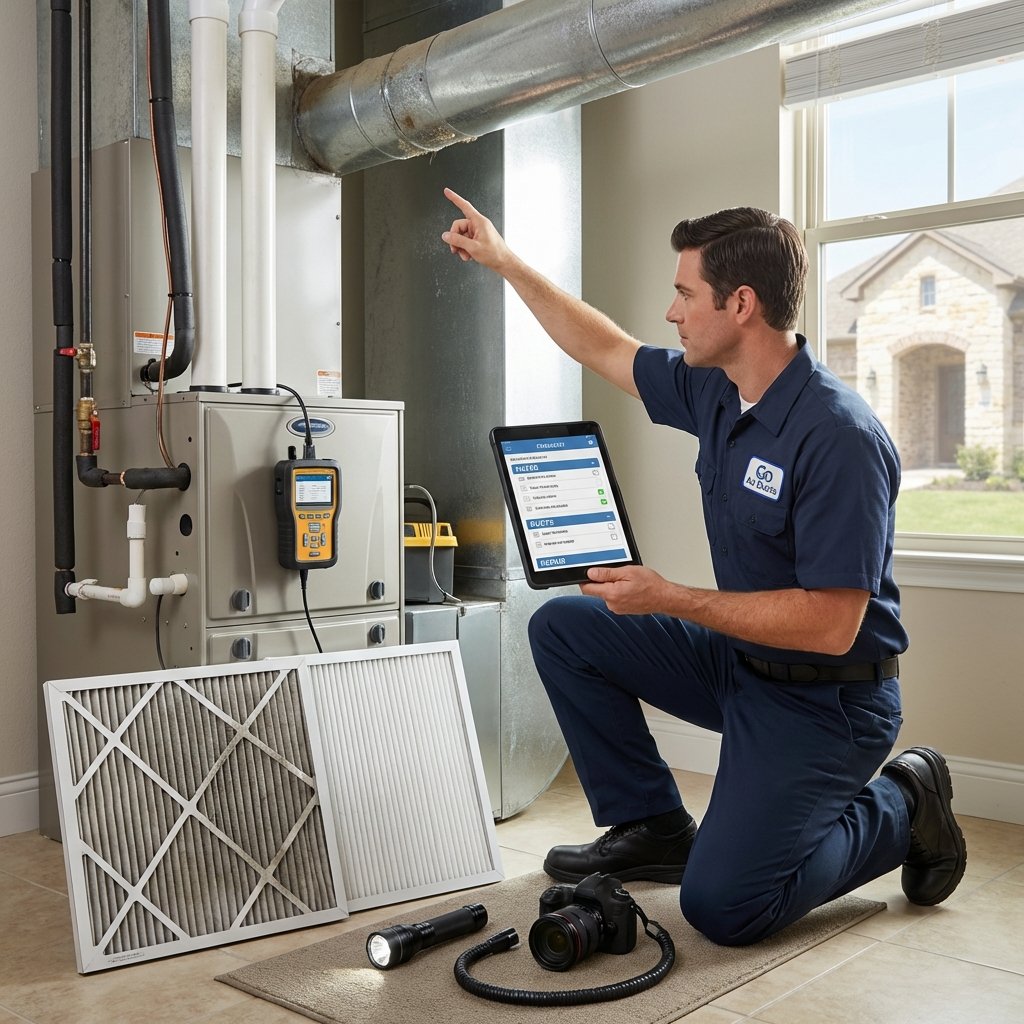
Higher energy bills with no temperature change: Get an efficiency diagnostic. We’ll identify whether leaks, poor insulation, or system wear is responsible.
Uneven cooling between rooms: This usually requires duct damper adjustment or ductwork redesign. We assess and recommend the appropriate fix.
Strange noises or system shutdowns: Schedule repair service immediately. Mechanical problems worsen quickly and become costlier.
Pets or severe allergies: Combine filter upgrades with professional duct cleaning twice annually. This dramatically improves air quality.
For any of these scenarios, we offer free estimates where we diagnose the problem and explain your options. No obligation, no pressure. We serve Austin, San Antonio, Dallas, and Houston with certified technicians and same-day availability.
Why Texas Homeowners Trust Go Air Ducts for Accurate Diagnostics
We’ve built our reputation on honest diagnosis and transparent pricing. When you call us, you get a technician with real experience identifying HVAC problems, not a salesperson looking to upsell unnecessary services.
Our advantage: we offer multiple solutions, not just one. Some homes need duct cleaning. Others need repair. Some benefit most from insulation upgrades that reduce HVAC strain. We identify what your specific situation requires and explain why.
We’re local, which means we understand Texas climate challenges. The humidity and heat here create unique HVAC demands that national chains don’t always grasp. We’ve seen how these conditions accelerate mold growth, dust accumulation, and system wear. Our recommendations reflect real-world Texas experience.
Our certified technicians use diagnostic technology that provides objective data. We don’t guess or assume. We measure airflow, inspect with cameras, and test system efficiency. When we explain what needs fixing, we back it up with specific findings.
Most importantly, we stand behind our work. We guarantee our duct cleaning, repairs, and installations. If something isn’t right, we fix it. That confidence comes from knowing our team does things properly the first time.
Ready to get answers about your HVAC system? Contact us at Go Air Ducts for a free diagnostic estimate. We’ll inspect your system, identify exactly what’s happening, and show you the most cost-effective solution. Serving Austin, San Antonio, Dallas, and Houston with fast, professional service.
If you’re dealing with dust, poor airflow, mold in your ducts, or a clogged dryer vent — don’t wait. These issues can affect your health and safety. Go Air Ducts Group are the local experts in air duct cleaning, mold removal, dryer vent cleaning, and attic insulation. Call now for a free inspection and same-day service in Austin and San Antonio.
Frequently Asked Questions (FAQ)
How do I know if I need air duct cleaning versus just changing my HVAC filter?
We recommend starting with a filter change if your system is running but airflow feels weak. However, if you notice persistent dust around vents, musty odors, or allergies worsening despite regular filter changes, your ducts likely need professional cleaning. During our inspections, we often find that filters alone can’t address buildup deep in the ductwork that accumulates over years.
What’s included in your HVAC diagnostic process?
We perform a thorough walkthrough of your system, checking filter condition, duct integrity, airflow patterns, and overall performance. Our technicians use video inspection equipment to identify hidden problems like mold, debris, or duct damage that visual inspection would miss. After we complete the diagnostic, we provide you with a detailed report and recommend only the services your specific system actually needs.
Why should I address HVAC problems early instead of waiting until something breaks?
Small issues like restricted airflow or minor duct leaks force your system to work harder, which increases your energy bills and accelerates wear on components. We’ve found that homeowners who address problems early typically save thousands in emergency repairs and energy costs within the first year. Catching problems during routine maintenance is far more affordable than dealing with a complete system failure during peak season.