
🕑 5 min read
How can I improve indoor air quality during winter?
To maintain healthy indoor air quality during winter, upgrade your HVAC air filter to MERV 8–11, keep indoor humidity levels between 30% and 50%, inspect and seal leaky return ductwork, use spot ventilation in kitchens and bathrooms, and ensure all combustion heating appliances (furnaces, gas fireplaces) are properly vented.
Table of Contents
- Key Takeaways
- Optimize HVAC Filtration and Airflow
- Maintain Optimal Indoor Humidity (30% to 50%)
- Ensure Fresh Air Exchange (Ventilation)
- Control Internal Pollutant Sources
- Indoor Air Quality Action Summary
- Frequently Asked Questions
- Need Professional Help with Your Airflow System?





During winter, homes are sealed tightly to keep cold air out, which traps dust, allergens, moisture, and combustion byproducts inside. Managing indoor air quality (IAQ) requires a balance between proper filtration, humidity control, ventilation, and system maintenance.
Key Takeaways
- Filter Management: Upgrade to a pleated MERV 8–11 filter and replace it every 60–90 days to capture fine particulates without over-restricting HVAC airflow.
- Humidity Balance: Maintain indoor relative humidity between 30% and 50% to prevent dry nasal passages while avoiding condensation and mold growth on cold windows and walls.
- Ventilation: Use kitchen and bath exhaust fans daily, or open windows for short 5-minute bursts to flush out trapped volatile organic compounds (VOCs) and carbon dioxide.
- Source Control: Inspect heating ductwork, service gas appliances annually, and keep carbon monoxide (CO) detectors tested and active.
Optimize HVAC Filtration and Airflow
Your central heating system is the primary vehicle for circulating air throughout your home. Relying on basic fiberglass filters allows microscopic dust and dander to continuously recirculate.
- Choose the Right MERV Rating: Standard flat fiberglass filters (MERV 1–4) only protect the blower motor from large debris. Upgrade to a pleated MERV 8 to MERV 11 filter to capture mold spores, fine dust, and pet dander. Avoid MERV 13 or higher unless your HVAC system is specifically rated for high static pressure.
- Maintain Filter Replacement Intervals: Inspect filters monthly during peak heating season. Replace them every 30 to 60 days if you have shedding pets or live in a dusty area, and no later than every 90 days for standard households.
- Keep Vents Unobstructed: Ensure supply registers and return air grilles are not blocked by furniture, rugs, or drapes to maintain proper static pressure and airflow balance.
Maintain Optimal Indoor Humidity (30% to 50%)
Cold winter air holds less moisture, and heating systems dry out indoor air further. Low humidity causes dry skin and respiratory irritation, while excessive humidity leads to window condensation and mold growth.
Use a Humidifier Safely: If using a whole-home or portable humidifier, set the target humidity between 30% and 45%.
- Prevent Mineral Dust: If using ultrasonic room humidifiers, fill them with distilled water instead of tap water to prevent white mineral dust from settling on furniture and entering your lungs.
- Control Moisture at the Source: Always run bathroom exhaust fans during and for 20 minutes after showers to prevent steam from migrating into cold bedrooms and framing walls.
Ensure Fresh Air Exchange (Ventilation)
Sealing windows and doors prevents heat loss, but it also traps carbon dioxide, cooking fumes, and cleaning chemical vapors (VOCs).
- Practice Flash Ventilation: On cold days, open two opposing windows wide for just 3 to 5 minutes. This creates a quick cross-breeze that exchanges stale indoor air for fresh outdoor air with minimal heat loss from walls and furniture.
- Use Range Hood Exhausts: Always run your kitchen range hood while cooking—especially when using gas stoves, which emit nitrogen dioxide (NO2) and carbon monoxide (CO).
- Consider an ERV/HRV: For tightly sealed modern homes, installing a Heat Recovery Ventilator (HRV) or Energy Recovery Ventilator (ERV) brings in fresh outdoor air while recovering thermal energy from the outgoing exhaust air.
Control Internal Pollutant Sources
Controlling pollutants at the source is more effective than trying to filter them out after they are released into the room.
- Service Heating Equipment: Have a certified technician inspect gas furnaces, boilers, and gas fireplaces annually to verify complete combustion and proper flue exhaust.
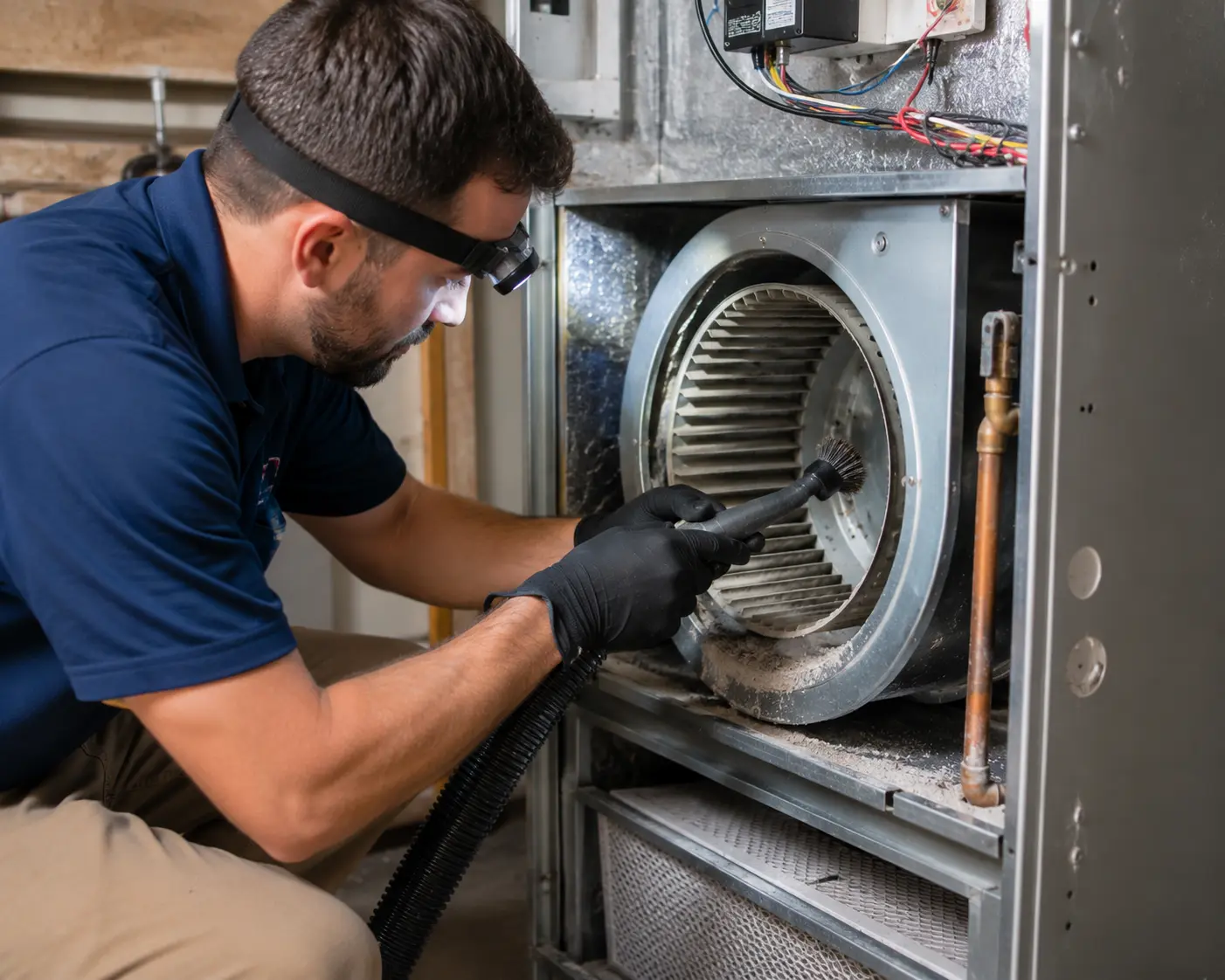
- Check Return Duct Integrity: Ensure return ducts located in attics, basements, or crawlspaces are fully sealed. Unsealed return joints draw cold, dirty air, insulation fibers, and crawlspace moisture directly into your heating stream.
- Minimize Synthetic Fragrances: Avoid scented candles, plug-in air fresheners, and aerosol sprays, which release volatile organic compounds (VOCs) and ultrafine soot particles into closed winter spaces.
Indoor Air Quality Action Summary
| Action Item | Recommended Frequency | Primary Benefit |
|---|---|---|
| HVAC Filter Replacement | Every 60–90 Days | Traps fine dust, pollen, and pet dander |
| Exhaust Fan Usage | Daily (during cooking/bathing) | Removes excess moisture and cooking gases |
| Humidity Inspection | Weekly | Keeps relative humidity within the safe 30%–50% range |
| Duct System Inspection | Every 3–5 Years | Prevents attic/crawlspace dirt from entering living areas |
| CO Detector Testing | Monthly | Protects against dangerous carbon monoxide buildup |
Frequently Asked Questions
What is the best indoor humidity level for winter?
Indoor relative humidity should be maintained between 30% and 50% during winter. If you notice condensation pooling on the inside of your window glass, your humidity is too high and should be turned down to prevent mold growth.
Do air purifiers help with winter air quality?
Yes. Standalone HEPA air purifiers effectively capture fine particulate matter (PM2.5), dust, and airborne allergens in enclosed rooms where central airflow may be limited.
Should I leave my HVAC fan setting on “ON” or “AUTO”?
Setting the fan to “AUTO” is generally recommended. Leaving the fan set to “ON” continuously can blow moisture off the cooling coils back into your home, increasing indoor humidity and wasting electricity.
Need Professional Help with Your Airflow System?
If your home stays dusty or feels stuffy despite changing air filters, unsealed ductwork or dirty heating components may be compromising your air supply.
The team at Go Air Ducts provides comprehensive air duct cleaning, professional air duct inspection, duct leak testing, and duct sealing across Austin, San Antonio, and surrounding Texas communities.
Contact us today to schedule an inspection and ensure clean, healthy airflow throughout the winter season.