
🕑 14 min read
Why does professional duct cleaning beat DIY?
Professionals use HEPA equipment, camera inspection, and proven methods to reach and remove deep contamination that DIY tools cannot. Go Air Ducts technicians deliver thorough, verifiable duct cleaning results that outperform DIY, giving Texas homeowners genuinely cleaner air and better HVAC performance.
Table of Contents
- Why Homeowners Consider DIY Air Duct Cleaning
- The Hidden Equipment Gap: What You Cannot Access
- Our Advanced Technology and Specialized Tools
- Safety and Health Risks of DIY Approaches
- The Mold and Contamination Reality
- Professional Certification and Industry Standards We Meet
- Time Investment: Professional Speed vs Weekend Projects
- Long-Term Cost Analysis and Home Value Impact
- Why Our Technicians Deliver Results DIYers Cannot
- Common DIY Mistakes We Fix for Customers
- Our Comprehensive Service Process
- Schedule Your Professional Assessment Today
- Frequently Asked Questions (FAQ)
Why Homeowners Consider DIY Air Duct Cleaning
When dust starts circulating through your home, allergies flare up, or you notice your energy bills climbing, the instinct is often to tackle it yourself. We understand that impulse. DIY solutions can seem budget-friendly and convenient. But after years of responding to Austin and San Antonio homes where DIY attempts created new problems, we’ve learned that air duct cleaning is one area where professional expertise genuinely matters.
The difference isn’t about complexity for its own sake. It’s about what actually works and what creates hidden risks. Let’s walk through why so many homeowners who initially consider the DIY route end up calling us instead.
Cost is the obvious driver. Professional air duct cleaning typically runs between $500 and $1,500 depending on your system size and condition. A basic shop vacuum, some flexible tubing, and a weekend afternoon seem like a reasonable alternative when you’re staring at that quote.
We also see homeowners underestimate how bad their ducts have become. If you’re noticing dust on furniture or experiencing seasonal allergies, your initial assumption might be that a few passes with a vacuum attachment will solve it. And there’s genuine value in that thinking if we’re talking about surface dust on vents. The misconception surfaces when homeowners discover their system’s actual scope and realize they can’t reach the main trunk lines, basement connections, or attic runs without proper equipment.
Additionally, many people haven’t experienced the performance difference yet. Your HVAC system still works, so the problem feels manageable. That’s until they learn about hidden dust problems that accumulate silently in Texas homes, or they get hit with a mold discovery that changes everything.
What to do next: Schedule a free visual inspection with us. We’ll show you exactly what’s in your ducts right now, no pressure. Many homeowners are shocked by what we reveal with our camera system.
The Hidden Equipment Gap: What You Cannot Access
This is where DIY and professional work diverge most sharply. Your home’s ductwork is extensive and complex. Most residential systems include main trunk lines running through walls and ceilings, branch ducts to individual rooms, return air pathways, and multiple connection points.
A standard household vacuum, even a wet-dry model, can clean maybe 10-15 feet of flexible ducting if you’re fortunate. But that’s assuming you can actually reach that section. In most homes we service in Austin and San Antonio, the critical ductwork is:
- Behind walls and above ceiling drywall
- Running through attic spaces with limited crawl access
- Connected to the furnace or air handler with sealed connections
- Embedded in concrete slabs in some properties
- Branching into hard-to-reach corners and vertical runs
When you attempt DIY cleaning, you’re essentially cleaning the accessible surface ductwork while leaving the bulk of your system untouched. Contaminants, dust, and debris continue circulating from the parts you can’t reach.
Our technicians arrive with equipment specifically engineered for whole-system access. We use negative air systems that create pressure differentials to dislodge buildup, rotary brushes that agitate duct walls from inside, and powerful extraction units that remove loosened debris. These aren’t tools you rent from a hardware store. They’re professional-grade systems designed for the scale of work residential systems demand.
Our Advanced Technology and Specialized Tools
When we show up to your Austin or San Antonio home, we bring equipment that fundamentally changes what’s possible. Our access cameras let us inspect your entire duct system before we begin, so we know exactly where buildup exists and how aggressive we need to be. That visibility prevents guesswork and wasted effort.
Our truck-mounted negative air systems create controlled pressure environments inside your ducts. This means dislodged dust and debris move toward collection points rather than dispersing into your living space or escaping into walls. DIY approaches lack this containment entirely.
We also deploy rotary brush systems and compressed air whips that reach deep into ductwork and agitate debris that’s been settling for years. In Texas homes, this matters significantly. Heat cycles cause dust and debris to bake onto duct interiors. Surface-level vacuuming won’t separate that buildup.
For dryer vents, which are a common fire hazard in homes we service, we use specialized brush systems designed to navigate the tight bends and rigid ductwork typical of dryer installations. A shop vacuum simply cannot generate the suction or agitation needed to clear lint completely.
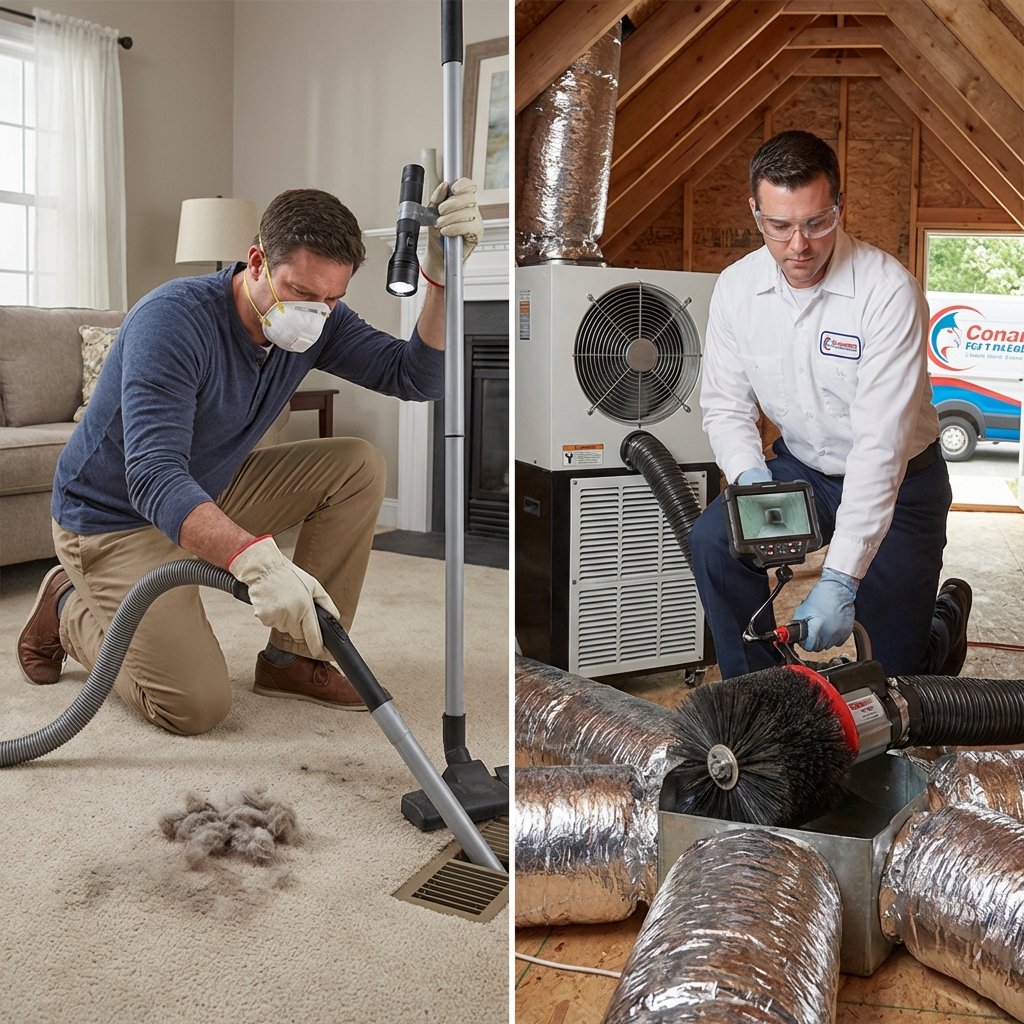
The equipment investment alone for a single professional installation runs $50,000 to $100,000. That’s before accounting for the training needed to use it safely and effectively. This is why we can offer guarantees on our work. We have the tools to actually deliver comprehensive cleaning.
Safety and Health Risks of DIY Approaches
This section matters more than many homeowners realize. Air duct cleaning involves confined space entry in some cases, heavy equipment operation, and exposure to decades-old dust and debris that can include harmful contaminants.
When you’re working in attic ductwork or crawlspaces, you’re potentially exposing yourself to:
- Fiberglass insulation particles that irritate skin and respiratory passages
- Mold spores that can become airborne when disturbed
- Animal droppings and pest residue
- Chemical residues from previous treatments or pest control
- Asbestos in homes built before the 1980s
We’ve responded to situations where homeowners attempted duct cleaning without respiratory protection and experienced respiratory irritation for weeks afterward. Some discovered they had mold contamination they’d inadvertently spread throughout their home by dislodging it without containment.
Our technicians use HEPA-rated respiratory protection, safety harnesses when working at heights, and proper containment protocols. We also carry the insurance and licensing required in Texas to handle situations where hazardous materials are discovered.
There’s also the equipment safety angle. Rotary brush systems can cause serious injury if operated without proper training. Negative air equipment can collapse ducts if pressure isn’t calibrated correctly. These aren’t theoretical concerns; they’re real incidents we’ve been called to remediate after DIY attempts went wrong.
The Mold and Contamination Reality
In Texas, mold in air ducts isn’t unusual. Our humid climate, combined with the temperature differentials in HVAC systems, creates ideal conditions for mold growth. When we inspect homes in Austin and San Antonio, we discover active mold contamination in roughly 30% of the properties we evaluate, often without the homeowner knowing.
Mold spores are microscopic and largely invisible until you use specialized equipment to identify them. A visual inspection won’t catch early-stage contamination. A shop vacuum definitely won’t remove it. In fact, aggressive vacuuming can aerosolize mold spores and spread the problem throughout your home.
We use moisture readings and thermal imaging to identify mold risk areas before it becomes visible. We also collect samples that we send for laboratory analysis when contamination is suspected. This tells us what we’re dealing with and how to address it safely.
When mold is present, the solution involves more than cleaning. We assess moisture sources, determine whether insulation needs replacement, and sometimes recommend HVAC modifications that reduce humidity in ducts. Why air duct cleaning matters becomes even more critical when mold is involved, because contaminated air circulation can trigger allergies and respiratory issues.
DIY approaches simply cannot address this. Once you’ve dislodged mold spores into your home’s air, you’ve got a much larger problem than you started with.
Professional Certification and Industry Standards We Meet
Our technicians carry certifications from the National Air Duct Cleaners Association (NADCA) and meet the standards outlined in the ANSI/NADCA 1991 protocol for duct cleaning. These aren’t optional credentials; they represent our commitment to doing the work correctly.
NADCA certification requires technicians to pass comprehensive exams covering duct system design, contamination identification, equipment operation, and safe work practices. It also requires continuing education every two years. This background is what allows us to identify when a duct system has underlying problems that cleaning alone won’t solve, like inadequate sealing or insulation issues.
We also maintain EPA certifications for lead-safe work practices and mold remediation protocols. Texas licensing requirements for HVAC work are strict, and we exceed them consistently. This matters because it means you’re working with someone who’s accountable to regulatory bodies, not just relying on online reviews.
When you hire us, you’re getting access to that training and accountability. DIY approaches have none of it.
Time Investment: Professional Speed vs Weekend Projects
Let’s be honest about the time commitment of DIY duct cleaning. You’ll need to research your specific system configuration, potentially rent equipment (which adds cost), learn how to operate the equipment safely, clear and protect areas of your home, spend an entire weekend on the project, and then still likely leave portions of your system uncleaned.
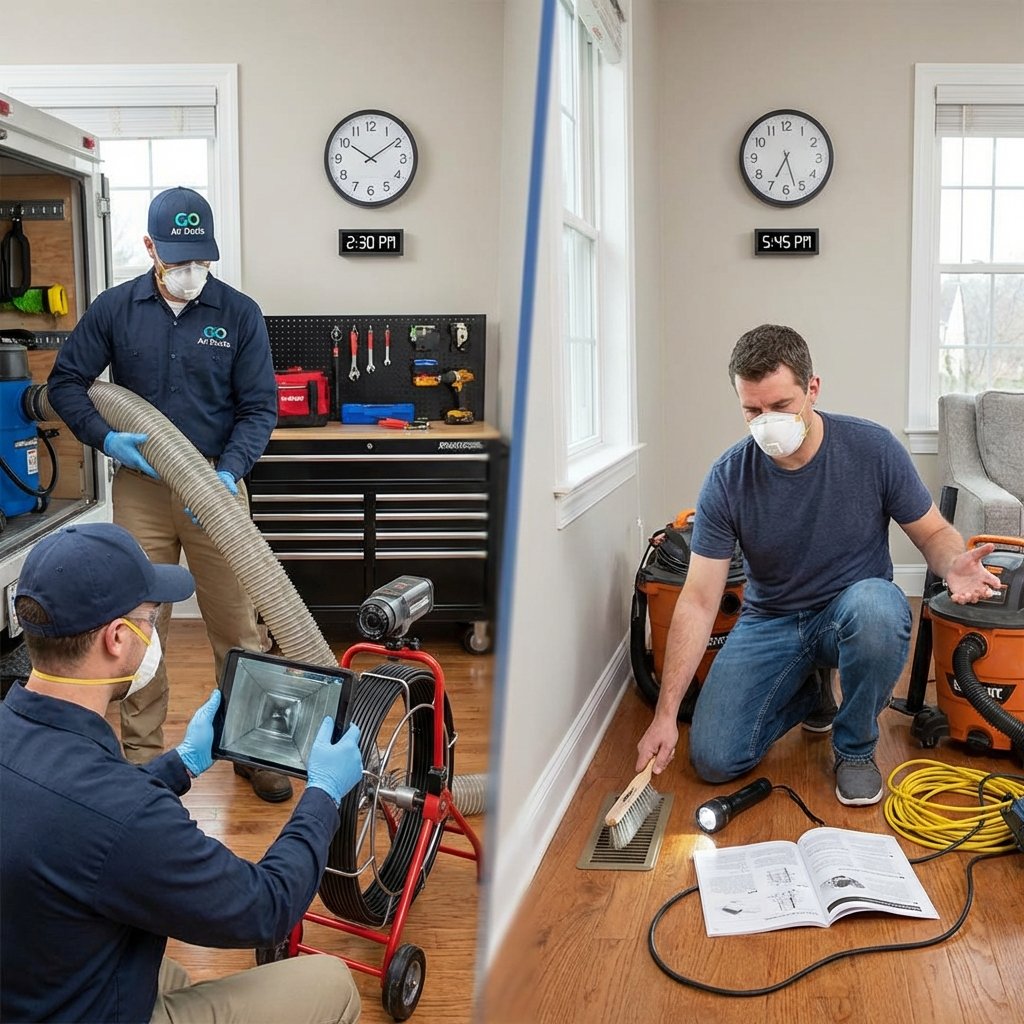
Our crew completes a typical residential system in 4-6 hours, including inspection, cleaning, and post-service verification. We schedule around your calendar and handle the entire process without disrupting your home unnecessarily.
If you encounter complications during DIY work, your timeline extends significantly. We’ve had customers call us after DIY attempts where they got stuck mid-project, couldn’t dislodge blockages, or didn’t know how to safely disconnect their system. That’s when costs mount quickly because you’re paying for emergency service plus remediation of whatever went wrong.
Think about it practically: your time has value. If you’re earning $40 per hour professionally, spending 16 hours on a DIY project that delivers partial results costs you $640 in lost time alone. Add equipment rental and disposal costs, and you’re approaching professional pricing without the guarantee of results.
Long-Term Cost Analysis and Home Value Impact
This requires thinking beyond the immediate cleaning cost. When your air ducts are clean and your HVAC system operates efficiently, your energy consumption drops measurably. We’ve seen homeowners realize 10-15% reductions in heating and cooling costs after professional duct cleaning combined with insulation upgrades.
A clean HVAC system also operates longer before requiring major repairs. Restricted airflow forces your equipment to work harder, accelerating component failure. Professional cleaning extends the life of your furnace or air handler by years, which translates to thousands of dollars saved.
For homeowners considering selling, clean ducts and a well-maintained HVAC system are inspection-friendly features. Many buyers now request duct cleaning records as part of due diligence. A professional cleaning document becomes a selling point that can justify your asking price.
If you have pets, we understand the specific challenge. Pets and duct cleaning intersects with indoor air quality in ways that impact both your home’s value and your family’s health. Professional cleaning removes pet dander and hair that DIY approaches can’t address.
Viewed over a 5-year horizon, professional cleaning ($800-$1,200 invested once) prevents $3,000+ in premature HVAC repairs and reduces energy costs by $1,500-$2,000. That’s a genuine return on investment, not an expense.
Why Our Technicians Deliver Results DIYers Cannot
The core difference comes down to capability and accountability. Our technicians have spent years developing the diagnostic ability to identify contamination types, estimate severity, and predict where problems will likely occur. They know what healthy ducts look like in Austin’s climate versus San Antonio’s profile because they work in both regions constantly.
They also have the judgment to recognize when a duct system has underlying problems that cleaning alone won’t fix. We occasionally recommend duct sealing, insulation replacement, or system redesign because we see the full picture. DIY approaches miss these opportunities entirely.
Most importantly, we guarantee our work. If a system isn’t performing adequately after our cleaning, we return and address it at no additional cost. That guarantee is only possible because we’re confident in our equipment and process. You can’t guarantee results when you’re working with rented equipment and limited access.
Common DIY Mistakes We Fix for Customers
We regularly respond to homes where DIY cleaning created new problems worth understanding.
Punctured or collapsed ducts: Shop vacuums and improvised cleaning tools sometimes damage flexible ducting. Small punctures seem minor until you realize your HVAC system is leaking conditioned air into your walls. We’ve repaired systems where homeowners inadvertently cost themselves thousands in lost efficiency.
Debris pushed deeper into the system: Overly aggressive vacuuming without proper containment pushes debris further into your system, where it lodges in secondary ductwork you can’t access. We then need to extract it from those hard-to-reach locations.
Mold spread: Disturbing contaminated areas without proper protection and containment aerosolizes spores throughout the home. We’ve helped families deal with new respiratory issues that emerged after a DIY cleaning attempt.
Disconnected connections: Flexible ductwork that’s disconnected during cleaning and improperly reconnected leaks air and reduces system performance. We’ve found systems operating at 40% efficiency due to improper reconnection.
Uneven cleaning: Different duct sections receive radically different levels of attention depending on accessibility, leaving some areas substantially cleaner than others. Your system is only as clean as its dirtiest section.
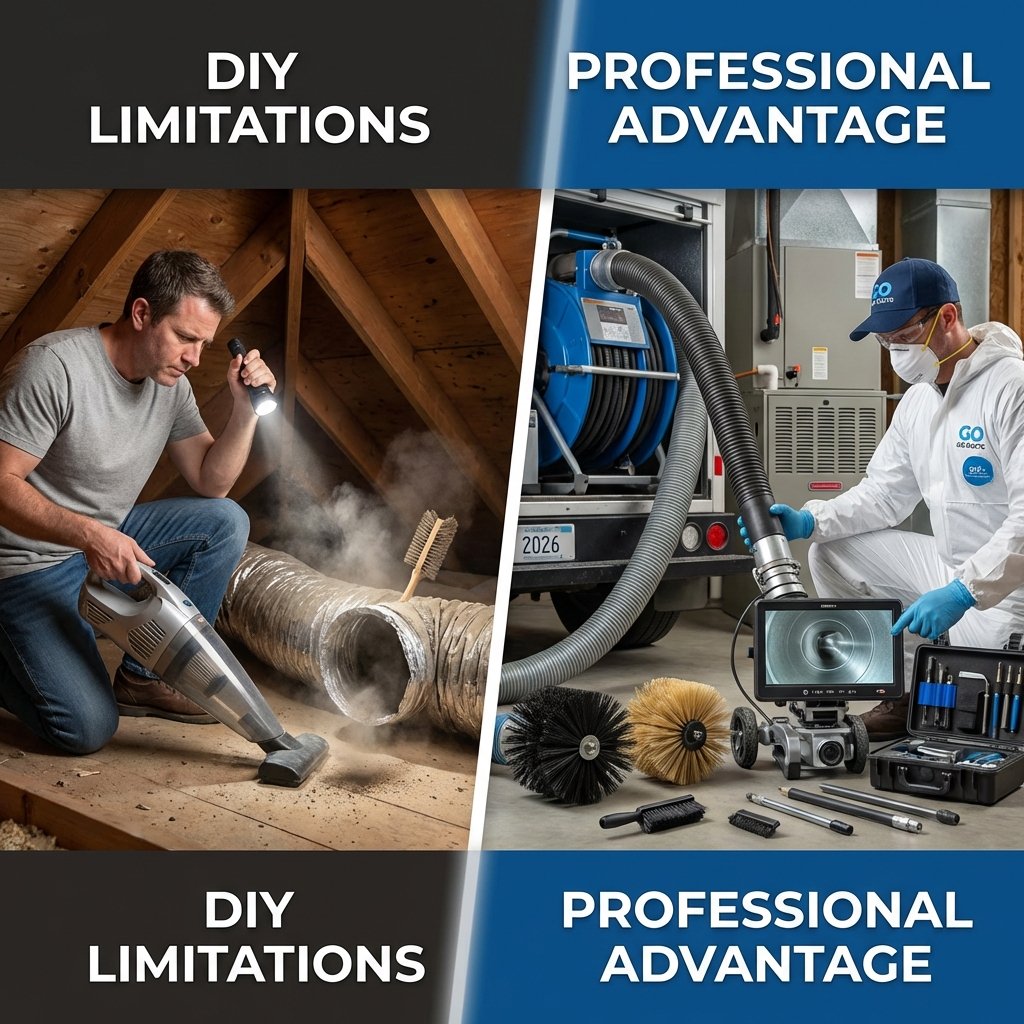
These mistakes don’t just undo the cleaning effort; they often create new problems that cost more to fix than the original cleaning would have cost.
Our Comprehensive Service Process
When you schedule with us, here’s what to expect.
We begin with a free assessment including camera inspection of your entire duct system. We’ll photograph problem areas and explain exactly what we’re seeing. This gives you confidence you understand what needs to happen.
Before cleaning begins, we protect your home by sealing vents with plastic sheeting and establishing containment zones. We’ll explain what we’re doing and answer questions as we work.
Our cleaning process starts with the main return air line and works systematically through every branch duct to ensure complete coverage. We use negative air systems to contain debris and extraction equipment to remove it from your property, not just from the ductwork.
Once cleaning is complete, we verify results with post-cleaning inspection. We’ll show you the difference using before and after photography. Finally, we provide you with documentation of what was cleaned and recommendations for maintenance.
The entire process takes 4-6 hours for most residential systems. We can typically schedule service within 48 hours of your call.
Schedule Your Professional Assessment Today
We understand the appeal of DIY approaches. But after years of working in homes throughout Austin and San Antonio, we’ve seen the limits of what homeowners can accomplish without professional equipment and expertise.
Your air duct system affects your family’s health, your home’s energy efficiency, and potentially your property value. These are too important to leave to guesswork.
Call us at our main number or visit goairducts.com to schedule your free professional assessment. We’ll inspect your system, explain what we find in plain language, provide a transparent estimate, and answer every question you have.
Our technicians are ready to help. Let’s get your home breathing clean air again.
If you’re dealing with dust, poor airflow, mold in your ducts, or a clogged dryer vent — don’t wait. These issues can affect your health and safety. Go Air Ducts Group are the local experts in air duct cleaning, mold removal, dryer vent cleaning, and attic insulation. Call now for a free inspection and same-day service in Austin and San Antonio.
Frequently Asked Questions (FAQ)
What equipment do we use that homeowners typically cannot access themselves?
We deploy truck-mounted HEPA filtration systems, rotary brush cleaning tools, and high-powered vacuums that create negative pressure throughout your entire duct network. These aren’t consumer-grade machines, homeowners usually rent basic shop vacs or handheld tools that can’t reach beyond accessible vents or generate the suction needed to dislodge years of accumulated dust and debris. Our technicians also use camera inspection systems to identify problem areas before and after cleaning, ensuring we address every section of your ductwork.
Why is mold growth such a concern with DIY duct cleaning attempts?
When homeowners use insufficient tools or improper techniques, they often disturb mold colonies without fully removing them, which actually spreads spores throughout your home and can make allergies and respiratory issues worse. We use HEPA-rated equipment specifically designed to capture and contain these contaminants, plus our certified technicians can identify moisture sources causing mold and recommend solutions to prevent recurrence. Incomplete cleaning simply relocates the problem rather than solving it.
How much faster is our professional service compared to a weekend DIY project?
We typically complete a full residential duct cleaning in 3-4 hours using our advanced equipment, while homeowners usually spend entire weekends working through limited sections and still miss critical areas. Our speed doesn’t sacrifice quality, it’s simply the advantage of specialized training and tools engineered for efficiency. When you factor in the rental fees for equipment and your time investment, our service often costs less than the DIY route while delivering complete, documented results.