
🕑 13 min read
Professional or DIY HVAC mold prevention in Austin?
DIY steps like filter changes help, but professional mold prevention addresses coils, drain pans, humidity, and ductwork that DIY cannot fully reach. Go Air Ducts provides professional HVAC mold prevention in Austin, tackling the moisture and buildup that cause mold for healthier, longer-lasting air quality.
Table of Contents
- Why Austin Homeowners Face Mold Risks in HVAC Systems
- The Problem with DIY Mold Prevention Attempts
- How Our Professional Inspection Process Works
- Advanced Mold Detection vs Standard HVAC Checks
- Our Certified Technician Advantage
- Air Duct Cleaning and Mold Remediation Methods We Use
- Preventative Maintenance Plans That Eliminate Recurring Mold
- Cost Comparison: Professional Service vs Repeated DIY Failures
- Why Austin’s Climate Demands Expert HVAC Mold Solutions
- Our Guarantee and Customer Protection
- Why Go Air Ducts Is Your Best Choice for Mold Prevention
- Frequently Asked Questions (FAQ)
Why Austin Homeowners Face Mold Risks in HVAC Systems
Mold in your HVAC system isn’t just an air quality issue—it’s a health hazard that spreads through every room in your home every time your system runs. As Austin homeowners, you’re facing unique challenges that make mold prevention harder than most people realize. We’ve inspected thousands of ductwork systems across Austin and San Antonio, and we can tell you that DIY attempts at mold prevention typically fail within months, leaving homeowners frustrated and their families exposed to contaminated air.
This guide walks you through why mold thrives in Austin HVAC systems, why DIY fixes don’t work long-term, and exactly how professional mold prevention protects your home and your health.
Austin’s humid subtropical climate creates the perfect storm for HVAC mold growth. Our summers deliver intense heat paired with high humidity levels that peak between May and September, and your air conditioning system pulls moisture directly into your ductwork every single day. When warm, humid air enters cooler ducts, condensation forms on interior surfaces—this is where mold colonies take root.
Add poor air circulation, blocked return vents, or a clogged filter, and you’ve created a breeding ground. Many homes also have ductwork that runs through unconditioned attics or crawl spaces where temperature swings are extreme. Water leaks from roof damage, foundation issues, or plumbing problems can drip directly into accessible ducts. Even small amounts of standing water or persistent moisture provide weeks of ideal mold growing conditions.
The problem compounds because most homeowners don’t see inside their ducts until mold colonies are already established. By the time you notice musty odors or experience allergy flare-ups, the contamination has usually spread across multiple sections of your system.
The Problem with DIY Mold Prevention Attempts
DIY mold prevention usually starts with one of three approaches: spray treatments from hardware stores, replacing filters more often, or attempting to clean ducts with consumer-grade vacuums. None of these address the root cause, and most actively make the problem worse.
Off-the-shelf mold sprays and coatings don’t penetrate deep into ductwork. They coat surface areas but don’t kill mold spores embedded in dust, debris, or rust spots inside your ducts. Within weeks, mold regrows underneath the treatment layer. You’re also introducing chemicals into the air your family breathes without professional-grade ventilation or protective equipment.
Replacing filters more frequently helps with airflow but doesn’t remove existing mold or moisture. If mold is already colonizing your ducts, a new filter won’t stop it from spreading. In fact, restricted airflow from clogged filters sometimes increases humidity inside ducts, making conditions worse.
Consumer vacuum systems lack the negative pressure and HEPA filtration needed for mold remediation. When you vacuum contaminated ductwork with a standard shop vac, you’re actually aerosolizing mold spores throughout your home. We’ve seen homeowners inadvertently spread mold to areas that were previously unaffected.
The most expensive DIY mistake is assuming your system just needs a good cleaning without addressing moisture sources. You spend $500 on a partial duct cleaning, feel better for a few weeks, then the problem returns because the humidity and condensation that caused the mold in the first place are still there.
How Our Professional Inspection Process Works
We start every mold prevention case with a comprehensive system inspection that goes far beyond a visual walkthrough. Our certified technicians use thermal imaging cameras to identify temperature variations and moisture accumulation points in your ductwork. These cameras reveal exactly where condensation is forming and where airflow is blocked or inadequate.
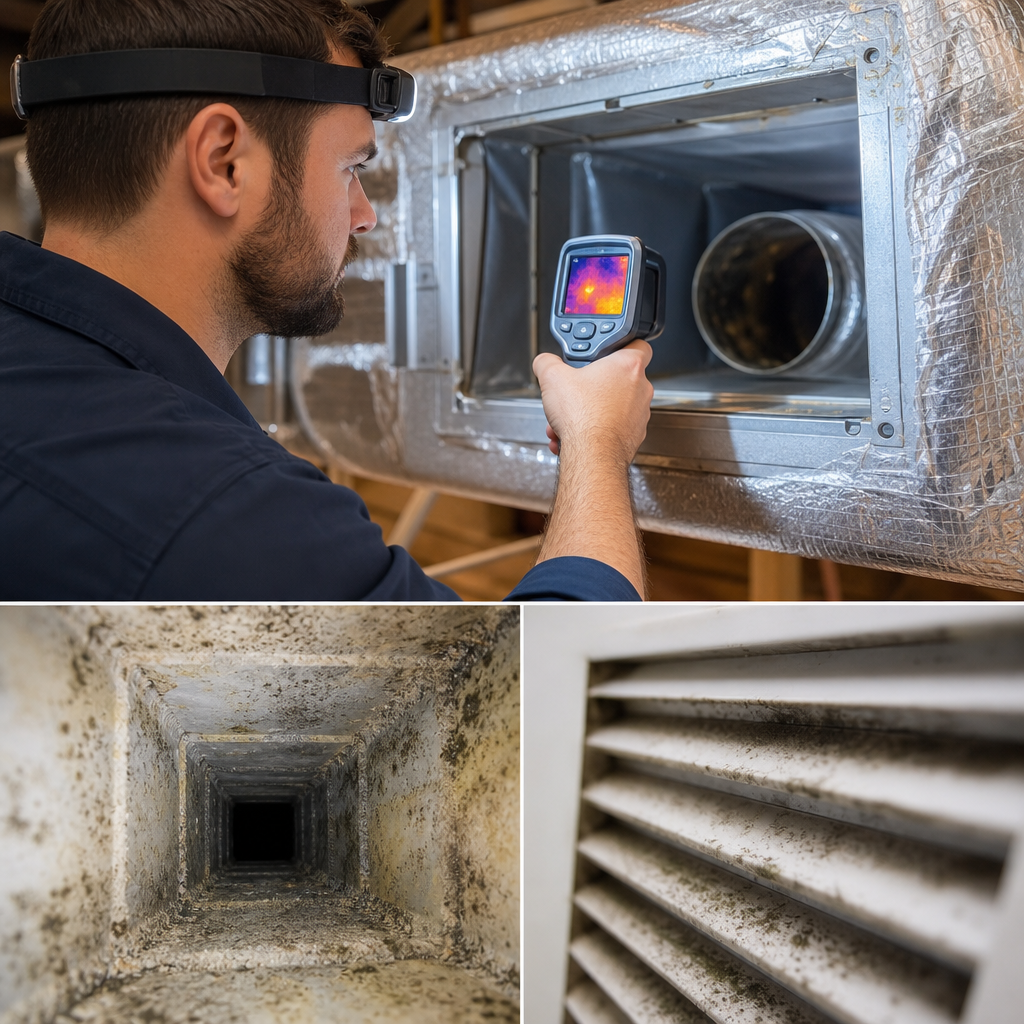
Next, we perform air quality testing to measure humidity levels, particle counts, and microbial contamination. This gives us hard data about what’s actually in your air, not just assumptions. We also inspect your HVAC equipment itself—blower motors, evaporator coils, and drain pans—because mold often starts at the cooling coil where moisture collects during normal operation.
We examine return air plenums, supply trunks, and individual branch ducts. We look for visible mold growth, water stains, rust, or settling dust that indicates moisture problems. We trace your ductwork path to identify vulnerable sections that run through unconditioned spaces or near potential water intrusion points.
This inspection produces a detailed report showing exactly where mold is present or likely to develop, what’s causing moisture accumulation, and what specific remediation steps will actually work for your home. This isn’t guesswork—it’s diagnostic data that drives every decision we make.
Advanced Mold Detection vs Standard HVAC Checks
Many HVAC companies offer basic maintenance checks that involve changing filters, checking refrigerant levels, and listening for unusual sounds. These checks miss mold entirely because they don’t include moisture assessment or ductwork inspection beyond a quick look at accessible sections.
Our advanced mold detection protocol includes moisture mapping throughout your entire duct system. We use portable humidity sensors and thermal imaging to create a complete picture of where moisture is accumulating. We also collect air samples for laboratory analysis when visual inspection suggests possible mold colonization. This tells us the specific mold species, spore concentrations, and whether the contamination poses immediate health risks.
Standard HVAC checks also don’t address humidity control at the system level. Our professional assessment includes evaluating your thermostat settings, your system’s dehumidification capacity, and whether your condensate drain is properly installed and clear of blockages. Many Austin homes have oversized AC systems that cycle on and off too frequently to properly dehumidify air—a problem that requires system adjustment, not just cleaning.
We also perform blower door tests in some cases to assess overall home air sealing and ventilation balance. If your home has negative pressure or improper makeup air, moisture problems in your ducts are inevitable, and addressing them requires solutions beyond duct cleaning alone.
Our Certified Technician Advantage
Our technicians hold EPA certifications, HVAC licenses, and specialized training in mold remediation protocols. This matters because mold work involves health and safety regulations that DIY methods completely ignore. Improper mold handling can expose you, your family, and even our own team to dangerous spore concentrations.
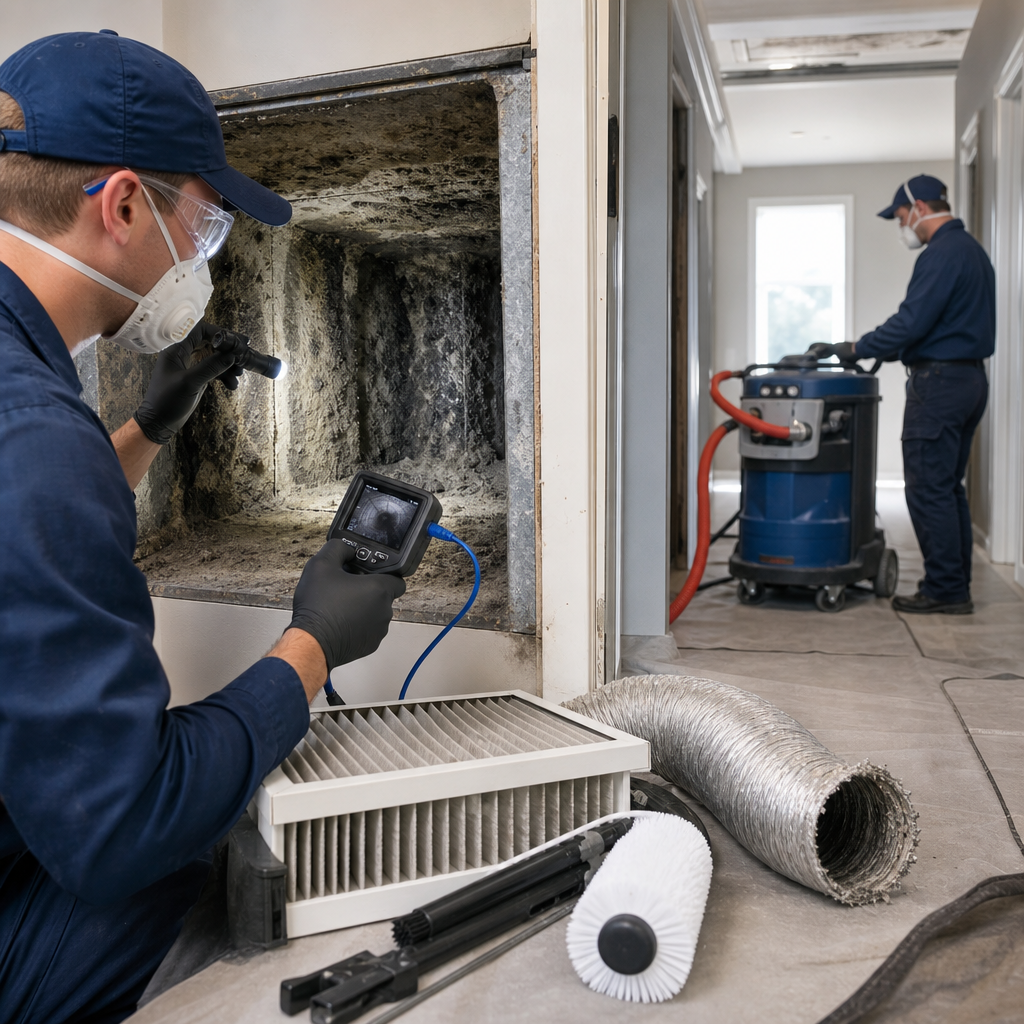
Our certified mold duct technicians follow containment procedures that prevent cross-contamination during remediation. We seal off work areas, use negative pressure equipment, and wear appropriate respiratory protection. We also understand how mold remediation interacts with your home’s entire HVAC ecosystem, not just the ductwork.
Certified technicians can identify underlying HVAC design issues that cause moisture problems in the first place. Maybe your return air is pulling moisture from a bathroom. Maybe your attic ductwork needs better insulation to prevent condensation during morning humidity peaks. Maybe your system needs a secondary dehumidifier because your AC unit isn’t sized appropriately for Austin’s humidity levels. These are nuanced problems that require real expertise to solve correctly.
Air Duct Cleaning and Mold Remediation Methods We Use
Our air duct mold remediation process combines mechanical cleaning with chemical treatment and system restoration. We don’t use one-size-fits-all approaches; every system gets a customized remediation plan based on inspection findings.
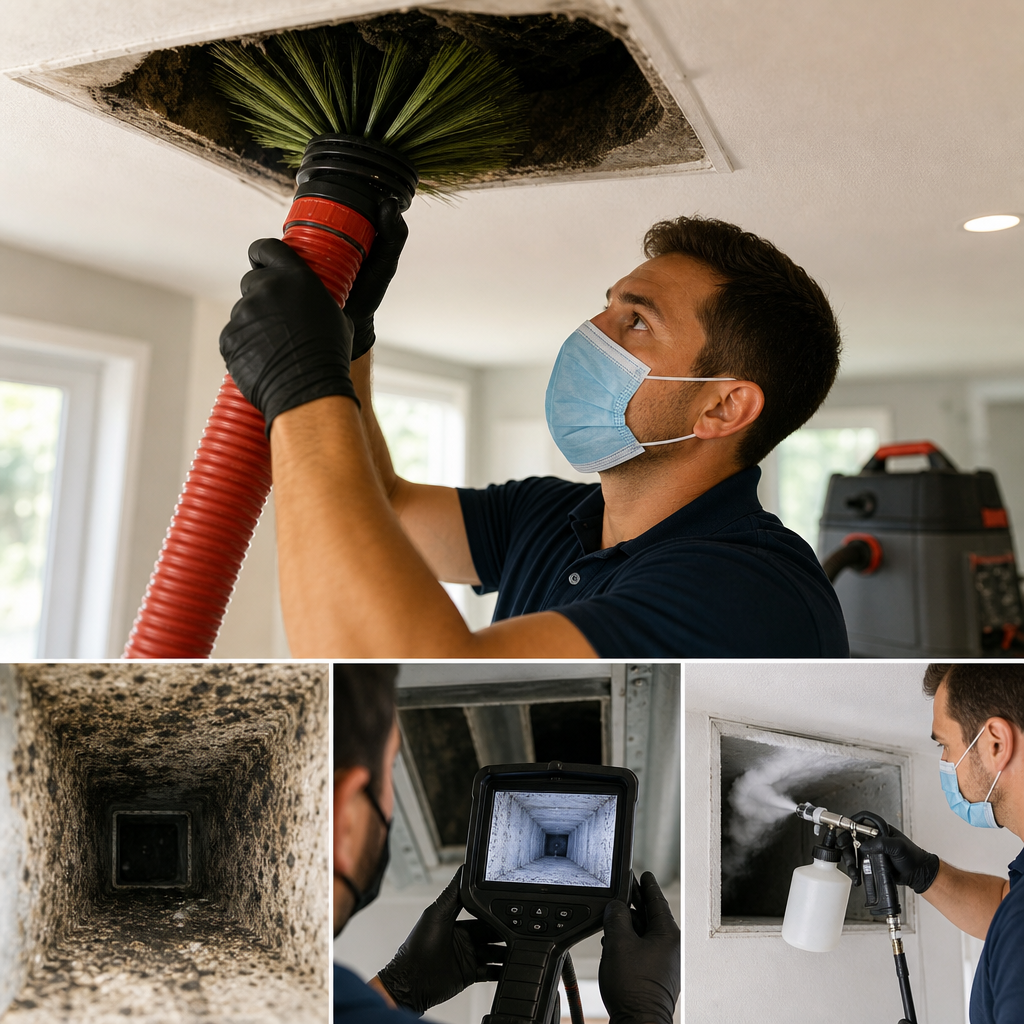
Mechanical cleaning starts with source removal. We use truck-mounted vacuum systems with industrial-strength suction and HEPA filtration to extract debris, dust, and mold spores from every section of your ductwork. Access holes are strategically created to allow brush cleaning of ducts that can’t be reached from return plenums or supply stacks. Unlike DIY shop vacs, our equipment maintains negative pressure throughout the entire process, ensuring spores don’t escape into your living spaces.
After mechanical cleaning, we apply EPA-approved antimicrobial treatments specifically formulated for HVAC systems. These aren’t hardware store sprays; they’re professional-grade coatings that penetrate dust layers and kill mold at the source. Treatment is applied using aerosol equipment and circulation techniques that ensure complete coverage, then allowed proper curing time before your system restarts.
Finally, we restore your system to optimal operating condition. We replace filters with high-efficiency media, clean or replace evaporator coils to remove moisture sources, clear your condensate drain line completely, and verify that all ductwork connections are sealed properly. System balance is checked to ensure airflow is even throughout your home.
Preventative Maintenance Plans That Eliminate Recurring Mold
One remediation project doesn’t guarantee mold won’t return. Austin’s climate demands ongoing moisture management, which is why we recommend quarterly or seasonal maintenance plans tailored to your home’s specific vulnerabilities.
Our preventative plans include regular filter replacements timed for Austin’s seasonal peaks, professional coil cleaning to remove buildup that traps moisture, condensate drain inspection and cleaning, and thermal imaging checks to catch moisture accumulation before it becomes a problem. For homes with attic ductwork or other high-risk configurations, we recommend semi-annual duct inspections and antimicrobial treatments.
These plans work because they address the three factors that create mold: moisture source, food source (dust and organic buildup), and time. By removing each factor regularly, we break the mold growth cycle completely. Homeowners who follow our preventative plans don’t experience mold recurrence because we’re eliminating conditions that allow it to thrive.
We also provide ongoing humidity monitoring through smart thermostat integration, giving you real-time visibility into your home’s moisture levels. If humidity creeps above safe thresholds, we can adjust system settings or recommend additional dehumidification before mold has any chance to establish.
Cost Comparison: Professional Service vs Repeated DIY Failures
DIY mold prevention seems cheaper upfront. A $200 hardware store cleaning kit plus $50 in spray treatments feels like a bargain compared to professional remediation. But here’s what actually happens: that DIY cleaning removes only surface dust, the spray treatment fails within weeks, mold returns, your family’s air quality deteriorates, you notice symptoms again, and you’re back at the hardware store buying more products.
After three or four cycles of failed DIY attempts, you’ve spent $800-$1,200 on treatments that didn’t work. Your mold problem is now worse because untreated contamination has spread deeper into your system. When you finally call a professional, we have to charge more for remediation because we’re dealing with extensive colonization instead of early-stage growth.
Professional air duct mold remediation costs between $1,200-$2,500 depending on your system size and contamination level. This one project permanently removes mold and restores your system to healthy operating condition. Combined with our preventative maintenance plan at approximately $400-$600 annually, your total investment in professional mold prevention is actually lower than repeated DIY failures.
More importantly, professional service comes with guarantees. If mold returns within our warranty period, we remediate it again at no charge. DIY treatments have no guarantee—you’re on your own when they fail, which they will.
Why Austin’s Climate Demands Expert HVAC Mold Solutions
Austin’s specific climate conditions make professional mold prevention non-negotiable. Our humidity levels, temperature ranges, and seasonal patterns create a year-round mold threat that generic solutions can’t address.
From June through September, outdoor humidity regularly exceeds 70%, and nighttime temperatures hover in the 70s. Your AC system is running nearly 24/7, pulling this humid air into your ductwork where it condenses. This seasonal intensity alone makes DIY prevention inadequate; you need active moisture management during peak months, not just one-time cleaning.
Austin’s rapid temperature swings also matter. Morning temperatures in spring and fall can be 30-40 degrees cooler than afternoon highs. This creates extreme condensation cycles in ductwork that runs through attics or unconditioned spaces. Professional systems account for these cycles through insulation, airflow optimization, and controlled humidity settings. DIY approaches completely miss this seasonal dynamic.
Additionally, our building stock includes many older homes with poor duct sealing and inadequate attic ventilation. These structural conditions make mold growth almost inevitable without professional intervention. Newer construction often has oversized AC systems that don’t dehumidify adequately. Professional assessment identifies which specific Austin housing conditions are driving your mold problem, then applies solutions designed for those exact conditions.
Our Guarantee and Customer Protection
We stand behind every mold remediation and prevention project with written guarantees that cover what DIY approaches never will. Our mold remediation guarantee promises that if mold reappears in treated sections of your ductwork within 12 months, we’ll remediate again at no cost. This guarantee only applies if you follow our recommended preventative maintenance plan, which is why we’re confident making this commitment—we know our process works when homeowners maintain their systems properly.
Our air quality guarantee goes further. If post-remediation air quality testing shows mold spore levels above acceptable thresholds, we continue treating until results meet EPA standards. We don’t declare the job finished based on visual inspection; we use laboratory data to verify your air is actually clean.
For customers on our quarterly maintenance plans, we offer a preventative guarantee: if mold develops in your ductwork despite our regular inspections and treatments, the remediation project is covered under your plan. This transforms mold prevention from a one-time expense into an ongoing protection that you know is backed by our professional reputation.
Why Go Air Ducts Is Your Best Choice for Mold Prevention
We’re not just another HVAC company offering mold services as an add-on. Mold prevention and remediation is our core expertise in Austin and San Antonio. We’ve invested in the specialized equipment, certifications, and training that make professional-grade mold work possible. Our technicians aren’t improvising; they’re executing proven protocols refined through thousands of jobs across Central Texas.
We understand Austin’s specific climate challenges because we work in this environment every day. We know which neighborhoods have the worst humidity problems, which building types are most vulnerable to mold, and which seasons demand the most aggressive prevention measures. This local expertise directly translates to better solutions for your home.
Our comprehensive inspection process means we don’t guess at problems or apply cookie-cutter treatments. We diagnose your specific situation, then create a remediation and prevention plan designed exactly for your home’s conditions. You’re not paying for generic service; you’re paying for targeted expertise.
Most importantly, we guarantee results. Your satisfaction isn’t based on hope or assumptions—it’s backed by warranties that only professional companies can offer. When you choose Go Air Ducts, you’re choosing a partner committed to eliminating your mold problem permanently, not temporary solutions that fail within months.
Ready to protect your home’s air quality? We offer free inspections that include air quality testing and a detailed remediation plan with no obligation. Call us today for same-day service availability or schedule your professional mold assessment online. Austin homeowners deserve healthy indoor air, and we know exactly how to deliver it.
If you’re dealing with dust, poor airflow, mold in your ducts, or a clogged dryer vent — don’t wait. These issues can affect your health and safety. Go Air Ducts Group are the local experts in air duct cleaning, mold removal, dryer vent cleaning, and attic insulation. Call now for a free inspection and same-day service in Austin and San Antonio.
Frequently Asked Questions (FAQ)
How quickly can we detect mold in our HVAC system during an inspection?
We use advanced thermal imaging and moisture detection equipment that identifies mold growth our clients can’t see with the naked eye. Most inspections take 2-3 hours, and we can typically schedule appointments within 48 hours in Austin and San Antonio. Our certified technicians provide detailed findings the same day, so you’ll know exactly what we’re dealing with and what steps come next.
Why does DIY mold prevention keep failing for Austin homeowners?
Austin’s humidity creates ongoing mold conditions that simple cleaning doesn’t address because most homeowners don’t reach deep into ductwork where spores hide. Without proper equipment and sealing techniques, mold returns within weeks or months after DIY attempts. We’ve found that our clients who tried DIY first spent more money overall than those who called us initially, which is why we guarantee our work won’t develop recurring mold issues.
What’s included in our preventative maintenance plans to stop mold from coming back?
Our plans combine quarterly professional duct cleaning, regular HVAC inspections, moisture control recommendations specific to your home, and dryer vent maintenance to eliminate moisture sources. We adjust our service frequency based on your home’s location, age, and previous mold history. If mold returns between scheduled visits, we handle the remediation at no extra charge as part of our guarantee.