
🕑 10 min read
Table of Contents
- Why School Air Quality Matters More Than You Think
- The Hidden Risks in Neglected School Duct Systems
- How Contaminated Ducts Affect Student Learning and Health
- Our Professional School Duct Sanitizing Process
- Advanced Sanitization Techniques We Use for Educational Facilities
- Benefits of Clean School Ducts for Your Facility
- Why San Antonio Schools Trust Go Air Ducts
- Investment in School Duct Sanitizing Saves Money Long-Term
- Schedule Your School Facility Assessment Today
- Frequently Asked Questions (FAQ)
Why School Air Quality Matters More Than You Think
Schools are high-traffic environments where students and staff spend six to eight hours daily breathing recirculated air. Unlike homes, educational facilities operate multiple HVAC zones, often running continuously throughout the year, and the air handling systems must manage dust, allergens, and contaminants from hundreds of occupants. When air ducts aren’t properly maintained, those pollutants accumulate and get distributed throughout classrooms, offices, and common areas repeatedly.
We’ve learned from working with San Antonio schools that poor indoor air quality directly impacts attendance and academic performance. Students with undiagnosed sensitivities or mild asthma often miss more class days or perform poorly without anyone connecting the dots to the air they’re breathing. Teachers report fatigue and concentration issues by mid-morning when the HVAC system hasn’t been cleaned in years. A professional San Antonio IAQ duct cleaning program changes that dynamic fast.
The investment in school duct sanitizing is actually an investment in student outcomes, staff wellness, and operational efficiency. It’s one of the most underrated maintenance decisions a school administrator can make.
The Hidden Risks in Neglected School Duct Systems
School duct systems accumulate contaminants at a faster rate than residential systems because of the high volume of foot traffic and air turnover. We’ve opened ducts in San Antonio schools and found layers of dust, mold spores, debris from renovation projects, pest droppings, and even rodent nesting material. These aren’t rare cases, either, they’re standard findings in facilities that haven’t had professional cleaning in three to five years.
Mold is the biggest concern. Ductwork naturally contains moisture from the cooling cycle, and if drain lines get blocked or if humidity isn’t properly managed, mold colonies establish themselves inside the ducts where no one sees them. Students breathe mold spores throughout the day, triggering allergic reactions, asthma exacerbations, and respiratory infections. For schools, this creates liability issues and potential health code violations.
Here are the primary risks we identify during inspections:
- Mold and mildew growth in ductwork and around coils
- Accumulated dust reducing airflow efficiency and forcing HVAC systems to work harder
- Bacterial and microbial contamination spreading throughout the facility
- Pest infiltration and nesting in unsealed ductwork
- Chemical off-gassing from old insulation or construction debris trapped in ducts
Without professional intervention, these problems compound. The HVAC system runs longer to maintain temperature, energy bills spike, components wear out prematurely, and students continue breathing compromised air.
How Contaminated Ducts Affect Student Learning and Health
The connection between air quality and student health is well-documented. Poor indoor air quality contributes to increased absenteeism, reduced cognitive function, and worsening of pre-existing respiratory conditions. We’ve spoken with school nurses in San Antonio who notice patterns: certain classrooms have higher sick-day reports, and those classrooms often have ductwork that hasn’t been serviced in years.
Contaminated ducts create a cascade of problems. When dust and allergens circulate constantly, students’ immune systems are in a low-level defensive state throughout the day. This diverts cognitive resources and makes concentration harder. For students with allergies or asthma, the situation is significantly worse, with some experiencing daily symptoms that could be prevented with proper air handling.
From an operational standpoint, schools that maintain clean ductwork report lower overall facility maintenance costs because HVAC equipment isn’t strained. Filters last longer, compressors don’t work overtime, and equipment lifecycles extend by years. That translates to budget relief that can be redirected to educational programs or other facility improvements.
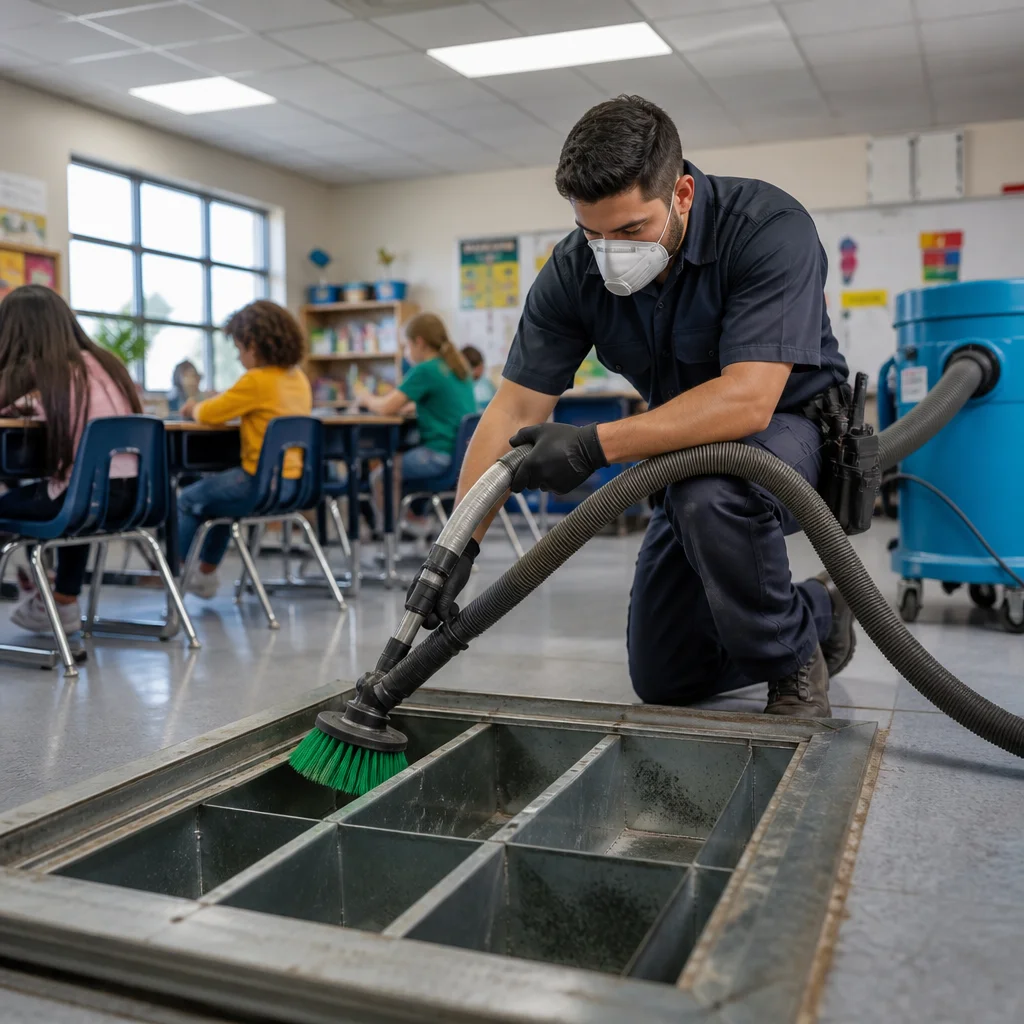
Our Professional School Duct Sanitizing Process
We’ve tailored our approach specifically for educational facilities because schools have different needs than office buildings or retail spaces. We work with administrators to schedule services during off-hours, typically evenings or weekends, so classrooms remain available during the school day.
Our process follows these core steps:
Initial Assessment and Documentation – We inspect all ductwork, identify contamination sources, and assess HVAC system condition. We provide detailed findings before proceeding, so you know exactly what we’re addressing.
Containment and Isolation – We seal work areas to prevent dust and contaminants from dispersing into occupied spaces. This is critical in schools where students and staff are nearby.
Professional Duct Cleaning – We use truck-mounted equipment and manual cleaning techniques to remove accumulated debris, dust, and deposits from ductwork. Our team doesn’t just surface-clean, we access all sections including hard-to-reach zones.
Sanitization and Treatment – After mechanical cleaning, we apply hospital-grade sanitizers to eliminate mold, bacteria, and microbial growth. These products are EPA-approved and safe for occupied buildings once application is complete and areas are ventilated.
System Testing and Verification – We test airflow, check for leaks, and verify that the system operates at proper capacity. We provide documentation showing the work completed and system performance metrics.
This structured approach ensures nothing gets overlooked and your school receives professional-grade results backed by documentation.
Advanced Sanitization Techniques We Use for Educational Facilities
Beyond standard duct cleaning, we employ advanced methods that address the specific contaminants found in school environments. These techniques go deeper than basic vacuuming and provide longer-lasting results.
Fogging and Mist Sanitization – For extensive mold or microbial contamination, we use EPA-approved fog treatments that penetrate all areas of the ductwork, including branches and connections where traditional cleaning might miss spots. This is particularly effective in schools with older HVAC systems that have hard-to-access sections.
Duct Sealing and Repair – Holes, disconnections, and leaks in ductwork reduce efficiency and allow outside air and contaminants to enter the system. We identify and seal these issues using professional-grade materials, improving both air quality and energy performance.
Coil Cleaning and Treatment – The evaporator and condenser coils are prime mold-growth zones. We clean these thoroughly and apply preventative treatments that inhibit future biological growth for several months.
HEPA Filtration Integration – We recommend and install upgraded filtration systems that capture particles down to 0.3 microns. For schools with students who have compromised immune systems or severe allergies, this upgrade makes a measurable difference in daily health outcomes.
Learn more about best practices by reviewing our San Antonio duct sanitization best practices guide tailored for facility managers.
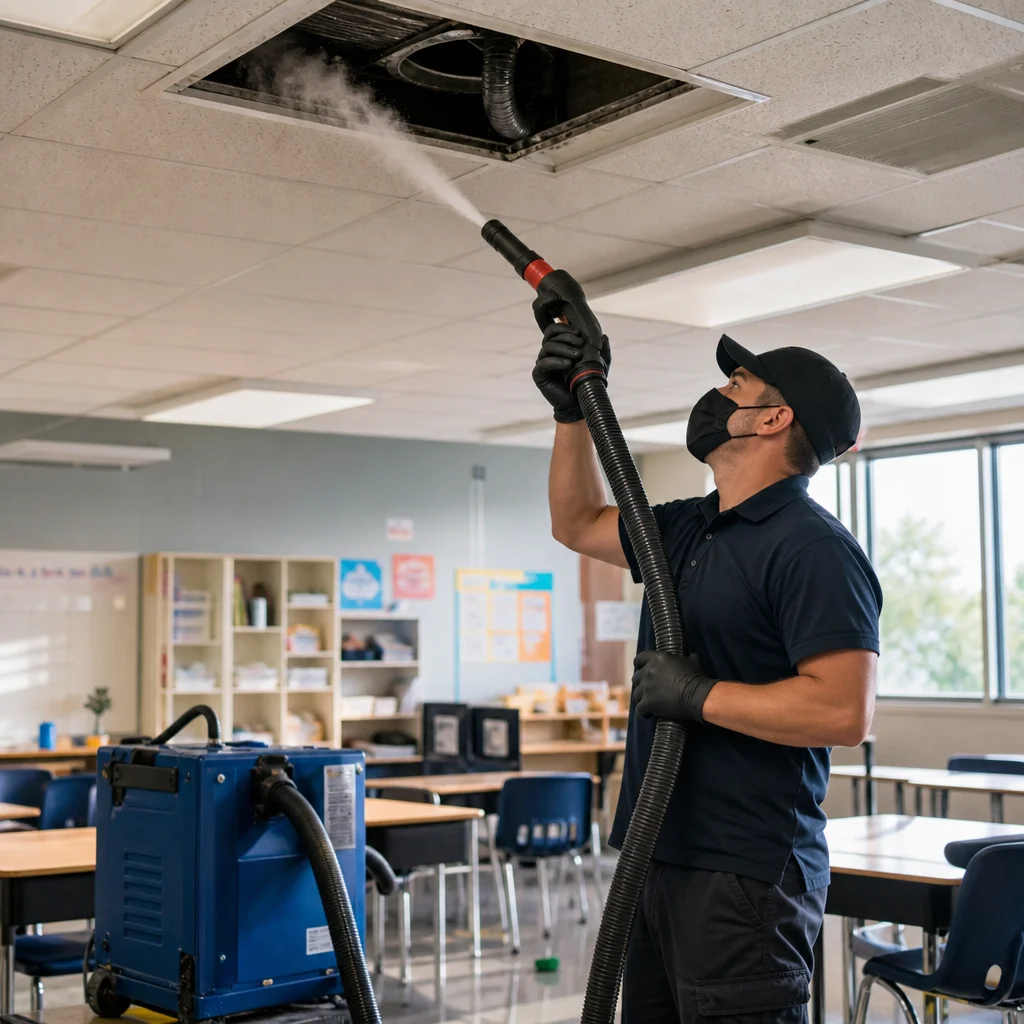
Benefits of Clean School Ducts for Your Facility
The improvements schools experience after professional duct sanitizing are noticeable within days. Here’s what we typically observe:
Immediate Improvements – Staff report better air circulation, fewer odors, and a fresher-smelling facility. Students with allergies often show symptom reduction within the first week.
Health Metrics – Absenteeism typically decreases as air quality improves. School nurses report fewer respiratory-related visits in weeks following service.
Energy Efficiency – Cleaned ductwork means the HVAC system doesn’t work as hard to maintain temperature. We’ve seen schools reduce monthly energy costs by 10-15% after comprehensive duct restoration.
Equipment Longevity – When ducts are clean, HVAC components experience less strain. Compressors, fans, and other mechanical elements last significantly longer, deferring expensive replacement projects.
Compliance and Documentation – Professional sanitizing provides documentation that demonstrates your school is maintaining facility standards. This supports health code compliance and protects against liability in case of air quality disputes.
Staff and Student Satisfaction – Families notice the improved air quality and feel confident their children are in a well-maintained facility. Staff experience fewer headaches and fatigue issues by day’s end.
These benefits compound over time. A school that invests in professional duct sanitizing and maintains regular HVAC care operates more efficiently, creates a healthier learning environment, and manages long-term facility costs more effectively.
Why San Antonio Schools Trust Go Air Ducts
We’ve served San Antonio educational facilities for over a decade, and we understand the specific challenges schools face with HVAC maintenance and indoor air quality. Our team has worked with campus administrators, facilities managers, and school districts to develop solutions tailored to educational environments.
We’re certified by industry standards and use only EPA-approved products and techniques. Our technicians are trained in the nuances of school facility work, including managing schedules around academic calendars and maintaining safety protocols in occupied buildings. We provide transparent reporting so administrators understand exactly what we found and what we did.
References from San Antonio schools speak to our reliability and professionalism. We show up on schedule, complete work efficiently, and follow up to ensure systems perform as expected. We also work with school budgets and can structure service plans that align with maintenance cycles and financial planning timelines.
When you partner with Go Air Ducts for school duct sanitizing, you’re working with a local expert who treats your facility’s air quality as seriously as you do.
Investment in School Duct Sanitizing Saves Money Long-Term
The upfront cost of professional duct sanitizing is an investment that pays for itself through operational savings and reduced emergency repairs. We’ve calculated the math with multiple San Antonio schools, and the numbers are clear.
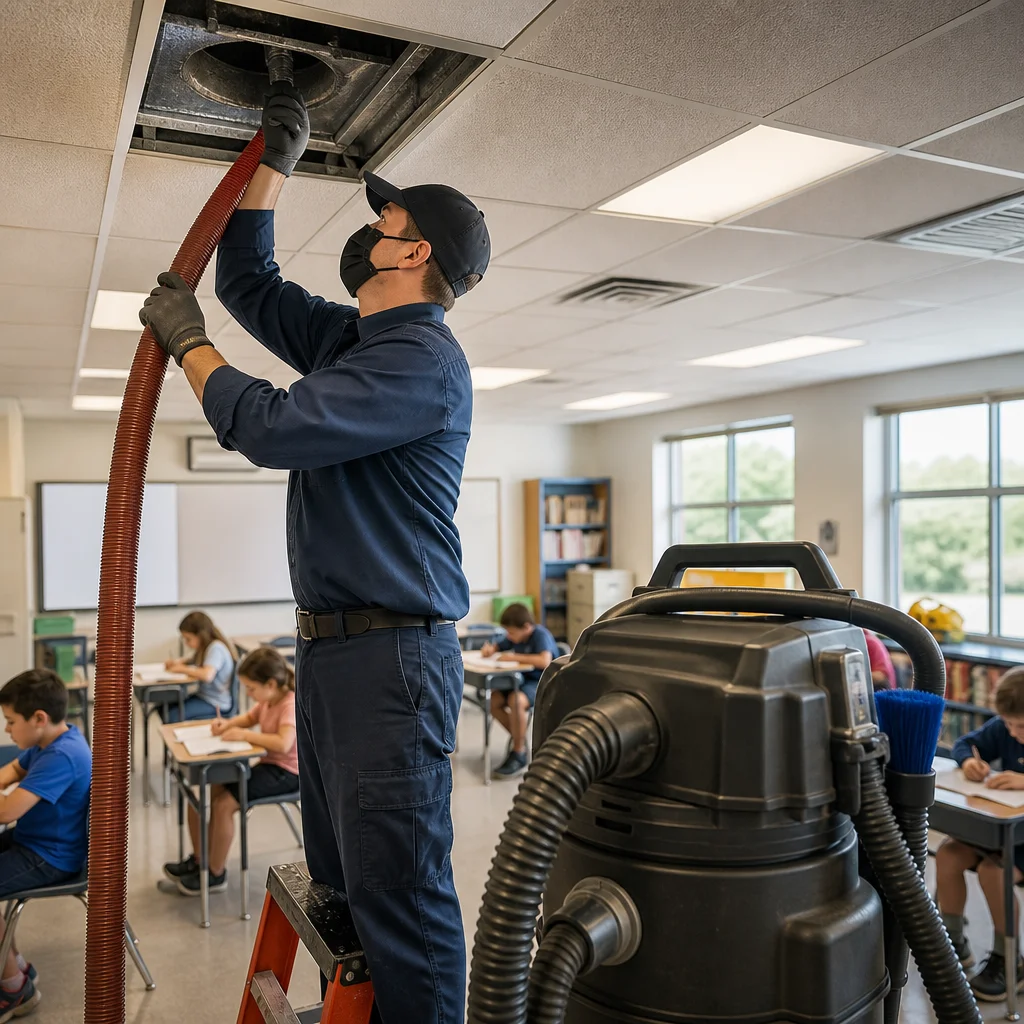
A typical school facility spending $2,500 to $5,000 on comprehensive duct cleaning and sanitizing will see energy savings of $400-$800 per month if ductwork was severely contaminated. That alone recovers the cost in 3-6 months. Beyond that, it’s pure savings.
More importantly, preventing premature HVAC component failure saves thousands in replacement costs. A school that doesn’t clean ducts regularly often faces compressor failures, coil replacements, and unexpected system shutdowns that force emergency repairs at premium rates. Scheduled professional maintenance prevents those costly surprises.
From a health and operational standpoint, reducing absenteeism and improving staff productivity adds value that doesn’t show up in utility bills but matters enormously to daily operations.
We recommend schools budget for professional duct sanitizing every 3-5 years depending on facility age and HVAC usage patterns. This preventative approach keeps systems running efficiently, maintains indoor air quality, and protects the school’s long-term asset value.
Schedule Your School Facility Assessment Today
Your school’s air quality is too important to leave to chance. We recommend scheduling a professional HVAC assessment to evaluate your current ductwork condition and identify areas where sanitizing would provide the most benefit.
Our free assessment includes a detailed inspection, findings report, and recommendations tailored to your specific facility. We’ll explain what we find in plain language and provide honest guidance about priorities and timing.
To get started, contact Go Air Ducts or call for a same-day consultation. We’ll coordinate scheduling around your school’s calendar and complete the work efficiently with minimal disruption. Let’s ensure your students and staff are breathing clean, healthy air every day.
For further reading: When to sanitize ducts.
If you’re dealing with dust, poor airflow, mold in your ducts, or a clogged dryer vent — don’t wait. These issues can affect your health and safety. Go Air Ducts Group are the local experts in air duct cleaning, mold removal, dryer vent cleaning, and attic insulation. Call now for a free inspection and same-day service in Austin and San Antonio.
Frequently Asked Questions (FAQ)
How often should we schedule duct sanitizing for our school facility?
We recommend that most educational facilities schedule professional duct sanitizing every 2-3 years as part of regular HVAC maintenance. However, schools with higher occupancy rates, older HVAC systems, or previous indoor air quality issues may benefit from annual services. During our free facility assessment, we’ll evaluate your specific situation and recommend a schedule that keeps your students and staff in the healthiest environment.
What makes our school duct sanitizing process different from standard cleaning?
We use advanced HEPA filtration and EPA-approved sanitization techniques specifically designed for educational facilities with high traffic and occupancy demands. Our process goes beyond standard duct cleaning by addressing mold, bacteria, and allergens that accumulate in school HVAC systems. Our certified technicians are trained to work with institutional facilities while minimizing disruption to your classes and operations.
Can clean school ducts actually improve student attendance and academic performance?
Research consistently shows that improved indoor air quality reduces respiratory issues, allergies, and absenteeism among students. When we remove contaminants from your duct system, we’re directly improving the air your students breathe during critical learning hours. We’ve worked with San Antonio schools that reported noticeable improvements in air quality and student wellness after our sanitizing services.