The Hidden Dangers of 1960s Chimney Construction
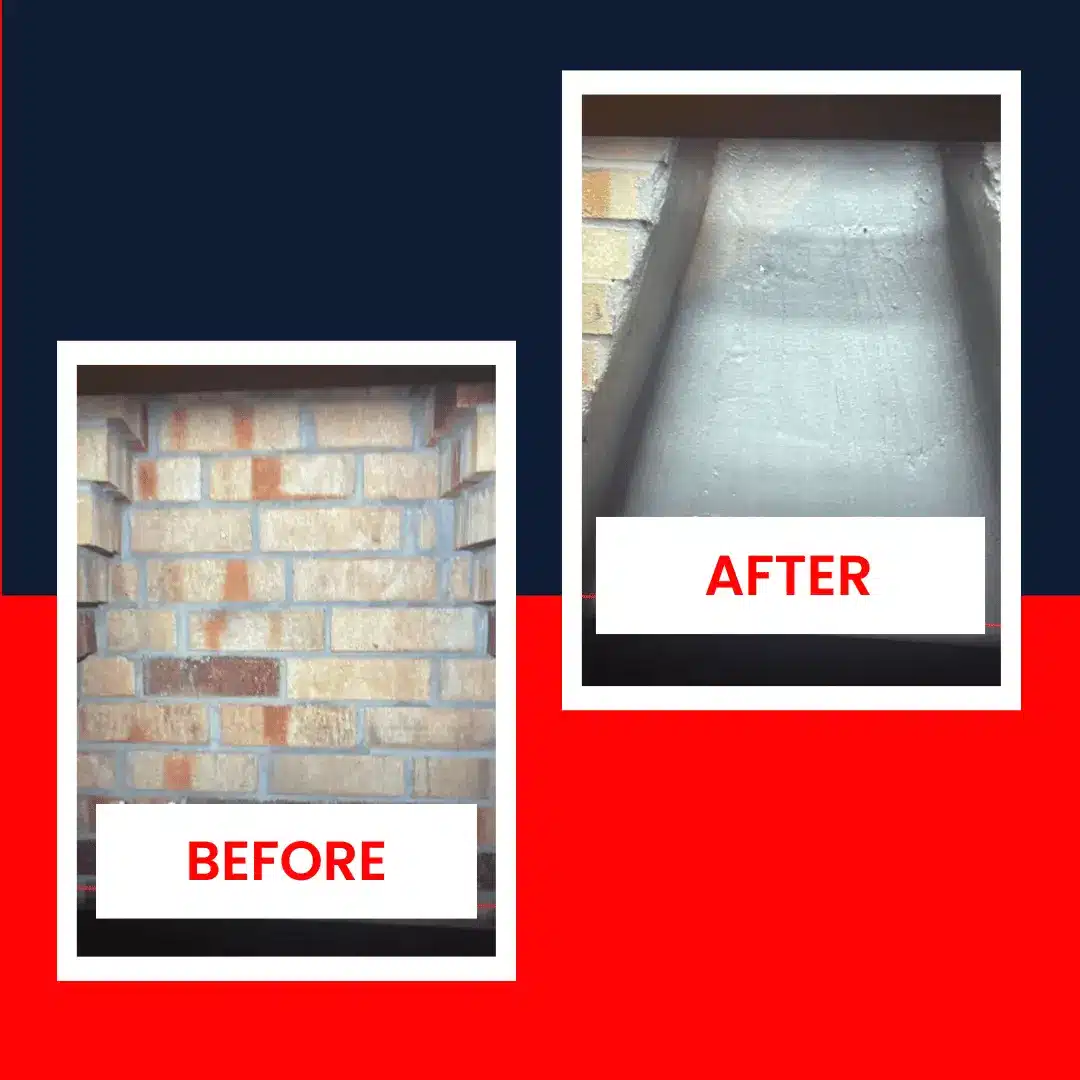
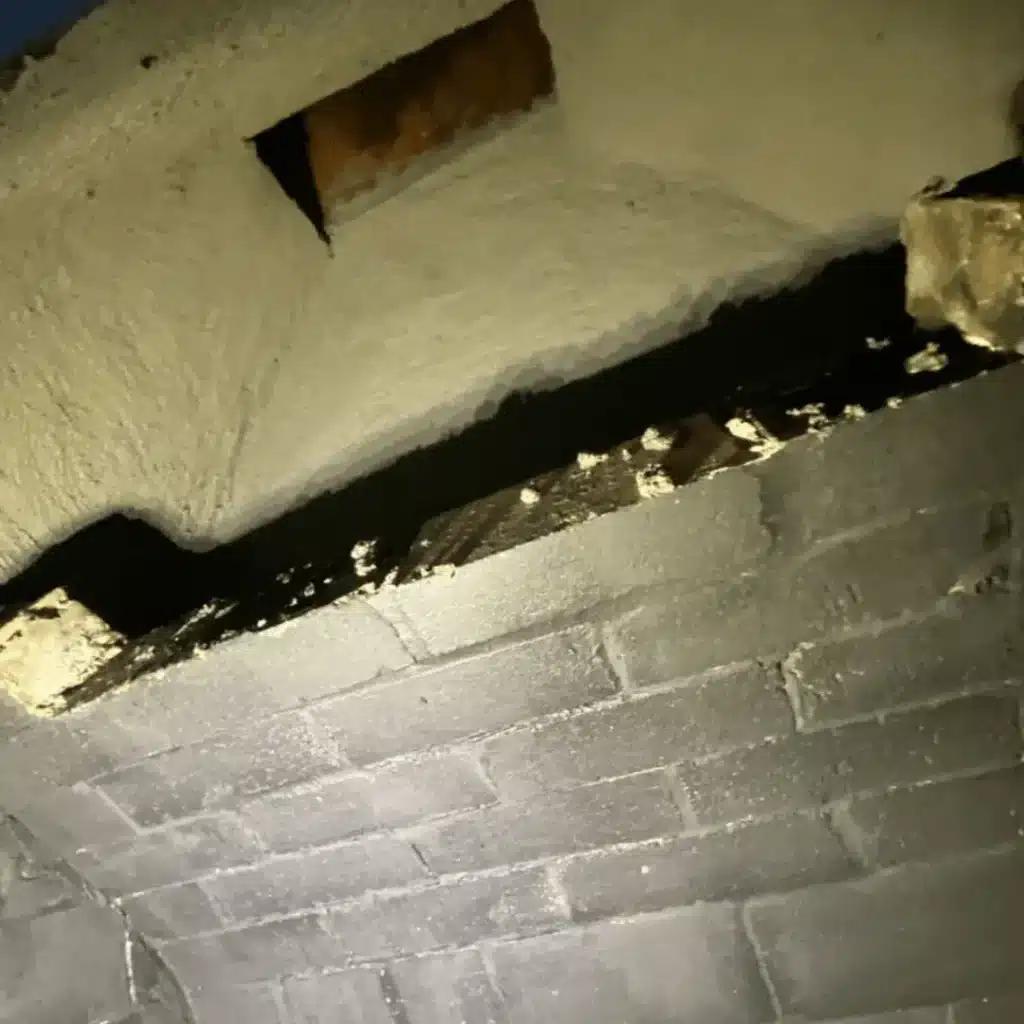
Chimneys constructed during the mid-20th century were often built with techniques that, while standard at the time, do not always meet modern efficiency or safety expectations. In this San Antonio residence, the smoke chamber, the funnel-shaped area between the firebox and the flue, was the primary culprit. Over sixty years of use, the original mortar had degraded, leaving a jagged, porous surface that trapped soot and hindered the natural flow of air.
When the interior of a smoke chamber is rough or “stepped,” it creates turbulence. Think of it like water flowing through a pipe filled with rocks; the friction slows the movement and causes backups. In a chimney, this friction cools the smoke, making it heavier and more likely to spill back into the house. To address this, our team initiated a multi-step restoration process designed to optimize “draft,” which is the pressure difference that pulls smoke out of the home.
Deep Chimney Cleaning and Creosote Removal
Before any structural repairs could begin, a comprehensive chimney cleaning was mandatory. Decades of wood-burning had left a thick layer of soot and stage-two creosote on the interior walls. Creosote is a highly flammable byproduct of wood combustion that, if left unchecked, is the leading cause of chimney fires in the United States.
Our technicians used specialized brushes and high-powered vacuum systems to strip away these deposits. This wasn’t just about cleanliness; it was about visibility. To perform a high-quality smoke chamber repair, we needed a clean substrate. Removing the buildup revealed the true extent of the mortar erosion in the smoke chamber, allowing us to plan the parging process with surgical precision. This level of maintenance aligns with the safety recommendations provided by the National Fire Protection Association (NFPA), which suggests annual inspections for all solid-fuel heating appliances.
Smoke Chamber Parging and Structural Sealing
The centerpiece of this San Antonio project was the smoke chamber parging. Parging is the process of applying a specialized, high-temperature masonry material over the interior walls of the smoke chamber. We used a smooth, insulating refractory mortar to “parge-to-smooth” the entire transition zone.
Why Parging is Essential for Older Homes:
- Draft Improvement: By smoothing out the “corbelled” (stair-stepped) bricks common in 1960s builds, we reduced friction and allowed smoke to exit at a much higher velocity.
- Fire Safety: The parging material fills in cracks and gaps in the masonry. This prevents heat and sparks from reaching the combustible wooden framing of the house that often sits behind the brickwork.
- Structural Integrity: The sealant adds a layer of protection that prevents further erosion of the original 1960s mortar.
This technical application restored the chimney’s “venturi effect”, the aerodynamic principle that allows a chimney to function as a vacuum. According to engineering resources at Texas A&M University, maintaining the smooth transition of air is vital for the thermal efficiency of any vented heating system.
Performance Results and Homeowner Safety
After the parging seal had cured, the results were immediate and dramatic. A smoke test confirmed that the draft had been fully restored. The homeowner could once again enjoy a fire without the fear of smoke damage or carbon monoxide concerns. By opting for a smoke chamber repair rather than a full tear-down, the client saved thousands of dollars in construction costs while gaining a fireplace that performs better than it did when it was first built in 1960.
This project serves as a reminder that chimney health extends beyond the visible fireplace. The “guts” of the system, the flue and the smoke chamber, are where safety is won or lost. Professional intervention ensures that these hidden components are compliant with modern safety codes, such as those outlined by the International Residential Code (IRC) regarding chimney lining and clearance to combustibles.
Professional Solutions for San Antonio Homeowners
If your home was built several decades ago, your chimney may be a “hidden” liability. Symptoms like sluggish starts to your fires, a persistent smoky smell, or visible crumbling bits of mortar in your firebox are signs that your smoke chamber is failing. Go Air Ducts specializes in the unique needs of San Antonio’s historic and mid-century homes, providing expert cleaning, parging, and structural repairs that stand the test of time. Our localized experience means we understand the specific environmental factors, from humidity to soil shifts, that affect South Texas masonry.
Is your fireplace drafting poorly or leaving a smoky scent in your San Antonio home? Don’t risk the safety of your family with a compromised chimney system. Contact us today to schedule a professional 14-point chimney inspection and smoke chamber evaluation. Whether you need a routine cleaning or a technical parging restoration, our expert team is ready to ensure your hearth is safe, efficient, and ready for the season.