Identifying the Failures of Legacy Metal Ductwork
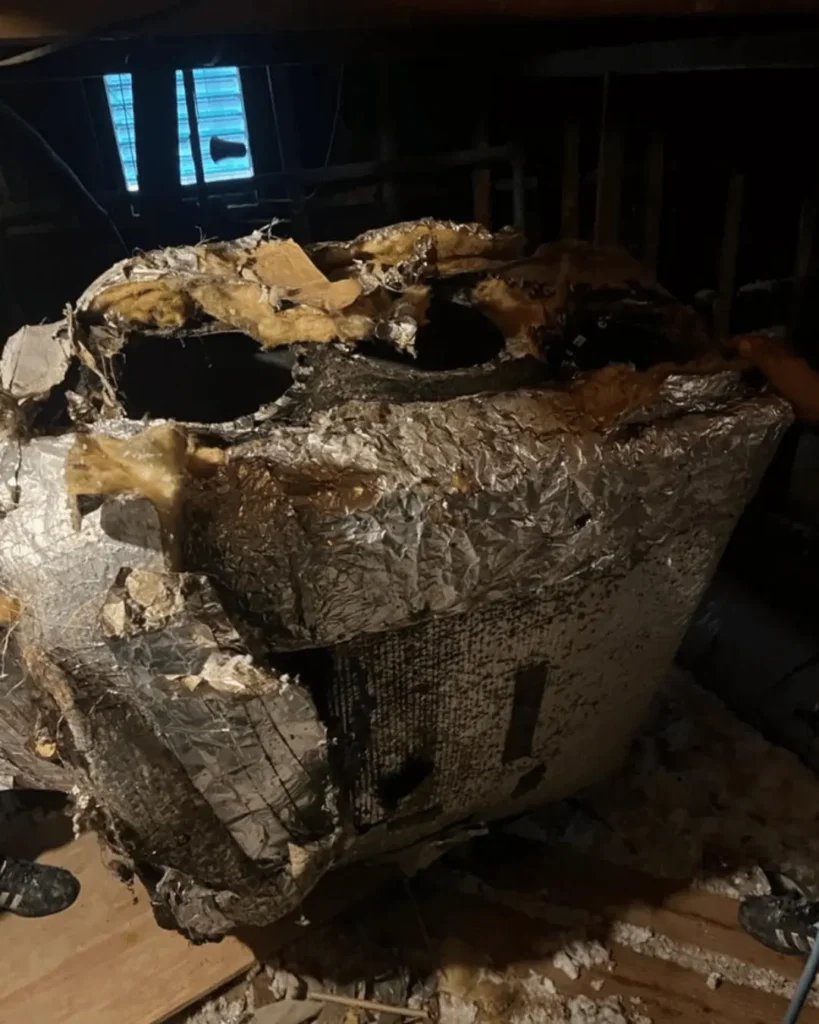
While metal ducts are known for their durability, they are not immortal. In many older Austin homes, the original metal ducting was installed with minimal insulation or sealed with tapes that degrade over decades. During our initial inspection, we identified significant corrosion and structural gaps at the joints of the old system. These openings were allowing cooled air to escape into the attic, forcing the HVAC unit to work twice as hard to reach the thermostat’s set point.
Beyond the energy loss, the deteriorated metal was a major contributor to poor indoor air quality. Years of moisture sitting against the metal surfaces had led to localized oxidation, and the unsealed gaps were pulling in attic dust, insulation fibers, and allergens. This “pulling” effect essentially turns your ductwork into a delivery system for contaminants. According to the U.S. Department of Energy, typical duct systems lose 20% to 30% of the air that moves through them due to leaks, holes, and poorly connected ducts. In this Austin residence, the loss was estimated to be even higher, making a full replacement the only viable long-term solution.
The Removal and Engineering Phase
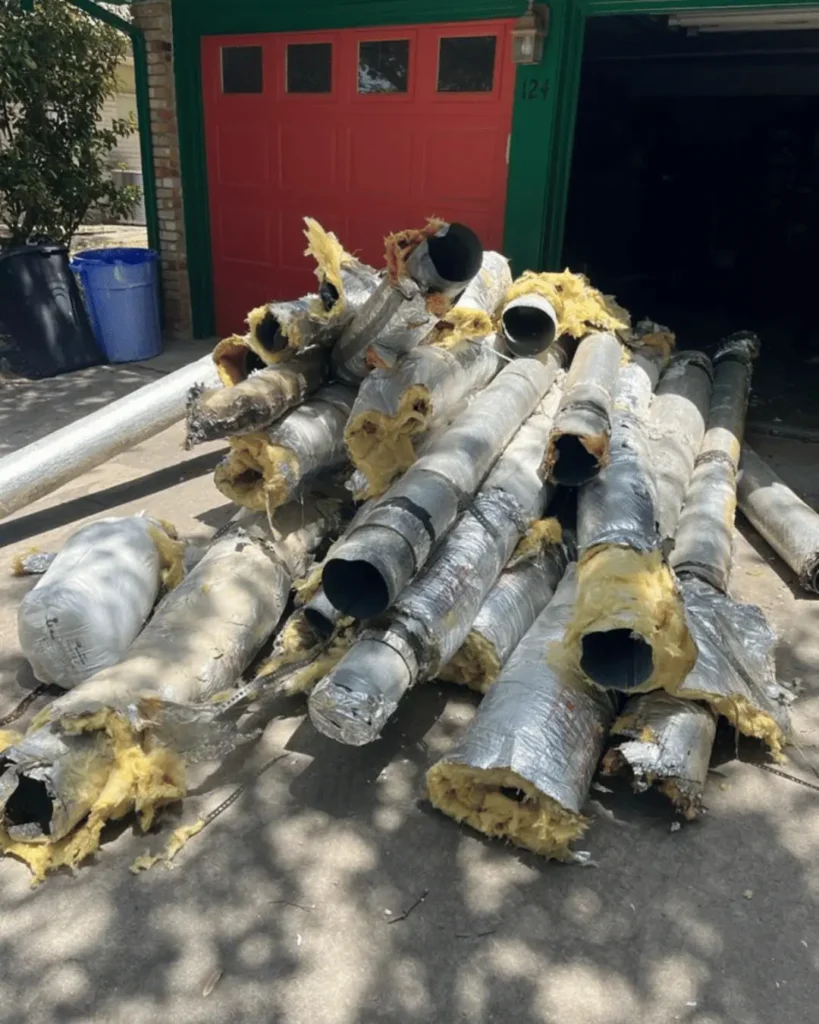
The first phase of this project involved the careful extraction of the existing metal components. Our team prioritized a clean removal process to ensure that the decades of accumulated dust within the old pipes did not migrate into the living spaces of the home. Once the attic was cleared of the old, inefficient materials, our project manager mapped out a new airflow-optimized layout.
One of the primary advantages of a full system replacement is the ability to correct original design flaws. We engineered the new layout to minimize “static pressure”, the resistance air encounters as it moves through the system. By reducing the number of sharp 90-degree turns and ensuring the “trunk line” was sized correctly for the home’s square footage, we guaranteed that every room in the Austin property would receive a balanced, consistent volume of air.
Installing High-Efficiency Modern Ducting
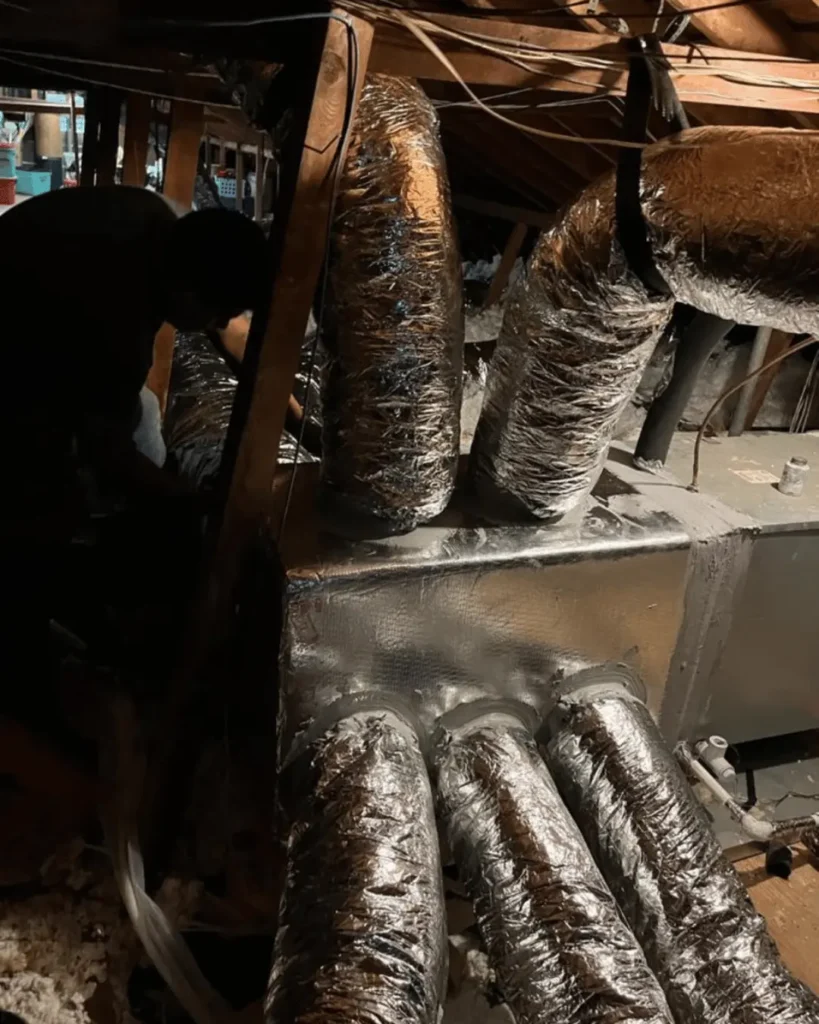
The installation phase focused on using materials that thrive in the South Texas heat. We replaced the old metal with a modern, high-efficiency system featuring superior thermal resistance (R-value) ratings. This ensures that the air leaving the AC unit stays cold as it travels through a 130-degree attic before reaching the vents.
Key Technical Upgrades During Installation:
- Airtight Mastic Sealing: Unlike the brittle tape used in the 1970s and 80s, we utilized professional-grade mastic sealant on every junction. This creates a permanent, flexible bond that remains airtight even as the house settles.
- Mechanical Support: We implemented a new suspension system to ensure the ducts do not sag over time. Sagging creates “pockets” where air slows down, and condensation can form, leading to mold issues.
- Balanced Dampers: We installed adjustable dampers that allow for precise airflow “tuning,” ensuring that the master bedroom and the kitchen receive exactly the amount of cooling they require.