Identifying the Signs of a Failing Chimney Chase Cover
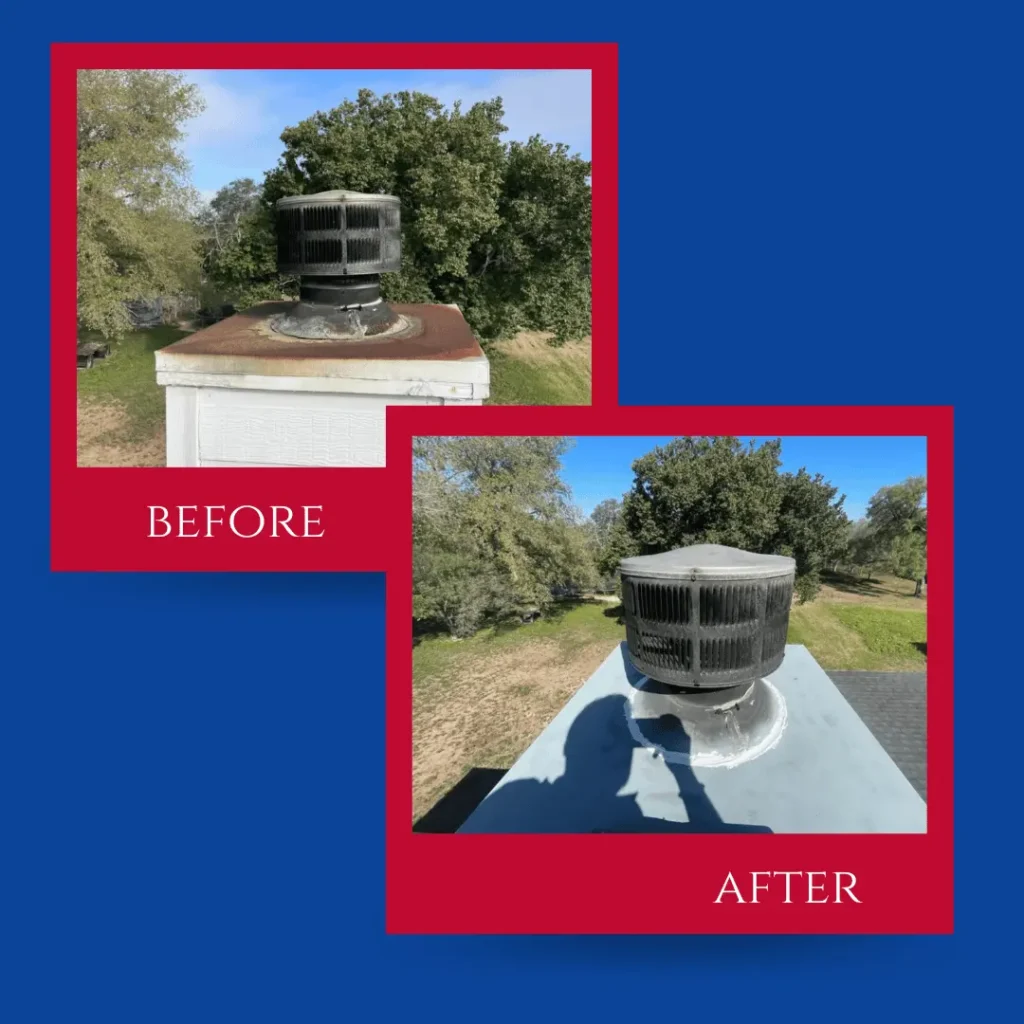
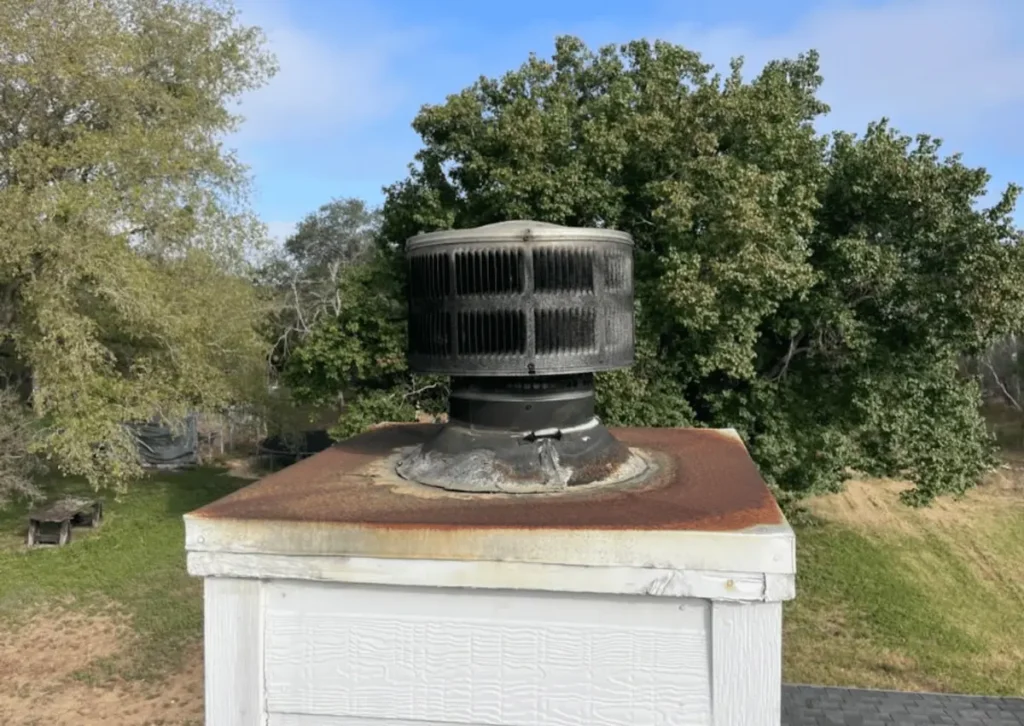
The project began when the San Antonio homeowner noticed “rust streaks” running down the side of their chimney’s exterior siding. This is a classic “red flag” indicating that the horizontal metal pan at the top of the chimney is no longer shedding water. Upon our team’s arrival and subsequent roof-level inspection, we discovered that the original galvanized steel cover had developed deep pitting and several through-and-through holes caused by standing water.
When a chase cover loses its integrity, water doesn’t just drip; it pools inside the wooden “chase” (the framed box that surrounds the flue). This leads to accelerated wood rot, mold growth, and can even damage the firebox itself. According to the Federal Emergency Management Agency (FEMA), moisture is the leading cause of structural degradation in residential buildings. In the humid environment of San Antonio, a small leak in a chimney cover can turn into a massive structural repair bill if not caught early. We documented the severe rust and the beginning stages of timber decay during the initial phase of the project to show the homeowner exactly where the system had failed.
The Removal and Structural Assessment Phase
The restoration process started with the careful removal of the old, deteriorated metal. Our technicians had to be extremely precise to ensure that no rusted debris fell down the flue or onto the surrounding roof shingles. Once the old cover was stripped away, our project manager conducted a thorough assessment of the internal wooden framing.
Fortunately, because the homeowner called us at the first sign of rust streaks, the moisture damage to the internal studs was localized. We were able to dry and treat the wood before proceeding. This step is vital; many “budget” contractors simply slap a new piece of metal over rotted wood, which traps moisture inside and leads to fungal growth. In our San Antonio chimney project, we ensured the substrate was clean, dry, and structurally sound before the new installation began.
Installing the Custom-Sealed Chase Cover
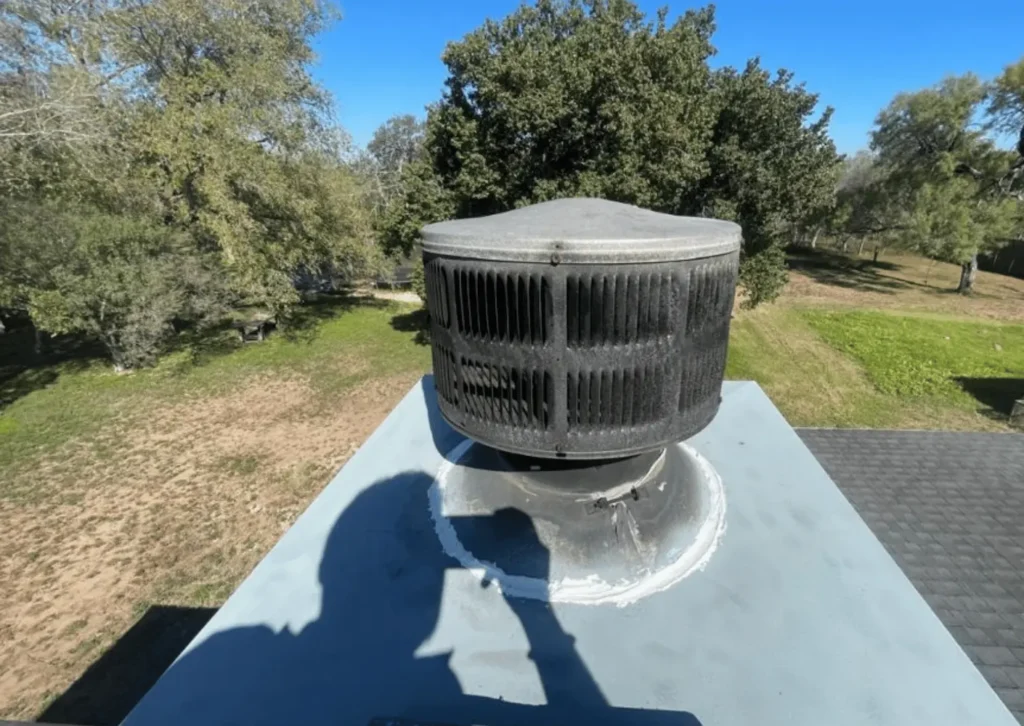
The centerpiece of this restoration was the installation of a custom-fabricated, heavy-gauge chase cover. Unlike the flat, thin metal pans used in many original home constructions, our replacement covers are designed with a “cross-break.” This means the metal has a slight, built-in pitch that forces water to run off the edges rather than allowing it to pool in the center.
Key Technical Features of the New Installation:
- Drip Edge Integration: We ensured the new cover featured a pronounced drip edge that hangs over the side of the chimney siding. This prevents water from “wicking” back into the wood.
- High-Temperature Sealant: Every penetration point, specifically where the metal flue pipe exits through the cover was sealed using industrial-grade, high-temperature silicone. This allows the pipe to expand and contract during fireplace use without breaking the watertight bond.
- Corrosion-Resistant Materials: We utilized materials specifically chosen to withstand the intense UV exposure and humidity levels characteristic of the San Antonio climate.