The Problem: Heavy Debris and Restricted Airflow
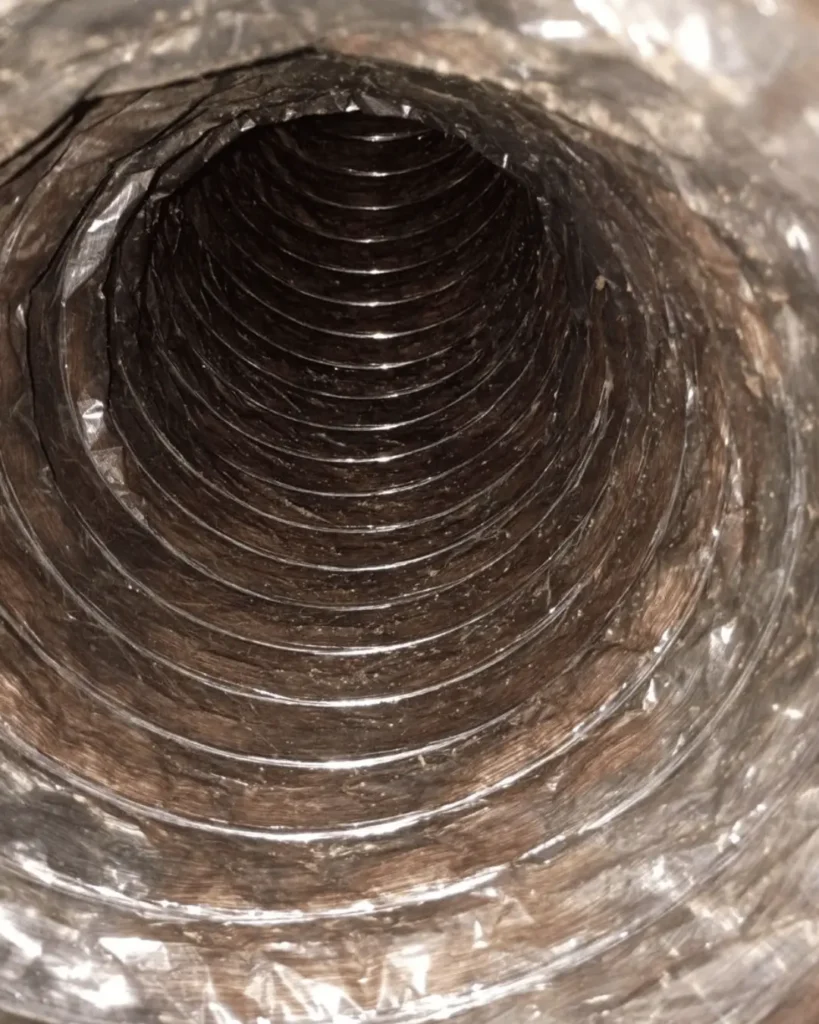
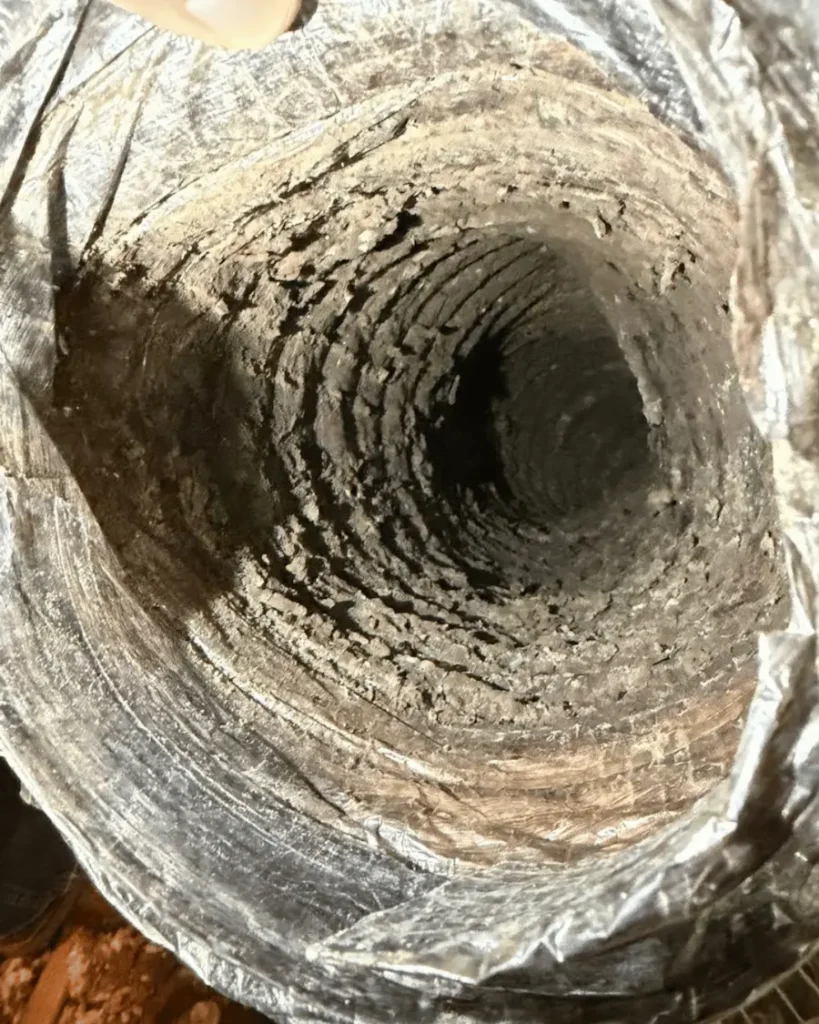
The San Antonio residence featured an HVAC system that had not been professionally serviced in several years. The homeowners reported that certain rooms felt warmer than others and noticed a thin layer of fine grey dust returning to surfaces just days after cleaning.
Upon a visual inspection using high-definition borescope cameras, our technicians discovered significant “caking” on the interior walls of the ductwork. In the San Antonio climate, moisture can occasionally mix with household dust, creating a sticky residue that anchors itself to the duct lining. This buildup does more than just circulate allergens; it creates static pressure issues, forcing the air conditioner to work harder, consume more energy, and experience premature wear on the blower motor.
The Strategy: Why We Used the Rotary Brush System
Not all air duct cleaning methods are created equal. While many companies rely solely on “negative air” (suction), heavy or adhered debris requires mechanical agitation to be fully dislodged. For this project, we selected a high-power rotary brush system.
This specialized equipment consists of a flexible cable topped with a motorized brush head that spins at high speeds while being fed through the ductwork. The bristles are designed to be tough on debris but gentle on the duct walls, ensuring that the structural integrity of the ventilation system is maintained. As the brush spins, it breaks the bond between the contaminants and the duct surface, suspended the particles so they can be extracted by our industrial-grade HEPA filtration vacuum.
The Execution: A Step-by-Step Deep Clean
The project began with the sealing of all supply and return registers to ensure no dust escaped into the living areas during the process. Our team worked systematically through the home, starting from the furthest point and moving toward the main air handler.
Mechanical Agitation and Extraction
As the rotary brush traveled deep into the trunk lines, it effectively “scrubbed” the interior surfaces. This was particularly crucial in the bends and elbows of the ductwork, where heavy dust tends to settle due to changes in air velocity. By using a brush that matches the diameter of the duct, we ensured 360-degree contact, leaving no corner untouched.
Addressing the San Antonio Environment
Given the local environmental factors, such as the prevalence of “mountain cedar” pollen and fine limestone dust common in Bexar County, the volume of material removed was substantial. The rotary brush successfully dislodged pounds of accumulated particulates, pet dander, and construction remnants that had been hidden for years.