
🕑 8 min read
Table of Contents
- When Mold Remediation Is Not Enough: Why Ducts Matter
- How Mold Gets Into Your Air Ducts and Spreads
- Signs Your Ductwork Needs Replacement After Mold Damage
- Why Cleaning Alone Often Fails Contaminated Ducts
- Our Process for Replacing Air Ducts After Mold Remediation
- Choosing Materials and Insulation for a Healthier System
- Cost Factors for Duct Replacement in San Antonio Homes
- Protecting Your Family: Air Quality Testing and Follow-Up
- Why Homeowners Trust Go Air Ducts in San Antonio
- Schedule Your Free Estimate with Go Air Ducts Today
- Frequently Asked Questions (FAQ)





When Mold Remediation Is Not Enough: Why Ducts Matter
Mold remediation removes visible growth from walls, floors, and surfaces, but many San Antonio homeowners discover that the problem keeps coming back. The reason is usually inside the walls and above the ceiling, where your air ducts carry conditioned air to every room. If mold has taken hold in the ductwork, your HVAC system can keep pulling spores back into living spaces every time it runs.
We see this pattern often in older homes across the city. A family completes remediation in a bedroom, feels relief for a few weeks, and then notices the same musty smell returning whenever the system kicks on. Without addressing the ducts, the cycle simply repeats.
Here is what to do next: ask your remediation contractor whether the HVAC system was inspected as part of the job. If it was not, schedule a duct inspection before you consider the project finished.
How Mold Gets Into Your Air Ducts and Spreads
Mold needs three things to grow: moisture, organic material, and time. Ductwork provides all three. Condensation forms on cold supply ducts in humid Texas summers, dust and skin cells settle on the interior surfaces, and small leaks or disconnected joints allow humid attic or crawlspace air to enter.
Once a colony establishes itself, the HVAC fan becomes a distribution system. Each cycle pushes spores through supply registers and into the rest of the house. Return ducts can also pull contaminated air back into the system, which keeps the cycle running.
Common entry points include:
- Flex duct with torn liners or damaged insulation
- Return plenums located in humid attics or garages
- Condensate pans that stay wet and are not drained properly
- Gaps at register boots and duct connections
If you notice dark spotting inside a register or around a duct joint, that is a strong sign the contamination has already spread beyond a single room.
Signs Your Ductwork Needs Replacement After Mold Damage
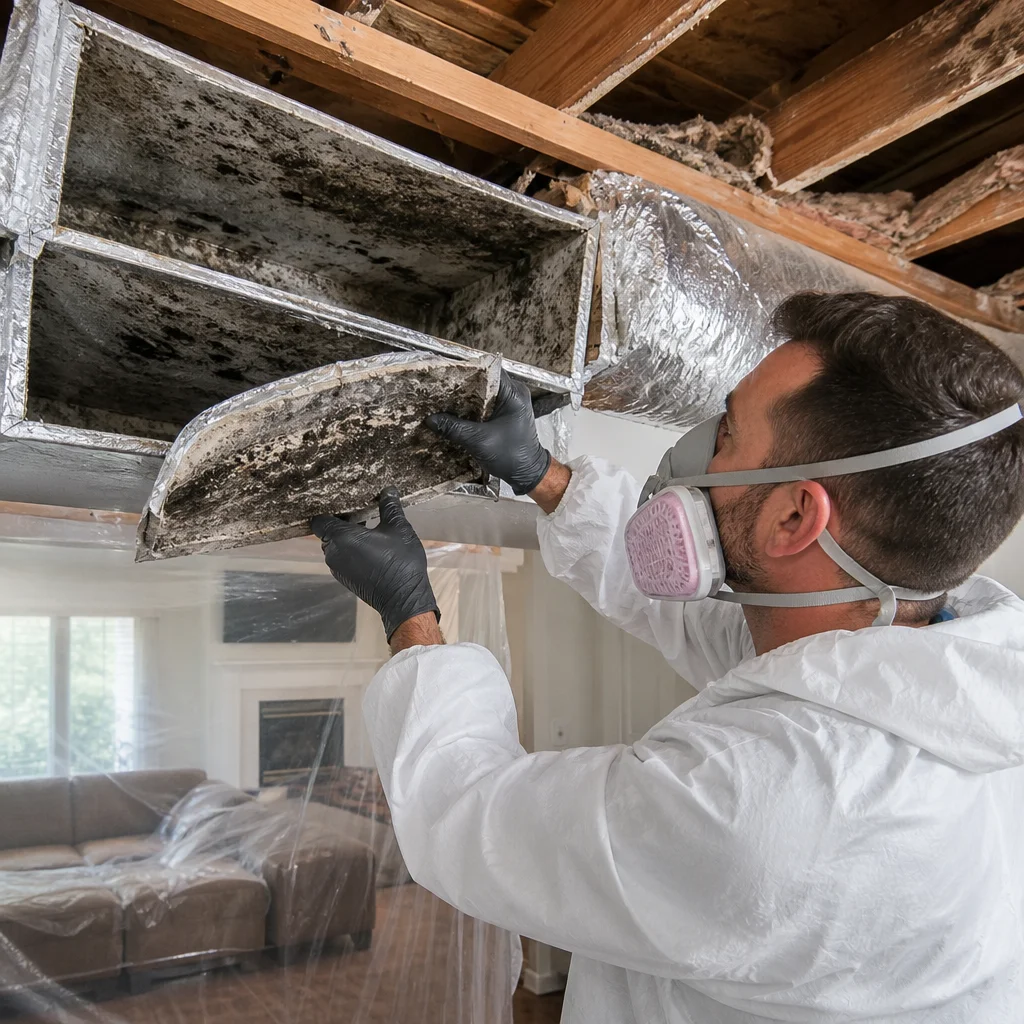
Not every contaminated duct requires replacement, but some conditions leave little choice. Replacement is typically the right call when the material itself has been compromised.
Watch for these warning signs:
- Mold growth on the interior duct liner that returns after cleaning
- Flex duct with crumbling, stained, or delaminated insulation
- Musty odors that persist even after the system has been serviced
- Visible water damage, sagging, or rust on metal ducts
- Recurring allergy symptoms among household members that improve when away from home
For a practical check, turn on the system and hold a clean white cloth over a supply register for a minute. Dark residue or a sour smell on the cloth points to active contamination.
Since our technicians inspect ductwork with cameras and moisture meters, we can tell you quickly whether repair, cleaning, or replacement makes sense. Learn more about our air duct mold remediation service.
Why Cleaning Alone Often Fails Contaminated Ducts
Duct cleaning removes loose dust, debris, and surface growth, and it is valuable for routine maintenance. The problem arises when mold has penetrated porous materials. Fiberglass duct board, insulated flex duct, and lined ducts can hold spores deep within their structure, where brushes and air whips cannot reach.
Cleaning also disturbs settled material. If a technician agitates contaminated ducts without proper containment and negative air pressure, spores can be released into the living space. That is why a poorly planned cleaning can leave a home worse off than before.
A useful rule: if the contamination is on a surface that cannot be fully sealed, cleaned, or sanitized, replacement is the more reliable option. Homeowners should ask whether the contractor uses containment and HEPA filtration during the work.
Our Process for Replacing Air Ducts After Mold Remediation
We follow a structured process so that replacement protects your indoor air rather than creating a new problem. Each stage builds on the one before it.
- Assessment: We inspect the full system, measure airflow, and document contamination with photos and moisture readings.
- Containment: We isolate the work zones, seal supply and return openings, and run negative air machines to keep dust and spores from migrating.
- Removal: Contaminated ducts, insulation, and damaged plenums are removed and bagged for proper disposal.
- Installation: New ductwork is sized to your home, sealed at every joint with mastic, and properly supported and insulated.
- Sanitizing: The HVAC components that remain, including the coil and blower area, are cleaned and treated where appropriate.
- Verification: We test airflow, confirm balanced delivery to each room, and recommend post-work air quality testing.
Homeowners often ask how long this takes. For a typical single-story home in San Antonio, most replacements are completed within one to three days, depending on access and the extent of the contamination.
Choosing Materials and Insulation for a Healthier System
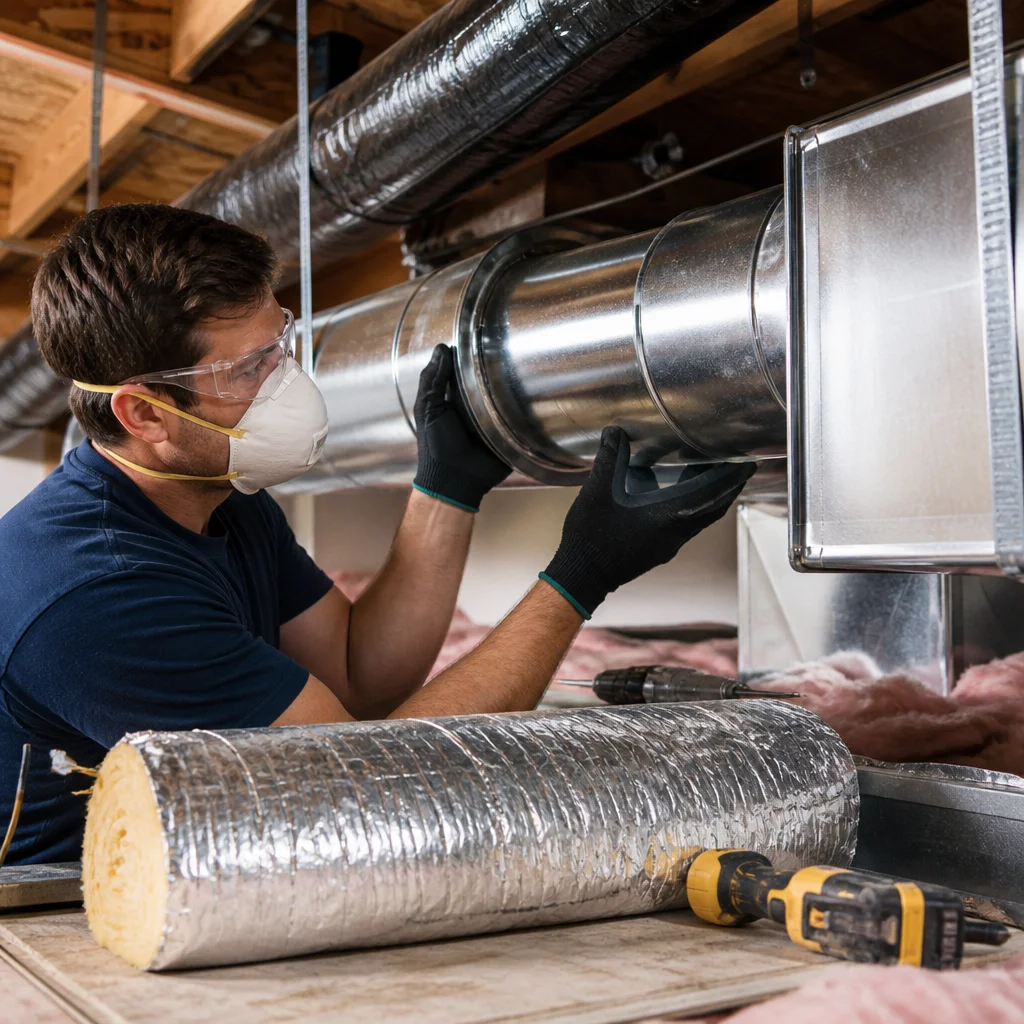
Material choice affects both air quality and long-term performance. Here is how the common options compare:
- Sheet metal ducts: Smooth interior surfaces resist mold growth and are easy to clean. They are the preferred choice for mold-prone areas.
- Flex duct: Affordable and flexible for tight spaces, but the interior liner can trap moisture if poorly installed. Choose a high-quality, antimicrobial product and keep runs as short and straight as possible.
- Duct board: Fiberglass-based and generally avoided in damp environments because it absorbs moisture and is difficult to sanitize.
Insulation matters just as much. In Texas attics, ducts can reach very high temperatures, and inadequate insulation causes condensation when cooled air meets warm surfaces. We recommend sealed, correctly rated duct insulation with a vapor barrier, along with air sealing at attic penetrations. This reduces moisture, lowers energy use, and gives you a more stable indoor environment.
Cost Factors for Duct Replacement in San Antonio Homes
Replacement pricing depends on several variables, and no two homes are identical. The main cost drivers include:
- Home size and layout: More rooms and longer duct runs require more material and labor.
- Accessibility: Ducts in tight attics, crawlspaces, or multi-story homes take longer to remove and install.
- Extent of contamination: Limited damage may allow partial replacement, while widespread growth often requires a full system rebuild.
- Material selection: Sheet metal typically costs more upfront than flex duct but offers better durability and cleanability.
- Insulation and sealing upgrades: Enhanced insulation and mastic sealing add to the initial investment but improve efficiency.
- Containment and testing: Proper containment and post-work air testing are part of a responsible project and should be included in the estimate.
Because of these variables, we provide free, written estimates after an on-site inspection. That way, you see exactly what is included before any work begins. Our team can also explain how mold inspection costs compare with full replacement pricing.
Protecting Your Family: Air Quality Testing and Follow-Up
Replacement is only part of protecting your household. Testing confirms that the work achieved its goal. Post-work air sampling and surface testing can verify that spore levels have returned to normal ranges, and a follow-up inspection a few weeks later catches any early issues.
Families with children, older adults, or anyone with asthma or allergies should prioritize testing. Keep your filters changed on schedule, maintain indoor humidity below about 50 percent, and report any returning odors promptly. Early attention is far less expensive than repeated remediation.
Our follow-up visits are designed to check airflow, humidity, and filtration so that you can confirm the system is performing as intended.
Why Homeowners Trust Go Air Ducts in San Antonio
Homeowners choose us because we combine technical training with clear communication. Our technicians are certified, we use containment and HEPA equipment on every mold-related job, and we document each project so you have a record of the work. We also serve Dallas, Houston, and Austin, which means our crews understand the humidity, dust, and attic conditions that are common throughout Texas.
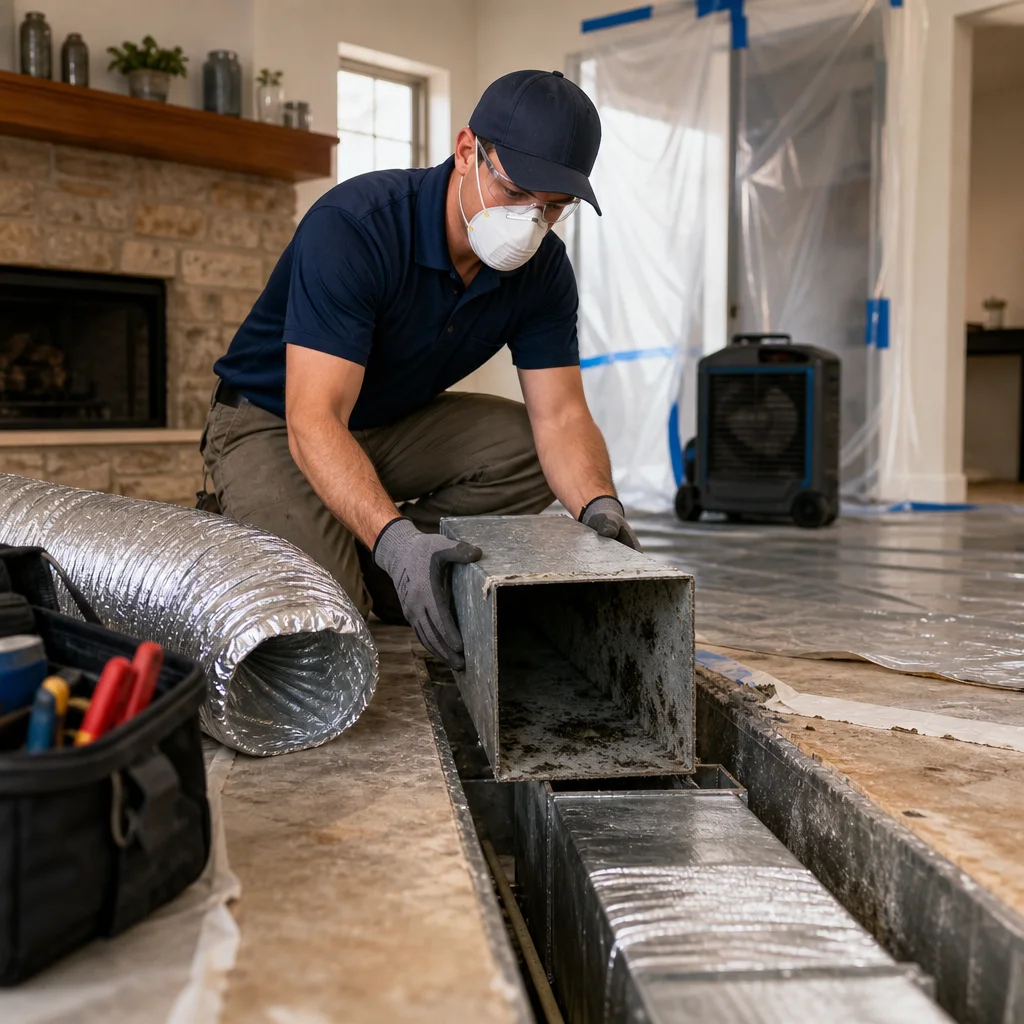
We know that a moldy duct system is stressful, and we aim to make the process straightforward. You receive honest recommendations, including when cleaning is enough and when replacement is the better investment.
Schedule Your Free Estimate with Go Air Ducts Today
If you suspect mold in your ductwork, do not wait for symptoms to worsen. Start with these steps:
- Document any visible growth, odors, or allergy patterns in your home.
- Note when symptoms appear, such as only when the system runs.
- Call for an inspection so a technician can confirm the source and scope.
We offer free service estimates across San Antonio and can often schedule same-day assessments for urgent concerns. Contact Go Air Ducts at goairducts.com to book your inspection and get a clear plan for protecting your home’s air.
For further reading: San Antonio HVAC mold remediation.
If you’re dealing with dust, poor airflow, mold in your ducts, or a clogged dryer vent — don’t wait. These issues can affect your health and safety. Go Air Ducts Group are the local experts in air duct cleaning, mold removal, dryer vent cleaning, and attic insulation. Call now for a free inspection and same-day service in Austin and San Antonio.
Frequently Asked Questions (FAQ)
Do we need to replace air ducts after mold remediation, or is cleaning enough?
It depends on how deeply the mold has penetrated. When mold has grown into porous duct board, insulation liners, or flex duct, we recommend replacement because those materials cannot be fully decontaminated. Our technicians inspect the ductwork first and document what they find, so you know exactly what needs to be replaced and why.
How much does it cost to replace air ducts in San Antonio?
Our costs depend on the size of your home, the length and layout of the ductwork, the materials selected, and whether insulation upgrades are included. We provide free written estimates after an on-site inspection, so you see the full scope and price before committing to any work. We will walk you through each option so you can choose what fits your budget and air quality goals.
How soon should we test indoor air quality after the work is finished?
We recommend scheduling air quality testing once the new ductwork is installed and the system has been running for a short period. This confirms that spore counts have returned to normal levels for your home. We can coordinate with an independent testing provider if you prefer a third-party report for your records.